
A smart thermostat replaces the basic dial on your wall with a connected device that learns your schedule, adjusts remotely, and quietly reduces your heating and cooling bills. But not all of them deliver on that promise equally. Some lock you into a single ecosystem, others require a C-wire you may not have, and a few look sleek but offer no meaningful savings over a $20 programmable model from the hardware store.
This smart thermostats review compares eight current models by looking at published specifications, listed prices, and recurring owner feedback across retail review platforms. The dividing line between a worthwhile pick and a disappointing one usually comes down to three things: how easy the initial setup is in a typical home, whether the companion app stays responsive over time, and how aggressively the energy-saving features actually engage without requiring constant manual input.
As an Amazon Associate we earn from qualifying purchases at no extra cost to you.




Quick Picks
| Product | Best for | Price |
|---|---|---|
| Google Nest Thermostat (Charcoal) | Google Home households wanting the simplest path | $79 |
| Amazon Smart Thermostat | Alexa and Ring users on a tight budget | under $80 |
| ecobee Smart Thermostat Essential | Energy Star certification at a moderate price | under $150 |
| Sensi Lite Smart Thermostat (ST25) | The lowest entry cost among Energy Star models | under $70 |
| ecobee Smart Thermostat Enhanced | Multi-room sensor support and advanced scheduling | under $200 |
| Google Nest Thermostat (Snow) | White-kitchen aesthetics with identical functionality | under $100 |
| Honeywell Home RTH9585WF | Large touch-screen control without a phone | $120 |
| Sensi Smart Thermostat (ST55) | Balanced feature set at a middle price | under $150 |
How We Picked
We narrowed this list using four criteria that owner reviews consistently flag as deal-breakers or deal-makers. First, C-wire requirements: a thermostat that demands one becomes a $150-plus job if you have no spare wire at the furnace. Second, Energy Star certification, which signals that the manufacturer met third-party efficiency benchmarks rather than simply claiming smart features. Third, app reliability over time, since many thermostats work fine for the first month and then develop connectivity gaps that owners describe in long-term reviews. Fourth, ecosystem lock-in, because a thermostat that only works well inside one assistant’s framework limits flexibility if you change platforms later.
The 8 Best Smart Thermostats Review in 2026
Google Nest Thermostat (Charcoal)
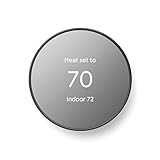
This is the default recommendation for anyone already inside Google Home. The charcoal finish blends into most walls without drawing attention, and the price sits well below comparable Nest models. Owners praise the Quick Schedule feature for getting a working routine set up in under five minutes without opening the app.
- Pro: No C-wire needed in most two-wire systems, making installation approachable for renters and DIYers alike.
- Pro: Auto-Savings nudges owners toward efficient temperatures without requiring a complex schedule setup.
- Con: The small circular display means you must pull out your phone for fine temperature adjustments, which annoys users who prefer wall-level control.
Skip this if you are deep in the Alexa ecosystem and do not want a second assistant app running alongside it.
Amazon Smart Thermostat
Amazon entered this category with an aggressive price point and Ring integration that no other brand offers out of the box. For households with Ring cameras and Alexa speakers, it slots in as the most natural choice at roughly $80. Owner reviews highlight how the thermostat automatically shifts when you arm a Ring security system, which is a genuinely useful tie-in.
- Pro: Ring-to-thermostat automation creates energy savings without manual scheduling.
- Pro: Minimal learning curve if you already use the Alexa app daily.
- Con: C-wire required, which eliminates a significant portion of older homes from consideration.
Skip this if your HVAC wiring lacks a C-wire and you are not willing to add one or use an adapter kit.
ecobee Smart Thermostat Essential
The Essential strips ecobee down to its core mission: efficient temperature management with Energy Star certification. At just under $120, it costs less than most smart speakers but includes the room-sensor compatibility that defines the ecobee platform. Owners who upgraded from basic Nest units appreciate the more granular scheduling controls.
- Pro: Energy Star certified, giving utility rebates a documented basis for approval.
- Pro: Works with Alexa, Google Home, and Apple HomeKit simultaneously, so no ecosystem lock-in.
- Con: The display is plain compared to pricier ecobee models and the Honeywell touch screen.
Skip this if you want the large color interface; the Enhanced model delivers that for a higher price.
Sensi Lite Smart Thermostat (ST25)
At just over $61, this is the cheapest Energy Star certified option in the group. Sensi built its reputation on no-C-wire installation across the product line, and the Lite keeps that advantage. Owners frequently buy one for a rental unit, guest house, or secondary thermostat zone where spending $100-plus would not be justified.
- Pro: Lowest entry price among Energy Star models, making multi-zone setups affordable.
- Pro: Works without a C-wire in most standard systems, expanding compatibility.
- Con: No geofencing or advanced automation; it is a remote-control and scheduling tool, not a learning thermostat.
Skip this if you expect the thermostat to learn your habits autonomously over several weeks.
ecobee Smart Thermostat Enhanced
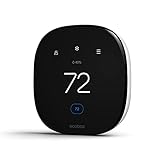
The Enhanced occupies the premium tier with a larger color display, Smart Recovery that pre-heats or pre-cools intelligently, and bundled support for room sensors that eliminate hot and cold spots. For under $200 it is the priciest pick here, but owners who pair it with sensors describe noticeably more even comfort throughout the house.
- Pro: Smart Recovery reaches your target temperature faster by learning how long your system needs for each seasonal shift.
- Pro: Room-sensor architecture addresses single-thermostat accuracy limitations that plague every other model in this group.
- Con: The price is double the Sensi Lite, and sensors are typically sold separately, raising total cost further.
Skip this if your home is small with an open floor plan where one thermostat already delivers even comfort.
Google Nest Thermostat (Snow)
Functionally identical to the Charcoal version above, the Snow variant exists for buyers who prefer a white or light-toned faceplate against painted drywall or trim. The extra twenty dollars over the Charcoal model buys nothing in performance, only aesthetics.
- Pro: Light finish integrates visually with modern minimalist interiors without the dark contrast of the Charcoal.
- Pro: Same no-C-wire simplicity and Auto-Savings features as its darker sibling.
- Con: A $20 color surcharge with zero functional difference, which feels unnecessary if you are already in the budget-conscious tier.
Skip this if the Charcoal color already matches your wall; you would be paying extra for no benefit.
Honeywell Home RTH9585WF
The Honeywell remains relevant for one specific reason: its large color touch screen lets anyone in the household adjust settings without a phone. At $120, it offers 7-day programmability, Energy Star certification, and Alexa readiness in a form factor that appeals to multi-generational homes where not everyone wants to open an app.
- Pro: Touch-screen interface is the most approachable for guests, children, and older adults in shared spaces.
- Pro: 7-day scheduling with separate wake, day, evening, and sleep periods per day gives granular control.
- Con: C-wire required, and Honeywell support threads indicate this trips up more owners than it should.
Skip this if you prefer phone-first control and do not want a large touchscreen facing the hallway.
Sensi Smart Thermostat (ST55)
The ST55 is Sensi’s full-featured model, adding a larger display and more scheduling flexibility over the Lite while keeping the same no-C-wire install philosophy. At roughly $102, it sits between the budget tier and the ecobee Essential, offering a balanced middle ground without any single standout weakness.
- Pro: Energy Star certified and works across Alexa, Google Home, and HomeKit without ecosystem lock-in.
- Pro: No-C-wire design in most systems removes the primary installation barrier owners cite in complaints about competitors.
- Con: The interface feels functional rather than elegant, and owner reviews note the app occasionally lags behind schedule changes.
Skip this if you already own an ecobee Essential; the latter offers Smart Recovery at a modest price premium.
Buying Guide
The C-Wire Question
The common wire provides continuous 24-volt power to the thermostat. Older homes wired with only two or three conductors will struggle without one. If you do not have a spare wire at the furnace, prioritize models explicitly designed for no-C-wire operation: both Google Nest variants, both Sensi models, and the ecobee units all support this. The Amazon Smart Thermostat and the Honeywell RTH9585WF require one, which means either an adapter kit or a technician visit.
Energy Star Certification and Rebates
Utility companies in most regions offer rebates on thermostats bearing the Energy Star label. Without certification, a rebate claim gets rejected regardless of the product’s actual efficiency. Every model here except the Amazon Smart Thermostat carries the Energy Star mark, so if you want a rebate to offset your purchase price, the Amazon unit is the only one that requires manual verification with your local utility.
Single Thermostat Versus Multi-Zone Comfort
If your house has rooms that run noticeably warmer or cooler than the thermostat’s location, no amount of scheduling fixes that physical problem. The ecobee Enhanced is the only model in this group designed around a room-sensor architecture that lets remote temperature readings override the baseboard unit. For homes under 1,200 square feet with open layouts, this is overkill. For multi-floor homes or additions built at different times, it is the single most effective upgrade available.
Our Verdict
The top pick is the Google Nest Thermostat (Charcoal). It combines the lowest price in the Google lineup with no C-wire requirement, Auto-Savings engagement that owners describe as genuinely useful, and a setup process that takes minutes rather than hours. For the budget tier, the Sensi Lite (ST25) wins at just over $61: it delivers Energy Star certification and broad platform compatibility at a price that makes it rational to deploy across multiple zones without guilt. One condition flips the verdict entirely: if your home already has an open C-wire and you want the touch-screen convenience of wall-level control without touching your phone, the Honeywell RTH9585WF becomes the superior choice for households with mixed-tech-ability members.
FAQ
Do smart thermostats actually lower energy bills?
Yes, when the automatic savings features engage and your usage patterns leave room for adjustment. Owner-reported savings on Energy Star certified models typically fall between ten and twenty percent on heating and cooling, but that assumes you are not overriding the schedule daily. A person who manually adjusts the temperature every evening gains very little regardless of the thermostat brand.
What happens if I switch from Alexa to Google Home?
Thermostats that support both platforms, such as the ecobee Essential, ecobee Enhanced, Sensi Lite, and Sensi ST55, continue working without any reconfiguration. The Amazon Smart Thermostat and Google Nest models are designed primarily for their native ecosystems, so switching assistants may mean losing voice-control integration or relying only on the thermostat’s own app going forward.
Is a color touchscreen worth the extra cost?
It depends on who uses the thermostat physically. If guests, children, or older adults frequently adjust the temperature from the wall, a touchscreen eliminates the phone-app barrier. If every adjustment happens remotely through a voice command or a phone, the display adds cost and complexity without changing your daily experience.
Can I install a smart thermostat myself?
Most models in this review ship with clear wiring diagrams and companion-app guides that walk through the process step by step. The no-C-wire models are simplest because you connect two or three labeled wires without needing to identify an unused conductor at the furnace. If your existing thermostat has more than three wires or you cannot match labels, hiring an HVAC technician for a short visit avoids the risk of damaging your system.










Write Your Review
No reviews yet. Be the first to share your experience!