
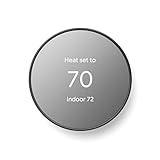
- Top Pick: Google Nest Thermostat – Smart Thermostat for Home – Programmable Wifi Thermostat – Charcoal
- Best Value: NonProgrammable Thermostat for Home, Digital Energy-Saving Thermostat,Single-Stage Systems, 1 Heat/1 Cool, Easy DIY Install,White Backlight
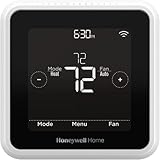
- Premium Choice: Honeywell Home RTH9585WF Wi-Fi Smart Color Thermostat, 7 Day Programmable, Touch Screen, Energy Star, Alexa Ready, C-Wire Required, Not Compatible with Line Volt Heating Gray
A failing or outdated thermostat is one of those household problems people tolerate far longer than they should. It manifests as rooms that never quite reach the right temperature, monthly energy bills that seem inflated by several dollars compared to what neighbors report, and a general inability to control comfort from anywhere outside the hallway wall. Replacing a basic mercury or early digital model with one of the modern thermostats for homes available today can eliminate all three issues simultaneously, but the range of options is genuinely confusing. A buyer must reconcile compatibility with their existing heating and cooling system, their tolerance for a complicated install, and whether they actually need app connectivity or just want a reliable dial they can adjust once a season.
What separates a good thermostat from a mediocre one in this market is not a single feature but a combination: whether the unit correctly negotiates with your furnace and air handler, whether the programming interface is intuitive enough that you will actually use it, and whether the price reflects real value rather than marketing. A $120 color-screen model that requires a C-wire your system does not have delivers less daily satisfaction than a $24 non-programmable unit that simply works out of the box. This roundup compares published specifications and aggregated owner feedback across eight options to help you identify the right match for your system and budget.
As an Amazon Associate we earn from qualifying purchases at no extra cost to you.




Quick Picks
| Product | Best for | Price |
|---|---|---|
| Google Nest Thermostat | Smart home owners wanting the most recognized brand at a mid-range price | $79 |
| NonProgrammable Digital Thermostat | Single-stage systems with no Wi-Fi or scheduling needs | under $30 |
| Honeywell Home RTH9585WF | Households wanting full scheduling and a large touchscreen display | $120 |
| Amazon Smart Thermostat | Alexa and Ring ecosystem users seeking a simple smart upgrade | under $80 |
| Honeywell Home T5 | Buyers who want geofencing and learning features without a subscription | under $80 |
| Upgraded Digital Non-Programmable Thermostat | Homeowners who also want a humidity readout on the faceplate | under $30 |
| Sensi Lite Smart Thermostat | Energy Star certification and budget-conscious smart home entry | under $70 |
| Suuwer Non-Programmable Thermostat | Conventional single-stage systems needing basic reliable control | under $30 |
How We Picked
We filtered the market by four criteria. First, system compatibility: every product must handle conventional single-stage heating and cooling, and we noted which units impose a C-wire requirement. Second, programming and control method: we distinguished between schedules you must set manually, learning algorithms that adapt over time, and voice-assistant integration. Third, owner-reported reliability: we reviewed aggregate feedback for recurring complaints about connectivity drops, inaccurate temperature readings, or premature failures. Fourth, price-to-feature ratio: a $24 thermostat with a clear backlight serves a different purpose than a $120 touchscreen, and we judged each against its own category rather than penalizing cheap units for lacking premium features.
The 8 Best Thermostats For Homes in 2026
Google Nest Thermostat
The Nest Thermostat targets homeowners who want smart features without the premium price tag of the full Learning or Elite models. It offers schedule flexibility through the Nest app, Savings Finder recommendations that review your usage patterns, and a simple dial interface on the wall unit. Owner feedback consistently praises the clean design and the integration quality with Google Assistant ecosystems. The primary drawback is that it does not learn automatically the way the older Nest Learning Thermostat does; you must set a schedule or rely on the app suggestions.
- Pro: Polished app with useful energy reports and auto-suggestion adjustments
- Pro: Compact mirror display blends into most wall colors without looking dated
- Con: No built-in learning algorithm requires manual scheduling for optimal savings
Skip this if you have no Wi-Fi in the hallway where the thermostat mounts, or if you dislike managing settings through a phone app rather than a physical interface.
NonProgrammable Digital Thermostat
At just under $24, this unit is the no-nonsense replacement for anyone with a basic single-stage system who simply needs reliable on and off control with a clear reading. The white backlight is bright enough to read from across a room, and the install matches the simplicity of the operation: four wires, mount, done. Owners who replace old mercury models repeatedly mention how much easier it is to set a fixed temperature without navigating menus.
- Pro: Lowest price point with no recurring connectivity or subscription dependency
- Pro: True plug-and-play for single-heat and single-cool systems
- Con: Zero scheduling capability means you must adjust manually for away periods
Skip this if you want any form of remote access, automation, or the ability to run different temperatures at night versus daytime.
Honeywell Home RTH9585WF
The RTH9585WF is for households with varied schedules where full seven-day programming matters. Its large color touchscreen makes setting different periods straightforward even without the app, and Energy Star certification confirms it meets efficiency standards. Owners appreciate the multiple faceplate options and the ability to view local weather on-screen. The notable limitation is the mandatory C-wire, which adds a wiring step or requires an adapter for older homes lacking a common terminal at the furnace.
- Pro: Full seven-day programming with granular per-period control visible on a large screen
- Pro: Compatible with Alexa and Google Assistant for voice adjustments
- Con: C-wire requirement adds installation friction for older systems
Skip this if your budget is tight or if your furnace lacks a C terminal and you do not want to run a new wire.
Amazon Smart Thermostat
Amazon’s thermostat speaks directly to the Ring and Alexa ecosystem, making it the logical choice for households already built around those platforms. It includes a built-in C-wire solution for most homes and an auto-tuning algorithm that adjusts setpoints based on your heating and cooling habits. Owners report simple setup and reliable voice control. The main criticism centers on its limited non-Amazon compatibility and a design that some find plain compared to the Nest.
- Pro: Seamless Alexa and Ring integration with no third-party bridge needed
- Pro: Included C-wire adapter covers many common configurations out of the box
- Con: No native Google Assistant support limits usefulness outside the Amazon ecosystem
Skip this if you use Google Home or prefer a thermostat that works equally well across multiple assistant platforms.
Honeywell Home T5 Smart Wi-Fi Thermostat
The T5 sits in a practical middle ground: it offers geofencing, voice control, and a scheduling interface without requiring a subscription or a premium touchscreen. It learns your patterns over time and can auto-adjust when you leave the house. Owners highlight the balanced feature set and the clear display. A recurring note is that the Wi-Fi connection occasionally drops in homes with distant routers, though a hardwired C-wire option resolves most stability complaints.
- Pro: Geofencing automatically switches to eco mode when no one is home
- Pro: Supports both Alexa and Google Assistant without lock-in
- Con: Wi-Fi stability depends heavily on router proximity in larger homes
Skip this if your router is far from the thermostat location and running a cable is impractical.
Upgraded Digital Non-Programmable Thermostat
This unit adds a humidity monitor to a basic single-stage thermostat, which is genuinely useful in climates where indoor moisture levels shift seasonally. The large blue LCD is easy to read, and the install matches other non-programmable options in this group. Owners who replaced older thermostats specifically value seeing relative humidity alongside temperature without purchasing a separate gauge.
- Pro: Built-in humidity readout eliminates a separate hygrometer
- Pro: Large display with clear backlighting for quick glances
- Con: No programmability or smart features beyond a fixed setpoint
Skip this if you need scheduling, away modes, or any form of remote control.
Sensi Lite Smart Thermostat
The Sensi Lite is the most affordable entry point into smart thermostats for homes that already carry Energy Star certification. It works with Alexa, Google Assistant, and SmartThings, and includes a C-wire adapter. Owners praise its no-fuss setup and the compact form factor. The trade-off is a smaller screen with fewer at-a-glance details, and the companion app lacks the depth of scheduling tools found in higher-priced models.
- Pro: Broad voice-assistant compatibility including SmartThings at the lowest smart price
- Pro: Energy Star certified with real energy-use reports in the app
- Con: Limited on-screen information requires opening the app for detailed settings
Skip this if you prefer making all adjustments at the wall unit rather than pulling out a phone.
Suuwer Non-Programmable Thermostat
The Suuwer targets the same buyer as the other basic non-programmable units but adds a blue backlight and a compact size that fits tight wall plates common in apartments. It handles single-heat and single-cool conventional systems without any configuration beyond setting the target temperature. Owners note the simple swap-out from aging mechanical thermostats and the quiet operation of the relay clicking.
- Pro: Blue backlight provides clear readability in dim rooms or at night
- Pro: Fits standard single-gang wall plates with no trim kit needed
- Con: No remote sensing means it can only measure temperature at its own location
Skip this if you have a multi-stage system, a heat pump with auxiliary heat, or any need for scheduling.
Buying Guide
System Compatibility Before Features
Identify your heating and cooling configuration before reading a single spec sheet. Conventional single-stage systems accept any product on this list, but heat pumps with auxiliary or emergency heat, two-stage furnaces, and dual-fuel setups require specific wiring support. A thermostat that cannot command your second stage will silently run at partial capacity, creating comfort gaps that no amount of smart programming can fix.
The C-Wire Question
Smart thermostats need continuous 24-volt power, which the common wire provides. If your furnace terminal block has no free C terminal, you either run a new wire, install a C-wire adapter kit, or choose a model like the Sensi Lite or Amazon Smart Thermostat that includes a power-harvesting solution in the box. Older non-programmable units do not require a C-wire at all, which is a legitimate reason to stick with a $24 model in a rental or secondary home.
Programming Method That Matches Your Lifestyle
A seven-day programmable schedule only saves energy if you actually maintain it. If you rarely leave the house at consistent times, a learning or geofencing model adapts without your intervention. If you follow a rigid work week, manual scheduling gives precise control. If you travel unpredictably, the simplest reliable path is a non-programmable unit paired with the habit of adjusting it before you leave.
Our Verdict
The Google Nest Thermostat is the top pick for most households because it balances design, app quality, energy reports, and a price that does not overcommit you to a smart-home ecosystem experiment. For buyers who want to spend the least and need nothing beyond a reliable fixed setpoint, the NonProgrammable Digital Thermostat for under $30 is the value pick. If your home already runs on Alexa and Ring, the Amazon Smart Thermostat wins on ecosystem integration despite a slightly higher price, because it eliminates the need for a separate hub or account linkage.
FAQ
Can I install a thermostat myself without hiring an electrician?
Yes. All eight products on this list use standard low-voltage 24-volt wiring that involves no line-voltage electricity. As long as you photograph your existing wire connections before disconnecting them, a screwdriver is the only tool required for most conventional systems.
Do smart thermostats require a subscription to use their features?
The models in this roundup do not charge a recurring fee for scheduling, geofencing, or voice control. Some premium tiers exist in the broader Nest or ecobee families, but none of the units reviewed here lock basic functionality behind a paywall.
Will a thermostat work if I have no C-wire and no smart features?
Non-programmable thermostats draw power from the heating and cooling circuits themselves, so a C-wire is irrelevant to their operation. This is one practical advantage of the basic units in this group: they function in any conventional system regardless of whether a common terminal is available at the furnace.
How often should I replace my thermostat?
Mechanical thermostats can drift inaccurately after five to ten years, and digital units sometimes develop display or relay failures within that window. If your current thermostat has been working reliably, the strongest reason to upgrade is not age but a change in lifestyle such as new work hours, a desire to reduce energy costs, or the arrival of a voice-assistant ecosystem in your home.










Write Your Review
No reviews yet. Be the first to share your experience!