
Choosing between a negative air machine and a shop vacuum is less about picking the “stronger” appliance and more about deciding where airborne dust, mold spores, and debris should go. A shop vacuum is designed to capture material at the end of a hose, while a negative air machine cleans and manages the air throughout a room or enclosed work area. That difference matters during remodeling, mold cleanup, sanding, demolition, and everyday household maintenance.
For a typical homeowner, the decision usually comes down to three questions: Do you need to remove debris or filter the room’s air? Do you need containment and controlled exhaust? And will you use the machine often enough to justify its size and cost? The right answer in 2026 may even be both: one for source cleanup and one for keeping contaminated air from spreading.
As an Amazon Associate we earn from qualifying purchases at no extra cost to you.


Quick Verdict
Choose a negative air machine when your priority is air quality, containment, or pressure control. It pulls air through filters—often including a HEPA filter—and can exhaust cleaned air outside through ducting. This makes it useful for mold remediation, lead-safe work, drywall removal, flooring demolition, and renovation projects where dust must stay inside a work zone.
Choose a shop vacuum when you need to pick up sawdust, screws, drywall crumbs, water, leaves, or other debris. It offers stronger, more targeted suction at the hose and is usually smaller and dramatically less expensive. A shop vacuum is the better general-purpose tool for garages, workshops, basements, vehicles, and quick household messes.
A shop vacuum is not automatically a substitute for a negative air machine. Even a vacuum with a fine-dust or HEPA-style filter is primarily a source-capture device. It does not typically create room-wide air circulation, maintain a contained negative-pressure zone, or provide the same ducted exhaust setup.
Side by Side
| Factor | Negative Air Machine | Shop Vacuum |
|---|---|---|
| Primary job | Filters room air and helps contain airborne contaminants | Collects wet or dry debris through a hose |
| Comfort | Usually quieter to operate continuously, though airflow noise remains | Can be loud at roughly 70–85 decibels, depending on the motor and hose |
| Durability | Built for extended filtration duty; filters require careful handling | Plastic models are durable for home use but can suffer from clogged filters and rough handling |
| Price range | About $200–$700 for many residential units; professional models cost more | About $50–$250 for common home and workshop models |
| Maintenance | Replace prefilters and HEPA filters; inspect seals and duct connections | Empty the tank, clean or replace filters, and check the hose for blockages |
| Space needed | Often about 18–30 inches tall and 12–20 inches wide; some units stack | Commonly about 12–24 inches tall with a 2.5- to 6-gallon tank |
| Look | Industrial, with filter doors, warning labels, and duct ports | Familiar canister or bucket design with wheels and a hose |
| Resale | Good if clean and recently serviced, but the buyer pool is specialized | Generally easier to resell because homeowners and hobbyists have broad use for it |
| Best for | Containment, remediation, renovation dust, and controlled exhaust | Debris pickup, wet spills, workshop cleanup, and vehicle interiors |
Where Negative Air Machine Wins
The main advantage is air management. A negative air machine draws air from a room or containment area, passes it through one or more filters, and discharges the filtered air. When connected to flexible ducting and exhausted outside, it can help keep contaminated air from moving into clean parts of a home.
That function is valuable during mold cleanup and demolition. Workers can seal a doorway with plastic sheeting, place the machine inside the work area, and create airflow toward the machine rather than toward hallways or bedrooms. The machine does not make hazardous cleanup automatically safe, but it supports a more controlled work setup.
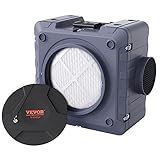
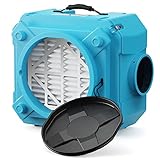
Many residential units use a prefilter, intermediate filter, and HEPA filter. A three-stage unit can extend HEPA-filter life by catching larger particles first. For example, the VEVOR Air Scrubber 550 CFM 3-Stage Filtration Stackable Negative Machine is listed at $258.90, while the ALORAIR Air Scrubber with 3 Stage Filtration, Clean Shield HEPA 550, Blue is listed at $399.96. These products illustrate the price step above a basic shop vacuum and the type of equipment aimed at air scrubbing rather than ordinary debris collection.
Negative air machines also run continuously without requiring someone to hold a hose over each dusty task. A listed airflow around 550 CFM is substantial for a portable residential air scrubber, although actual airflow can change as filters load, ducting is added, or static pressure increases. Buyers should look for filter access, sealed housing, a filter-change indicator, a GFCI-compatible power setup, and a reliable duct collar.
The tradeoff is that an air scrubber is not a convenient substitute for a vacuum. It will not efficiently pick up nails, chunks of drywall, standing water, or a pile of sawdust. It also needs clearance around its intake and a safe location where exhaust will not simply blow contaminants into another occupied area.
Where Shop Vacuum Wins
A shop vacuum wins on versatility and value. Its hose concentrates suction at the mess, making it useful for drilling dust, sanding residue, fireplace ash when the model permits it, vehicle crumbs, clogged sinks, and workshop debris. Wet/dry models can also collect water, which a negative air machine cannot do.
Entry-level units are easy to store and replace. The CRAFTSMAN CMXEVBE17250 is a 2.5-gallon, 2.5 peak horsepower wet/dry shop vacuum listed at $49.99. The Amazon Basics Wet Dry Shop Vacuum Cleaner has a 4-gallon tank, 3 peak horsepower, and a stainless-steel body; its listed price is $62.44. These compact options make sense for a homeowner who needs occasional cleanup rather than continuous air filtration.
Shop vacuums are also better at handling attachments. A floor nozzle, crevice tool, brush, extension wand, and utility nozzle can cover most garage and household jobs. Some models include blower ports, allowing the motor to push air for clearing leaves or drying equipment. That feature is useful, but blowing unfiltered dust indoors can worsen air quality, so use it outdoors or only when the material is not hazardous.
The important limitation is filtration. A standard cartridge filter and collection bag may capture ordinary dust, but they do not necessarily provide the sealed, tested HEPA performance needed for fine hazardous particles. A vacuum can also exhaust some fine dust back into the room if its filter is overloaded, damaged, incorrectly installed, or poorly sealed. For lead paint, asbestos, significant mold contamination, or other regulated hazards, follow applicable professional guidance instead of relying on a consumer vacuum.
Cost Over 5 Years
Purchase price is only part of the calculation. A compact shop vacuum may cost $50–$100 initially. Add approximately $10–$30 per year for disposable bags, replacement filters, and occasional accessories, and a reasonable five-year ownership estimate is about $100–$250, excluding electricity and repairs.
A negative air machine commonly starts around $200–$400 and can reach $700 or more. Over five years, budget roughly $50–$200 for prefilters and one or more HEPA filters, depending on how dusty the projects are. That produces an estimated five-year total of about $300–$900. A HEPA filter can cost considerably more than a shop-vac cartridge, and running a machine for days during remediation increases electricity use.
These figures are planning ranges, not guarantees. Filter life depends heavily on the material being removed, hours of operation, room conditions, and whether prefilters are changed promptly. A machine used once for a clean renovation may have lower operating costs than one used repeatedly for demolition or mold work.
Which One for Your Home
Small apartment
For routine cleaning, choose a compact shop vacuum. A 2.5- to 4-gallon model is easier to store in a closet and costs far less than an air scrubber. Use a bag and the correct fine-dust filter for drilling or sanding. Consider renting a negative air machine for a major renovation instead of storing one year-round.
Family with kids or pets
A shop vacuum is the practical everyday choice for tracked-in dirt, litter, crumbs, and spills. For remodeling, pair source capture at the tool with a HEPA-equipped negative air machine inside a sealed work area. Keep both machines away from children, and do not treat air filtration as a replacement for removing contaminated materials safely.
Rental
Renters usually benefit from a shop vacuum because it handles maintenance, move-out cleanup, and small repairs. A negative air machine becomes worthwhile when a landlord, remediation contractor, or restoration professional requires containment during a water-damage or mold project. Check the rental agreement before doing demolition or remediation yourself.
Long-term home
Homeowners who routinely renovate, build furniture, or maintain a workshop may reasonably own both. Use the shop vacuum at the cutting or sanding tool, then run the negative air machine to reduce suspended dust and maintain airflow in the work zone. If you rarely create fine airborne dust, invest in a better shop vacuum first and rent an air scrubber for occasional large projects.
FAQ
Can a shop vacuum create negative air pressure?
It can create suction at its hose, but that is not the same as maintaining negative pressure in a sealed room. A purpose-built negative air machine is designed for continuous air movement, filtered discharge, and duct connections that support containment.
Is a negative air machine the same as an air purifier?
They overlap, but their intended uses differ. A room air purifier typically recirculates filtered air for comfort and general air quality. A negative air machine is built for tougher work environments and may support sealed containment and exhaust to the outdoors.
Can I use a shop vacuum for mold cleanup?
Only for limited, appropriate tasks and with the correct filtration and protective procedures. Vacuuming visible mold with an ordinary shop vacuum can spread fine particles. Significant mold growth, hidden moisture, or contaminated building materials is better handled according to professional remediation guidance.
Which uses less electricity?
Small shop vacuums often use roughly 5–12 amps at 120 volts, while portable negative air machines commonly use a similar household circuit but may run for many more hours. The actual cost depends on wattage, runtime, and local electricity rates. A lower-wattage vacuum can still use more energy if it operates continuously.
Ready to decide? Our #1 pick for 2026 is the Primary job.
Live price & availability on Amazon.






Write Your Review
No reviews yet. Be the first to share your experience!