
Going bagless removes a purchase you repeat for the life of the house, but it does not remove the work — it moves it. Instead of swapping a bag, you will be dumping a dirt chamber and looking after whatever now does the bag’s old job: a washable filter stack, a self-cleaning filter, or a cyclonic separator. The honest decision is which of those replacements suits your tolerance for emptying day, because a bagless unit you dread servicing slowly becomes a vacuum you avoid using.
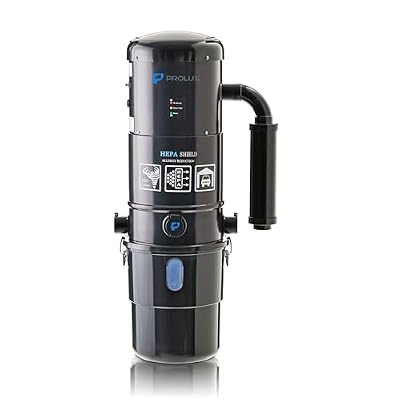

The three units here serve homeowners finished with buying bags, large households that fill containers quickly, and anyone planning a fresh install without a consumables cupboard. Each was chosen from its Amazon listing name and stated specifications — dirt capacity, airflow, water lift and separation method — and together they cover the three ways a power unit can run without a bag.
Quick Picks
As an Amazon Associate we earn from qualifying purchases.
| Product | Best for | Key spec from title |
|---|---|---|
| Prolux CV12000 Central Vacuum Power Unit | Big homes that still want HEPA filtration | 16.1 L chamber, over 130 CFM |
| Imperium CV7300 Central Vacuum Power Unit | True cyclonic separation, longest emptying gaps | 663 air watts, 38 qt canister |
| Allegro MU4500 Champion | A self-cleaning filter with a full install kit | 600 air watts, 5 gal pail |
How to Choose
Understand What Replaces the Bag
A bag does two jobs — it stores dirt and it filters air — so every bagless design has to cover both some other way. The Prolux CV12000 leans on filtration, stacking a washable micron pre-filter ahead of a washable HEPA filter above its chamber. The Allegro MU4500 uses a permanent self-cleaning microfiber filter that shakes itself clear. The Imperium CV7300 spins the airstream instead, using true cyclonic separation to fling dirt into its canister before the air moves on. Neither approach is wrong; they simply relocate the upkeep. Filter-based units ask for washing days, the cyclonic asks for canister care, and knowing which chore you prefer is the real selection step.
Plan for Emptying Day, Not Just Capacity
Bagless emptying is where owners either settle into a rhythm or start resenting the machine. Chamber sizes here run from the Allegro’s 5 gallon pail through the Prolux’s 16.1 liter chamber to the Imperium’s 38 quart canister, and the gap between emptying days stretches accordingly. The Prolux adds a clear view window, which sounds minor until you realize it replaces guesswork — you dump the chamber when you can see it needs it. Think about where the unit hangs, too: a garage-mounted canister emptied straight into an outdoor bin keeps the dust outside the living space, which is half the point of a central system.
Budget Attention for the Filter That Remains
Bagless marketing often implies maintenance-free, and that is only partly true. Washable filters still need washing: the Prolux’s pre-filter and HEPA filter come out for a rinse and must dry before the unit goes back together, so plan the chore for a day the vacuum can sit idle. The Allegro’s self-cleaning microfiber filter cuts that to nearly nothing, asking mainly that the pail beneath it gets emptied. Cyclonic separation shifts the burden again — the Imperium’s canister uses a liner system, so a light consumable remains even though bags are gone. Whichever design you pick, name its recurring chore honestly before it is mounted on the wall.
Size Suction for the Longest Run, Not the Average Room
A power unit does not clean the room it sits in; it cleans through the longest pipe run in the house. Judge candidates by the farthest inlet: airflow in CFM and water lift together describe how the unit will feel at that distant wall port. The Imperium quotes 663 air watts, 139 CFM and 132 inches of lift; the Allegro answers with 141.8 inches of lift from a smaller rated area. Prolux publishes no air watts figure at all, quoting over 130 CFM and a 12,000 square foot rating instead — compare the numbers each brand actually publishes instead of penalizing one for a missing metric.
The 3 Best Options
Prolux CV12000 Central Vacuum Power Unit
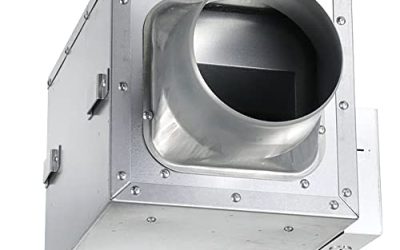
If you want bagless running without surrendering HEPA filtration, this is the unit built for you. Dirt collects in a 16.1 liter chamber with a clear view window, and above it sit three levels of filtration anchored by a washable micron pre-filter and a washable HEPA filter — rinse them, dry them, and the consumables budget stays at zero. The coverage rating reaches 12,000 square feet, the widest in this list, driven by an Ametek 2-stage bypass motor pushing over 130 CFM. A garage utility port and an included muffler round out a package clearly aimed at big homes and working garages.
Specs
- Over 130 CFM per the listing
- 16.1 L bagless dirt chamber with clear view window
- Rated for homes up to 12,000 sq ft
- Ametek 2-stage bypass motor, 12.5 A, runs on a standard 120 V circuit per listing answers
- Three levels of filtration with washable micron pre-filter and washable HEPA filter
- Powder-coated steel body, about 35 in H x 12 in W, 22 lb
- Garage utility port and muffler included
Best for: Large homes that want bagless running with washable HEPA filtration.
Watch out for: Bagless does not mean filter-free — the washable micron pre-filter and HEPA filter still need periodic washing, plus full drying time before the unit goes back together.
ASIN: B086687RBY
Imperium CV7300 Central Vacuum Power Unit
The Imperium is the only true cyclonic in this group: its listing describes cyclonic filtration that spins dirt out of the airstream into a separate 38 quart canister, the largest dirt capacity here by a wide margin. Muscle matches the concept — 663 air watts, 139 CFM and 132 inches of water lift, rated for homes up to 6,000 square feet. The canister works with a liner system that keeps the vessel itself cleaner between dumpings. It is made in the USA, carries a 10-year warranty, and runs at a quoted 60 dB with its muffler kit, with a utility inlet included.
Specs
- 663 air watts
- 139 CFM
- 132 in water lift
- 38 qt dirt capacity in a separate canister with can-liner system
- Rated for homes up to 6,000 sq ft
- Tangential by-pass motor, 120 V, 14 A
- True cyclonic filtration per the listing
- 60 dB with muffler kit; utility inlet included
- 10-year warranty; made in the USA
Best for: Homes that want cyclonic separation and the longest stretch between emptying days.
Watch out for: The canister uses liners, so while there are no vacuum bags to buy, liners remain a small ongoing consumable — and a 38 quart canister needs real wall and floor space in the garage or utility room.
ASIN: B00XYZSIV6
Allegro MU4500 Champion

Allegro’s answer to bagless upkeep is a filter that maintains itself: a patented permanent self-cleaning microfiber system above a 5 gallon bagless pail, so there are no bags to buy and no filter swaps to schedule. The 2-stage Ametek Lamb tangential bypass blower posts a listed 600 air watts with 124.1 CFM and 141.8 inches of water lift — the strongest lift figure in this trio — across a 6,000 square foot rating. All-steel construction gives it a workshop-grade feel. This ASIN is the kit version, bundling a 30 ft electric hose package with the power unit for a one-order installation.
Specs
- 600 air watts per listing headline
- 124.1 CFM
- 141.8 in water lift
- 5 U.S. gal bagless dirt pail
- Rated for homes up to 6,000 sq ft
- 2-stage 5.7 in Ametek Lamb tangential bypass blower, 15.7 A max
- Patented permanent self-cleaning microfiber filtration
- All-steel construction, about 34 lb, about 39.5 in H x 11.25 in diameter
- Sold as a kit with a 30 ft electric hose package
Best for: From-scratch installs that want bagless running and the hose kit in one box.
Watch out for: The headline figure says 600 air watts while the maker’s own technical bulletin for this unit says 575 — judge it by its 124.1 CFM and 141.8 in water lift, and note this ASIN is the kit version with the hose package included.
ASIN: B007TKVUS0
Which One Fits Your Situation
A Pet-Heavy Home That Fills Containers Fast
Choose the Imperium CV7300. Shedding seasons punish small chambers, and its 38 quart canister holds roughly double what the other two carry, so emptying day arrives half as often. Cyclonic separation also keeps working as the canister fills with hair, and the liner system makes a full, fuzzy load less unpleasant to dump.
A Dust-Sensitive Household Going Bagless Anyway
The Prolux CV12000 is your compromise: no bags, but a washable HEPA filter still guards the airstream, and the clear chamber window lets you time emptying for a day when the bin can go straight outside. Empty it outdoors, rinse the filters on schedule, and bagless running stays compatible with a sensitivity-conscious home.
A New Build Wiring Pipes for the First Time
Take the Allegro MU4500 kit. This ASIN pairs the power unit with a 30 ft electric hose package, covering the two major purchases in a single order while the walls are still open. Its self-cleaning filter also suits a first-time owner: one less maintenance routine to learn while the household settles into central vacuuming.
A Very Large Home Tired of Buying Bags
The Prolux CV12000 again — its 12,000 square foot rating doubles the coverage class of the other two, and its maker quotes airflow rather than air watts, so judge it on the over 130 CFM figure and the rating itself. For a big floor plan, that headroom matters more than any single specification.
Common Mistakes
- Believing bagless means maintenance-free, then letting a washable filter clog until suction fades across the whole house.
- Emptying a dirt chamber indoors, which returns the finest dust to the air the central system just removed it from.
- Comparing only air watts when one maker, Prolux, publishes CFM and coverage instead — and dismissing a strong unit for a missing number.
- Choosing a small pail for a pet-heavy household and signing up for emptying days every few weeks.
- Forgetting that a kit ASIN includes hoses and a powerhead, and ordering accessories the box already contains.
Frequently Asked Questions
Do bagless central vacuums still have filters?
Two of these three do. The Prolux runs a washable micron pre-filter and a washable HEPA filter, and the Allegro uses a permanent self-cleaning microfiber filter. The Imperium CV7300 instead separates dirt cyclonically, spinning it into its canister. Bagless describes how dirt is stored, not whether filtration exists — check which system a unit uses before assuming there is nothing to maintain.
How messy is emptying a bagless canister?
It depends on where and how you do it. A chamber or pail lifts off and dumps into a trash bag; done outdoors or in the garage, most dust goes straight into the bag. The Prolux’s clear window helps you empty before the chamber is packed tight, and the Imperium’s liner system keeps its canister cleaner. Emptying indoors beside the unit undoes much of the benefit.
Are bagless power units weaker than bagged ones?
No — dirt storage method does not set suction. The motors here post figures like 663 air watts and 139 CFM for the Imperium, and 141.8 inches of water lift for the Allegro, which stand comparison with any bagged rival. What changes with bagless designs is the upkeep pattern: chambers to dump and, on filter-based models, filters to wash instead of bags to replace.
What ongoing purchases remain with a bagless unit?
Bags disappear, but small consumables can remain. The Imperium’s canister uses liners, which are an ongoing if minor purchase. Filter-based models like the Prolux trade purchases for labor — its filters are washable rather than disposable. The Allegro comes closest to zero upkeep spending, with a permanent self-cleaning filter and a plain pail to empty.
Write Your Review
No reviews yet. Be the first to share your experience!