
Choosing a Space Shuttle kit is really a decision about build format, not about the orbiter itself. The same shuttle exists as a fold-together steel model that sits in the palm of a hand and as a large brick build that needs a full shelf, and those two projects share almost nothing in tools, time or finished look. Picking the wrong format is the most common reason a shuttle kit ends up half finished in a drawer.

This guide is for adult hobbyists who want a display shuttle, for gift buyers shopping for a patient teenager, and for collectors who care which orbiter name ends up on the wing. Every pick below is a scale assembly kit sold on Amazon, and the details in each section come from the name and specifications on its product page.
Quick Picks
As an Amazon Associate we earn from qualifying purchases.
| Product | Best for | Key spec from title |
|---|---|---|
| Metal Earth Premium Series Space Shuttle Launch Kit | Builders who want the full launch stack in a small display footprint | 1:342 scale, 3 steel sheets |
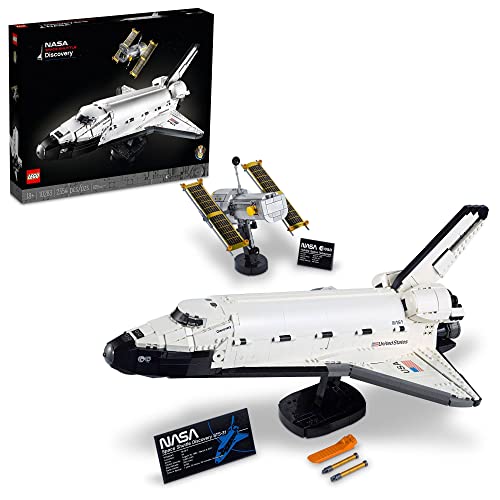
| LEGO Icons NASA Space Shuttle Discovery 10283 | Builders who want a long, detailed brick project with a second model included | 2,354 pieces, Hubble Telescope included |
How to Choose
Decide Between a Launch Stack and an Orbiter Alone
The first fork in this category is what the finished model actually shows. A launch configuration kit builds the orbiter attached to its external tank and twin booster rockets, standing vertically the way the vehicle sat on the pad. An orbiter-only kit builds the shuttle in flight or landing pose, usually lying flat or mounted on a stand. Neither is better, but they display very differently: a vertical stack needs height clearance, while a long orbiter needs shelf depth. Decide which silhouette you want before comparing anything else, because no amount of detail makes up for a model that does not fit the space you planned for it.
Match the Build Format to Your Tools and Patience
Shuttle kits come in three broad formats, and each asks something different of the builder. Etched steel kits are folded and tabbed together from flat sheets, need no glue or solder, but reward steady hands and tweezers. Plastic kits need cement and paint, and the white tile finish that makes a shuttle look right takes careful masking. Brick kits need nothing but time and table space, and the instructions break the work into numbered bags. A builder who enjoys painting will find a brick kit flat, while a builder who hates paint will stall on a plastic kit. Choose the format you will actually finish.
Check the Finished Dimensions, Not Just the Scale Number
Scale figures only help if you translate them into real shelf space. A 1:342 launch model stands under seven inches tall, which suits a desk or a bookcase cubby. A large brick orbiter can run past twenty inches in length, which rules out most standard shelves and pushes you toward a dedicated display surface. Measure the shelf, cabinet or desk corner first, then read the assembled dimensions on the listing and leave a margin for stands and plaques. Builders often check length and forget height, which is exactly the measurement that matters for a vertical launch stack under a cabinet.
Confirm Which Orbiters the Kit Can Represent
Many shuttle kits are not locked to a single vehicle. Metal kits may include nameplates for several orbiters, and plastic kits often carry decal sheets covering much of the fleet, sometimes including Enterprise, which never flew in space. If you care about a specific mission or a specific orbiter, read the listing for the names it actually includes before ordering. This matters most for gifts: a recipient who watched Discovery fly will notice if the finished model can only wear Atlantis markings. It also matters for accuracy, because some kits pair one orbiter name with details from another.
The 2 Best Options
Metal Earth Premium Series Space Shuttle Launch Kit
This kit builds the shuttle in its launch configuration, orbiter mounted on the external tank between the two boosters, from three laser etched steel sheets. Nothing is glued or soldered; parts are folded and joined with small tabs, so the work is closer to careful origami in metal than to a traditional plastic build. At 1:342 scale the finished stack is compact enough for a desk, and the set includes nameplates for four orbiters, so the builder chooses which vehicle the stack represents at the very end of the build.
Specs
- Brand: Metal Earth (Fascinations), Premium Series
- Scale: 1:342, as listed
- Material: laser etched steel, 3 sheets
- Pieces: 92, as listed
- Assembled size: 3.54 x 4.13 x 6.70 inches, as listed
- Difficulty: moderate, as listed
- Recommended age: 14 years and up, as listed
- Assembly: no glue or solder needed, as listed
- Includes nameplates for Atlantis, Discovery, Endeavour and Enterprise
Best for: Desk display builders who want the complete launch stack in a small footprint.
Watch out for: The steel tabs are small and unforgiving of repeated bending, so check the listing photos for the sheet layout and plan on using tweezers before you start.
ASIN: B08X9Q9F13
LEGO Icons NASA Space Shuttle Discovery 10283
This is the large brick option: a 2,354 piece build of Discovery that also includes a model of the Hubble Space Telescope, recreating the STS-31 deployment mission. The listing highlights a payload bay, elevons and a detailed cockpit, and the finished orbiter runs over twenty inches long, so it reads as a centerpiece rather than a shelf filler. Because it is a brick build there is no paint, no glue and no masking, which makes it the most forgiving route to a big, clean looking shuttle for builders who prefer construction over finishing work.
Specs
- Brand: LEGO, Icons line
- Set number: 10283, as listed
- Pieces: 2,354, as listed
- Subject: Space Shuttle Discovery with Hubble Space Telescope
- Assembled size: over 8.5 inches high, 21 inches long and 13.5 inches wide, as listed
- Manufacturer recommended age: 18 years and up, as listed
- Features named on the listing: payload bay, elevons and cockpit
Best for: Adult builders who want a long, absorbing project and a large finished display piece.
Watch out for: This set was retired by the manufacturer, so listings may come from marketplace sellers; check the seller, the set number 10283 and that the box is sealed before ordering.
ASIN: B08STQBXN5
Which One Fits Your Situation
You Have a Small Desk or One Bookcase Shelf
Choose the Metal Earth launch kit. Its finished stack stands under seven inches tall and takes up very little width, so it fits where a long orbiter cannot. The vertical launch pose also reads clearly at small size, because the tank and boosters give the silhouette height and contrast that a tiny flat orbiter would lose. It is the only pick here that works in a cubby or beside a monitor.
You Want a Weekend Spanning Project, Not an Evening Build
Choose the LEGO Discovery set. More than two thousand pieces spread naturally across several long sessions, and the Hubble model gives the project a second, distinct phase once the orbiter is done. Builders who enjoy steady, instruction led construction without paint or glue will get the most from it. If your free time comes in short bursts, the bagged stages also make it easy to stop and resume cleanly.
You Are Buying a Gift for a Space Enthusiast
Start with the Metal Earth kit if the recipient likes working with their hands and has the patience for small parts, since the finished stack looks striking and the orbiter nameplates add a personal choice to the build. Choose the LEGO set if the recipient prefers a substantial, guided project they can build over several evenings, or if small metal tabs would frustrate them. Either way, confirm the recipient has display space before choosing the larger set.
You Care About a Specific Orbiter or Mission
The Metal Earth kit lets the builder pick among Atlantis, Discovery, Endeavour and Enterprise nameplates at the end of the build, which suits collectors who want a particular name on the stack. The LEGO set is fixed to Discovery and specifically to the Hubble deployment mission, which is the right choice if that mission is the one you want to commemorate. Match the kit to the story you want the model to tell.
Common Mistakes
- Assuming every shuttle kit needs glue and paint, then ordering a steel or brick kit with the wrong expectations, or the reverse: buying a plastic kit without budgeting for cement, paint and masking supplies.
- Reading the scale number and skipping the assembled dimensions, which is how builders end up with a vertical launch stack that does not fit under the shelf above it.
- Forgetting that some kits represent the orbiter alone while others build the full launch stack, so the finished model shows a completely different configuration than expected.
- Overlooking which orbiter names a kit can actually carry, and discovering after the build that the markings for the intended vehicle are not in the box.
- Bending etched steel tabs back and forth to adjust a fit, which weakens the metal until the tab snaps and the joint can no longer be closed neatly.
Frequently Asked Questions
Do these shuttle kits actually fly or move like an RC model?
No. Despite the way this category is sometimes searched, the kits in this guide are static scale display models. The Metal Earth kit folds together from steel sheets and the LEGO set is a brick build; neither has a motor, a radio or any flight function. If a listing for any shuttle kit claims powered flight, read it very carefully, because that would be a different product type entirely from the scale kits covered here.
Which kit is better for a first time model builder?
The LEGO set is the gentlest starting point, because the instructions are staged, no tools or paint are required, and a mistake is fixed by pulling pieces apart. The Metal Earth kit needs no glue either, but its small steel tabs demand patience and tweezers, so it suits a careful beginner rather than a casual one. A traditional plastic shuttle kit, with cement and a large white paint finish, is the hardest of the three formats to start with.
How long does each build take?
Build time depends on the format more than the subject. The Metal Earth launch kit is a focused project of 92 pieces that most builders finish in a small number of sittings, though the tab work cannot be rushed. The LEGO Discovery set holds 2,354 pieces and is realistically a multi session project spread over several evenings. Neither listing promises a specific completion time, so treat any hour figure in a product title as a rough guide rather than a guarantee.
Can the finished models be displayed without a case?
Yes, both picks are designed as display pieces and can sit on an open shelf or desk. The steel launch model is light and stable on its base, while the brick orbiter is a large, solid build. The practical concerns are dust and sunlight rather than structure: a white orbiter shows dust quickly, and prolonged direct sun can fade printed or applied markings. A covered shelf or a simple dusting routine keeps either model looking clean.



Write Your Review
No reviews yet. Be the first to share your experience!