
Our Short List of 3

- Best for: A complete reline of a daily driver using the standard six diameters
- Material: Silicone
- Hose inner diameters: 1/8 in (3.18 mm), 5/32 in (4 mm), 3/16 in (4.76 mm), 1/4 in (6.35 mm), 5/16 in (7.94 mm), 3/8 in (9.53 mm)
- Length: 5 ft per hose, 6 hoses
- Wall thickness: 3 mm

- Best for: Engines with many branched vacuum circuits that need fresh tees, joiners and reducers throughout
- Material: Silicone hoses with nylon connectors
- Hose inner diameters: 1/8 in, 5/32 in, 3/16 in, 1/4 in, 5/16 in, 3/8 in
- Length: 5 ft per hose, 6 hoses
- Nominal wall thickness: 3 mm
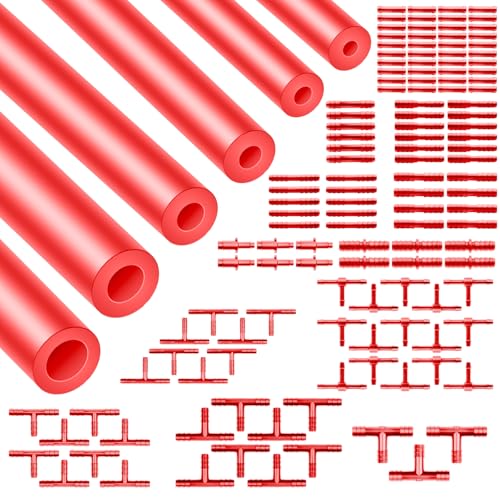
- Best for: Project and show builds where color-coded lines make future leak tracing faster
- Material: Silicone
- Hose inner diameters: 1/8 in, 5/32 in, 3/16 in, 1/4 in, 5/16 in, 3/8 in
- Length: 5 ft per hose, 6 hoses
- Nominal wall thickness: 3 mm
All 4 Picks at a Glance
| Product | Specs | Action |
|---|---|---|
| OFBAND Multipurpose Vacuum Line Kit |
| Check price on Amazon |
| Easily Silicone Vacuum Tubing Hose Line Kit |
| Check price on Amazon |
| Shineyoo Red Vacuum Hose Kit |
| Check price on Amazon |
 Boombamo Vacuum Hose Automotive Kit |
| Check price on Amazon |
A rough idle, a faint hiss under the hood and heater controls that ignore you usually trace back to the same cheap culprit: rubber vacuum lines that have hardened, cracked at the ends or split where they bend. The real decision is not whether to replace them, but which kit covers every diameter on your engine with hose that survives bay heat, because one missed size or one soft hose that collapses under vacuum leaves the leak hunt unfinished.
The four kits below serve distinct buyers: owners relining a daily driver end to end, restorers who want a factory-style black finish, turbo owners rerouting boost control plumbing, and project-car builders who color-code every run. Each pick was chosen from the hose material, inner diameter range, wall thickness and connector count printed on its own Amazon listing, and every kit pairs assorted vacuum hoses with the fittings needed to join them.
Quick Picks
As an Amazon Associate we earn from qualifying purchases
| Product | Best for | Key spec from title |
|---|---|---|
| OFBAND Multipurpose Vacuum Line Kit | A full engine-bay reline with the standard six sizes | 6 hoses plus 64 connectors, 130 PSI max |
| Easily Silicone Vacuum Tubing Hose Line Kit | Branch-heavy systems with many tees and reducers | 115 nylon connectors included |
| Shineyoo Red Vacuum Hose Kit | Color-coding vacuum runs on a project build | 128 color-matched connectors in 12 sizes |
| Boombamo Vacuum Hose Automotive Kit | Clean, square cuts during a turbo reline | 113 connectors plus a tube cutter |
How to Choose
Silicone or Rubber, and the Heat Rating That Matters
Original vacuum lines are usually EPDM rubber, which is cheap and adequate until years of heat cycles turn it brittle at the barbs. Silicone handles engine-bay temperatures far longer and stays flexible, which is why every kit here uses it. Check the temperature range printed on the listing rather than assuming: ratings differ between brands, and a hose routed near a turbo or exhaust manifold lives a harder life than one clipped along a fender. If your repair sits beside serious heat, pick the kit whose stated range leaves the most headroom.
The Inner Diameters the Kit Actually Covers
Vacuum hose is sized by inner diameter, and a typical engine mixes several: small lines to sensors and actuators, mid sizes to the brake booster area and larger runs to reservoirs. Most cars draw from the same pool of 1/8, 5/32, 3/16, 1/4, 5/16 and 3/8 inch lines, which is exactly the spread these six-piece kits carry. Before ordering, pull two or three of your old lines and measure the nipples they slide onto. A kit missing the one size your engine uses most turns a Saturday repair into a second order and another wait.
Total Length and the Fittings in the Box
Five feet per size sounds generous until a reroute takes the long way around the bay, so count your longest run before assuming one kit finishes the car. The connectors matter just as much: straight joiners extend a line, tees branch one source to two devices, and reducers step between sizes when a previous owner improvised. Kits here range from 64 to 128 connector pieces, and the bigger assortments earn their keep on older engines where brittle plastic tees snap the moment you touch them. A bundled tube cutter also beats a utility knife for square ends.
Wall Thickness and Collapse Resistance
A vacuum hose works under suction, so a thin, soft wall can suck flat at idle and starve the device it feeds, creating a fault that appears and disappears with rpm. The kits below use a 3 millimeter wall, which is the common defense against collapse on small-diameter silicone lines. Thicker is not automatically better, though: an overly stiff hose fights tight bends and can pull off short barbs. Match the wall to the job, route with gentle curves, and push every end fully home so the barb ridges, not friction alone, hold the seal.
The 4 Best Options
OFBAND Multipurpose Vacuum Line Kit
- Best for: A complete reline of a daily driver using the standard six diameters
- Material: Silicone
- Hose inner diameters: 1/8 in (3.18 mm), 5/32 in (4 mm), 3/16 in (4.76 mm), 1/4 in (6.35 mm), 5/16 in (7.94 mm), 3/8 in (9.53 mm)
- Length: 5 ft per hose, 6 hoses
- Wall thickness: 3 mm
A complete reline of a daily driver using the standard six diameters
Silicone vacuum hose is for air and water duty, not fuel or oil lines, and the largest size here is 3/8 in ID, so measure any bigger booster line before ordering
This is the straightforward full-reline kit: six black silicone hoses in the standard diameter spread, 64 connectors for the joins, and a stated temperature range that covers ordinary engine-bay duty. It suits the owner who found cracked lines during other work and wants one box that replaces all of them without sorting out a separate fittings purchase. The black finish keeps a stock appearance, the 130 PSI maximum pressure rating sits comfortably above anything a vacuum circuit produces, and the connector count is enough for a typical bay without paying for a huge assortment you may never open.
Easily Silicone Vacuum Tubing Hose Line Kit
- Best for: Engines with many branched vacuum circuits that need fresh tees, joiners and reducers throughout
- Material: Silicone hoses with nylon connectors
- Hose inner diameters: 1/8 in, 5/32 in, 3/16 in, 1/4 in, 5/16 in, 3/8 in
- Length: 5 ft per hose, 6 hoses
- Nominal wall thickness: 3 mm
Engines with many branched vacuum circuits that need fresh tees, joiners and reducers throughout
The listing gives no headline pressure or temperature figure for this kit, so confirm the stated ratings on the product page if your lines run close to a turbo or manifold
Where the Easily kit separates itself is the fittings box: 115 nylon connectors alongside the six silicone hoses, the deepest assortment in this group. That depth matters on engines whose vacuum diagrams branch repeatedly, with tees feeding the charcoal canister, climate doors and cruise control from shared sources. Every branch you rebuild needs a sound connector, and old nylon turns fragile with age. The hoses themselves follow the familiar pattern of five-foot lengths in the six common diameters with a 3 millimeter wall, and the black color keeps the finished bay looking unmodified.
Shineyoo Red Vacuum Hose Kit
- Best for: Project and show builds where color-coded lines make future leak tracing faster
- Material: Silicone
- Hose inner diameters: 1/8 in, 5/32 in, 3/16 in, 1/4 in, 5/16 in, 3/8 in
- Length: 5 ft per hose, 6 hoses
- Nominal wall thickness: 3 mm
Project and show builds where color-coded lines make future leak tracing faster
This listing is the red variant; the same brand sells other colors under separate listings, so confirm the color on the page before ordering if your build needs a specific one
Shineyoo builds the same six-size silicone spread in red and matches it with 128 connectors in 12 sizes, the largest count here, with the fittings color-matched to the hose. On a project car that logic is practical, not cosmetic: colored runs are easier to trace during a leak hunt, and a connector assortment this wide covers odd step-downs between devices. The hoses carry a 3 millimeter wall and a 130 PSI maximum pressure figure, in line with the group. Choose it when the engine bay is a long-term build you will service repeatedly and want to read at a glance.
Boombamo Vacuum Hose Automotive Kit
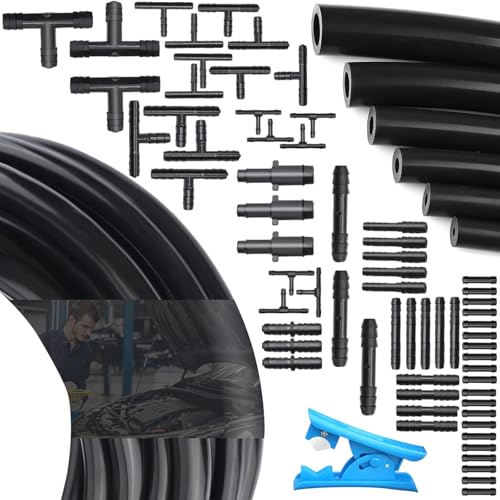
- Best for: Turbo owners relining boost control plumbing who want clean cuts without buying a cutter separately
- Material: Silicone rubber
- Hose inner diameters: 1/8 in, 5/32 in, 3/16 in, 1/4 in, 5/16 in, 3/8 in
- Length: 5 ft per hose, 6 hoses
- Maximum pressure: 130 PSI
Turbo owners relining boost control plumbing who want clean cuts without buying a cutter separately
Five feet per size can run short on a full reroute of a larger engine, so measure your longest run first and plan joins with the included connectors if it exceeds that length
Boombamo adds the tool the other kits leave out: a tube cutter packed with six silicone rubber hoses and 113 connectors across 12 sizes. Square cuts are not a nicety on vacuum work, because an angled end rocks on its barb and leaks at one edge, and the cutter makes every end square without crushing the wall. The listing also names the wider jobs this class of hose takes on, from automotive repair to custom turbo and intercooler pipe fabrication, which fits owners whose vacuum reline is part of a larger forced-induction refresh rather than a standalone fix.
Which One Fits Your Situation
You Are Chasing a Rough Idle and a Hiss
Start with the OFBAND kit. A leak hunt usually ends with several lines replaced at once, because disturbing one brittle hose cracks its neighbor, and this box covers the six standard diameters with enough connectors for a typical bay. Its black finish keeps the repair invisible, and the stated temperature range suits ordinary under-hood routing on a daily driver.
Your Turbo Build Needs Every Line Redone
Pick the Boombamo kit. Boost control plumbing lives on tees and step-downs, and its 113 connectors across 12 sizes cover that branching, while the bundled cutter keeps each end square on short solenoid barbs. The listing explicitly names turbo and intercooler fabrication among its uses, which matches the heat and routing demands of a forced-induction bay.
You Maintain Several Cars at Home
Choose the Easily kit for the shelf. The 115-connector assortment is the deepest here, and a home garage that sees different makes will burn through tees and reducers faster than hose. Six five-foot hoses in the standard diameters cover most of what rolls in, and the leftover fittings stay useful for the next car, the next leak and the next broken plastic tee.
You Are Building a Project Car You Will Service for Years
Take the Shineyoo kit. Color-matched red hoses and connectors turn the vacuum diagram into something you can follow by eye, which pays off every time you trace a fault or reroute a device. The 128-piece connector set is also the widest here, so unusual branches on a modified engine rarely stall the job for want of one fitting.
Common Mistakes
- Using silicone vacuum hose on a fuel or oil line, when these kits are rated for air and water duty only
- Ordering by outer diameter instead of inner diameter, then finding every hose loose or impossible to fit
- Reusing old plastic tees and connectors that crack during removal and leak from the moment the new hose goes on
- Cutting hose ends at an angle with a knife, leaving one edge of the barb exposed as a permanent leak path
- Assuming five feet of each size finishes any car, without measuring the longest run before the old lines come off
Frequently Asked Questions
Can silicone hose replace every rubber vacuum line on my car?
For air and vacuum circuits, generally yes, provided the inner diameter matches the original line and the routing keeps the hose clear of sharp edges and extreme heat. Silicone lasts longer under the hood than rubber. It is not a substitute for fuel, oil or coolant hose, which need materials rated for those fluids, so leave those lines to their correct hose types.
Which inner diameter do most vacuum lines use?
Most engines draw from six common sizes: 1/8, 5/32, 3/16, 1/4, 5/16 and 3/8 inch. Small sensor and actuator lines cluster at the lower end, while reservoir and booster-related runs use the larger sizes. That is why assortment kits bundle all six. Measure the nipple your old hose came off rather than guessing from the hose itself, since hardened rubber shrinks and stretches with age.
Do vacuum hoses need clamps to seal properly?
Small vacuum lines usually seal on barbed fittings without clamps, because the circuit carries suction rather than pressure and the barb ridges grip the hose wall. A clamp helps on a smooth nipple, a stretched hose, or a line that also sees boost pressure on a turbo engine. If a line slips off with light tugging, fix the fit instead of relying on a clamp alone.
How do I find which vacuum line is leaking?
Work one line at a time with the engine idling. Listen for hissing near tees and ends, then pinch each hose briefly with pliers; a change in idle quality points at the circuit you just closed. Inspect the last two inches of every line first, since heat and bending crack hose at the barb. Replacing a whole run is usually faster and more reliable than patching a single split section.






Write Your Review
No reviews yet. Be the first to share your experience!