
Best Chiropractic Neck Pillows for Better Alignment
The best chiropractic neck pillows are the ones that keep your head level with your spine without forcing your neck into a fixed position: choose a contoured cervical pillow with the correct loft for your sleeping position, medium-to-firm support, breathable materials, and a size that matches your shoulders and body frame.
- Best Chiropractic Neck Pillows for Better Alignment
- Quick picks by sleeping situation
- Head-to-head comparison
- How loft and contour shape affect alignment
- Choosing the right pillow for your body size
- Decision matrix: which design fits your situation?
- Material and firmness: what matters after the first week
- Ownership, cleaning, and durability realities
- Frequently asked questions
Quick picks by sleeping situation
- Best for back sleepers: A contoured cervical foam pillow with a lower front edge and a raised neck roll, such as the Core Products Tri-Core Cervical Support Pillow.
- Best for side sleepers: A firm, high-loft contour pillow with a broad shoulder-supporting surface, such as the Therapeutica Sleeping Pillow in the appropriate size.
- Best adjustable option: The Coop Sleep Goods Original Adjustable Pillow, because shredded memory foam lets you remove or add fill instead of committing to one fixed height.
- Best for pressure-sensitive sleepers: A slow-response, contoured memory-foam pillow such as the TEMPUR-Neck Pillow, provided its fixed height matches your shoulder width.
- Best for hot sleepers: A latex cervical pillow or a ventilated foam model with a washable, moisture-managing cover; latex generally rebounds faster and allows more airflow than dense solid memory foam.
Head-to-head comparison
| Pillow or type | Typical loft | Firmness | Approximate weight | Best position | Breathability and fit notes |
|---|---|---|---|---|---|
| Core Products Tri-Core Cervical Support Pillow | About 3.5–5 inches, depending on size and edge used | Medium-firm to firm | About 2–3 lb | Back and combination sleepers | Fiber-filled core with a shaped center; relatively breathable, but the contour can feel narrow for broad shoulders |
| Therapeutica Sleeping Pillow | About 4.5–6.5 inches, depending on size | Firm | About 2–3 lb | Back and side sleepers | Highly structured contour; size selection matters more than with a conventional pillow |
| TEMPUR-Neck Pillow | About 3–4.75 inches, depending on profile | Medium-firm to firm | About 3–4 lb | Back and side sleepers | Dense pressure-relieving foam; durable, but warmer and less adjustable than shredded-fill designs |
| Coop Original Adjustable Pillow | Roughly 3–8 inches after adjustment | Medium, adjustable | About 3–4 lb | All positions | Airier than a solid foam block; useful for changing loft, though it has less pronounced cervical shaping |
| Ventilated latex cervical pillow | About 3–5 inches | Medium-firm to firm | About 2–3 lb | Back and side sleepers | Springy and relatively cool; may transfer more movement and cannot be finely adjusted |
Dimensions and weights vary by size and revision, so use these figures as comparison ranges rather than exact specifications. A pillow that is technically supportive can still be unsuitable if its height does not fill the space between your shoulder and head.
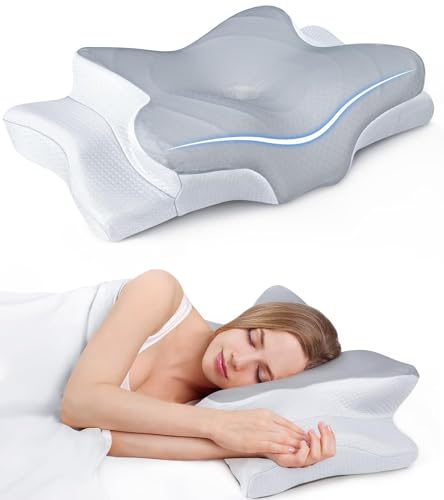
Ultra Pain Relief Cooling Pillow for Neck Support, Adjustable Cervical Pillow Cozy Sleeping, Odorless Ergonomic Contour Memory Foam Pillows, Orthopedic Bed Pillow for Side Back Stomach Sleeper
Included for 'Best Chiropractic Neck Pillows for Better Alignment' because the listing specifies Adjustable Cervical Pillow Cozy Sleeping and Odorless Ergonomic Contour Memory Foam Pillows, details this guide uses to compare options.
View on Amazon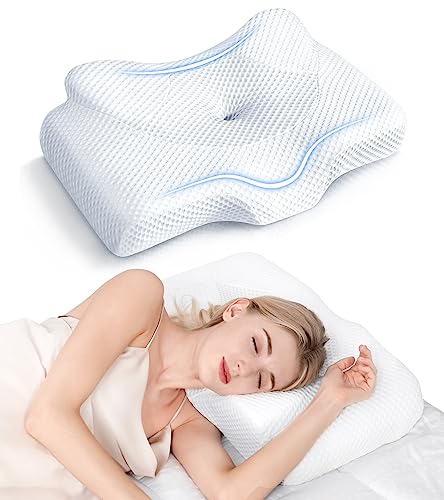
Osteo Cervical Pillow for Neck Pain Relief, Hollow Design Odorless Memory Foam Pillows with Cooling Case, Adjustable Orthopedic Bed Pillow for Sleeping, Support for Side Back Sleepers
Included for 'Best Chiropractic Neck Pillows for Better Alignment' because the listing specifies Hollow Design Odorless Memory Foam Pillows with Cooling Case and Adjustable Orthopedic Bed Pillow for Sleeping, details this guide uses to compare options.
View on Amazon
Ergonomic Cervical Pillow for Neck Pain Relief Back & Side Sleepers FULL WH
Included for 'Best Chiropractic Neck Pillows for Better Alignment' as a relevant option in this category; details come from the product listing.
View on Amazon
Cervical Pillow for Neck Pain Relief, Contour Memory Foam Pillows for Sleeping, Ergonomic Pillow Cooling Pillow Bed Pillow Neck Support for Side Back Stomach Sleepers (Blue)
Included for 'Best Chiropractic Neck Pillows for Better Alignment' because the listing specifies Contour Memory Foam Pillows for Sleeping, details this guide uses to compare options.
View on AmazonHow loft and contour shape affect alignment
Loft is the pillow’s height when occupied, not merely its measurement on a packaging label. Back sleepers usually need a lower head section, often around 3–4 inches, with a slightly higher neck-support area. Too much height pushes the chin toward the chest. Too little allows the head to fall backward.
Side sleepers normally need more loft because the shoulder creates a larger gap between the mattress and the side of the head. A useful starting range is approximately 4–6 inches, but shoulder width, mattress softness, and body size can move that target considerably. On a soft mattress, the shoulder sinks and may require less loft than it would on a firm mattress.
Combination sleepers often do better with a dual-height contour, a gusseted pillow, or adjustable fill. A pronounced central groove can help keep a back sleeper’s head centered, while a broad side section provides room when turning. However, a deep contour is not automatically better: if you frequently sleep on your stomach, it may twist your neck rather than support it.
Choosing the right pillow for your body size
Use shoulder width as a practical fit check. Measure approximately from the outer edge of one shoulder to the side of your neck, then compare that gap with the pillow’s usable side-sleeping height. This is not a medical formula, but it is more informative than choosing a pillow by bed size.
- Small frames or narrow shoulders: Look for a low profile around 3–4 inches, a compact contour, or adjustable fill that can be reduced.
- Average frames: Start with approximately 4–5 inches for side sleeping and 3–4 inches for back sleeping.
- Broad shoulders or firm mattresses: Consider 5–6 inches for side sleeping, a wider surface, and firmer material that will not collapse under the head.
- Heavier heads or larger frames: Prioritize dense foam, latex, or a reinforced gusset. Soft, low-density fiber may flatten quickly.
Lie in your usual position for at least 10 minutes during a trial. Your nose should point roughly toward the center of your chest rather than toward the ceiling or mattress, and your neck should feel supported without a hard edge pressing into it.
Decision matrix: which design fits your situation?
| Your situation | Most suitable design | Why | Main compromise |
|---|---|---|---|
| Budget under about $40 | Basic fiber cervical pillow or adjustable polyester-fill pillow | Lower entry cost and easier replacement | More compression and less consistent neck support |
| First ergonomic pillow | Adjustable shredded-foam model | Loft can be changed gradually | Requires several nights of adjustment |
| Side sleeping most nights | Firm, broad, high-loft contour | Fills the shoulder-to-neck gap | Can feel too tall when rolling onto your back |
| Hot bedroom or night sweats | Ventilated latex or open-cell foam with a washable cover | Improves airflow and moisture management | Latex has a springier feel; foam may still retain heat |
| Frequent travel | Compact inflatable or compressible cervical pillow | Small packed size | Usually less stable than a full-size home pillow |
| Neck position changes frequently | Dual-height or adjustable-fill pillow | Accommodates back-to-side movement | May lack the precise contour of a fixed cervical model |
Material and firmness: what matters after the first week
Memory foam provides predictable support and spreads pressure, but dense foam can feel warm and may develop a permanent impression over time. Latex is more buoyant, cooler, and quicker to recover after movement; its springiness is helpful for repositioning but may not suit people who prefer a cradled sensation. Fiber and shredded-foam pillows are easiest to reshape and wash around, but they require periodic fluffing and can develop low spots.
For most adults, medium-firm support is a safer starting point than either a very soft or extremely rigid pillow. A pillow that feels luxurious in the hand may compress too far under the head. Conversely, a very firm orthopedic contour can create pressure at the base of the skull if its curve does not match your neck.
Ownership, cleaning, and durability realities
The cover usually wears out before the foam does. Look for a removable, machine-washable cover and use a second washable protector to reduce sweat and skin-oil buildup. Do not machine-wash solid memory foam or latex unless the manufacturer specifically permits it; moisture trapped inside can cause odor, deterioration, or mold growth.
- Air a new foam pillow in a well-ventilated room for 24–72 hours if it has a manufacturing odor.
- Wash the cover according to its label, typically every one to two weeks if used without a protector.
- Rotate or reverse a two-sided pillow every few months when the design allows it.
- Check for a lasting valley, cracked foam, lumpy fill, or loss of height. These are signs that support has changed.
- Replace the pillow when adjustment no longer restores its loft, commonly after about two to four years for quality foam and sooner for inexpensive fiber fill.
A common mistake is adding a second pillow beneath a contoured model. That can raise the entire head and undo the intended neck angle. Another is judging fit after only one night; allow several nights, but stop using a design that causes persistent pain, numbness, weakness, headaches, or worsening symptoms.
Frequently asked questions
Are chiropractic neck pillows medically necessary?
No. They are support products, not a substitute for diagnosis or treatment. If neck discomfort is persistent, follows an injury, or is accompanied by radiating pain, numbness, weakness, severe headache, or other concerning symptoms, consult a qualified healthcare professional.
Should a cervical pillow feel hard?
Not necessarily. It should resist excessive compression while distributing pressure comfortably. The correct firmness depends on body size, sleeping position, mattress firmness, and personal tolerance.
Can stomach sleepers use these pillows?
Many fixed cervical pillows are poorly suited to stomach sleeping because their contour can hold the neck in rotation. A very low, soft, adjustable design is generally less restrictive, though changing sleep position may be worth discussing with a professional if stomach sleeping aggravates symptoms.









Write Your Review
No reviews yet. Be the first to share your experience!