
Finding the best cold air intake duct means choosing the tubing that carries cool outside air into the engine bay, and the duct is the part of the intake system that does the actual routing. A good duct bends around obstacles without kinking, holds its shape under heat, and seals tightly at both ends so hot engine-bay air stays out. A poor duct collapses under suction, cracks with heat cycling, or slips off its fitting on a rough road. This guide compares flexible duct hose, silicone elbows, and couplers that route cold air to an airbox or intake tube, explains how to measure diameter and length, and lays out who each duct type suits best. Every product below is a duct or duct fitting made for cold air intake routing, so the comparison stays focused on ducting rather than full intake kits or filters.


How to Choose
Inside diameter
The duct inside diameter must match the airbox inlet, the intake tube, or the mounting plate it connects to. Common sizes include three-inch and four-inch diameters, and a duct that is too small restricts airflow while a duct that is too large will not seal. Measure the outside diameter of the fitting the duct slides over, and choose a duct sized to fit it snugly with a clamp.
Length and routing
Measure the route from the cold air source to the airbox, following the bends the duct must take, and add length for the curves and for the ends that slide over the fittings. Flexible duct hose can be cut to length in many cases, while molded silicone elbows come in fixed lengths. A duct that is too short will pull off its fitting, and a duct that is too long will sag and kink, so measure twice and keep the run as short and straight as the engine bay allows.
Material and heat tolerance
Duct materials handle heat differently: PVC flex hose suits moderate temperatures near the front of the engine bay, while silicone couplers and elbows tolerate higher heat near the engine and turbo piping. Check the temperature rating in the product specifications and compare it with the hottest point on the planned route. A duct routed near exhaust components needs a higher rating than one routed along the inner fender.
Flexibility and kink resistance
A duct that must bend sharply needs a design that holds its shape under the bend. Memory-flex hose keeps its position after bending, and reinforced silicone holds its round shape under suction. Smooth-bore ducting flows better than deeply corrugated ducting, but corrugated hose bends more easily. Balance the bend radius against the airflow path, and avoid tight bends that flatten the duct.
Fittings and clamps
A duct is only as secure as its connections, so check what fittings and clamps come with it. Threaded couplers let flex hose sections join together for longer runs, mounting plates anchor the duct to the bodywork, and T-bolt clamps hold silicone couplers tighter than standard worm clamps. Plan the full fitting list before ordering, and keep spare clamps in the toolbox.
Durability and inspection
Ducting lives in a harsh environment of heat, vibration, and road debris, so inspect it regularly for cracks, soft spots, and loose clamps. A duct that looks fine from above can be worn thin where it rubs against a bracket. Choose materials that resist the fluids they may meet, and remember that silicone hose is not compatible with fuel or oil, so keep it clear of leaks.
Vehicle-specific or universal
Universal duct hose and couplers fit many builds with careful measurement, while vehicle-specific intake hoses match one model exactly. Universal parts give flexibility for custom builds, and vehicle-specific parts give a guaranteed fit for a stock replacement. Decide which matters more for your project before comparing individual products.
Top Picks
Spectre Performance 8741 Black 3-Inch Air Duct Hose
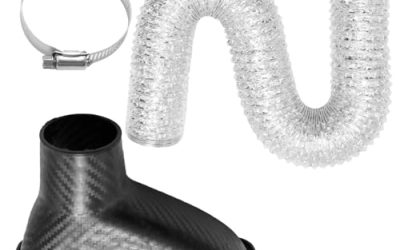
The Spectre Performance 8741 is a black three-inch air duct hose made to attach directly to an airbox inlet, plenum, intake tube, or mounting plate with a three-inch outside diameter, bringing cooler air into the engine. The kit includes 28 inches of ducting and two threaded PVC couplers, and multiple pieces can be threaded together for longer runs. The memory-flex design helps the hose retain its position after bending, which keeps the routing stable.
Specs include a three-inch diameter, 28 inches of ducting, two threaded PVC couplers, and a memory-flex design in black PVC. The hose suits builders routing cold air to an airbox on a custom or modified intake, especially where the duct must bend around obstacles. Its main caveat is that PVC suits moderate temperatures, so route it away from exhaust components and check it for heat damage after the first long drive.
Spectre Performance 9781 Black 4-Inch 90 Degree Boot
The Spectre Performance 9781 is a black four-inch 90-degree boot made from flexible PVC, designed to turn a duct run through a right angle without kinking. The pliable material makes installation straightforward and allows custom trimming to fit the available space. It suits intake routing where the duct must turn sharply from the front of the vehicle toward the airbox.
Specs include a four-inch diameter, a 90-degree bend, flexible PVC construction, and a trimmable design. The boot suits builders who need a clean right-angle turn in a cold air duct run and who want a flexible fitting rather than a rigid elbow. Its main caveat is that a 90-degree turn always adds some airflow resistance, so keep the rest of the run as straight as possible and check the boot for flattening at the bend after installation.
Ingoulut Silicone Straight Hose 3-Inch Coupler
The Ingoulut silicone straight hose is a three-inch coupler made from four-ply reinforced silicone, supplied with stainless steel T-bolt clamps. It measures three inches long and three inches in diameter, and it works as an air intake and exhaust hose, a turbo intercooler connection, and a coolant and radiator tubing connector. The temperature range runs from minus 65 degrees Fahrenheit to 500 degrees Fahrenheit, which covers engine-bay heat with a wide margin.
Specs include a three-inch inside diameter, a three-inch length, four-ply reinforced silicone, stainless steel T-bolt clamps, and a temperature range of minus 65 to 500 degrees Fahrenheit. The coupler suits builders joining two intake pipes of the same diameter or connecting an intake tube to a throttle body. Its main caveat is that silicone hose is not compatible with fuel or oil, so keep it away from fuel lines and oil leaks, and confirm the three-inch length suits the gap before ordering.
AotoKoop 3-Inch 45 Degree Silicone Coupler
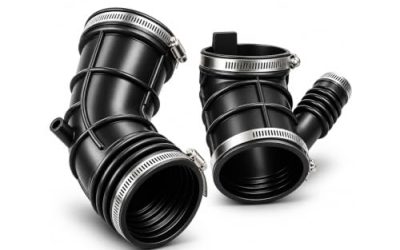
The AotoKoop 45-degree silicone coupler is a three-inch inside diameter elbow hose with a four-inch leg length, made from four-ply reinforced silicone and supplied with two T-bolt clamps. It is made for turbo intake, intercooler, and charge-air piping, and it handles temperatures from minus 76 degrees Fahrenheit to 428 degrees Fahrenheit. The 45-degree bend suits intake runs that need a gentle turn rather than a sharp right angle.
Specs include a three-inch inside diameter, a four-inch leg length, four-ply reinforced silicone, two T-bolt clamps, and a temperature range of minus 76 to 428 degrees Fahrenheit. The coupler suits builders who need a smooth angled join in an intake or intercooler run where a straight coupler cannot follow the pipe layout. Its main caveat is that the four-inch legs need enough straight pipe on each side to clamp securely, so measure the available pipe length before ordering.
Comparison Table
| Duct | Type | Diameter | Length or bend | Heat tolerance |
|---|---|---|---|---|
| Spectre 8741 | Flexible duct hose | 3 inches | 28 inches | Moderate, PVC |
| Spectre 9781 | 90-degree boot | 4 inches | 90 degrees | Moderate, PVC |
| Ingoulut coupler | Straight silicone coupler | 3 inches | 3 inches | Minus 65 to 500 F |
| AotoKoop coupler | 45-degree silicone elbow | 3 inches | 4-inch legs | Minus 76 to 428 F |
Which One Is Right for You?
If you are routing cold air from the front of the vehicle to the airbox, the Spectre 8741 flexible duct hose is the natural starting point, because it bends to follow the engine bay and joins together for longer runs. If the route needs a sharp right-angle turn, add the Spectre 9781 boot at the corner rather than forcing the flex hose into a kink. If you are joining two straight intake pipes or connecting an intake tube to a throttle body, the Ingoulut straight silicone coupler gives a heat-tolerant, clamped connection, and its T-bolt clamps hold tighter than standard clamps. If the join needs a gentle angle, the AotoKoop 45-degree elbow follows the pipe layout without the resistance of a sharp bend. Many builds use more than one of these parts together, so measure the full route, list every bend and join, and order the ducting and couplers as a set rather than one piece at a time.
Frequently Asked Questions
What diameter cold air intake duct do I need?
Match the duct inside diameter to the outside diameter of the fitting it slides over, whether that is the airbox inlet, the intake tube, or a mounting plate. Common sizes are three inches and four inches. Measure the fitting with calipers or a tape, and choose a duct that fits snugly over it with a clamp, since a loose duct leaks hot air and a tight duct will not slide on.
Can I cut flexible intake duct hose to length?
Yes, most flexible PVC duct hose can be cut to the length the route needs, and threaded couplers let sections join for longer runs. Cut the hose square so the end seals evenly against the fitting, and leave enough length for the ends to slide fully over their fittings. Keep the cut end clean, since a ragged edge can catch airflow and fray over time.
Is silicone ducting better than PVC duct hose?
Silicone tolerates higher temperatures and holds its shape under suction better than PVC, which makes it the stronger choice near the engine and turbo piping. PVC flex hose bends more easily and costs less, which makes it practical for long, cool runs along the inner fender. Choose silicone for hot, high-stress joins and PVC for cool, flexible routing, and keep silicone clear of fuel and oil.
How do I stop a cold air duct from slipping off its fitting?
Use the right clamp for the material: T-bolt clamps hold silicone couplers firmly, and hose clamps suit PVC duct hose. Slide the duct fully over the fitting, position the clamp over the fitting barb or bead, and tighten it evenly. Check the clamps after the first drive, since heat cycling can loosen a new connection, and inspect the duct at every oil change for wear where it touches brackets or bodywork.
Disclosure: As an Amazon Associate, we may earn from qualifying purchases.



Write Your Review
No reviews yet. Be the first to share your experience!