
Our Short List of 3

- Best for: bright daylight and changing light where one filter must cover it all.
- Variable ND3-ND400
- 1.5-9 stops
- High-grade optical glass
- Premium coatings
- Best for: everyday daylight video without cross artifacts at the dark end.
- Variable ND2-ND32
- 1-5 stops
- No X-cross in range
- Available in common thread sizes

- Best for: outdoor video near water or glass where glare and brightness both matter.
- 3-7 stop variable ND plus true circular polarizer in one thread
- Cuts glare off water, glass, and foliage
- Threaded mount
All 4 Picks at a Glance
| Product | Specs | Action |
|---|---|---|
| Hoya Variable ND II (ND3-ND400) |
| Check price on Amazon |
| K&F Concept Variable ND (ND2-ND32) |
| Check price on Amazon |
| Freewell Hybrid Variable ND/CPL |
| Check price on Amazon |
 Tiffen Neutral Density 0.9 (3-stop) |
| Check price on Amazon |
Video shot in bright daylight fights the camera at every step. The shutter speed climbs, motion turns choppy, and the aperture closes until the background looks sharp. A neutral density filter cuts the light reaching the sensor, so the shutter can stay near the cinematic target and the aperture can stay open for separation. The choice is not only which filter to buy, but which kind: a variable filter that dials through a range, or a fixed filter with one strength.
This guide is for video shooters who film outdoors and want smoother motion without fighting exposure. Each filter below was chosen from the strength range and glass details stated on its Amazon page. Three are variable ND filters, each one replacing a whole set of fixed strengths, while the fourth is a single fixed 3-stop filter. Match the thread size to your own lens before ordering, since common sizes run 49, 52, 58, 67, 72, and 77mm.
Quick Picks
As an Amazon Associate we earn from qualifying purchases
| Product | Best for | Key spec from title |
|---|---|---|
| Hoya Variable ND II | Widest range in one filter | Variable ND3-ND400, 1.5-9 stops |
| K&F Concept Variable ND | Everyday shooting without cross artifacts | Variable ND2-ND32, 1-5 stops |
| Freewell Hybrid Variable ND/CPL | Glare control plus ND in one | 3-7 stop variable ND plus true CPL |
| Tiffen Neutral Density 0.9 | Simple fixed strength, no dial | Fixed ND 0.9, 3 stops, ColorCore glass |
How to Choose
Variable versus fixed strength
A variable ND filter rotates to change its strength, so one filter covers the range that would otherwise need several fixed filters. That flexibility suits run-and-gun shooting, where the light changes between takes and swapping filters costs time. A fixed filter gives one strength with no dial to bump and no risk of uneven darkening, which suits controlled shoots with a known light level. Think about how often your light changes during a shoot, and choose the type that matches your pace rather than the one with the longest spec sheet. Fixed filters also stack cleanly when one strength is not enough.
Stop range and the light you shoot in
The stop range decides which light levels a filter can handle. A 1-5 stop variable covers overcast days and open shade, while a 1.5-9 stop range reaches into harsh midday sun and bright snow or sand. A 3-7 stop hybrid suits daylight exteriors where glare also matters. Match the range to the brightest conditions you shoot in, not the average ones, since a filter that tops out too early leaves the shutter climbing again. Check the stated range on the product page before ordering. Desert and snow reflect extra light, so they need the top of the range.
Thread size and lens fit
ND filters screw onto the front thread of a lens, so the thread size must match your lens exactly. Common sizes include 49, 52, 58, 67, 72, and 77mm, and the size is usually printed on the front of the lens or on the inside of the lens cap. A filter in the wrong size simply will not mount, so measure before you buy rather than guessing from the lens brand. Some shooters keep one filter size and use step-up rings, but that adds bulk and can vignette on wide lenses. Keep the size written down with your lens cap so you order the right one.
Glass quality and color shift
Cheap ND glass can tint footage green or warm, and that shift costs time in the edit. High-grade optical glass with premium coatings holds color neutral across the range, which matters most when the filter stays on for a whole shoot. Watch for the X-cross artifact too, a dark cross that appears when some variable filters are pushed to their darkest setting. A filter that states no X-cross in its range gives more usable strength at the top end, so read the product page for that claim. A filter that stays neutral saves a color-correction pass on every clip.
The 4 Best Options
Hoya Variable ND II (ND3-ND400)
- Best for: bright daylight and changing light where one filter must cover it all.
- Variable ND3-ND400
- 1.5-9 stops
- High-grade optical glass
- Premium coatings
bright daylight and changing light where one filter must cover it all.
match the thread size to your lens; check the size printed on the lens front.
The Hoya Variable ND II covers the widest range here, running from ND3 to ND400, or 1.5 to 9 stops, in a single filter. That span takes a shooter from soft morning light to harsh midday sun without swapping glass on a long shoot, which suits outdoor video where the light shifts between locations. High-grade optical glass with premium coatings keeps color neutral across the range, so footage needs less correction in the edit. The dial-by-hand rotation lets you adjust strength smoothly while the camera rolls. It is the pick when one filter must handle the brightest conditions you will meet.
Watch out for: match the thread size to your lens; check the size printed on the lens front.
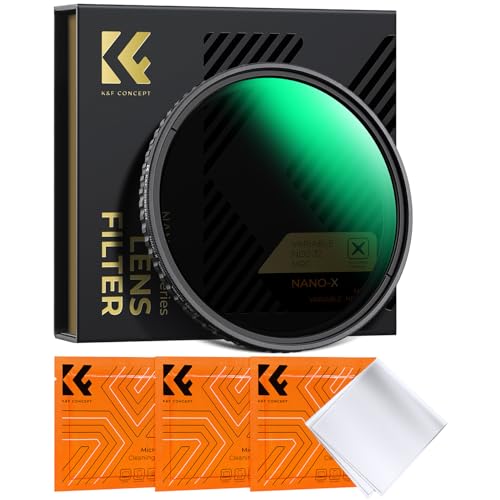
K&F Concept Variable ND (ND2-ND32)
- Best for: everyday daylight video without cross artifacts at the dark end.
- Variable ND2-ND32
- 1-5 stops
- No X-cross in range
- Available in common thread sizes
everyday daylight video without cross artifacts at the dark end.
the 5-stop ceiling may not suit harsh midday sun; check your brightest conditions.
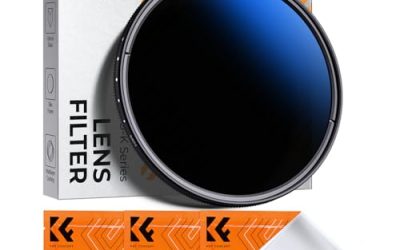
The K&F Concept variable ND covers ND2 to ND32, or 1 to 5 stops, a range that suits most everyday outdoor video without reaching into extreme brightness. Its main advantage is the claim of no X-cross in range, so the darkest settings stay usable instead of showing the dark cross that ruins some variable filters. That makes it a reliable everyday filter for shooters who want to set the strength and forget it. It comes in common thread sizes, so matching your lens is straightforward. It is the pick when you want a dependable variable filter for regular daylight shooting.
Watch out for: the 5-stop ceiling may not suit harsh midday sun; check your brightest conditions.
Freewell Hybrid Variable ND/CPL
- Best for: outdoor video near water or glass where glare and brightness both matter.
- 3-7 stop variable ND plus true circular polarizer in one thread
- Cuts glare off water, glass, and foliage
- Threaded mount
outdoor video near water or glass where glare and brightness both matter.
match the thread size to your lens; the polarizer needs rotating to find the glare angle.
The Freewell hybrid does two jobs at once, combining a 3-7 stop variable ND with a true circular polarizer in a single thread. That pairing cuts glare off water, glass, and foliage while also controlling exposure, which suits shooters filming near lakes, windows, or wet streets. The threaded mount screws onto the lens like a normal filter, so it adds no rig or adapter. It is the pick when glare is as much a problem as brightness, and carrying two filters would slow the shoot down on a busy shoot day. The 3-7 stop range covers most daylight exteriors well.
Watch out for: match the thread size to your lens; the polarizer needs rotating to find the glare angle.
Tiffen Neutral Density 0.9 (3-stop)
- Best for: controlled shoots with known light where one fixed strength is enough.
- Fixed ND 0.9
- 3 stops
- ColorCore optical glass
- Single filter
controlled shoots with known light where one fixed strength is enough.
one strength only; bright sun may need a stronger filter as well.
The Tiffen 0.9 is the only fixed filter here, giving a single 3-stop reduction with no dial to adjust and nothing to bump mid-take. That simplicity suits controlled shoots where the light level is known and the shutter target is fixed, since the exposure stays exactly where you set it for the whole scene. ColorCore optical glass keeps the image neutral, and the single-filter design means no moving parts to wear. It is the pick when you want one reliable strength and would rather change filters than risk an accidental rotation. It also suits shooters who already own other fixed strengths.
Watch out for: one strength only; bright sun may need a stronger filter as well.
Which One Fits Your Situation
You shoot in harsh midday sun
The Hoya Variable ND II is the pick when the sun is at its strongest. Its 1.5-9 stop range reaches far enough to hold the shutter near the cinematic target in bright light, while the premium coatings keep color neutral. Dial the strength by hand as clouds pass, and you avoid swapping filters between takes. Match the thread size to your lens first.
You want a dependable everyday filter
The K&F Concept variable ND suits regular daylight shooting, with a 1-5 stop range that covers overcast days and open shade. The no X-cross claim keeps the darkest settings usable, so you can set the strength and keep shooting. It comes in common thread sizes, making the lens match easy. Choose it for everyday video work.
You film near water or glass
The Freewell hybrid is the pick when glare fights you as much as brightness does. Its true circular polarizer cuts reflections off water, glass, and foliage while the variable ND controls exposure in the same thread. That combination suits lakeside, street, and window shooting. Rotate the polarizer to find the angle that kills the glare before you roll.
You prefer one fixed strength
The Tiffen 0.9 suits controlled shoots where the light is steady and the exposure is set for the whole session. Three stops of reduction with ColorCore glass gives a clean, neutral image and no dial to bump during a take. Pick it when you know your light level and want the simplest tool for the job.
Common Mistakes
- Ordering a filter in the wrong thread size and finding it will not mount on the lens.
- Pushing a variable ND to its darkest setting and getting an X-cross in the frame.
- Choosing a 5-stop ceiling for harsh midday sun and watching the shutter climb again.
- Ignoring color shift and spending extra time correcting tint in the edit.
- Buying a fixed filter for run-and-gun work and swapping glass between every take.
Frequently Asked Questions
What does an ND filter do for video?
An ND filter cuts the light reaching the sensor, so the shutter speed can stay near the cinematic target and the aperture can stay open. That keeps motion smooth and the background softly separated instead of sharp. Without one, bright daylight forces a fast shutter and choppy motion. The result looks closer to how the eye sees motion.
How do I choose the right ND strength?
Match the stop range to the brightest light you shoot in. A 1-5 stop variable covers overcast days and shade, while a 1.5-9 stop range handles harsh midday sun. A fixed 3-stop filter suits controlled light. Check the stated range on the product page first. When in doubt, pick the wider range so bright days stay covered.
What thread size ND filter do I need?
The thread size must match your lens exactly, and common sizes are 49, 52, 58, 67, 72, and 77mm. The size is usually printed on the front of the lens or inside the lens cap. Measure before ordering, since a wrong size will not mount at all. Step-up rings exist, but they add bulk and can vignette wide lenses.
Do variable ND filters cause color shift?
Some do, especially cheap glass pushed to its darkest setting, which can tint footage green or warm. High-grade optical glass with premium coatings holds color neutral across the range. Read the product page for the glass and coating claims, and check footage early in the shoot. Test the darkest setting before the shoot so surprises stay out of the footage.
Write Your Review
No reviews yet. Be the first to share your experience!