
Our Short List of 3

- Best for: diesel trucks and equipment that need a deep clean now and a maintenance dose afterwards
- Brand: Archoil
- Model: AR-FSK
- Contents: AR6400-D Diesel Fuel System Cleaner (12 oz) and AR6500 Diesel Treatment (40 oz)
- Step 1 treat rate: one 12 oz bottle treats 30 to 40 gallons of diesel
- Best for: neglected or high-mileage engines, gas or diesel, that need a staged renewal over several tanks
- Brand: Lucas Oil
- Model: 10966
- Part number: LUCA10966
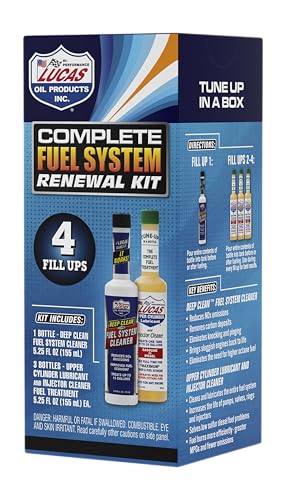
- Contents: 1 bottle of Deep Clean Fuel System Cleaner and 3 bottles of Upper Cylinder Lubricant and Injector Cleaner

- Best for: GDI gasoline owners who want preventive cleaning on a stated mileage interval
- Brand: RUN-RITE
- Manufacturer: Run-Rite
- Part number: 1501
- UPC: 850004971000
All 3 Picks at a Glance
| Product | Specs | Action |
|---|---|---|
| Archoil Diesel Fuel System Kit |
| Check price on Amazon |
| Lucas Oil Complete Fuel System Renewal Kit |
| Check price on Amazon |
| RUN-RITE G.D.I. Maintenance Kit |
| Check price on Amazon |
A single bottle of fuel system cleaner works through one tank and then it is gone, which is fine for light upkeep but a poor match for an engine that has already lost a step. A 2-step kit splits the job in two: a concentrated cleaner goes in first to attack the deposits that are already there, and a second, different formula follows to keep working after the deep clean ends. The real decision is whether those two stages match your fuel type and the way you use the vehicle.
This guide serves three groups: diesel pickup owners dealing with injector, turbo and filter deposits, drivers of gasoline direct-injection cars who want prevention on a schedule, and owners of higher-mileage vehicles that have never had a structured treatment. Every kit below was chosen from its Amazon listing and the specs the maker publishes: two distinct formulas in the box, a stated order of use, bottle sizes, the gallons each bottle treats, and the interval the maker sets between services.
Quick Picks
As an Amazon Associate we earn from qualifying purchases
| Product | Best for | Key spec from title |
|---|---|---|
| Archoil Diesel Fuel System Kit | Diesel trucks that need a deep clean first | AR6400-D 12 oz cleaner plus AR6500 40 oz treatment |
| Lucas Oil Complete Fuel System Renewal Kit | A four-fill-up renewal for neglected engines | One Deep Clean bottle plus three lubricant cleaner bottles |
| RUN-RITE G.D.I. Maintenance Kit | Preventive care for gasoline GDI engines | Sledgehammer plus Fuel Shot, used every 7,500 miles |
How to Choose
What Each of the Two Stages Actually Does
A 2-step kit is defined by the split between its stages, so read the box as two products, not one. The first stage is the worker: a concentrated cleaner dosed into one tank to loosen injector deposits and the varnish that builds up through the fuel system. The second stage is the keeper: a milder treatment, dosed later or at every fill-up, that holds the clean and protects parts the first stage cannot reach for long. If both bottles carry the same formula and the same directions, you are looking at a twin pack, not a two-step process, and it should be priced and judged that way.
Fuel Type and Injection Design Come First
Kits are built for one fuel, and the wrong match wastes the whole box. Diesel kits lean on cetane and lubricity chemistry and often name turbo and particulate filter deposits among their targets, while gasoline kits are blended for spark-ignition engines and, in the better cases, name direct injection on the listing. Injection design matters just as much: a tank additive travels with the fuel, so it can reach injectors on any engine, but on a direct-injection gasoline engine it never washes the backs of the intake valves. A kit that claims valve cleaning should say how that stage reaches them.
Treat Rates, Intervals and the Real Cost in Time
The second stage only works if its schedule fits your life, so compare the numbers on each listing before the brand names. Note how many gallons the deep-clean bottle treats, because a big truck tank can swallow a dose meant for a compact car. Then look at how the follow-up stage is dosed: some kits ask for a small amount at every fill-up, some set a mileage interval, and some simply line the bottles up across consecutive tanks. A kit whose second stage treats hundreds of gallons asks for a long commitment, while a four-bottle plan is finished in a month of normal driving.
Tools, Funnels and Other Fine Print
Most pour-in kits need nothing but a funnel, yet the fine print still separates an easy Saturday job from a frustrating one. Check whether the bottles have long necks or measuring chambers, since modern filler necks, especially capless designs, can reject a short bottle or spill half the dose down the fender. Confirm that both stages are genuinely pour-in: some professional two-step services feed the second chemical through the intake with shop equipment, which is a different purchase entirely. Finally, note what the box actually contains, because some listings sell two kits at once and others a single service.
The 3 Best Options
Archoil Diesel Fuel System Kit
- Best for: diesel trucks and equipment that need a deep clean now and a maintenance dose afterwards
- Brand: Archoil
- Model: AR-FSK
- Contents: AR6400-D Diesel Fuel System Cleaner (12 oz) and AR6500 Diesel Treatment (40 oz)
- Step 1 treat rate: one 12 oz bottle treats 30 to 40 gallons of diesel
diesel trucks and equipment that need a deep clean now and a maintenance dose afterwards
it is diesel only, and the second stage only protects the clean if you keep dosing at fill-ups
Diesel owners get the clearest two-step script here. The listing spells out a simple 2-step process: pour the 12 oz bottle of AR6400-D into the tank first, where it deep-cleans injector deposits across 30 to 40 gallons and goes after turbo and particulate filter deposits as well. After that tank, the 40 oz AR6500 takes over at every fill-up, treating up to 400 gallons while it maintains the clean, improves lubricity and boosts cetane. Both stages ride in the fuel, so there is no equipment, no intake work and nothing to connect under the hood.
Lucas Oil Complete Fuel System Renewal Kit
- Best for: neglected or high-mileage engines, gas or diesel, that need a staged renewal over several tanks
- Brand: Lucas Oil
- Model: 10966
- Part number: LUCA10966
- Contents: 1 bottle of Deep Clean Fuel System Cleaner and 3 bottles of Upper Cylinder Lubricant and Injector Cleaner
neglected or high-mileage engines, gas or diesel, that need a staged renewal over several tanks
the process runs across four fill-ups, so keep the bottles in order and do not pour the set in at once
Lucas builds its kit as a four-fill-up plan rather than a single service. The first bottle in the box is Deep Clean Fuel System Cleaner, the strongest formula, and it goes into the first tank on its own. The three bottles that follow are Upper Cylinder Lubricant and Injector Cleaner, one per fill-up, so the cleaning continues while the upper cylinders get lubrication that a plain detergent does not provide. Lucas lists the kit for gasoline and diesel engines alike, injected or carbureted, which makes it the flexible pick for a mixed household fleet.
RUN-RITE G.D.I. Maintenance Kit
- Best for: GDI gasoline owners who want preventive cleaning on a stated mileage interval
- Brand: RUN-RITE
- Manufacturer: Run-Rite
- Part number: 1501
- UPC: 850004971000
GDI gasoline owners who want preventive cleaning on a stated mileage interval
gasoline only, and as a preventive kit it is not a rescue treatment for injectors that are already failing
RUN-RITE aims its kit squarely at gasoline direct-injection engines, the design that fouls its injectors while fuel never touches the intake valves. The kit pairs Sledgehammer, a polyether amine injector cleaner, with Fuel Shot, a small second treatment that travels with the fuel to clean GDI injector nozzles and cut friction. The maker sets a clear cadence of one service every 7,500 miles, which turns prevention into a calendar habit instead of a guess. Note that this listing sells two kits at once, so one purchase covers two services on that schedule.
Which One Fits Your Situation
Your Diesel Truck Feels Down on Power
If the truck is a diesel and the complaint is lost pull, haze at idle or more frequent filter regeneration, start with the Archoil kit. Its first stage is a full-strength cleaner sized for a 30 to 40 gallon tank, and its second stage keeps treating the fuel long after, which suits trucks that work hard between services and cannot afford a repeat of the same deposit problem.
Your Older Car Has Never Had a Fuel Treatment
A high-mileage sedan or SUV that has run for years on whatever fuel was cheapest responds better to a staged plan than to one strong bottle. The Lucas kit spreads the work across four fill-ups, deep-cleaning first and then lubricating while it cleans, and it covers gasoline and diesel engines, so it also fits the second car in the driveway without buying a different box.
Your Direct-Injection Engine Still Runs Well
Prevention is the right brief when a GDI engine shows no symptoms yet. The RUN-RITE kit is built for exactly that: two smaller treatments on a 7,500-mile rhythm that keep injector nozzles and combustion chambers from building the carbon that later causes misfires and rough running. Buy it before the warning signs, and the two-kit listing keeps the next service already on the shelf.
You Want One Purchase to Cover Months of Driving
If you would rather stock the shelf once and forget the schedule, compare how long each kit lasts. The Archoil second stage treats up to 400 gallons, which is months of fill-ups for most drivers, while the RUN-RITE listing puts two full services in one box. Either way, write the start date on the box, because a maintenance stage only counts when it actually goes in the tank.
Common Mistakes
- Buying a twin pack of one cleaner and treating it as a 2-step kit, when both bottles do the same job in the same way.
- Pouring a diesel-only kit into a gasoline car, or a gasoline GDI kit into a diesel truck, because the boxes look alike on the shelf.
- Adding both stages on the same day when the listing spaces them across fill-ups or miles, which concentrates the dose and skips the maintenance phase.
- Skipping the second stage once the engine feels better, which lets fresh deposits start forming on the clean surfaces right away.
- Expecting a pour-in kit to repair a failed injector, a weak fuel pump or any other mechanical fault that no additive can fix.
Frequently Asked Questions
What makes a kit a true 2-step fuel system cleaning kit?
Two different formulas with two different jobs, used in a stated order. The first is a concentrated cleaner that attacks deposits already in the system; the second is a follow-up treatment that maintains the result, protects parts or keeps cleaning gently. Two bottles of the same product sold together are a multipack, not a two-step kit, whatever the box art suggests.
Can I pour both stages in on the same day?
Only if the listing says so, and most do not. Staging exists because the maintenance formula is meant to work on a freshly cleaned system over the following tanks or miles. Doubling up on day one concentrates the chemistry beyond the stated dose and throws away the follow-up protection that makes the second stage worth buying in the first place.
Will a 2-step kit clean the intake valves on a GDI engine?
Only partly, and the listing wording matters. A tank additive travels with the fuel, so on a direct-injection engine it reaches the injectors but never washes the backs of the intake valves, which is where GDI carbon builds up. Kits that name intake valves among their targets are describing the port-injected path or the combustion side, so match the claim to your engine design.
How often should a 2-step cleaning be repeated?
At the interval the maker prints, which differs by kit design. Maintenance stages dosed at every fill-up run continuously until the bottle is empty, preventive gasoline kits may set a figure such as 7,500 miles, and multi-bottle renewal plans finish after their set number of fill-ups and are repeated when symptoms or mileage say the system needs another pass.

Write Your Review
No reviews yet. Be the first to share your experience!