
Our Short List of 3
All 5 Picks at a Glance
| Product | Specs | Action |
|---|---|---|
 FastenerUSA 18/5 Shielded Thermostat Wire | Check price on Amazon | |
 Southwire 64169644 250 ft 18/5 Brown CU CL2 Thermostat Wire | Check price on Amazon | |
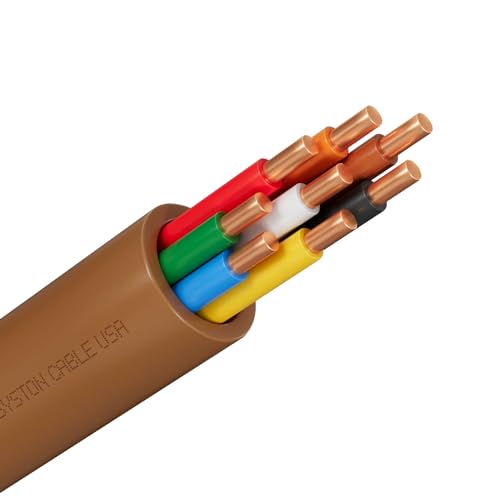 Syston 18/8 Thermostat Doorbell HVAC Control Cable 18 AWG 8C | Check price on Amazon | |
 NATIONAL Wire&Cable 18/5 25 Ft Thermostat Doorbell HVAC Cable | Check price on Amazon | |
 18/4 Thermostat Wire HVAC Copper Cable 500 ft CMR/Riser | Check price on Amazon |
HVAC Talk is a forum where installers and homeowners talk through real heating and cooling jobs, and shielded thermostat wire comes up there often. The usual thread begins the same way: a communicating thermostat misbehaves, a new smart thermostat keeps dropping its connection, or a long wire run passes through a crowded utility chase next to high-voltage lines. Someone suggests shielded wire, someone else says plain wire has worked fine for decades, and the discussion runs from there. This guide sorts out what shielded thermostat wire actually is, when it helps, and which cables to buy.
Shielded thermostat wire is ordinary low-voltage thermostat cable with one addition: a thin metal layer, usually aluminum foil, wrapped around the insulated conductors, plus a bare drain wire that runs the full length of the cable in contact with that foil. The foil blocks electrical noise from nearby high-voltage wiring, cable TV lines, Ethernet runs, and radio equipment. The drain wire gives that intercepted noise a path to ground. Without the drain wire connected properly, the foil does little good, so the two parts belong together.
One honest point belongs at the front of this guide. Only one pick below has foil shielding plus a drain wire confirmed in its published description. The other four are standard thermostat wire, included because the same HVAC Talk discussions compare them side by side with shielded cable, and because most homes do not need shielding at all. Each pick below states its shielding status plainly, so you can tell at a glance which cable actually carries a shield and which one does not. If interference protection is the whole reason for your purchase, buy the shielded pick and confirm the foil and drain wire on the listing before you order.
Most thermostats do not need shielded wire. The Honeywell T6 Pro installation manual says shielded cable is not required. Carrier Infinity, EcoNet, and Rheem manuals say the same thing in different words: shielded wire is optional, useful only where the run sits near or parallel to high-voltage wiring, cable TV, Ethernet, or radio equipment. For a typical furnace and air conditioner with a short, clean run through a wall, plain solid copper thermostat wire does the job. Shielding earns its keep on long runs through crowded chases, in homes with communicating equipment that sends data over the thermostat wires, and anywhere the cable must travel beside mains wiring for a long distance.
Grounding is where shielded wire jobs most often go wrong, so the rule deserves emphasis. Connect the drain wire to the C terminal or to ground at the indoor unit only. Never connect the drain wire to any terminal at the thermostat. Never ground the shield at both ends. Grounding both ends creates current loops in the shield, and those loops cut shield effectiveness instead of improving it. Where a run has several segments, twist the shield wires together across each joint so the shield stays continuous from end to end, then ground it once at the furnace or air handler.
What to Look for
Shielding construction comes first. True shielded thermostat cable names its shield in the listing: aluminum foil, aluminum and polyester foil, or a braided metal layer, plus a drain wire. If a listing never mentions a foil layer or a drain wire, treat the cable as unshielded, no matter what a roundup headline calls it. Several roundups label ordinary thermostat wire as shielded, and their own fine print often admits that shielding is not confirmed in the listed features. Read the construction details, not the headline.
Conductor count comes next, and it matters more than shielding for most buyers. Count the terminals in use on the furnace control board, then buy a cable with at least one spare conductor. Heat-only systems with a boiler or baseboard heat usually need two conductors, so 18/2 fits, although a smart thermostat on that system also needs a C wire or a power extender kit. A standard furnace with central air needs five conductors: power, heat, cooling, fan, and common, so 18/5 is the residential standard. Systems with a humidifier, a dehumidifier, or second-stage heating need seven conductors, so 18/7 fits. High-efficiency heat pumps, multi-stage equipment, and zoning panels need eight conductors, so 18/8 fits, with spares left over for future accessories. Pulling one extra conductor now is far easier than pulling a whole new cable later.
Solid copper is non-negotiable. Every conductor in a thermostat cable should be solid bare copper. Avoid copper-clad aluminum, often shortened to CCA, which carries higher resistance, heats more under load, and can cause voltage drop that makes a smart thermostat reboot or lose its connection. A genuine 18 AWG solid copper conductor measures about 1.02 millimeters in diameter. Thinner 20 or 22 AWG wire can work for short runs, but over a long run its higher resistance can choke off steady 24-volt power to a smart thermostat, so 18 AWG is the safe default, and runs over 100 feet should use 18 AWG or larger.
Jacket class tells you where the cable may legally run. CL2 is the common in-wall class for low-voltage control cable. CL2R and CMR are riser classes for vertical runs between floors and through shafts. CL3 and CL3R carry a 300-volt class instead of 150 volts. CMP and CL2P are plenum classes for air-handling spaces such as return-air plenums and dropped ceilings used for air circulation, and they use low-smoke insulation. Sunlight resistance matters for any run that passes through an attic or along an exterior wall. Check the jacket print for the class your local code requires, and when in doubt ask a licensed electrician before you pull cable through a plenum or riser.
Length is easy to get wrong. Measure the run from the thermostat to the furnace, add slack of 12 to 18 inches at each end, and add a little more for the bends and detours that always appear inside a finished wall. A 25-foot roll suits a single short replacement. A 50-foot roll covers most single-story runs. A 100-foot or 250-foot roll suits a two-story home or several jobs. A 500-foot reel suits a whole-house rewire or a multi-unit project, and it leaves spare cable for the next job.
Small construction details make the pull easier. A rip cord under the jacket lets you strip the outer sheath cleanly without nicking a conductor. A smooth, slick jacket slides through studs and top plates without catching. Color-coded conductors in the standard order, red, white, green, yellow, blue, and more as the count rises, keep the wiring diagram easy to follow at both ends. Label every conductor with tape and a marker before you disconnect the old thermostat, and check continuity with a multimeter before you restore power, so a nick from the pull does not turn into a blown fuse on the control board.
Our Picks
FastenerUSA 18/5 Shielded Thermostat Wire
The FastenerUSA cable is the only pick in this guide with foil shielding plus a drain wire confirmed in its published description, and that is why it leads the list. Its aluminum foil wrap sits around five 18 AWG conductors to block electrical noise from nearby high-voltage lines, and the included drain wire gives that noise a path to ground when bonded at the furnace end. This is the cable to buy when the run must travel parallel to mains wiring, through a crowded utility chase, or alongside cable TV and Ethernet lines.
Shielding also guards against ghosting, where noise makes the thermostat send a false signal that turns on the fan or compressor for no reason. A smart thermostat that keeps dropping its connection can sometimes trace back to exactly this kind of interference, and a foil shield is the direct fix. Beyond the shielding, the jacket is rugged and resists abrasion better than standard thermostat wire, which suits pulls through crawlspaces and unfinished basements. Five conductors cover power, heat, cooling, fan, and common, so it fits a standard furnace and air conditioner with no spare left over. If your system needs a spare conductor for a future accessory, pair this cable with a second run or choose a higher conductor count from the unshielded picks below and confirm its shielding separately. Ground the drain wire at the indoor unit only, and never connect it at the thermostat.
Southwire 64169644 250 ft 18/5 Brown CU CL2 Thermostat Wire
Southwire is the recognized name in thermostat wire, and the 64169644 is its 250-foot, five-conductor roll. It uses solid copper conductors with PVC insulation and a brown PVC jacket, listed as a Class 2 power-limited circuit cable under UL Standard 13, with RoHS compliance and sunlight resistance. The working range runs from minus 20 to plus 60 degrees Celsius, and the cable carries a 150-volt class. It strips cleanly, resists tearing and burn-through near heat sources, and its 250-foot length covers a long run or several installations from one roll.
One point must stay plain: this cable is not shielded. A retailer specification sheet for the 64169644 lists its shielded status as no, and Southwire describes it as standard thermostat wire. It belongs in this guide because HVAC Talk threads compare it against shielded cable constantly, and because it is the right buy for the many homes where shielding is not required. Choose it for a standard furnace and air conditioner run where the cable route stays clear of high-voltage lines. Its length makes it a strong fit for a whole-house rewire, and the Southwire name makes it easy to match to the cable your installer already knows.
Syston 18/8 Thermostat Doorbell HVAC Control Cable 18 AWG 8C
The Syston 18/8 covers the complex end of the range with eight solid copper conductors, which suits high-efficiency heat pumps, multi-stage heating and cooling, emergency heat, and zoning panels that need more control lines than a five-conductor cable can carry. Spare conductors also cover future accessories such as a humidifier relay or an outdoor temperature sensor, and they give you a fallback line if one conductor is damaged during the pull. The cable carries a 300-volt CL3 class with CL3R and CMR riser listings, a sunlight-resistant jacket, and a rip cord under the sheath for clean stripping. It is described for indoor and outdoor low-voltage use and meets RoHS requirements.
Shielding is not confirmed for this cable, so do not buy it for interference protection without checking the full construction details on the listing first. One more honest note: feedback on the Syston 18/8 line at a major home improvement retailer includes reports of shipments where the jacket print did not match the ordered gauge, with some buyers measuring a conductor closer to 20 AWG than 18 AWG. Check the jacket print on arrival and confirm that it reads 18 AWG before you pull the cable. When the gauge checks out, this is the most flexible cable in the guide for a complex system.
NATIONAL Wire&Cable 18/5 25 Ft Thermostat Doorbell HVAC Cable
The NATIONAL Wire and Cable 18/5 is the short-run pick: a 25-foot roll of solid copper thermostat wire for a single replacement. Five conductors cover power, heat, cooling, fan, and common for a standard furnace and air conditioner. It is made in the USA and carries a lifetime warranty. The short length keeps the roll easy to handle and leaves little spare cable behind, which suits a homeowner who needs to replace one thermostat run and nothing else.
Shielding is not confirmed for this cable, so treat it as standard unshielded thermostat wire. Its value is simplicity: the right conductor count, solid copper, a short and manageable length, and a domestic maker. Measure the run before you order, since 25 feet leaves little room for a detour around a joist or a second trip through a top plate. If the run is longer than a single room, choose a 50-foot or 100-foot roll instead.
18/4 Thermostat Wire HVAC Copper Cable 500 ft CMR/Riser
This 18/4 cable is the bulk pick: four bare copper conductors on a 500-foot reel, CMR and riser listed, with a sunlight-resistant jacket and a working range from minus 20 to plus 60 degrees Celsius. Four conductors cover heat, cooling, fan, and common on many systems, and the long reel suits a whole-house rewire, a multi-unit project, or an installer who pulls thermostat wire often. The reel format keeps the cable tidy between jobs.
Its shielding status is the least certain in this guide, so it sits last and carries the weakest evidence. One roundup lists shielding among its pros, but the listing title itself never names a foil layer or a drain wire, and no independent specification sheet confirms shielding. Treat this cable as unshielded unless the listing you open states otherwise. Confirm the live listing and the jacket print before you buy, and check the conductor count against your control board, since four conductors leave no spare for a future accessory.
Frequently Asked Questions
Do I need shielded thermostat wire?
For a typical thermostat, no. The Honeywell T6 Pro installation manual says shielded cable is not required, and Carrier Infinity, EcoNet, and Rheem manuals say the same: shielded wire is optional. Buy shielded wire when the cable run must travel near or parallel to high-voltage wiring, cable TV lines, Ethernet runs, or radio equipment, or when the equipment manual for a communicating thermostat calls for foil shielding and a drain wire. If none of those conditions apply, solid copper thermostat wire in the right conductor count does the job, and the money saved can go toward a longer roll or a spare conductor.
How do I ground the drain wire?
Connect the drain wire to the C terminal or to ground at the indoor unit only, and leave it unconnected at the thermostat. Never connect the drain wire to any terminal at the thermostat, and never ground the shield at both ends, since grounding both ends creates current loops in the shield that cut its effectiveness. Where a run has several segments, twist the shield wires together across each joint so the shield stays continuous, then ground it once at the furnace or air handler. Turn off power at the breaker before you touch any wiring, and hire a licensed electrician if you are unsure about any connection.
What conductor count do I need?
Count the terminals in use on the furnace control board, then add at least one spare. Heat-only systems with a boiler or baseboard heat usually need two conductors, so 18/2 fits, although a smart thermostat on that system also needs a C wire or a power extender kit. A standard furnace with central air needs five conductors for power, heat, cooling, fan, and common, so 18/5 is the usual buy. Systems with a humidifier, a dehumidifier, or second-stage heating need seven conductors, so 18/7 fits. High-efficiency heat pumps, multi-stage equipment, and zoning panels need eight conductors, so 18/8 fits with spares left over. When in doubt, pull the higher count, since an unused conductor tucked into the wall costs little and a missing conductor costs a whole new pull.
How to Choose
Begin with the equipment manual. If it calls for shielded wire, or if the run must travel beside high-voltage lines, cable TV, Ethernet, or radio equipment, buy the FastenerUSA 18/5 shielded cable and ground its drain wire once at the indoor unit. If the manual does not call for shielding and the route stays clear of interference sources, choose by conductor count and length instead. A standard furnace and air conditioner takes the Southwire 64169644 250-foot roll for a long run or several jobs, or the NATIONAL 18/5 25-foot roll for one short replacement. A heat pump or multi-stage system takes the Syston 18/8, with its eight conductors and 300-volt CL3 class, after you confirm the jacket print reads 18 AWG. A whole-house rewire or a multi-unit project takes the 18/4 500-foot reel, after you confirm its conductor count and shielding status on the live listing. In every case, confirm the live listing before you buy, check the jacket print on arrival, label every conductor before you disconnect the old thermostat, and check continuity before you restore power.
Disclosure: As an Amazon Associate, we may earn a commission from qualifying purchases made through links in this article, at no additional cost to you.


Write Your Review
No reviews yet. Be the first to share your experience!