
Our Short List of 3
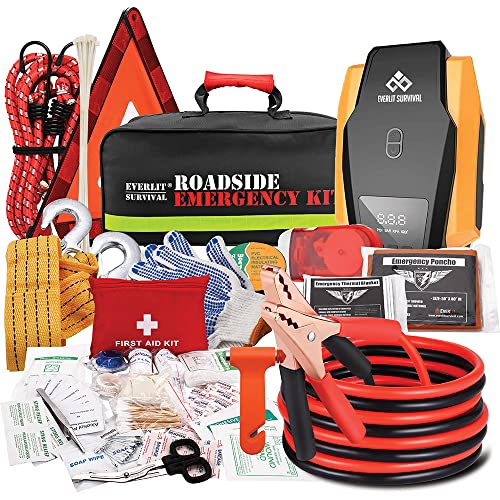
- Best for: Drivers who want the widest roadside coverage in one bag.
- 12 ft 8-gauge 300A jumper cables
- Digital tire inflator with auto shut-off and LED
- 108-piece first aid kit
- Reflective triangle, glass breaker and seatbelt cutter

- Best for: Winter drivers who need a shovel and cold-weather tools.
- UL-certified 8.2 ft jumper cables
- Snow shovel
- Flashing lights
- Safety hammer and seatbelt cutter

- Best for: Drivers who want a compact essentials kit for city driving.
- UL-certified 6-gauge 8.2 ft jumper cables, rated -40°F to 140°F
- Tow strap
- Safety hammer, triangle, vest and blanket
- Tire repair tools
All 5 Picks at a Glance
| Product | Specs | Action |
|---|---|---|
| Everlit Survival Car Emergency Kit |
| Check price on Amazon |
| LIANXIN 142-Piece Roadside Assistance Emergency Kit |
| Check price on Amazon |
| COOGEO 15-Piece Car Emergency Kit |
| Check price on Amazon |
 Vetoos Car Roadside Emergency Kit |
| Check price on Amazon |
 VCANENERGY Car Emergency Safety Kit, 43-Piece |
| Check price on Amazon |
A flat battery, a burst tire or a minor breakdown rarely happens in a convenient place. It happens on a dark road, in the rain, or miles from the nearest town, and the difference between a short delay and a long, cold wait is usually what is already in the trunk. A car safety kit gathers the essentials — jumper cables, a warning triangle, a flashlight, basic first aid — into one bag you can grab without thinking.
This guide compares five cable-based roadside kits for drivers who want real coverage without carrying a workshop. Every pick includes jumper cables and roadside tools, and most add a first aid kit, a tow rope and a reflective triangle. The kits differ in piece count, cable size and extras such as an inflator or a compressor, so the right choice depends on where you drive, who rides with you and how much trunk space you are willing to give up.
Quick Picks
As an Amazon Associate we earn from qualifying purchases
| Product | Best for | Key spec from title |
| Everlit Survival Car Emergency Kit | Drivers who want an inflator built in | 12 ft 8-gauge 300A jumper cables |
| LIANXIN 142-Piece Roadside Assistance Emergency Kit | Cold-weather drivers needing a shovel | UL-certified 8.2 ft jumper cables |
| COOGEO 15-Piece Car Emergency Kit | Drivers who want a compact essentials kit | 6-gauge 8.2 ft jumper cables |
| Vetoos Car Roadside Emergency Kit | Families wanting tools plus first aid | 47-piece first aid kit |
| VCANENERGY Car Emergency Safety Kit | Drivers who want a compressor on board | 12 ft 6-gauge 500A jumper cables |
How to Choose
Jumper Cables First
Cables are the heart of any roadside kit, and they are the item you will reach for most often. Look at gauge and length together: a lower gauge number means a thicker cable that carries current better, and a longer cable reaches the other car without awkward parking. Eight-gauge cables handle most four-cylinder and six-cylinder cars, while six-gauge cables give a stronger margin for larger engines and cold mornings. Check the clamps too, since coated clamps grip battery posts more securely and resist corrosion. A kit with short, thin cables may work on a mild day and fail exactly when the temperature drops, so treat cable quality as the first filter, not an afterthought.
First Aid and Visibility
A kit that only jumps a dead battery leaves the rest of the emergency uncovered. A first aid kit with bandages, prep pads and tweezers handles the small injuries that happen while changing a tire or clearing debris, and a reflective triangle plus a high-visibility vest tells other drivers you are there before they are close enough to react. A flashlight or headlight matters just as much after dark, when most of the work happens by hand. Check the contents list before you buy, because one kit in this guide has no first aid supplies at all, and a kit that looks complete on the outside can be missing the two items that keep you safe while you wait.
Tow Ropes, Tools and Extras
The extras decide whether a kit is a complete roadside answer or a box of cables with a few ornaments. A tow rope or strap lets another driver pull you off a soft shoulder, and a snow shovel earns its place the first time you are stuck in a drift. A tire gauge, a repair kit and a glass breaker with a seatbelt cutter cover the smaller problems that strand drivers too. An inflator or a portable compressor is the most useful extra of all, since it can reinflate a slow leak without a service call. Weigh each extra against trunk space, and favor the tools you can picture yourself actually using on a wet roadside at night.
Size, Weight and Storage
A safety kit only helps if it is in the car, so size and weight matter more than most buyers expect. A kit around eight pounds fits behind a seat or under a cargo floor without crowding groceries or luggage, while a heavier kit may end up in the garage instead of the trunk. Measure your storage space before ordering, and remember that a soft bag squeezes into corners a rigid case cannot reach. A kit with a clear layout also helps under stress, since you will be searching for a triangle or a flashlight in the dark. The best kit is the one you forget about until the day you need it, and then find in seconds.
The 5 Best Options
Everlit Survival Car Emergency Kit
- Best for: Drivers who want the widest roadside coverage in one bag.
- 12 ft 8-gauge 300A jumper cables
- Digital tire inflator with auto shut-off and LED
- 108-piece first aid kit
- Reflective triangle, glass breaker and seatbelt cutter
Drivers who want the widest roadside coverage in one bag.
The inflator is a digital tire inflator, not a full-size compressor — check it suits your tire size before relying on it.
The Everlit kit suits drivers who want the widest coverage in a single bag. Its 12-foot jumper cables reach across most parking situations, and it is the only kit in this group with a digital tire inflator, which handles a slow leak without a separate tool. A 108-piece first aid kit, a reflective triangle, a glass breaker and a seatbelt cutter cover the situations a battery alone cannot fix, and the tow rope, rain poncho and space blanket add comfort while you wait. At eight pounds it stays portable enough to live in the trunk year-round, and the veteran-owned brand backs it with a one-year warranty.
LIANXIN 142-Piece Roadside Assistance Emergency Kit
- Best for: Winter drivers who need a shovel and cold-weather tools.
- UL-certified 8.2 ft jumper cables
- Snow shovel
- Flashing lights
- Safety hammer and seatbelt cutter
Winter drivers who need a shovel and cold-weather tools.
This kit has no first aid kit — add a separate first aid pouch if you want medical supplies on board.
The LIANXIN kit is the cold-weather pick of this group, built around tools for snow and ice rather than a first aid box. Its UL-certified jumper cables, snow shovel, flashing lights and safety hammer cover the problems winter drivers actually face, and the tow rope and reflective triangle add the basics for a roadside stop. The trade-off is plain: this is the only kit in the pool with no first aid kit, so drivers who want medical supplies should pair it with a separate first aid pouch. For a driver who already carries first aid and wants a winter-ready tool bag, it fills the gap well.
COOGEO 15-Piece Car Emergency Kit
- Best for: Drivers who want a compact essentials kit for city driving.
- UL-certified 6-gauge 8.2 ft jumper cables, rated -40°F to 140°F
- Tow strap
- Safety hammer, triangle, vest and blanket
- Tire repair tools
Drivers who want a compact essentials kit for city driving.
With only 15 pieces it carries fewer tools than the larger kits — check the contents list matches the emergencies you expect.
The COOGEO kit is the compact choice for drivers who want essentials without a heavy bag. Fifteen pieces sounds small next to the larger kits, but the contents cover the real basics: UL-certified six-gauge jumper cables rated for extreme temperatures, a tow strap, a safety hammer, a triangle, a vest and a blanket, plus tire repair tools and a small first aid selection. The 600D nylon bag keeps the whole set tidy in a corner of the trunk, and the two-year warranty covers the kit for two years of use. It suits a city driver or a second car that rarely leaves town.
Vetoos Car Roadside Emergency Kit
- Best for: Families who want tools plus a solid first aid kit.
- 6-gauge jumper cables with PVC-coated clamps
- 16.5-in folding shovel
- Tow rope, triangle, vest and blanket
- 47-piece first aid kit
Families who want tools plus a solid first aid kit.
The listing’s stated dimensions are implausibly small for the contents — confirm the bag fits your storage space.
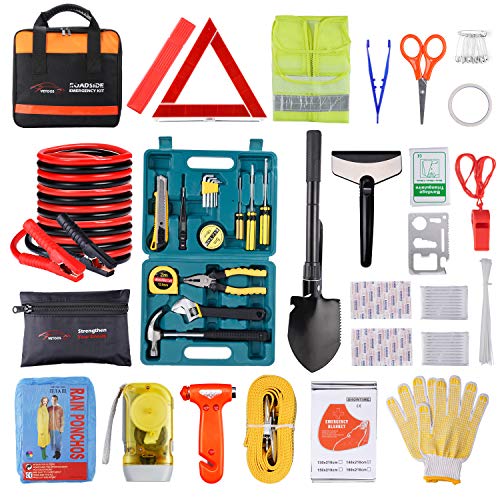
The Vetoos kit suits families and drivers who want a tool-heavy bag with a solid first aid kit inside. Its six-gauge jumper cables use PVC-coated clamps, and the 16.5-inch folding shovel, tow rope and mini tool set cover both winter and everyday roadside work. A 47-piece first aid kit, a dial tire gauge and a 4-in-1 whistle with compass, thermometer and mirror round out a bag that feels prepared rather than minimal. One note: the listing’s stated dimensions look implausibly small for these contents, so measure your storage space from the bag itself rather than the printed figures.
VCANENERGY Car Emergency Safety Kit, 43-Piece
- Best for: Drivers who want a compressor on board for flat tires.
- 12 ft 6-gauge 500A jumper cables
- Portable air compressor, 250 PSI
- 24-piece first aid kit
- 14 ft 4,850 lb tow rope
Drivers who want a compressor on board for flat tires.
The 250 PSI figure is a listing figure for the compressor — do not read it as a tire-inflation claim for every tire.
The VCANENERGY kit is the only pick in this group with a portable air compressor, and that single extra changes what the kit can do. Its 12-foot, six-gauge, 500-amp jumper cables are the strongest in the pool, and the 250 PSI compressor, 24-piece first aid kit, 14-foot tow rope and tire repair kit cover a flat tire as well as a dead battery. The flashlight runs on two AAA batteries, so keep spares in the bag. At 7.72 pounds it stays easy to lift, and the 43-piece count keeps the bag organized without the clutter of a much larger set.
Which One Fits Your Situation
Daily Commuter
You drive to work and back, mostly in town, and you want a kit you can forget about until it matters. The COOGEO kit fits this life: compact, light and complete enough for a dead battery or a slow leak, without filling the trunk. The Everlit kit works too if you want the inflator and the larger first aid kit, and you have room to spare.
Winter and Rural Roads
Snow, ice and long empty stretches change the kit you need. The LIANXIN kit leads here with its snow shovel, flashing lights and safety hammer, built for cold-weather stops. The Vetoos kit is the backup choice, adding a folding shovel and a bigger first aid kit. Either way, pair the kit with a charged phone and warm clothing.
Family Road Trips
With kids in the back, a breakdown is a family problem, not just a car problem. The Everlit kit covers the most ground: a 108-piece first aid kit, a rain poncho, a space blanket and a tow rope for the wait. The Vetoos kit is a strong second pick, with its 47-piece first aid kit and mini tool set. Keep water and snacks in the car too.
Flat Tires Without a Service Call
If your biggest worry is a tire rather than a battery, the compressor matters most. The VCANENERGY kit is the only pick here with a portable air compressor, plus a tire repair kit and a 14-foot tow rope. The Everlit kit is the alternative, with its digital inflator and auto shut-off. Either kit still needs a working spare or a repair shop for a torn sidewall.
Common Mistakes
- Buying the biggest piece count without checking what the pieces are — a kit with 142 pieces can still lack first aid supplies.
- Storing the kit in the garage instead of the trunk, where it cannot help on the road.
- Ignoring cable gauge and length, then finding the cables too short or too thin on a cold morning.
- Forgetting to check the flashlight batteries and the first aid kit expiry dates once a year.
- Assuming a jump-starter and a jumper-cable kit are the same thing — they are different tools with different needs.
Frequently Asked Questions
Do I need a car safety kit if I already have roadside assistance?
Roadside assistance helps, but it cannot reach you instantly, and coverage gaps, dead zones and long waits are common on rural roads. A safety kit lets you handle the simple problems yourself — a dead battery, a slow leak, a minor injury — and keeps you visible and warm while you wait for help. Think of the kit as the first response, not a replacement for assistance.
What is the most important item in a car safety kit?
Jumper cables, because a dead battery is the most common roadside failure and the easiest to fix with help from another driver. After cables, a reflective triangle and a flashlight matter most, since they keep you visible to traffic while you work. First aid supplies, a tow rope and a tire gauge follow close behind.
Can I use jumper cables on any car?
Most petrol and diesel cars accept a standard jump start, but check your owner’s manual first — some hybrids and electric cars have different procedures and battery locations. Match the cable gauge to your engine size, connect the clamps in the order your manual describes, and never let the clamps touch each other. If you are unsure, wait for assistance rather than risk damage.
How often should I check my car safety kit?
Check it twice a year, ideally when the seasons change. Test the flashlight, replace weak batteries, inspect the jumper cables for cracked insulation or corroded clamps, and check first aid expiry dates. Replace anything you used during a real emergency right away, so the kit is complete the next time you need it.
Write Your Review
No reviews yet. Be the first to share your experience!