
- Top Pick: Alen 25i HEPA Air Purifier, Ultimate Filter, Covers 800 Sq Ft
- Best Value: Air Purifiers for Home Large Room up to 2200sq.ft, MOOKA Air purifier for Home Pets with Washable Filter, PM 2.5 Display Air Quality Sensor Air Cleaner for Bedroom, Dorm room, Pets, Office PR1 (White)
- Premium Choice: LEVOIT Air Purifier for Home Allergies and Pets Hair Smokers in Bedroom, H13 True HEPA Filter, 24db Filtration System Cleaner Odor Eliminators, Remove 99.97% Dust Smoke Mold Pollen, Core 300, White
- Recommended Products
- 1. The Anatomy of Indoor Air Pollution: What Are We Inhaling?
- 2. Decoding Air Purifier Technologies: The Science of Clean Air
- 3. The Mathematical Physics of Clean Air: CADR and ACH
- 4. Top Home Air Purifiers Evaluated
- 5. Comprehensive Technical Comparison Matrix
- 6. Strategic Placement and Operational Best Practices
- Conclusion
- Frequently Asked Questions
- Related Articles
🛒 Best Price Today on Amazon
Prime members get fast, free shipping on everything above, plus member-only deals. New members get a 30-day free trial — cancel anytime.
Recommended Products

Levoit Air Purifier for Home Pets Hair Allergens in Bedroom Quiet Purifiers

Levoit Air Purifiers for Bedroom Home Pets Dorm Room, Small Air Purifiers

VOOPNU Air Purifiers for Home, High Efficiency Filter Up to 1076 Ft², White
As an Amazon Associate we earn from qualifying purchases. Product prices and availability are accurate as of the date/time indicated.
Air Purifiers For Home are an essential solution for improving indoor air quality and reducing exposure to everyday airborne pollutants. They help capture dust, pet dander, mold spores, smoke, and other microscopic particles that can accumulate inside modern homes. Advanced filtration technologies can significantly enhance the cleanliness and freshness of the air you breathe each day.
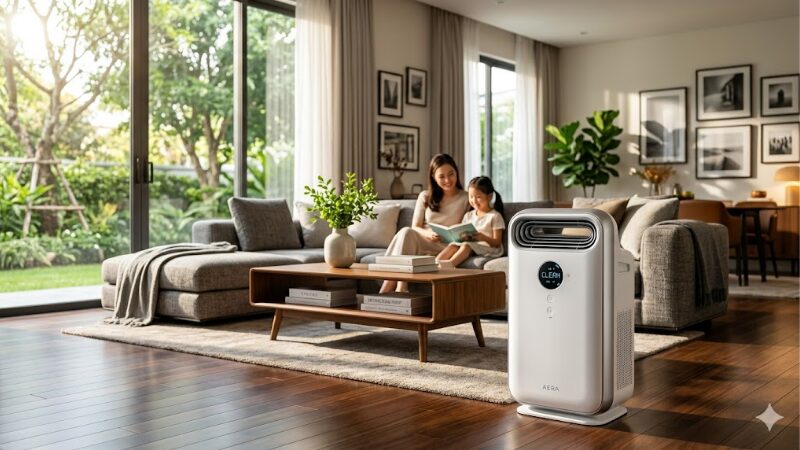
1. The Anatomy of Indoor Air Pollution: What Are We Inhaling?
Before diving into filtration hardware, we must identify the specific airborne adversaries an effective air purifier needs to neutralize. Indoor contaminants are broadly categorized into two main groups: particulate matter and gaseous pollutants.
Particulate Matter (PM)
Particulate matter refers to solid particles and liquid droplets suspended in the air. These are classified by their aerodynamic diameter:
- PM10 (Coarse Particles): Measuring between 2.5 and 10 microns, this category includes visible ambient dust, pollen grains, and large pet dander fragments. While annoying, these are usually trapped by your upper respiratory tract’s natural filtration (your nose and throat).
- PM2.5 (Fine Particles): Measuring 2.5 microns or smaller (roughly 30 times thinner than a strand of human hair), these tiny particles include smoke, combustion byproducts, and pet allergens. PM2.5 particles can bypass your upper respiratory defenses, traveling deep into your lungs and entering your bloodstream.
- PM0.1 (Ultrafine Particles): Measuring under 0.1 microns, this microscopic tier contains viruses, bacteria, and ultra-fine wildfire smoke particles.
Gaseous Pollutants and VOCs
Volatile Organic Compounds (VOCs) are gases emitted from household solids or liquids. New carpets, engineered wood furniture, paint, chemical cleaning sprays, and aerosol deodorants continuously emit toxic vapors like formaldehyde, benzene, and toluene. Standard physical particle filters cannot capture these gases; removing them requires specialized molecular filtration.
2. Decoding Air Purifier Technologies: The Science of Clean Air
Not all air purifiers are created equal. The market features various mechanical and chemical filtration methods, each suited to specific types of pollution.
True HEPA (High-Efficiency Particulate Air) Filtration
The absolute backbone of any high-quality home air purifier is a True HEPA filter. By definition, a certified True HEPA filter (typically rated at H13 or H14 industrial grade) must capture at least 99.97% of airborne particles as small as 0.3 microns.
HEPA filters do not act like simple kitchen strainers. Instead, they use a dense web of randomly arranged fiberglass fibers to trap particles through three distinct physical mechanisms:
- Inertial Impaction: Large, heavy particles travel in a straight line, cannot navigate the twists of the fiber matrix, and crash directly into a fiber, getting stuck.
- Interception: Mid-sized particles follow the airflow path around fibers but pass close enough to get snagged by the edge of a fiber.
- Diffusion: Extremely small particles (under 0.1 microns) collide with gas molecules and move in an erratic, zig-zag pattern known as Brownian motion. This chaotic movement makes them highly likely to bump into a fiber and get trapped.
Candid Buyer Warning: Avoid products labeled as “HEPA-type,” “HEPA-like,” or “HEPA-tech.” These are marketing terms for lower-grade filters that fail to meet strict germicidal standards, often letting up to 30% of fine particles slip right back into your room.
Activated Carbon Filtration
Because HEPA filters are made of fiberglass mesh, gaseous VOCs and odors pass through them easily. To stop odors, you need an Activated Carbon Filter.
Activated carbon is standard charcoal that has been treated with oxygen to open up millions of microscopic pores between its carbon atoms. This process increases its surface area dramatically—a single gram of activated carbon can have an internal surface area exceeding 1,000 square meters.
Through a process called adsorption, gas molecules stick to the massive internal surface area of the carbon matrix, trapping odors and chemical fumes.
Photoelectrochemical Oxidation (PECO) and PCO
PECO is a modern alternative to traditional filters. It uses a light-activated catalyst to trigger a chemical reaction that breaks down organic pollutants at a molecular level, converting viruses, bacteria, and VOCs into harmless water vapor and trace carbon dioxide.
3. The Mathematical Physics of Clean Air: CADR and ACH
When shopping for an air purifier for your home on Amazon, look past the aesthetic housing and focus on the hard physics metrics: CADR and ACH.
What ACH Measures
ACH (Air Changes per Hour) indicates how many times an air purifier can cycle the entire volume of air in a room through its filtration system within 60 minutes.
For general wellness, look for a rating of 4 ACH, which means the air is fully cleaned every 15 minutes. For individuals with severe asthma or airborne allergies, a purifier capable of delivering 5 ACH or 6 ACH is often recommended.
ACH Calculation Formula
The relationship between an air purifier’s Clean Air Delivery Rate (CADR) and room performance can be calculated using the following formula:
ACH = (CADR × 60) ÷ Room Volume
Where:
ACH = Air Changes per Hour
CADR = Clean Air Delivery Rate (CFM)
Room Volume = Total room volume in cubic feet
Example ACH Calculation
Consider an air purifier with a CADR rating of 300 CFM operating in a 400-square-foot living room with an 8-foot ceiling.
Room Volume = 400 × 8 = 3,200 cubic feet
ACH = (300 × 60) ÷ 3,200
ACH = 18,000 ÷ 3,200
ACH = 5.625
This result means the purifier can clean the entire volume of air in the room approximately 5.6 times per hour, exceeding the standard recommendation for people with allergies and providing a higher level of air circulation and filtration.
4. Top Home Air Purifiers Evaluated
Navigating the crowded marketplace requires balancing performance, smart automation, filtration quality, and long-term operating costs. Here is an evaluation of the top-performing residential air purifiers available on Amazon.
Levoit Core 600S Smart Air Purifier
The Levoit Core 600S stands out as a high-value option for large living rooms, open-concept spaces, and studio apartments.
- Impressive Air Delivery Power: Boasting an exceptional CADR rating of 410 CFM, the Core 600S can fully refresh the air in a large 1,580-square-foot space once every hour, or handle a 635-square-foot room at a strict 4X ACH.
- VortexAir 3.0 Technology: This system uses a 360-degree cylindrical aerodynamic intake to pull stagnant air from all directions, eliminating the dead zones common with single-sided wall purifiers.
- Laser AirSight Plus Automation: An integrated infrared laser sensor constantly scans surrounding air for particulate matter. In Auto Mode, the internal processor reacts in milliseconds, increasing fan speeds instantly if it detects smoke or dust.
Coway Airmega 400S (Heavy-Duty Performance)
The Coway Airmega 400S is a premium, dual-intake machine built for spaces that need serious, continuous air purification.
- Dual Filtration Design: The Airmega features a unique design with mechanical filter sets mounted on both the left and right sides of the chassis. This doubles the surface area available to catch incoming dust and pet hair.
- Max2 Combined Filter Integration: This cartridge pairs an H13 True HEPA filter with an activated carbon mat, capturing 99.97% of fine particles down to 0.3 microns while reducing hazardous VOCs like formaldehyde.
- Extremely Durable Engineering: Built with a premium brushless DC motor, the Airmega 400S is incredibly quiet, emitting just 22 dB on low speed while remaining highly energy-efficient.
Dyson Purifier Cool TP07 (Form Meets Multi-Function)
Dyson balances premium air purification with modern industrial design and integrated cooling fan technology.
- Fully Sealed HEPA H13 Standard: Unlike some purifiers where dirty air can bypass loose filter seals, Dyson seals the entire machine to HEPA H13 standards. What goes inside stays inside.
- Air Multiplier Projection: The TP07 uses specialized fluid dynamics to project a powerful stream of purified air across the room, circulating the environment effectively without needing loud, traditional fan blades.
- Comprehensive Environmental Reporting: The on-board LCD screen and mobile app provide real-time graphs tracking PM2.5, PM10, VOCs, nitrogen dioxide ($NO_2$), and ambient humidity.
5. Comprehensive Technical Comparison Matrix
| Air Purifier Model | Certified Filter Grade | Maximum CADR Performance | Optimal Room Size (4X ACH) | Minimum Operational Noise | Smart Ecosystem App |
| Levoit Core 600S | H13 True HEPA | 410 CFM | 635 sq. ft. | 26 dB | Yes (VeSync/Wi-Fi) |
| Coway Airmega 400S | Max2 HEPA/Carbon | 350 CFM | 780 sq. ft. | 22 dB | Yes (IoCare App) |
| Dyson Purifier TP07 | Sealed HEPA H13 | ~200 CFM | 300 sq. ft. | 46 dB (Mid-speed) | Yes (MyDyson App) |
| Blueair Blue 211+ | HEPASilent Technology | 350 CFM | 540 sq. ft. | 31 dB | No (One-Button) |
6. Strategic Placement and Operational Best Practices
Buying a great air purifier for your home is only half the battle; you also need to set it up for success.
Crucial Setup & Maintenance Steps:
- Maintain a 360-Degree Air Clearance Zone: Never tuck your air purifier deep into a corner or slide it flush behind a couch. To create proper airflow currents, maintain at least 15 to 20 inches of open clearance around all intakes and exhausts.
- Run Your Purifier Continuously (24/7): Air pollution is a continuous problem; dust settles, pets dander sheds, and furniture off-gasses constantly. Do not turn your purifier off when you leave the room. Instead, leave it running 24/7 on Auto Mode or low speed—modern units use very little electricity on lower settings.
- Vacuum the Pre-Filter Every Month: The outer mesh pre-filter catches large lint, dust bunnies, and pet hair. Every 4 weeks, run a vacuum brush attachment over this outer layer. Keeping the pre-filter clear maintains optimal airflow and prevents the inner HEPA filter from clogging prematurely.
- Use Distilled Water in Accompanying Humidifiers: If you use a combination purifier-humidifier unit, fill the tank exclusively with distilled water. Tap water contains minerals that create a fine white dust when atomized, which can instantly clog your HEPA filter and ruin its efficiency.
Explore more stories on this topic, there’s a good chance you’ll find them interesting too:
Conclusion
An air purifier for home use is a smart investment in your health, comfort, and peace of mind. By choosing a unit with a certified True HEPA filter, checking the CADR rating against your room size, and keeping up with basic filter maintenance, you create a pristine indoor environment for yourself and your family. Explore the top choices on Amazon today to take control of your indoor air quality and enjoy clean, fresh air with every breath!
Frequently Asked Questions
Do I need one purifier per room or a single large unit?
Air purifiers only clean the air that reaches them, and closed doors, hallways, and furniture block circulation far more than people expect. One right-sized unit per frequently used room, especially bedrooms, outperforms a single large machine in the living room. Alternatively, a whole-house approach using a MERV 13 filter with the HVAC fan set to circulate covers the entire home baseline.
As an Amazon Associate we earn from qualifying purchases.


How do I size a purifier for each room?
Multiply length by width for square footage, then choose a model whose smoke clean air delivery rate is at least two-thirds of that number for eight-foot ceilings. That yields roughly four to five air changes per hour. Add margin for high ceilings, open floor plans, and homes with pets or smokers, and remember advertised coverage usually assumes only two air changes.
Should the purifier run all the time?
Continuous operation on a low or automatic setting gives the steadiest results, because particle levels rebound within an hour or two of shutting a unit off. Modern purifiers draw only 5 to 60 watts on lower speeds, so the electricity cost is typically a few dollars per month per unit. Auto mode with a particle sensor balances noise and effectiveness well.
What annual cost should I plan for filters?
Budget roughly 50 to 150 dollars per unit per year for combined HEPA and carbon replacements, more for large-capacity models with separate cartridges. Extending filter life by vacuuming pre-filters, keeping windows closed on high pollution days, and running proper HVAC filtration reduces that spend. Compare filter prices before buying the purifier, since cheap machines often carry expensive proprietary cartridges.
What can a home air purifier not fix?
It cannot remove carbon monoxide, radon, or gases already absorbed into furnishings, cannot stop mold growing behind walls, and cannot compensate for a home that never gets fresh air. Install working carbon monoxide alarms, test for radon, fix moisture problems with professional help, and ventilate regularly. Purifiers reduce airborne particles and odors; they are one layer of a complete strategy.
Ready to decide? Our #1 pick for 2026 is the Air Purifier Model.
Live price & availability on Amazon.



Write Your Review
No reviews yet. Be the first to share your experience!