
Introduction
Good garden soil is the foundation of every healthy bed. Native ground is often heavy clay, thin sand, or tired dirt that has fed plants for years without being replenished. A bagged garden soil fixes that by adding organic matter, improving drainage, and giving roots a loose, living medium to grow in.
- Introduction
- Affiliate Disclosure:
- Quick Picks
- 1. Espoma Organic Vegetable & Flower Garden Soil
- 2. FoxFarm Raised Bed Planting Mix
- 3. Coast of Maine Cobscook Blend In-Ground Garden Soil
- 4. Espoma Organic Raised Bed Mix
- 5. Coast of Maine Planting Soil for Roses & Flowers
- How to Choose
- Frequently Asked Questions
- Conclusion
This guide compares five bagged garden soils for beds and in-ground planting. Each one is a different style: an organic in-ground amendment, a ready-to-use raised bed blend, a compost-rich coastal mix, and a flower-focused planting soil. All five are sold in bags you can carry home and work straight into your beds.
Affiliate Disclosure:
As an Amazon Associate, we may earn from qualifying purchases made through links in this article, at no extra cost to you. Our picks are based on ingredients, intended use, and bag size, not on seller incentives.
Quick Picks
- Best overall organic in-ground soil: Espoma Organic Vegetable & Flower Garden Soil
- Best ready-to-use raised bed mix: FoxFarm Raised Bed Planting Mix
- Best compost-rich coastal blend: Coast of Maine Cobscook Blend In-Ground Garden Soil
- Best organic raised bed mix: Espoma Organic Raised Bed Mix
- Best for roses and flowers: Coast of Maine Planting Soil for Roses & Flowers
1. Espoma Organic Vegetable & Flower Garden Soil

Espoma Organic Vegetable & Flower Garden Soil is a natural and organic planting mix made for in-ground planting and transplanting. It is blended from 30 to 40 percent Canadian sphagnum peat moss, aged forest products, aged humus and/or composted rice hulls, plus limestone to adjust pH, earthworm castings, alfalfa meal, kelp meal, feather meal, and yucca extract. The mix also carries Espoma Myco-Tone, a blend of endo and ecto mycorrhizae that forms a partnership with plant roots and helps them take up water and nutrients.
This is an amendment soil, not a fill dirt. You work it into native soil at planting time, to a depth of 3 to 4 inches, and it improves structure and fertility in the ground where roots actually grow. It suits vegetables, flowers, trees, and shrubs planted directly in the ground.
Pros:
– Organic and natural ingredient list with no synthetic plant foods
– Myco-Tone mycorrhizae support root development and nutrient uptake
– Earthworm castings and meals feed soil biology over time
– Works for vegetables, flowers, trees, and shrubs
Cons:
– Must be mixed into native soil, so it is not a fill-and-plant bag on its own
– One cubic foot covers a small area, so large beds need several bags
– Peat-heavy blend dries out if left open in sun before use
Specs
- Bag size: 1 cubic foot
- Intended use: In-ground planting and transplanting
- Base: 30 to 40 percent Canadian sphagnum peat moss
- Key ingredients: Earthworm castings, alfalfa meal, kelp meal, feather meal, yucca extract
- Biology: Myco-Tone mycorrhizae blend
- Organic status: Natural and organic, for organic gardening
2. FoxFarm Raised Bed Planting Mix

FoxFarm Raised Bed Planting Mix is a ready-to-use, all-purpose garden soil for raised beds and containers. The 1.5 cubic foot bag blends aged forest products, sphagnum peat moss, earthworm castings, and oyster shell into a loose mix that holds moisture while draining well. It is made for vegetables, flowers, fruits, and herbs, and it arrives ready to use with no mixing step.
At 40 pounds, the bag is heavy, but that weight reflects a dense, moisture-holding blend rather than light filler. One bag covers a useful section of a raised bed, and the earthworm castings and oyster shell give plants a steady supply of organic matter and minerals as the mix settles in.
Pros:
– Ready to use straight from the bag, no mixing required
– Earthworm castings and oyster shell enrich the blend
– Good balance of moisture retention and drainage
– Suits vegetables, flowers, fruits, and herbs
Cons:
– Heavy 40-pound bag is hard to carry and pour
– Single 1.5 cubic foot size means large beds need several bags
– Premium blend costs more per cubic foot than basic garden soil
Specs
- Bag size: 1.5 cubic feet
- Weight: 40 pounds
- Intended use: Raised beds and containers
- Key ingredients: Aged forest products, sphagnum peat moss, earthworm castings, oyster shell
- Form: Ready-to-use blend
- Best for: Vegetables, flowers, fruits, and herbs
3. Coast of Maine Cobscook Blend In-Ground Garden Soil

Coast of Maine Cobscook Blend is an organic and natural in-ground garden soil built from ocean and land-sourced ingredients. The blend combines salmon and blueberry compost, aged bark, sphagnum peat moss, and horticultural limestone. It is made to improve and revitalize in-ground garden soil, giving tired beds fresh structure, better drainage, and slow, natural feeding.
This is a true amendment soil. You mix it into existing ground at planting time, and the compost and bark open up heavy soil while the peat moss holds moisture. It suits vegetables and a broad range of garden and landscape plants, and the single cubic foot bag is easy to carry and mix into a small bed or a row of planting holes.
Pros:
– Compost-rich blend with salmon and blueberry compost
– Aged bark improves drainage and structure in heavy soil
– Natural and organic, with no synthetic additives
– Easy one cubic foot bag for small beds and planting holes
Cons:
– One cubic foot covers less area than multi-pack options
– Compost-based feeding releases nutrients on its own schedule
– Regional availability can vary outside the Northeast
Specs
- Bag size: 1 cubic foot
- Intended use: In-ground garden soil improvement
- Key ingredients: Salmon and blueberry compost, aged bark, sphagnum peat moss, horticultural limestone
- Form: Organic and natural blend
- Best for: Vegetables and mixed garden and landscape plants
4. Espoma Organic Raised Bed Mix

Espoma Organic Raised Bed Mix is an all-natural, ready-to-use soil blend for raised beds and outdoor containers. The 1.5 cubic foot bag blends earthworm castings, alfalfa meal, kelp meal, and feather meal with Myco-Tone mycorrhizae, and it contains no synthetic plant foods or chemicals. It is made for growing vegetables and herbs in raised garden beds, and it works straight out of the bag.
Growers like this mix for new beds because it is light to carry and simple to fill with, and the mycorrhizae blend helps roots settle in and take up nutrients. Some owners note that the mix looks woody, like mulch and sawdust, because of the aged forest products in the blend, but the plants still grow well in it.
Pros:
– Ready to use, with no mixing step
– Myco-Tone mycorrhizae support root health
– No synthetic plant foods or chemicals
– Light bag for a 1.5 cubic foot volume
Cons:
– Woody texture looks like mulch to some growers
– One bag fills only a small section of a large bed
– Higher cost per cubic foot than basic garden soil
Specs
- Bag size: 1.5 cubic feet
- Intended use: Raised garden beds and outdoor containers
- Key ingredients: Earthworm castings, alfalfa meal, kelp meal, feather meal
- Biology: Myco-Tone mycorrhizae blend
- Form: Ready-to-use, all-natural blend
- Best for: Vegetables and herbs
5. Coast of Maine Planting Soil for Roses & Flowers
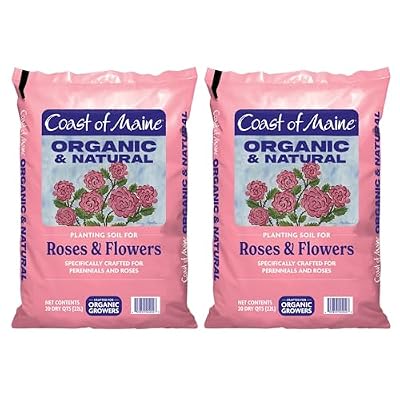
Coast of Maine Planting Soil for Roses & Flowers is a premium organic and natural planting soil for multi-use planting in the ground and in containers. The 20-quart bag blends composted manure and sphagnum peat moss into a rich, earthy medium with enhanced drainage, and it is made for roses, flowers, and other ornamental plantings.
This is the flower-focused pick in the lineup. The composted manure base gives a slow, steady release of nutrients, while the peat moss holds moisture around roots. It works in the ground for flower beds and borders, and it also works in large containers where a richer medium helps blooms hold up through hot weather.
Pros:
– Composted manure base feeds plants steadily
– Enhanced drainage suits humid summers and heavy watering
– Works in the ground and in large containers
– Rich texture suits roses and heavy-feeding flowers
Cons:
– 20-quart bag is smaller than cubic foot options
– Flower-focused, so vegetable growers may want a labeled edible blend
– Manure-based blend has a stronger smell when first opened
Specs
- Bag size: 20 quarts
- Intended use: In-ground and container planting
- Key ingredients: Composted manure, sphagnum peat moss
- Drainage: Enhanced drainage formulation
- Best for: Roses, flowers, and ornamental plantings
How to Choose
Match the soil to the bed. In-ground beds need an amendment soil that mixes into native ground, like the Espoma Vegetable & Flower Garden Soil or the Coast of Maine Cobscook Blend. Raised beds need a ready-to-use fill, like the FoxFarm Raised Bed Planting Mix or the Espoma Organic Raised Bed Mix. Using a container mix in a large in-ground bed wastes money, and using a dense amendment as a raised bed fill can leave roots short of air.
Check the bag size against your bed. A 1 cubic foot bag covers about 12 square feet at 1 inch deep, or 4 square feet at 3 inches deep. A 1.5 cubic foot bag covers about 50 percent more. Measure your bed, decide how deep you want to amend, and count bags before you buy so you do not run out halfway through a bed.
Read the ingredient list. Peat moss holds moisture, aged bark and perlite open up heavy soil, compost and worm castings feed soil life, and mycorrhizae help roots take up nutrients. If your ground is heavy clay, favor bark and compost. If your ground is sandy and dries fast, favor peat moss and compost.
Decide on organic or conventional. Organic blends use compost, meals, and minerals, and they feed plants slowly as soil life breaks them down. Conventional blends use coated fertilizers that feed for a set window, often up to 3 months. Both work, but organic blends suit growers who want to build soil health over seasons rather than feed one crop at a time.
Mind the weight. A 1.5 cubic foot bag of dense, moist soil can weigh 40 pounds. If you have steps, a long carry, or a bad back, smaller bags or a cart make the job far easier. Dry bags are lighter, so buy ahead and store them under cover.
Confirm availability before ordering. One listing in this guide showed no featured offers at check time, so check the listing is live before ordering. Bagged soil is heavy to ship, and some blends are sold only in certain regions, so local garden centers may carry a blend that online sellers do not.
Frequently Asked Questions
Can I use garden soil in pots and containers?
Garden soil is made to mix into native ground, and it is usually too dense for pots on its own. For containers, use a potting mix or a raised bed blend that is labeled for container use, like the Coast of Maine Planting Soil for Roses & Flowers, which is made for both ground and container planting.
How much garden soil do I need for a raised bed?
Multiply length by width by depth in feet to get cubic feet, then add a little extra for settling. A 4 by 8 foot bed at 6 inches deep needs about 16 cubic feet, which is roughly eleven 1.5 cubic foot bags. Fill in layers, water each layer, and top up after a week as the mix settles.
Is garden soil the same as topsoil?
No. Topsoil is the upper layer of natural earth, often screened but not enriched, and it varies a lot in quality. Garden soil is a blended product with peat moss, compost, bark, and often fertilizer or mycorrhizae, made to improve planting beds. Topsoil fills low spots, while garden soil feeds plants.
How often should I amend my garden beds with fresh soil?
Most beds benefit from a fresh layer each year, worked into the top few inches before planting. Heavy feeders like tomatoes and squash use up organic matter fast, while perennial beds can go longer between full amendments. A yearly top-up of compost or garden soil keeps structure and fertility from sliding backward.
Conclusion
The best garden soil is the one that matches your bed and your ground. Espoma Organic Vegetable & Flower Garden Soil is the strongest all-around pick for in-ground planting, FoxFarm Raised Bed Planting Mix is the easiest ready-to-use fill for raised beds, and Coast of Maine Cobscook Blend is the richest compost-based amendment for tired ground. Espoma Organic Raised Bed Mix suits organic growers who want a light, ready-to-use bed fill, and Coast of Maine Planting Soil for Roses & Flowers is the best choice for flower beds and borders. Measure your bed, read the bag, and mix the soil in well, and your plants will have the rich, loose ground they need to grow.

Write Your Review
No reviews yet. Be the first to share your experience!