
Our Short List of 3

- Engine type: single cylinder, 4-stroke, air-cooled OHV
- Displacement: 212cc
- Rated power: 7 HP
- Bore x stroke: 70 x 55 mm

- Model: MXR212E
- Engine type: single cylinder, 4-stroke, forced air cooling, OHV
- Displacement: 212cc
- Rated power: 7 HP
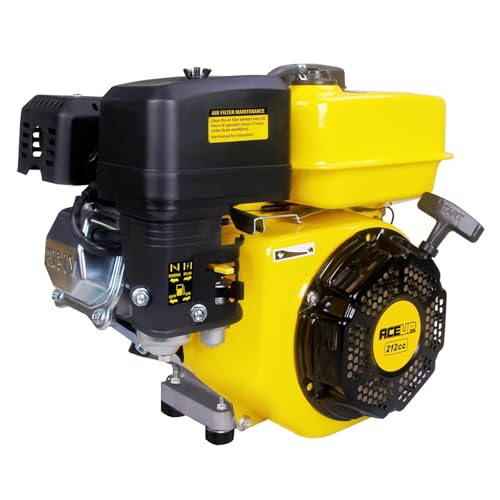
- Model: AE170B
- Engine type: single cylinder, 4-stroke, air-cooled OHV
- Displacement: 212cc
- Rated power: 7 HP at 3600 RPM
All 5 Picks at a Glance
| Product | Specs | Action |
|---|---|---|
| maXpeedingrods 7HP 212cc Gas Engine, Recoil Start |
| Check price on Amazon |
| maXpeedingrods 7HP 212cc Gas Engine, Electric Start (MXR212E) |
| Check price on Amazon |
| Aceup Energy 7HP 212cc Gas Engine (AE170B) |
| Check price on Amazon |
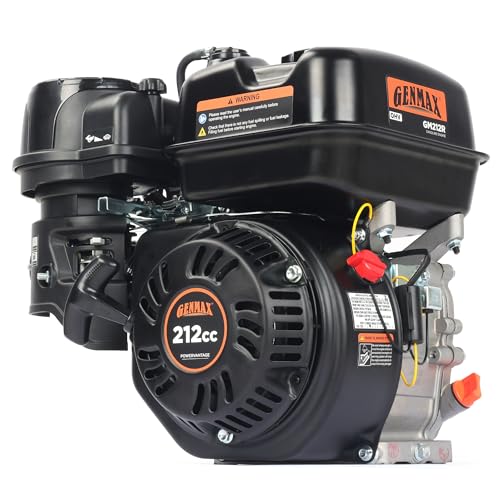 GENMAX GM212R 7HP 212cc Recoil-Start Engine |
| Check price on Amazon |
 XtremepowerUS 420cc 15HP Gas Engine |
| Check price on Amazon |
A small gas engine kit is the fastest way to bring a project back to life. Whether the job is a go-kart frame waiting in the garage, a mini bike with a tired motor, a log splitter that lost its power plant, or a pressure washer that needs a fresh engine, the horizontal-shaft utility engine is the standard answer. These engines share a common layout: a single cylinder, four-stroke overhead-valve design, a horizontal crankshaft, and a mounting pattern that repeats across dozens of brands, which is why one engine can replace another with little more than a shaft measurement and a bolt check.
- What Counts as a Small Gas Engine Kit
- maXpeedingrods 7HP 212cc Gas Engine, Recoil Start
- maXpeedingrods 7HP 212cc Gas Engine, Electric Start (MXR212E)
- Aceup Energy 7HP 212cc Gas Engine (AE170B)
- GENMAX GM212R 7HP 212cc Recoil-Start Engine
- XtremepowerUS 420cc 15HP Gas Engine
- How to Choose the Right Small Gas Engine
- Frequently Asked Questions
- Conclusion
This guide covers five engines that represent the class well. Four sit in the popular 212cc bracket, the size that powers most karts, mini bikes, tillers, pumps, and compact equipment. The fifth steps up to 420cc for heavier machines that need more torque. Each entry lists the published specifications that matter for fitment — displacement, output, shaft diameter, shaft length, keyway size, and starting method — because with utility engines, fit is everything. An engine with the wrong shaft diameter or the wrong shaft length will not couple to your clutch, pulley, or pump no matter how strong it is.
What Counts as a Small Gas Engine Kit
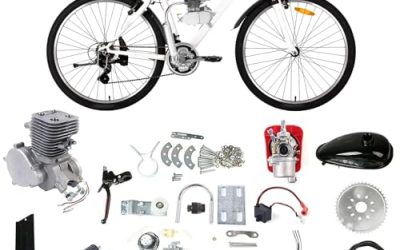
In this guide, a small gas engine kit means a complete, ready-to-run gasoline engine sold as a single unit: block, recoil or electric starter, fuel tank, muffler, and air filter already fitted. It does not mean a bicycle motor kit, which is a different class of product built around a bicycle frame, and it does not mean a bare short block or a box of rebuild parts. Every engine below is a complete horizontal-shaft utility engine of the kind sold to replace worn engines on equipment and to power kart and mini bike builds.
maXpeedingrods 7HP 212cc Gas Engine, Recoil Start
- Engine type: single cylinder, 4-stroke, air-cooled OHV
- Displacement: 212cc
- Rated power: 7 HP
- Bore x stroke: 70 x 55 mm
The maXpeedingrods recoil-start engine is the reference point for the 212cc class. It is a four-stroke overhead-valve single rated at 7 horsepower, built around a 70 by 55 mm bore and stroke with an 8.5:1 compression ratio. The crankshaft is the industry-standard size for this class: a 3/4-inch diameter horizontal shaft, 2.43 inches long, with a 3/16-inch keyway and a 5/16-24 drilled and tapped end. That combination matches the centrifugal clutches, torque converters, pulleys, and pump couplings that most small equipment already uses.
Starting is recoil only, which keeps the engine simple and light, and there is no battery to wire or maintain. The maker lists a ball-bearing supported crankshaft for stability, a low-oil sensor that shuts the engine down when the oil level drops too far for safe operation, and EPA certification. The fuel tank holds 3.6 liters and the crankcase takes 0.6 liters of oil, figures that repeat across this engine family and make servicing predictable.
maXpeedingrods 7HP 212cc Gas Engine, Electric Start (MXR212E)
- Model: MXR212E
- Engine type: single cylinder, 4-stroke, forced air cooling, OHV
- Displacement: 212cc
- Rated power: 7 HP
The electric-start version of the same engine family adds a key start on top of the recoil starter, and that one change suits a wide range of equipment. On a log splitter, generator, or compactor that sits in one place, turning a key is easier than pulling a rope, and the recoil starter remains in place as a backup if the battery runs flat. The battery itself is not included, so plan on supplying a suitable 12-volt battery and cabling for your installation.
Under the cover it is the same 212cc overhead-valve single with the same 3/4-inch shaft, 2.43-inch shaft length, 3/16-inch keyway, and 5/16-24 tapped end, so it couples to the same clutches and pulleys as the recoil model. The published package includes the engine, a spark plug socket wrench, an oil funnel, and an owner’s manual. The maker lists transistorized ignition, a 3.6-liter fuel tank, 0.6 liters of oil capacity using SAE 10W-30, and a one-year warranty.
Aceup Energy 7HP 212cc Gas Engine (AE170B)
- Model: AE170B
- Engine type: single cylinder, 4-stroke, air-cooled OHV
- Displacement: 212cc
- Rated power: 7 HP at 3600 RPM
The Aceup Energy AE170B is another 212cc, 7-horsepower overhead-valve engine, and its listing leans on internal hardware: a steel camshaft, a forged crankshaft, and a cast iron cylinder liner. A cast iron liner is worth attention in this class because it gives the cylinder a wear surface that can handle long hours better than a plain aluminum bore, and it is one of the features that separates work-duty engines from lighter recreational ones.
The shaft measures 3/4 inch in diameter and 2-3/8 inches long, a fraction shorter than the 2.43-inch shafts above, with the same 3/16-inch keyway and 5/16-24 UNF threaded end. That small length difference is exactly the kind of detail to check against your old engine before ordering, because a clutch or pulley that seats against the shaft shoulder needs the length it was built for. Starting is recoil only. The listing gives a 3600 RPM engine speed, a 0.9-gallon fuel tank, and a weight of 28.9 pounds, the lightest engine in this guide, which helps on equipment that has to be lifted or tilted. The maker publishes a one-year limited warranty for normal use.
GENMAX GM212R 7HP 212cc Recoil-Start Engine
- Model: GM212R
- Engine type: single cylinder, 4-stroke OHV
- Displacement: 212cc
- Rated power: 7 HP
GENMAX is best known for generators, and the GM212R applies the same thinking to a standalone utility engine. It is a 212cc four-stroke overhead-valve single rated at 7 horsepower with recoil starting, so like the other recoil engines here it needs no battery and suits remote or portable equipment. The listing publishes a torque figure of 8.85 ft-lb at 2500 RPM, which is the number that describes how the engine pulls under load at working speed rather than at its peak.
The shaft specification matches the class standard: 3/4-inch diameter, 2.43 inches long, a 3/16-inch keyway, and a 5/16-24 UNF thread. The listing also names a cast iron cylinder sleeve and a forged crankshaft. At 38.2 pounds, with published dimensions of 15.15 x 12.28 x 13.85 inches, it is the heaviest of the 212cc engines in this guide, so confirm your frame or equipment housing has room and that the mounting pattern lines up before choosing it for a compact build.
XtremepowerUS 420cc 15HP Gas Engine
- Engine type: single cylinder, 4-stroke OHV
- Displacement: 420cc
- Rated power: 15 HP
- Shaft: horizontal, counterclockwise rotation from the PTO side
When a 212cc engine is not enough, the next common step is the 420cc class, and the XtremepowerUS engine is a typical example. Its 420cc four-stroke overhead-valve single is rated at 15 horsepower, roughly double the output of the 212cc engines above, and it is aimed at heavier equipment: larger log splitters, stump grinders, big tillers, compressors, and full-size kart builds that carry adult riders or work gear.
The published feature list includes forced-air cooling, splash lubrication, and a low-oil shutoff that stops the engine when the oil level falls too low. Starting is by recoil. The maker describes a horizontal shaft with the power take-off rotating counterclockwise when viewed from the shaft side, the standard rotation for this engine family. Because 420cc engines are physically larger and heavier than the 212cc class — this one is listed at 72 pounds — measure your mounting space, bolt pattern, and shaft requirements carefully; a 420cc engine is not a drop-in swap for a frame built around a 212cc block.
How to Choose the Right Small Gas Engine
Match the shaft first. The crankshaft is the interface between the engine and everything it drives. Measure the diameter, the usable length, and the keyway on the engine you are replacing, and compare all three against the listing. In the 212cc class the common pattern is a 3/4-inch shaft with a 3/16-inch keyway, but shaft lengths vary between 2-3/8 and 2.43 inches, and some engines in the wider market use 20 mm shafts that look similar and are not interchangeable.
Check the mounting pattern. Most horizontal-shaft utility engines share a standard base bolt pattern, but larger engines and some brands differ. Measure the bolt spacing on your frame or equipment plate and compare it with the new engine’s footprint and overall dimensions before ordering.
Pick displacement for the load. A 212cc engine in the 6.5 to 7.5 horsepower range covers most karts, mini bikes, tillers, pumps, and small splitters. Step up to a 420cc engine when the equipment maker specified that class originally, or when the load is genuinely heavy — undersizing an engine works it at full throttle constantly, and oversizing one adds weight and may not fit the mount.
Decide on starting. Recoil-only engines are simpler, lighter, and need no battery, which suits karts and portable tools. Electric start earns its place on stationary equipment and on machines used in cold weather, but remember that most electric-start engines in this class ship without a battery.
Plan the first service. Utility engines usually ship without oil. Fill the crankcase to the published capacity with the specified oil grade before the first start, use fresh unleaded gasoline, and check the low-oil sensor function if the engine has one. Keep the model number recorded; parts such as air filters, recoil starters, and carburetors are ordered by model, not by appearance.
Frequently Asked Questions
Will a 212cc engine fit where my old 196cc or 6.5 HP engine sat?
Usually yes, provided the shaft matches. The 196cc and 212cc engines in this class share the same general footprint and the standard 3/4-inch shaft pattern, so swaps are common. Confirm the shaft diameter, shaft length, and base bolt spacing on both engines before ordering, because those three measurements decide the fit.
What is the difference between recoil start and electric start?
A recoil engine starts with a pull rope and needs no battery, which makes it lighter and simpler. An electric-start engine adds a starter motor turned by a key or switch, powered by a 12-volt battery that is typically not included, and it keeps the recoil starter as a backup. Choose based on whether your equipment has a place for a battery.
Can I use one of these engines on a go-kart or mini bike?
Yes. Horizontal-shaft 212cc engines are the standard power choice for karts and mini bikes, and they drive through a centrifugal clutch or torque converter sized for a 3/4-inch shaft. Check that your frame’s engine plate matches the mounting pattern and that the shaft length suits your clutch before ordering.
How much oil does a small gas engine take, and which kind?
The 212cc engines in this guide take 0.6 liters of oil, and the makers specify SAE 10W-30. Engines ship without oil, so filling the crankcase is part of installation. Running a new engine before adding oil will damage it, and the low-oil shutoff fitted to several of these engines is a safeguard, not a substitute for filling and checking the oil.
Conclusion
The small gas engine market is built on a shared pattern, and that is good news for buyers: four of the engines here are 212cc overhead-valve singles with the same standard shaft, so the choice comes down to starting method, internal hardware, and weight. The maXpeedingrods recoil engine is the straightforward class standard, its electric-start MXR212E sibling adds key starting for stationary equipment, the Aceup Energy AE170B is the lightest option with a cast iron liner, and the GENMAX GM212R brings published torque figures and generator-brand backing. For genuinely heavy work, the XtremepowerUS 420cc doubles the output in a larger, heavier package. Measure your shaft and mounting pattern, match the displacement to the load, and any of these engines will do the job it was built for.
Disclosure: As an Amazon Associate, we earn from qualifying purchases made through links on this page, at no extra cost to you.

Write Your Review
No reviews yet. Be the first to share your experience!