
Our Short List of 3
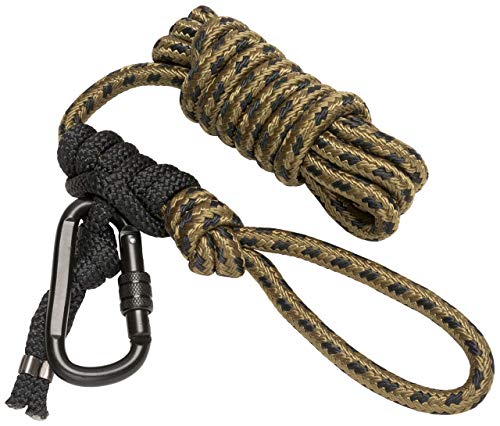
- Rope length: 9 ft
- Adjustment: pre-tied Prusik knot
- Role as published: tether and lifeline for climbing-style tree stands
- Length note: about 2.5 ft longer than the maker’s standard tree strap

- Model: SU83100
- Rope length: 8 ft
- Material: nylon
- Included components: 8 ft safety rope, prusik hitch, lineman’s clip, one locking carabiner

- Model: LLS+
- Rope length: 30 ft
- Material: nylon blend with reflective material woven in
- Included: Recon carabiner and HSS-COWBELL sound dampeners
All 4 Picks at a Glance
| Product | Specs | Action |
|---|---|---|
| Hunter Safety System Rope-Style Tree Strap |
| Check price on Amazon |
| Summit Treestands Lineman’s Climbing Rope with Hardware |
| Check price on Amazon |
| Hunter Safety System Reflective Lifeline |
| Check price on Amazon |
 Huntury Treestand Lifeline Rope, 30 Feet |
| Check price on Amazon |
A saddle setup lives or dies by its ropes. The saddle itself is only the seat; the connection between you and the tree is a rope system, and it works in two distinct jobs. The first is the tether, the rope that anchors above you once you reach hunting height and holds your weight while you lean, turn and shoot. The second is the lineman rope, the loop that wraps the trunk and keeps you attached with both hands free while you climb and hang your sticks and platform. Most falls in elevated hunting happen during the climb and the transition at the top, which is exactly when these two ropes earn their keep.
That is why this roundup covers rope kits rather than bare cord. Every pick below is sold as a working kit as published: a rope supplied with its friction hitch or prusik cord and its carabiner hardware, ready to clip in without hunting down separate components. A length of bulk climbing rope from a general outdoor shelf is a different product, and mixing unlisted parts into a life-safety system is a habit saddle hunters are better off avoiding. The four kits here span the two roles: short tether and lineman ropes in the eight-to-nine-foot range for the climb and the sit, and full-length lifeline ropes that keep a hunter connected from the ground to the stand and back down again.
The rope kits compared
Hunter Safety System Rope-Style Tree Strap
- Rope length: 9 ft
- Adjustment: pre-tied Prusik knot
- Role as published: tether and lifeline for climbing-style tree stands
- Length note: about 2.5 ft longer than the maker’s standard tree strap
Hunter Safety System built its name on treestand safety, and the Rope-Style Tree Strap is the piece saddle hunters most often borrow from that world. It is a nine-foot rope with a pre-tied Prusik knot, designed to loop around the tree above your position and serve as the anchor your bridge clips into. The maker positions it as a tether that doubles as an effective lifeline for climbing-style stands, keeping the hunter attached during both the climb and the hunt, and at nine feet it runs about two and a half feet longer than the maker’s standard webbing tree strap, which helps on larger trunks.
The appeal for a saddle hunter is the simplicity. There is one rope, one sliding knot and one connection point, so the system is easy to set at height in the dark and easy to adjust when you want more or less room to lean. The Prusik slides when you push it and grips when it is loaded, which is the behaviour a tether needs. Because the knot arrives tied, there is no knot-craft to get right before the first climb. Hunters who run several set trees can also buy the same strap in a three-pack and leave one in place at each spot.
Summit Treestands Lineman’s Climbing Rope with Hardware
- Model: SU83100
- Rope length: 8 ft
- Material: nylon
- Included components: 8 ft safety rope, prusik hitch, lineman’s clip, one locking carabiner
Summit’s entry is the most literal lineman kit in this group. The box contains an eight-foot safety rope, a prusik hitch, a lineman’s clip and one locking carabiner, so everything the climb requires arrives together. The rope can also be converted into a lineman’s-style climbing belt, which is the configuration used while installing hang-on stands and climbing sticks: the rope wraps the trunk, clips to both sides of the saddle or harness, and lets the hunter lean back against it with both hands free for the next stick section.
For saddle hunting, that hands-free working position is the whole point of a lineman rope. You climb a section, set the next stick, work the platform strap, and the rope holds your position against the tree the entire time. The prusik hitch gives one-handed length adjustment as the trunk narrows on the way up, and the locking carabiner keeps the connection gated shut. At eight feet the rope suits the trunk diameters most hunters actually climb, and the green nylon build keeps a low profile in the woods.
Hunter Safety System Reflective Lifeline
- Model: LLS+
- Rope length: 30 ft
- Material: nylon blend with reflective material woven in
- Included: Recon carabiner and HSS-COWBELL sound dampeners
The Reflective Lifeline takes the other approach to staying connected: one long rope, installed from the ground, that covers the whole climb. The thirty-foot line is fixed above the stand position and tied off at the base of the tree, and the hunter clips in at ground level and slides the Prusik knot up as they climb and back down at the end of the sit. There is no point in the ascent, the hunt or the descent where the connection has to come off, which is why lifeline systems are so widely recommended for fixed stands that get hunted all season.
The reflective weave is the signature detail: it catches the slightest flashlight beam, so the rope and the stand location show up on the walk in before daylight. The kit comes complete with the maker’s Recon carabiner, and the HSS-COWBELL sound dampeners quiet the hardware against sticks and stand metal. Saddle hunters who hunt the same trees repeatedly can install one line per tree and simply clip in on arrival, and the same ground-to-stand logic works for a saddle climb with sticks. The maker states a lifespan of three years from the date of purchase under its updated policy, which gives a clear retirement date to write on the calendar.
Huntury Treestand Lifeline Rope, 30 Feet
- Rope diameter: 12 mm
- Rope length: 30 ft
- Rope breaking strength: 18 kN (published as about 4,000 lbs)
- Carabiner breaking strength: 25 kN (published as about 5,600 lbs)
Huntury’s lifeline is a complete ground-to-stand kit built around a thicker rope than most. The main line is twelve millimetres in diameter and thirty feet long, with a published breaking strength of 18 kN, and it arrives with a prusik knot, a carabiner published at 25 kN, and a storage bag, so the whole system packs away as one unit between hunts. The way it is used mirrors the other lifeline here: once the stand is hung, the rope is wrapped around the tree and hung down, the harness tail hooks to the prusik knot, and the hunter slides the knot up and down to stay connected through the climb.
The heavier rope diameter is the practical difference. A twelve-millimetre line is easier to grip with gloves on, gives the prusik a substantial rope to bite, and tolerates bark abrasion well across a season of use on the same tree. The included bag matters more than it sounds, because a lifeline that lives coiled in a truck bed collects grit, and grit is what wears rope fibres from the inside. Hunters setting up several stands can standardise on one kit per tree and keep each rope with its own hardware rather than sharing parts around.
How to choose a saddle hunting rope kit
Start by separating the two jobs. A tether works above you at hunting height and mostly stays put once it is set, so an eight-to-nine-foot rope with a prusik is plenty for typical trunks. A lineman rope works at chest height and moves constantly as you climb, so it wants hardware at both ends and easy one-handed adjustment. A lifeline covers the climb itself and stays on the tree, so length is its defining number. Many saddle hunters run one rope for the first two jobs and treat the lifeline as a separate, per-tree purchase, and the kits above map onto those roles cleanly.
Rope diameter drives handling more than any other figure. Lines in the eight-to-eleven-millimetre range pack small and suit hunters who carry everything in and out each sit. A twelve-millimetre line is bulkier but kinder to gloved hands and shrugs off rough bark. Whichever diameter you choose, the prusik cord must be sized to grip it: kits solve this by supplying the hitch matched to the rope, which is one more reason to buy the rope and its friction hitch as a published set rather than as loose parts.
Look closely at how the rope terminates. Factory sewn or spliced eyes keep the full strength of the line and present a clean loop for the carabiner, while knots reduce strength and add bulk that can hang up on bark. On the hardware side, a locking gate is the baseline for anything holding a climber, and a carabiner that can be operated with one hand matters when the other hand is holding a stick section. Published breaking strengths for the rope and the carabiner should both appear in the maker’s figures; a kit that hides either number is asking you to guess about the parts that hold you.
Finally, plan for inspection and retirement from day one. Ropes in this role live outdoors, rub on bark, and carry a climber’s full weight, so check the sheath for cuts and flat spots before every season and after any fall, and feel along the line for soft or stiff sections that suggest core damage. Keep ropes out of vehicle beds and away from fuel, solvents and battery acid, store them dry and out of sunlight, and respect the maker’s stated lifespan where one is published. A rope kit is the one part of a saddle system where replacement on schedule, rather than replacement on failure, is the right habit.
Frequently asked questions
What is the difference between a tether and a lineman rope?
A tether anchors above the hunter at hunting height and connects to the saddle bridge; it holds your weight while you sit, lean and turn in the saddle. A lineman rope wraps around the trunk at roughly chest height and clips to both sides of the saddle or harness, holding you against the tree with both hands free while you climb and hang equipment. The tether protects the sit, and the lineman rope protects the climb, so a complete setup accounts for both.
How long should a saddle hunting tether rope be?
Eight to nine feet covers most trees a saddle hunter will climb, because the tether only needs to wrap the trunk above the platform and leave working slack for the bridge and prusik. Bigger trunks, or a tether that also serves as a lifeline anchor, call for more length. The lifeline kits in this roundup run thirty feet because that rope has a different job: it spans from above the stand all the way to the ground.
Can one rope kit handle both the climb and the sit?
Yes, within limits. A nine-foot tether rope can be pressed into lineman duty on the way up and then reset as the tether at height, and several of the kits here are published for exactly that kind of double duty. The trade-off is a transition at the top where connections change over, and that transition is a moment that demands care. Hunters who climb often usually settle on a dedicated lineman rope plus a dedicated tether so each connection is made once and left alone.
When should a hunting rope kit be replaced?
Replace a rope immediately after it arrests a fall, and retire it at once if inspection shows cuts, fraying, flat spots, glazing from friction heat, or a section that feels noticeably softer or stiffer than the rest. Follow the maker’s stated lifespan where one is published, since ultraviolet light and weather age fibres even when a rope looks fine. Carabiners with gates that no longer close cleanly, or bodies with visible wear grooves, should leave the system at the same time.
Conclusion
The rope kit is the part of a saddle system that everything else depends on, and the four kits here cover the roles without overlap: the Hunter Safety System Rope-Style Tree Strap as a simple, proven tether, the Summit Lineman’s Climbing Rope with Hardware for hands-free climbing work, and the two thirty-foot lifelines from Hunter Safety System and Huntury for hunters who want a connection that starts at the ground. Match the kit to the job, keep the rope and its hardware together as the maker published them, and inspect the system on a schedule. Do that, and the ropes become the quietest part of the hunt, which is exactly what safety gear should be.
Disclosure: As an Amazon Associate, we earn from qualifying purchases made through links on this page, at no extra cost to you.





Write Your Review
No reviews yet. Be the first to share your experience!