
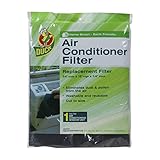
- Top Pick: Duck Brand Replacement Air Conditioner Foam Filter, 24-Inch x 15-Inch x 1/4-Inch, 1285234
- Best Value: EZ-FLO 12 x 6 Inch (Duct Opening) Air Vent Cover for Wall or Ceiling, Three-Way Ventilation Register, Solid Steel HVAC Register Cover, White, 61615
- Premium Choice: EZ-FLO 10 x 4 Inch (Duct Opening) Air Vent Cover for Wall or Ceiling, Two-Way Ventilation Register, Solid Steel HVAC Register Cover, White, 61609
Replacing a section of ductwork or swapping out worn vent covers only goes smoothly when your measurements are correct the first time. Ducts come in a surprising range of sizes, and a difference of even half an inch between the duct opening and the register you buy can leave you with rattling covers, air leaks, and wasted trips back to the hardware store. Getting the numbers right before you shop is the single biggest time-saver in any 2026 duct project.
- Watch: How to Measure Your Existing Air Ducts for Replacement — Video Review
- Understand Duct Opening Size vs. Faceplate Size
- Measuring Rectangular Ducts and Registers
- Measuring Round Ducts and Collars
- Filters and Foam: Measure Thickness Too
- Tips
- Frequently Asked Questions
- Conclusion
- Related Articles
- Related Guides
This guide walks you through measuring round and rectangular ducts, decoding the “duct opening size” listed on replacement grilles, and choosing filters and hoses that actually fit. You will learn where to place the tape measure, how to account for flanges and collars, and which numbers matter when ordering online where you cannot test-fit the part.
As an Amazon Associate we earn from qualifying purchases at no extra cost to you.


⚡ Save on Your Next PC — Amazon Prime
Prime members get fast free shipping on the systems above, plus early access to Prime Day & Black Friday PC deals. New members get a 30-day free trial.
Watch: How to Measure Your Existing Air Ducts for Replacement — Video Review
Understand Duct Opening Size vs. Faceplate Size
The most common mistake is measuring the visible faceplate of a vent cover instead of the hole in the wall. Replacement covers such as the EZ-FLO 12 x 6 Inch and EZ-FLO 10 x 4 Inch air vent covers are always listed by their duct opening size, which is the dimension of the hole the collar drops into, not the larger decorative flange you see on the surface. A 10 x 6 opening cover has an overall faceplate roughly 11.75 x 7.75 inches. Always order by the opening, then confirm the faceplate will hide the hole.
Measuring Rectangular Ducts and Registers
For a rectangular boot or register, remove the existing cover and measure the inside of the sheet-metal opening, width first, then height. Record the width as the first number because HVAC parts are always listed width x height (a 10 x 8 register like the HBW 2-Way Stamped Face model is 10 inches wide and 8 inches tall). Measure at two points on each side to catch any out-of-square openings, and use the smaller reading so the collar still seats cleanly.
Measuring Round Ducts and Collars
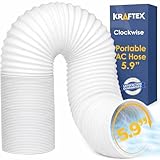
Round flex and rigid ducts are sized by inside diameter: 4, 6, 8, 10, and 12 inches are the residential standards. Measure straight across the opening at its widest point. If you can only reach the outside, measure the circumference with a flexible tape and divide by 3.14 to get the diameter. Portable AC exhaust fittings, like a 5.9-inch clockwise-thread hose, are sized to the appliance port rather than a house duct, so match those to the unit, not the wall.
Filters and Foam: Measure Thickness Too
Filter media is a three-dimensional measurement. A Duck Brand 24 x 15 x 1/4-inch foam AC filter or a Breathe Naturally universal cut-to-fit carbon filter is defined by length, width, and thickness. Slot depth matters as much as face size; a filter that is nominally correct but a hair too thick will bow and bypass air around the edges. Note the slot depth before buying, and remember nominal filter sizes run about half an inch smaller than the label.
Tips
- Always list width first: HVAC sizing convention is width x height x depth, so a 10 x 4 is very different from a 4 x 10.
- Measure the opening, not the cover: shop by duct opening size and let the flange overlap handle the cosmetics.
- Round down on tight fits: take the smaller of two readings so collars and covers seat without forcing.
- Photograph old labels: stamped dimensions on the existing part are the fastest confirmation before you order online.
Frequently Asked Questions
Is the vent size the same as the duct size?
No. The vent cover is sold by the duct opening it fits, but its faceplate is larger to cover the rough edges. A “10 x 6” cover fits a 10 x 6 hole and has a faceplate closer to 12 x 8 inches.
How do I measure a duct I cannot fully reach?
Measure the circumference of a round duct with a soft tape and divide by 3.14, or measure one exposed side of a rectangular duct and check the stamped label on the boot for the full dimensions.
What if my opening is slightly out of square?
Take readings at multiple points and use the smallest one. A two-way or three-way cover with a generous flange will still hide minor irregularities in an older opening.
Do filter sizes match the number on the frame?
Filter labels are nominal and usually run about half an inch smaller in actual size. Measure the slot, not just the old filter, to confirm both the face dimensions and the thickness.
Conclusion
Accurate duct measurement comes down to three habits: measure the opening rather than the cover, always record width before height before depth, and confirm against the stamped dimensions on the part you are replacing. Nail those, and swapping a register, foam filter, or run of round duct becomes a quick job rather than a return-and-retry cycle.




Write Your Review
No reviews yet. Be the first to share your experience!