
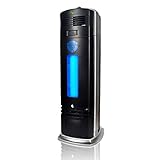
- Top Pick: OION Technologies B-1000 Permanent Filter Ionic Air Purifier Pro Ionizer with UV-C, New
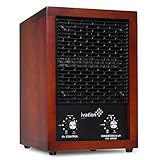
- Best Value: Prolux New Comfort CA3500 6-Stage Air Purifier & Ozone Generator with True HEPA & UV-C Light, Covers Up to 3,000 Sq Ft, Portable for Home or Commercial Use
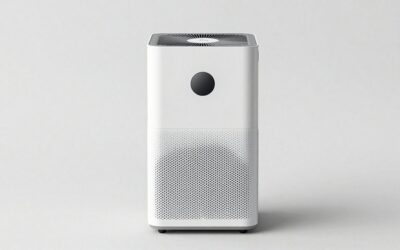
- Premium Choice: AZEUS Air Purifier for Wildfire Smoke, UV-C HEPA for Home Large Room, White
When people want to disinfect the air moving through their HVAC, two very different technologies come up: UV-C light and ozone generation. They are often lumped together as “air sanitizers,” but they work in opposite ways and carry very different safety profiles. UV-C inactivates microbes with germicidal light while air passes by; an ozone generator floods a space with O3 gas that oxidizes odors and organisms but is unsafe to breathe. Choosing the wrong one for a duct system can mean either wasted money or a genuine health hazard.
This 2026 guide compares the pros and cons of each approach for duct and whole-house use, looks at in-duct UV lamps versus portable ozone units, and explains when each technology is appropriate. The short version: UV-C is the safe, continuous-use choice for occupied homes, while ozone is a powerful but occupant-empty remediation tool. Here is how to decide.
As an Amazon Associate we earn from qualifying purchases at no extra cost to you.


⚡ Save on Your Next PC — Amazon Prime
Prime members get fast free shipping on the systems above, plus early access to Prime Day & Black Friday PC deals. New members get a 30-day free trial.
Watch: UV-C Light Air Purifier vs. Ozone Generator: Pros and Cons for Duct Systems — Video Review
How to Choose
- Occupancy is the deciding factor: UV-C can run safely with people and pets present; ozone must only be used in unoccupied, sealed spaces and requires airing out before re-entry.
- Match placement to purpose: An in-duct UV lamp mounted near the coil disinfects continuously; portable ozone units are for periodic shock treatment of odors, not everyday air.
- Check lamp coverage and wattage: UV-C effectiveness depends on dwell time and intensity, so size the lamp to your duct’s airflow and consider dual-lamp units for larger systems.
- Weigh maintenance: UV bulbs lose output and need replacement roughly annually; ozone plates need periodic cleaning and the generator draws real power during runs.
- Look for hybrid HEPA units if unsure: Combination purifiers pair HEPA and UV-C so you filter particles and inactivate microbes without ever introducing ozone into living space.
The Best Picks Reviewed
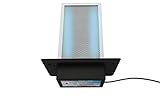
D200 Dual-Lamp In-Duct UV Light for HVAC
This is the purpose-built duct-system choice. Its dual lamps mount inside the ductwork near the coil to continuously disinfect passing air and discourage mold on the wet coil surface. It is the safe, set-and-forget option for occupied homes.
Qualirey 100W UV Light with Ozone Purifier
A dual-mode unit offering both UV and ozone with three gear settings, this is best for empty rooms where you want strong shock treatment. Treat the ozone function strictly as an unoccupied-space tool and ventilate thoroughly afterward.
Enerzen Ozone Generator 60,000 mg Industrial O3
A high-output industrial deodorizer for serious odor remediation, smoke, mustiness, pet accidents. It is potent and effective for empty spaces but has no place running in a room while anyone is home.
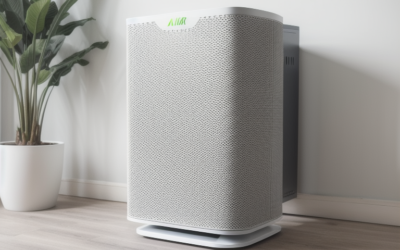
AZEUS UV-C HEPA Air Purifier for Large Rooms
The AZEUS pairs true HEPA filtration with a UV-C stage, so you capture wildfire smoke and allergens while inactivating microbes, all without generating ozone. It is a strong occupied-home alternative to duct-mounted UV.
GermGuardian 5-in-1 HEPA Air Purifier with UV-C
A widely trusted portable that combines HEPA, carbon, and UV-C in one tower. For anyone who wants germicidal action without touching their ductwork, this is the easiest, safest entry point.
Frequently Asked Questions
Is ozone safe to use in my ducts while I’m home?
No. Ozone is a respiratory irritant and should only be used in unoccupied, sealed spaces, then ventilated before people or pets return. For continuous, occupied-home use, choose UV-C instead.
Does in-duct UV-C actually work?
Yes, within its limits. UV-C effectively inactivates microbes and controls coil mold when the lamp has enough intensity and the air has enough dwell time. It does not remove particles, so pair it with a filter.
Can UV-C replace my air filter?
No. UV-C targets living organisms like mold and bacteria but does nothing for dust, dander, or smoke particles. Keep your MERV-rated filter or HEPA unit; UV-C is a complement, not a substitute.
How often do UV-C bulbs need replacing?
Most germicidal lamps should be replaced about once a year. They may still glow after that, but their germicidal output drops significantly, so annual replacement keeps the system effective.
Final Thoughts
For a duct system in an occupied home, in-duct UV-C like the D200, or a HEPA-plus-UV portable, is the safe, continuous choice. Reserve ozone generators for empty-space odor remediation only. Decide based on whether people will be breathing the air during operation, and you will never confuse these two very different tools again.


Write Your Review
No reviews yet. Be the first to share your experience!