
⚡ Key Takeaways
- The Core Difference
- Side-by-Side Comparison
- When Cleaning Is the Right Choice
- When Replacement Makes More Sense
- Repair: The Middle Ground
- How Duct Age Factors Into the Decision
- The Long-Term Cost Comparison
- How to Decide for Your Home
- Signs You’re Being Pushed Toward the Wrong Option
- Frequently Asked Questions
- Conclusion
- Related Articles
- Related Guides
As an Amazon Associate we earn from qualifying purchases at no extra cost to you.





- Cleaning removes dust, debris, mold, and contaminants from inside your existing ducts.
- Cleaning is the smart, economical option when your ducts are structurally sound but contaminated.
- Replacement becomes the better investment when the ductwork itself is the problem.
- Sometimes you don't need full replacement—just targeted repair.
When your ductwork is causing problems, you face a fork in the road. The choice between air duct cleaning vs replacement hinges on the condition of your ducts, their age, and whether the issues are surface-level or structural. Cleaning is far cheaper and solves contamination problems, while replacement addresses leaks, damage, and inefficiency that cleaning simply can’t fix. This comparison breaks down when each option makes sense, what each costs, and how to decide which your home actually needs.
🛒 Best Price Today on Amazon
Prime members get fast, free shipping on everything above, plus member-only deals. New members get a 30-day free trial — cancel anytime.
The Core Difference
Cleaning removes dust, debris, mold, and contaminants from inside your existing ducts. Replacement tears out the old ductwork and installs new ducts entirely. Cleaning treats what’s in the ducts; replacement fixes what’s wrong with the ducts. Knowing which problem you have is the key to choosing correctly.
A quick way to frame the decision
Ask yourself: Is the air dirty, or are the ducts themselves failing? Dirty air points to cleaning. Failing ducts—leaks, crushed sections, disconnected joints, persistent mold in deteriorating material—point to replacement.
Side-by-Side Comparison
| Factor | Cleaning | Replacement |
|---|---|---|
| Typical cost | $300–$700 | $1,500–$8,000+ |
| Best for | Dust, debris, pests, surface mold | Leaks, damage, old/deteriorated ducts |
| Lifespan impact | Maintains current system | Resets system for 15–25 years |
| Efficiency gain | Modest, if buildup was heavy | Significant if old ducts leaked badly |
| Disruption | Low, a few hours | High, one or more days |
| Air quality | Removes contaminants | Removes contaminants and stops leaks |
When Cleaning Is the Right Choice
Cleaning is the smart, economical option when your ducts are structurally sound but contaminated. Choose cleaning if:
- You see dust puffing from registers but the ducts are intact.
- There’s surface mold that can be remediated without removing ductwork.
- Pests left debris that needs removal.
- Recent construction filled the system with drywall dust.
- Your ducts are relatively young (under 15 years) and not leaking.
In these cases, a thorough source-removal cleaning paired with a fresh electrostatic furnace filter restores air quality at a fraction of replacement cost.
When Replacement Makes More Sense
Replacement becomes the better investment when the ductwork itself is the problem. Consider replacement if:
- Ducts are leaking significantly, wasting 20–30 percent of conditioned air.
- Sections are crushed, disconnected, or torn beyond repair.
- Mold has permeated porous duct material (like old fiberglass duct board) and can’t be fully removed.
- The ductwork is 20+ years old and undersized or poorly designed.
- You’re already renovating or replacing the HVAC system.
Leaky ducts are a hidden energy drain. If your ducts run through an unconditioned attic, replacing them is also a chance to add quality attic air duct insulation that prevents future condensation and energy loss.
The hidden cost of leaky ducts
The Department of Energy estimates that duct leaks can waste a substantial portion of your heating and cooling energy. When ducts leak this badly, no amount of cleaning helps—you’re paying to condition air that escapes into the attic or crawl space.
Repair: The Middle Ground
Sometimes you don’t need full replacement—just targeted repair. Sealing leaks with mastic or foil tape, reconnecting separated joints, or replacing a single damaged section can solve problems for a few hundred dollars. If only certain rooms feel underserved, a register booster fan may resolve airflow issues without major work. Ask a contractor whether repair is viable before committing to full replacement.
How Duct Age Factors Into the Decision
The age of your ductwork is one of the clearest signals pointing toward cleaning or replacement. Sheet-metal ducts can last 20 to 25 years or more when well maintained, while flexible ducts and older fiberglass duct board degrade faster. If your ducts are under 15 years old and structurally sound, cleaning almost always makes sense for contamination problems—you’re protecting an investment that has plenty of life left. Once ducts pass the 20-year mark, the calculus shifts. Older systems are more likely to have developed leaks at the joints, sagging flex runs, crushed sections, and deteriorating insulation, all of which cleaning can’t fix.
There’s also a material consideration. Older homes sometimes have fiberglass duct board, a porous material that absorbs moisture and harbors mold deep in its fibers. Once mold colonizes porous duct board, cleaning rarely removes it completely, and replacement of the affected sections becomes the only reliable cure. Metal ducts, by contrast, have non-porous surfaces that clean up well, making them better candidates for remediation rather than replacement.
The Long-Term Cost Comparison
Looking only at the upfront price can be misleading. Cleaning is cheaper today, but if your ducts are leaking 20 to 30 percent of your conditioned air, you keep paying that penalty on every utility bill for years. Replacement costs far more initially but can pay back part of that investment through lower energy bills, better comfort, and a system that lasts two decades. When weighing the two, factor in how long you plan to stay in the home, your current energy costs, and whether you’re also upgrading the HVAC equipment. If you’re staying put and your ducts are old and leaky, replacement often wins the long-run math even though cleaning looks cheaper on day one.
How to Decide for Your Home
Start with a professional inspection that includes camera footage of the inside of your ducts. A reputable contractor will show you the actual condition and recommend the least invasive effective solution. Get multiple opinions, especially if one company immediately pushes full replacement—that can be an upsell. Weigh the age of your system, the severity of any leaks, and your long-term plans for the home.
Don’t forget the finishing details
Whether you clean or replace, upgrading to well-fitted air vent covers keeps dust out and improves the appearance of your registers. Good covers and filters protect your investment either way.
Signs You’re Being Pushed Toward the Wrong Option
Because replacement is so much more profitable than cleaning, some contractors steer homeowners toward it unnecessarily. Watch for warning signs that you’re being upsold. A company that recommends full replacement without ever showing you camera footage of the duct interior, that refuses to discuss repair or cleaning as alternatives, or that pressures you to sign immediately with a “today only” discount deserves skepticism. Conversely, a bargain-basement cleaning outfit might wave away genuine structural problems just to land the cheaper job, leaving leaky ducts unaddressed. The honest middle ground is a contractor who inspects thoroughly, documents the actual condition, and walks you through all three paths—repair, cleaning, or replacement—explaining why one fits your situation best.
Getting two or three independent opinions is the single best protection. If two reputable, certified companies both reach the same conclusion after inspecting your system, you can trust the recommendation. When opinions diverge sharply, that disagreement itself is useful information worth digging into before you commit thousands of dollars.
Frequently Asked Questions
Should I clean or replace my air ducts?
Clean if the ducts are sound but contaminated with dust, pests, or surface mold. Replace if they’re leaking badly, physically damaged, or old and deteriorated. A camera inspection reveals which applies.
Is duct replacement worth the cost?
It can be, especially if leaky or undersized ducts are wasting energy. New ducts last 15–25 years and can significantly improve efficiency and comfort, offsetting the higher upfront price over time.
Can mold in ducts be cleaned or does it require replacement?
Mold on metal ducts can often be cleaned and remediated. Mold in porous fiberglass duct board frequently can’t be fully removed, so replacement of affected sections is usually recommended.
How do I know if my ducts are leaking?
Signs include uneven room temperatures, high energy bills, rooms that never reach the setpoint, and excessive dust. A contractor can perform a duct leakage test to measure the loss precisely.
Is repairing ducts cheaper than replacing them?
Yes. Sealing leaks or replacing a damaged section costs far less than full replacement. Always ask whether targeted repair can solve your problem before agreeing to replace the entire system.
Conclusion
The air duct cleaning vs replacement decision comes down to one question: is the air dirty, or are the ducts failing? Cleaning is the affordable fix for contamination in sound ductwork, while replacement is the right call for leaking, damaged, or deteriorated systems. Get a camera inspection, consider repair as a middle ground, and choose the least invasive solution that truly solves your problem. With the right choice, you’ll enjoy cleaner air and a more efficient home for years.
Top picks from this guide
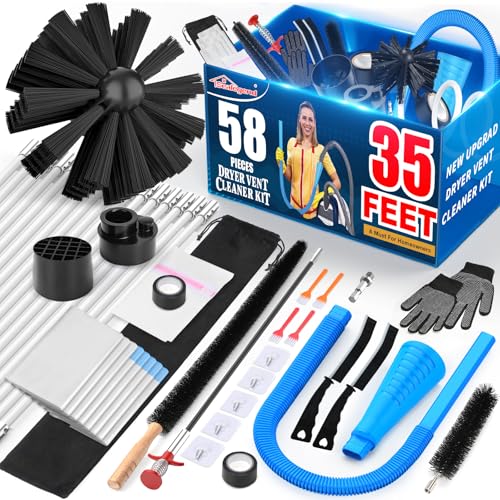 SealegendSealegend 58-Pieces 35-Feet Dryer Vent Cleaner Kit, Dryer Cleaning Tools$27 \xc2\xb7 98/100
 HolikmeHolikme Dryer Vent Cleaner Kit - 30Ft Fireplace Chimney Brushes…$23 \xc2\xb7 96/100
 EnovorldDryer Vent Cleaner Kit 32FT, Improve Dryer Efficiency & Reduce…$35 \xc2\xb7 96/100
 HeliumXAir Dryer Vent Cleaner Kit, High-Pressure Blasting Dryer Duct Cleaning…$17 \xc2\xb7 94/100








Write Your Review
No reviews yet. Be the first to share your experience!