
Condensation inside air ducts triggers dangerous microbial growth, reduces cooling efficiency, and damages drywall ceilings across humid regions. Cold conditioned air colliding with warm ambient attic vapor forces liquid droplets to form rapidly inside uninsulated distribution channels. Managing air velocity and thermal barriers prevents structural decay.
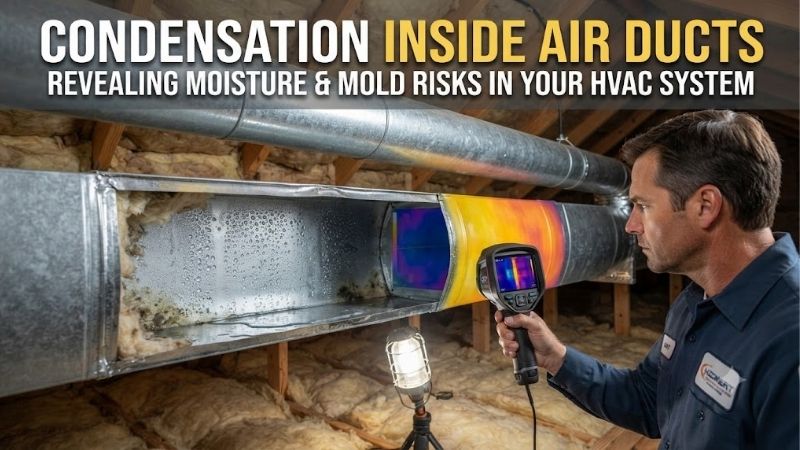
How to Choose the Right condensation inside air ducts Solutions
Evaluating condensation inside air ducts remedies requires analyzing ambient attic temperatures, local vapor barriers, and home airflow balances. Addressing high indoor humidity preserves indoor air purity while preventing costly furnace repair service calls. Modern moisture control techniques protect ductwork investments for years.
Evaluating Thermal Barriers and Insulation Thickness
Evaluating attic duct insulation prevents surface cold spots where moisture vapor condenses into liquid drops. Installing thick fiberglass sleeves or foam wrapping maintains internal air temperatures above ambient dew points. Proper thermal resistance prevents cold metal channels from sweating inside unconditioned spaces.
Inadequate insulation sleeve thickness allows hot attic air to chill metal trunks rapidly during summer. Upgrading unconditioned duct lines to modern thermal standards eliminates lingering surface wetness easily. Choosing higher R-value materials protects ceiling drywall from moisture staining during heat waves.
Monitoring Atmospheric Moisture and Dew Points
Monitoring dew point temperature prevents airborne moisture from reaching saturation levels near cold registers. When humid indoor air meets cold aluminum grilles, liquid drops form on surrounding drywall surfaces. Balancing ambient air moisture stops surface sweating before mold spores colonize register vents.
Adjusting central air handler blower speeds keeps air moving quickly across cold evaporator coils continuously. Slower airflow drops duct temperatures excessively, pushing internal air below ambient condensation thresholds. Proper blower tuning maintains balanced airflow without chilling metal vent surfaces needlessly.
Sealing Joints Against Ambient Vapor Infiltration
Applying proper air duct sealing stops warm ambient attic air from entering pressurized distribution networks. Leaky duct joints allow unconditioned moisture to mix directly with cold supply streams, causing rapid drop formation. Mastic sealant creates airtight barriers that withstand high static pressure fluctuations.
Unsealed supply plenums draw humid crawlspace air through tiny structural gaps during routine cooling cycles. Sealing metal seams prevents liquid pooling inside lower return ducts before structural rust develops. Quality butyl tapes and mastic pastes provide long-lasting protection against internal moisture.
Supporting Flexible Duct Line Layouts
Preventing flex duct sweat requires eliminating sharp kinks and crushed insulation sleeves along attic runs. Restricted airflow causes localized cooling pockets where cold air sits dormant inside plastic liners. Smooth flex duct routing ensures rapid air movement and steady temperature balance across all rooms.
Sagging flexible lines trap pockets of dense cold air, increasing exterior sleeve condensation in hot weather. Elevating flexible runs onto joists preserves insulation thickness and maintains uniform air velocity. Smart duct support prevents sagging sections from developing persistent surface wetness.
Top Picks for condensation inside air ducts Solutions
Analyzing top products for condensation inside air ducts helps homeowners isolate thermal bridges and stop duct sweating effectively. Installing tested insulation sleeves, sealed tapes, and dehumidification gear protects structural home framing year-round. The following Amazon picks provide reliable moisture mitigation.
| Product Name | Category | Primary Feature | Main Benefit |
|---|---|---|---|
| Frost King Foil & Fiberglass | Duct Insulation | Foil Thermal Barrier | Blocks ambient heat transfers |
| Nashua 324A Foil Tape | Sealing Tape | Acrylic Cold Adhesive | Seals airtight plenum seams |
| ThermoPro TP50 Hygrometer | Humidity Sensor | Digital LCD Display | Tracks indoor moisture spikes |
| AlorAir 120 PPD Dehumidifier | Crawlspace Gear | High Moisture Removal | Lowers crawlspace dew points |
| Design Polymerics DP 1010 | Mastic Sealant | Water-Based Acrylic | Permanent air joint sealing |
Frost King Foil and Fiberglass Duct Wrap
Homeowners seeking to reduce condensation inside air ducts will love this thick fiberglass wrap for uninsulated metal trunks. Its reflective foil outer jacket blocks ambient heat radiant transfers while locking in supply air temperatures. It stops exterior metal sweating across hot attic spaces effectively.
On the downside, handling loose fiberglass fibers requires protective gloves, long sleeves, and safety goggles during overhead installation. Thin outer foil edges can tear if pulled too tightly around sharp rectangular duct corners. Still, it delivers affordable duct wrap insulation for damp attic channels.
Nashua 324A Premium Cold Weather Foil Tape
DIYers sealing joint gaps to manage condensation inside air ducts will appreciate this UL 181-listed foil tape. Its aggressive cold-weather acrylic adhesive bonds tightly to sheet metal sleeves and foil jackets. It prevents ambient moisture infiltration across high-pressure plenum seams reliably.
However, peeling the stiff paper backing off sticky adhesive layers can prove frustrating in tight crawlspaces. Thin foil backing can crease or tear if misaligned during initial application over irregular joints. Nevertheless, it provides essential airtight sealing for humid ductwork networks.
ThermoPro TP50 Digital Indoor Hygrometer Monitor
Property owners monitoring indoor moisture trends to prevent duct wetness will benefit from this digital sensor. Its clear LCD screen displays real-time relative humidity percentages and ambient temperatures accurately. Using a hygrometer humidity monitor identifies indoor humidity spikes before vent sweating starts.
Negative wise, this basic tabletop monitor lacks wireless Bluetooth connectivity or smart phone app notifications for remote tracking. The screen lacks a built-in backlight, making readings difficult in dim basement mechanical rooms. Overall, it delivers simple, accurate humidity monitoring for home spaces.
AlorAir Crawlspace Dehumidifier 120 PPD Commercial Unit
Homeowners fighting heavy plenum moisture and condensation inside air ducts will value this commercial-grade crawlspace dehumidifier. Removing up to 120 pints of daily moisture, it lowers ambient dew points around unconditioned duct runs. Deploying a dehumidifier for crawlspace environments stops moisture accumulation across lower channels.
Downside wise, the heavy industrial chassis requires two people to maneuver into low-clearance crawlspace areas. The high-output compressor produces noticeable operational noise beneath first-floor living zones. Regardless, it offers unmatched moisture extraction power for damp home foundations.
Design Polymerics DP 1010 Water-Based Duct Sealant
Buyers fixing leaky seams to control ventilation sweating will appreciate this flexible mastic paste. Brushing smoothly onto sheet metal joints, it cures into a permanent, water-resistant seal that stops air leaks. It stops ambient air mixing that triggers internal vent condensation drops.
On the negative side, full cure times require up to 48 hours before running high-velocity HVAC blower fans. Applying thick paste with hand brushes can feel messy without protective rubber gloves and drop cloths. Still, it provides durable airtight joint seals for long-term duct protection.
Frequently Asked Questions
Addressing common queries about condensation inside air ducts helps homeowners restore healthy HVAC moisture control balances and protect drywall ceilings. Clear answers clarify thermal barriers, fan speed settings, and humidity management tactics. Read these expert insights to maintain dry, efficient home ductwork networks.
Why is there condensation inside air ducts during summer?
Condensation forms when cold conditioned air cools uninsulated metal duct walls below the surrounding ambient dew point temperature. Hot, humid attic air contacting chilled metal surfaces causes water vapor to turn into liquid droplets. Poor attic duct insulation accelerates this moisture formation across metal trunks.
Restricted system airflow from dirty furnace filters also drops duct temperatures excessively, increasing condensation risks. Ensuring proper air velocity and insulating cold supply lines stops surface sweating during hot summer months. Timely duct maintenance preserves home structural integrity year-round.
Can high indoor humidity cause air ducts to sweat?
Yes, high indoor humidity dramatically raises indoor dew points, causing vent condensation to pool on cold supply vents and grilles. When humid room air contacts cold register metal, liquid droplets pool on surrounding ceiling drywall. Maintaining balanced indoor humidity levels prevents vent sweating effectively.
Operating dedicated dehumidifiers or whole-home ventilation controls keeps indoor relative humidity below fifty percent consistently. Lowering ambient moisture prevents liquid pooling around register boxes without adjusting thermostat temperatures lower. Smart humidity control protects home interiors from mold growth.
How does improper airflow increase duct condensation?
Improper airflow caused by clogged air filters or undersized ducts chills supply air excessively inside main distribution trunks. Slow-moving cold air drops duct wall temperatures significantly, worsening duct sweating across hot unconditioned spaces. Preserving high blower velocity maintains steady internal temperatures.
Regularly replacing restrictive air filters ensures blower fans move adequate CFM volume across cooling coils continuously. Clean filters prevent excessive static pressure drops, keeping duct surfaces above ambient dew points. Proper airflow management eliminates localized thermal chilling pockets easily.
Will air duct sealing stop moisture buildup?
Yes, air duct sealing stops warm, humid ambient air from leaking into chilled supply duct channels during cooling cycles. Sealing metal joints with mastic paste prevents moist air from mixing with cold air streams inside plenums. Airtight seals reduce internal condensation drop formation dramatically.
Combining professional mastic sealing with thick outer insulation wrap creates an impermeable barrier against attic vapor. Stopping air leaks preserves cooling efficiency while eliminating moisture accumulation along hidden joists. Smart duct sealing protects home heating and air conditioning systems long-term.
Final Thoughts
Managing condensation inside air ducts requires balancing thermal insulation, proper air duct sealing, and indoor humidity control. Eliminating cold surface spots protects ceiling drywall from moisture damage while preserving HVAC system efficiency. Timely duct upgrades ensure dry, comfortable indoor living environments year-round.
As an Amazon Associate we earn from qualifying purchases at no extra cost to you.
#1 Pick







Write Your Review
No reviews yet. Be the first to share your experience!