
- Top Pick: Holikme Dryer Vent Cleaner Kit – 30Ft Fireplace Chimney Brushes Flexible
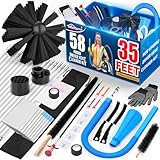
- Best Value: Holikme Dryer Vent Cleaner Kit – 35Ft Flexible Lint Brush for Deep Cleaning
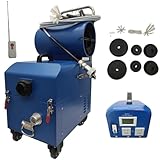
- Premium Choice: Flexible 8 Tentacles Air Duct Cleaning Whip, Forward Air Flow Design, 14 Inch Long for Duct Cleaning with 1/8 Inch Connector
The Short Answer
For most household duct-cleaning jobs, choose rods that are 12 to 18 inches long per section, with a diameter of about 0.25 to 0.5 inch (6 to 13 mm). A total working length of 15 to 30 feet (4.6 to 9.1 m) is usually enough for a dryer vent, bathroom exhaust duct, or short return-air run.
Use thinner, more flexible rods for bends and narrow ducts. Choose thicker rods when you need to push a brush through a longer, straighter run. For a powered air-duct whip, check the connector size first; a common example is a 1/8-inch (3.2 mm) connector. The correct length depends on how far the brush must travel, while the correct diameter depends on the duct opening and the number of bends.
As an Amazon Associate we earn from qualifying purchases at no extra cost to you.


Do not size a rod to fill the duct. The brush or whip needs room to rotate and move air around it. As a practical rule, the brush head should be slightly smaller than the duct’s narrowest inside dimension, and the rod should bend without scraping hard against the walls.
Standard Sizes
Duct-cleaning rods are sold as individual sections, flexible shafts, or long kits. Product listings may describe overall reach rather than the length of each rod, so check both measurements before buying. The table below covers common household sizes.
| Rod or kit size | Typical section length | Overall reach | Rod diameter | Best suited to |
|---|---|---|---|---|
| Short, narrow kit | 12 in (30.5 cm) | 10–15 ft (3.0–4.6 m) | 1/4 in (6.4 mm) | Bathroom vents, short exhaust ducts, small dryer runs |
| General-purpose flexible kit | 18 in (45.7 cm) | 15–20 ft (4.6–6.1 m) | 5/16 in (7.9 mm) | Most residential dryer vents and straight duct sections |
| Long flexible kit | 18–24 in (45.7–61.0 cm) | 25–35 ft (7.6–10.7 m) | 5/16–3/8 in (7.9–9.5 mm) | Long dryer vents and chimney-style passages |
| Stiff, heavy-duty rod | 24 in (61.0 cm) | 20–30 ft (6.1–9.1 m) | 3/8–1/2 in (9.5–12.7 mm) | Long, mostly straight ducts with heavy buildup |
| Air-whip connector | 14 in (35.6 cm) whip assembly | Depends on hose and air system | 1/8 in (3.2 mm) connector | Powered air cleaning, when paired with compatible equipment |
For a typical dryer vent, a 30-foot kit often provides more reach than necessary but allows you to work from the appliance toward the exterior termination. A 35-foot kit can be useful when the vent exits through a basement, attic, or long side wall. Examples in this category include 30-foot and 35-foot flexible brush kits priced around $19.99 to $20.99, depending on the listing and included accessories.
A 17-foot one-piece flexible shaft, priced around $24.99 in a typical listing, is better for a shorter run when you want fewer joints. A powered eight-tentacle air-whip assembly with a 14-inch length and 1/8-inch connector may cost about $46.95, but it is not a complete replacement for an air compressor, vacuum, or compatible hose.
How to Measure Your Space
- Identify the access point. Measure the opening where the rod or brush will enter. Common dryer vent openings are about 4 inches (10.2 cm) across, while central-air ducts may be much larger. Never assume the visible grille size equals the inside duct size.
- Measure the straight run. Use a tape measure to estimate the distance from the access point to the exterior cap, appliance connection, or next access panel. Add the lengths of all reachable sections.
- Estimate the bends. Add about 1 to 2 feet (30 to 61 cm) for each moderate bend. A tight 90-degree elbow may require a thinner rod, a shorter section, or cleaning from the opposite direction.
- Check the narrowest point. Measure or estimate the smallest inside dimension, not the largest part of the duct. Select a brush head at least 1/2 inch (1.3 cm) smaller than that opening when possible.
- Choose a working margin. Buy 10 to 20 percent more reach than your measurement. For example, a measured 14-foot (4.3 m) run is a better match for a 17- or 20-foot kit than a kit that stops exactly at 14 feet.
- Confirm the connection. Check whether the brush uses screw-together rods, a threaded end, a quick-connect fitting, or a 1/8-inch (3.2 mm) air connector. Rod diameter alone does not guarantee compatibility.
By Room or Use Case
Dryer vents
Most home dryer vents use 4-inch (10.2-cm) ducting. A 1/4- to 5/16-inch (6.4- to 7.9-mm) flexible rod with a 15- to 30-foot (4.6- to 9.1-m) reach is a practical choice. Use a brush made for lint rather than a large HVAC rotary brush. If the vent has several elbows, a 30-foot kit with shorter flexible sections is often easier to control than one very stiff shaft.
Bathroom exhaust fans
Bathroom exhaust ducts are often 3 or 4 inches (7.6 or 10.2 cm) wide and may be short, but they can have sharp turns near the roof or wall cap. Choose a 1/4-inch (6.4-mm) rod and a total reach of 10 to 15 feet (3.0 to 4.6 m). A small, soft brush is less likely to damage thin flexible ducting.
Kitchen exhaust ducts
Grease can make kitchen exhaust cleaning more demanding. Measure the duct before choosing a brush, because sizes vary widely. For a compact residential run, a 5/16- to 3/8-inch (7.9- to 9.5-mm) rod may provide useful control, but use a degreasing method approved for the duct and hood. Do not force a dry brush through hardened grease.
Central-air supply and return ducts
Large HVAC ducts may be 6 to 12 inches (15.2 to 30.5 cm) or more across. A dryer-vent rod can reach into an opening, but it may not clean a large rectangular duct evenly. For these systems, choose a rod or whip specifically rated for the duct size and use access panels where available. A professional rotary-brush or air-whip system may be more appropriate than a basic hand kit.
Chimney or fireplace passages
Chimney brushes use different heads and rods from dryer-vent brushes. For a chimney, match the brush diameter to the flue’s inside dimensions and select rods long enough to reach the entire flue from the chosen direction. Flexible 30- or 35-foot kits may be marketed for fireplace use, but verify that the brush material and diameter are suitable for the flue liner before purchasing.
Common Sizing Mistakes
- Buying by total length alone: A 30-foot kit may still be unsuitable if its rod sections are too stiff for your bends or its brush is too large.
- Using an oversized brush: A tight brush can become stuck, especially in an elbow. Leave clearance for rotation and withdrawal.
- Ignoring section length: Twelve-inch sections turn more easily than 24-inch sections, while longer sections can feel sturdier in a straight run.
- Confusing connector and rod diameter: A 1/8-inch air connector does not mean the entire whip or hose is 1/8 inch wide.
- Choosing a rigid rod for flexible duct: Excessive force can tear thin foil or plastic ducting.
- Cleaning only from one end: If the rod cannot reach the full run, use the opposite access point rather than forcing it farther.
FAQ
What size rod is best for a 4-inch dryer vent?
Start with a flexible rod about 1/4 to 5/16 inch (6.4 to 7.9 mm) in diameter and a 15- to 30-foot (4.6- to 9.1-m) reach. The brush head should fit comfortably inside the 4-inch duct without wedging at bends.
Are longer duct-cleaning rods better?
Only when you need the extra reach. A longer kit is useful for a 25-foot (7.6-m) vent, but unnecessary length can be harder to manage. Select the shortest kit that reaches the full run, then add roughly 10 to 20 percent for working margin.
Can I use dryer-vent rods in HVAC ducts?
You can use a small kit for limited access around a grille, but it may not clean a large HVAC duct effectively. Match the brush and rod to the duct’s inside size, construction, and access points. Large systems commonly require specialized equipment.
What should I buy in 2026 for occasional home use?
For routine dryer or bathroom-vent maintenance, a 15- to 20-foot kit with 12- to 18-inch sections and a 1/4- to 5/16-inch rod is a sensible starting point. Choose a 30- to 35-foot kit for a long run, and consider a powered air-whip only if you already have compatible air equipment.
Ready to decide? Our #1 pick for 2026 is the Short, narrow kit.
Live price & availability on Amazon.


Write Your Review
No reviews yet. Be the first to share your experience!