
The Short Answer
For most dryer vent cleaning jobs, choose a flexible vacuum hose or attachment with a 1.25- to 1.5-inch inside diameter (3.2 to 3.8 cm). This is the most useful size for reaching through the lint screen opening and connecting to small dryer-vent cleaning brushes. A 2.5-inch hose (6.4 cm) is better when you are cleaning from the outside wall or using a wet/dry vacuum with a large standard hose.
The dryer’s exhaust duct itself is normally much larger: approximately 4 inches in diameter (10.2 cm). That does not mean you should buy a 4-inch vacuum hose. A full-size hose may not fit through the dryer’s lint-trap channel, and it can be difficult to control inside the duct. The best setup is usually a narrow, flexible hose with an adapter that matches your vacuum’s inlet.
As an Amazon Associate we earn from qualifying purchases at no extra cost to you.

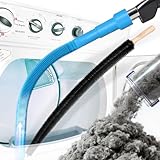


Before buying, check three measurements: the vacuum’s hose opening, the cleaning tool’s connection, and the narrowest part of the dryer’s lint-trap or vent path. Universal kits commonly cost about $7 to $15, while longer or more specialized hose-and-brush systems can cost approximately $15 to $40. Prices vary by retailer and included accessories.
Standard Sizes
The following sizes cover most home dryer vent cleaning tools. Measurements refer to approximate inside diameters unless noted otherwise. Always compare the actual connector dimensions with your vacuum because “universal” does not guarantee a snug fit on every model.
| Hose or opening size | Inches | Centimeters | Typical use |
|---|---|---|---|
| Narrow vacuum attachment | 1.25 in | 3.2 cm | Lint-screen openings, crevices, and compact dryers |
| Common small attachment | 1.5 in | 3.8 cm | Dryer vent brushes and many canister or shop-vac adapters |
| Medium vacuum hose | 1.75 in | 4.4 cm | Some specialty kits and larger household vacuums |
| Standard wet/dry vacuum hose | 2.5 in | 6.4 cm | Outside vent cleaning and high-volume lint removal |
| Dryer exhaust duct | 4 in | 10.2 cm | Permanent duct behind the dryer and through the wall |
| Typical lint-trap channel depth | 8–24 in | 20–61 cm | Approximate reach needed from the dryer opening |
A 1.25- or 1.5-inch hose is usually the safest starting point for cleaning through the lint filter housing. Flexible crevice-style attachments can bend around the internal turns without putting excessive pressure on the screen channel. For the duct behind the dryer, a 2.5-inch hose can remove loose lint more quickly, but it may require a reducer or stepped adapter.
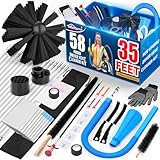
Some kits include a brush rather than a separate hose. Examples such as the PetOde universal attachment and brush kit, Holikme two-pack, and Sealegend universal blue attachment are generally compact, low-cost options in roughly the $7 to $10 range. Their listed price does not tell you whether the connector will fit your particular vacuum, so measure first. A kit may include a 1.25-inch-style adapter, a tapered connector, or a flexible tube intended to fit several openings.
How to Measure Your Space
- Unplug the dryer. Turn off the dryer and disconnect its power before moving it or removing the lint screen. If it is gas-powered, avoid disturbing the gas line. Do not operate the appliance while the vent is disconnected.
- Measure the vacuum connection. Measure the inside diameter of the vacuum port or the outside diameter of the vacuum hose end. A ruler or tape measure marked in inches is sufficient. For example, an opening close to 1.5 inches may need a 1.5-inch attachment or a tapered adapter.
- Measure the cleaning opening. Remove the lint screen and measure the narrowest visible opening. Do not force a tool into a slot that is narrower than the tool head. A hose around 1.25 inches is often more useful than a larger hose here.
- Check the hose length. Measure from the vacuum to the dryer opening, allowing enough length to move the nozzle. For a nearby dryer, 3 to 6 feet (0.9 to 1.8 meters) is often convenient. Longer hoses may be needed when cleaning from an exterior wall.
- Inspect the rear duct connection. Pull the dryer forward carefully and measure the exhaust duct. Most residential dryer ducts are 4 inches in diameter. Confirm that the duct is not crushed, sharply kinked, or made from unsafe thin plastic film.
- Measure the outside vent cover. If you plan to clean from outdoors, measure the opening behind the flap or screen. A 2.5-inch hose may fit comfortably, but the vent cover or bird screen can reduce the usable opening.
- Compare adapter measurements. Look for a hose or kit with a connector range that includes your measurements. A tapered adapter should fit tightly enough to prevent lint from escaping, but it should not need to be forced into the dryer.
By Room or Use Case
Standard laundry room with a nearby outlet
A 1.25- to 1.5-inch flexible attachment is usually the most practical choice. It can reach the lint-trap channel and the short section behind the appliance without requiring a bulky shop vacuum. Choose a hose about 3 to 6 feet long and use a soft brush head if the interior contains lint packed against the walls.
Long or hidden vent runs
For a vent that travels through a wall, ceiling, or multiple turns, use a flexible cleaning system with a narrow hose or rotating brush. A 1.25- to 1.5-inch vacuum connection can collect loosened lint, while a separate brush may extend 10 to 20 feet or more. Avoid pushing a rigid nozzle around sharp bends; it can disconnect a joint or damage a flexible duct.
Exterior wall vent
A 2.5-inch hose connected to a wet/dry vacuum is useful for removing larger amounts of lint from the outside. It provides greater airflow than a narrow attachment, but it is only appropriate if the exterior opening is large enough. A reducer may be needed between the 2.5-inch vacuum hose and a smaller brush or vent adapter.
Compact or stackable dryer
Stacked laundry centers and compact dryers often have restricted lint-screen openings. Start with a 1.25-inch hose and a slim, flexible nozzle. Measure the opening carefully because the available space may be less than 1.5 inches. Keep the attachment short enough to control and do not pry against plastic guides inside the lint-trap housing.
Commercial or shared laundry room
For frequent cleaning, a 2.5-inch shop-vac hose paired with reducers and a dedicated vent brush is more durable than a basic household attachment. Look for a crush-resistant hose, a secure locking connection, and a brush shaft long enough for the building’s vent layout. A larger vacuum may weigh 10 to 20 pounds or more, so use care when moving it near the appliance.
Common Sizing Mistakes
- Buying a 4-inch hose because the duct is 4 inches. The 4-inch measurement describes the permanent exhaust duct, not necessarily the cleaning-tool connection.
- Measuring the outside instead of the inside. Hose walls add material. Measure the opening that air and lint actually pass through.
- Assuming “universal” means guaranteed compatibility. Universal kits often rely on tapered ends, and the fit can vary among vacuums.
- Choosing the largest hose available. Bigger is not always better in the lint-trap channel. A large nozzle may not reach past the first bend.
- Ignoring the adapter. A hose with the right diameter can still fail if its connector is too short, too loose, or incompatible with the vacuum’s locking system.
- Using a brush without collecting loosened lint. Brushing can move lint deeper into the duct. Pair the brush with vacuum suction when possible, and clean the exterior vent afterward.
- Forcing a tool through resistance. Stop if the hose catches, the vent flap will not open, or the duct appears separated. A professional inspection may be safer than pushing farther.
FAQ
Is a 1.5-inch hose large enough for dryer vent cleaning?
Usually, yes. A 1.5-inch hose is a common practical size for the lint-screen opening and many dryer vent cleaning kits. It may not remove lint as quickly as a 2.5-inch shop-vac hose, but it is easier to maneuver through narrow channels and bends.
Can I use a regular vacuum cleaner?
You can use a household vacuum if its hose and motor are suitable for loose, dry lint. Use a compatible narrow attachment and avoid forcing the hose into the duct. A shop vacuum is often preferable for heavy buildup because its hose is more durable and its collection container is easier to empty.
What size is a standard dryer vent duct?
Most residential dryer exhaust ducts are approximately 4 inches (10.2 cm) in diameter. Confirm the actual duct before buying an adapter, especially in older homes or unusual installations. The duct should be properly supported, unobstructed, and connected with appropriate metal or approved semi-rigid material.
How often should I clean the vent?
Inspect and clean the lint screen after every load. Have the vent path cleaned at least once a year in many homes, and more often if drying takes longer, clothes feel unusually hot, or the household does frequent laundry. In 2026, the best size guide is still the same practical rule: measure the vacuum opening and the narrowest dryer access point before choosing the hose.
Ready to decide? Our #1 pick for 2026 is the Narrow vacuum attachment.
Live price & availability on Amazon.


Write Your Review
No reviews yet. Be the first to share your experience!