
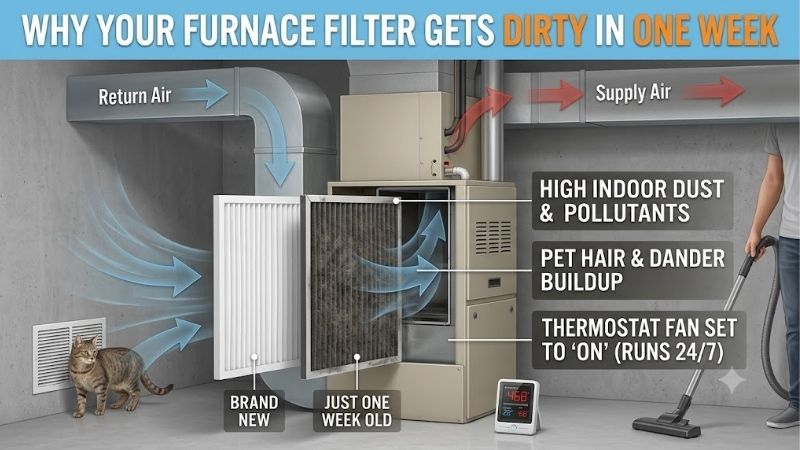
Why furnace filter gets dirty in one week is a common question homeowners ask when dust accumulates fast. High pet dander, continuous fan running, or leaky air ducts cause rapid filter buildup in your HVAC system. Inspecting your home airflow, MERV rating, and return vents helps protect equipment while restoring clean indoor air.
How to Choose the Right Furnace Filter to Prevent Clogging
Choosing an appropriate replacement filter requires balancing indoor air quality needs with your blower motor capacity. Understanding how why furnace filter gets dirty in one week relates to improper media selection prevents premature airflow restriction. Evaluating frame dimensions and filtration media ensures optimal protection for your heating and cooling equipment.
Selecting the Proper MERV Rating for Home Airflow
Minimum Efficiency Reporting Value measures how effectively media traps microscopic particles passing through return vents. High MERV rating options catch finer pollutants like smoke and pet dander but create higher initial pressure drops. Selecting an overly dense media forces your HVAC system fan to work harder, accelerating surface dust accumulation.
Homeowners with standard residential units usually find MERV 8 to 11 provides an effective balance of performance. Capturing dust accumulation without choking system airflow prolongs motor life and maintains balanced temperatures. Always verify manufacturer specifications before installing dense media to avoid restrictive conditions in your home.
Evaluating Pleated Filters Versus Fiberglass Media
Flat fiberglass options offer minimal airflow restriction but fail to trap fine airborne particles effectively. Electrostatically charged pleated filter products capture significantly more debris due to expanded surface area folds. However, dense synthetic pleats show visible dirt much faster, leading many users to replace them prematurely.
While fiberglass looks clean longer, harmful dust bypasses the frame and settles directly inside interior ductwork. A quality pleated filter holds fine particulate matter safely within its synthetic fibers. Choosing structural stability and higher surface area keeps your system internal components clean over seasonal operations.
Matching Filter Thickness with System Cabinet Capacity
Standard one inch filter slots limit total media surface area, causing fast buildup in heavy dust environments. Upgrading to four inch media cabinets distributes captured debris across deeper pleat folds, extending service lifespan. Understanding this spatial dynamic helps reduce replacement frequency while keeping performance consistent throughout winter.
Deep media designs allow air to pass freely even as outdoor pollutants and indoor dander collect inside pleats. If your cabinet only accepts slim frames, consider frequent monitoring during heavy HVAC usage periods. Proper dimensional matching prevents air bypass around frame edges and maintains constant indoor comfort.
Top Picks for High Dust Homes and Long Lasting Airflow
Discovering why furnace filter gets dirty in one week often leads homeowners to upgrade their replacement media. The following high performance filters capture heavy dust accumulation, pet dander, and pollen effectively. Each option offers reliable structural integrity and efficient airflow balance for modern residential heating systems.
Filtrete MPR 1200 MERV 11 Pleated Air Filter
Ideal for households with shedding pets and seasonal allergy sufferers seeking reliable microparticle removal. Electrostatic pleats attract dust accumulation while maintaining consistent airflow across standard residential HVAC system designs. High structural rigidity prevents frame collapsing under high return air vent suction during continuous operation.
Higher filtration efficiency means surface loading becomes visible faster than cheap fiberglass alternatives. Users must monitor airflow resistance monthly to prevent unnecessary strain on electric blower motors. Overall, it delivers superior indoor air quality for busy households needing dependable allergen protection.
Nordic Pure MERV 12 Pleated AC Furnace Air Filter
Designed for urban residences exposed to fine smog, lint, and airborne mold spores throughout the year. Synthetic antimicrobial media stops bacterial growth while capturing tiny particles that cause indoor air quality issues. Sturdy moisture resistant frames hold shape exceptionally well under humid baseline indoor conditions.
Extremely fine synthetic fibers capture dust quickly, which can shorten active lifespan in high traffic homes. System blowers with lower horsepower may experience reduced air velocity if left unchanged too long. Nevertheless, this filter excels at creating pristine living spaces free from persistent airborne irritants.
Honeywell Home FC100A1029 MERV 11 Media Air Filter
Perfect for homeowners possessing four inch deep filter cabinets who want long lasting allergen filtration capacity. Deep pleated media offers massive surface area, preventing rapid surface clogging while capturing stubborn pet dander. Heavy duty beverage board housing forms an airtight seal inside compatible whole house air cleaner units.
Requires a dedicated deep cabinet enclosure, making it incompatible with standard one inch return slots without modification. Higher initial replacement cost is balanced by extended operation intervals reaching up to twelve months. It remains an outstanding choice for whole house protection and low maintenance heating setups.
| Product Model | MERV Rating | Thickness | Primary Filter Material | Best For |
|---|---|---|---|---|
| Filtrete MPR 1200 | MERV 11 | 1 Inch | Electrostatic Synthetic | Pet Owners & Allergy Relief |
| Nordic Pure MERV 12 | MERV 12 | 1 Inch | Antimicrobial Synthetic | Urban Smog & Fine Dust |
| Honeywell FC100A1029 | MERV 11 | 4 Inch | Deep Pleated Media | Deep Cabinets & Long Life |
Frequently Asked Questions
Understanding why furnace filter gets dirty in one week helps maintain energy efficiency and home comfort. Below are direct answers to common queries regarding rapid dust accumulation, fan settings, and system safety. Reviewing these expert tips ensures your indoor air quality stays high while protecting valuable mechanical parts.
Can a Dirty Air Filter Cause Your Furnace to Overheat?
Restricted airflow prevents heat exchangers from transferring thermal energy into living spaces efficiently. Excessive dust accumulation on media folds traps hot air inside the furnace cabinet, triggering safety limit switches. Repeated overheating cycles cause system shut downs and potentially damage expensive mechanical components over time.
Replacing clogged media immediately restores proper air volume across heat exchanger surfaces. Regular inspections prevent emergency service calls during extreme winter conditions when heating demand peaks. Keeping return pathways open ensures safe mechanical operation and consistent heat distribution throughout your home.
How Often Should You Replace Your Home Air Filter?
Most manufacturers recommend changing one inch pleated options every ninety days under normal living conditions. However, homes with multiple pets, recent remodeling, or air duct leaks require replacement every thirty days. Observing why furnace filter gets dirty in one week indicates severe dust sources needing immediate corrective action.
Inspecting media monthly allows you to gauge actual loading rates rather than relying on strict calendar schedules. Homes utilizing four inch media filters often extend service intervals up to six or twelve months safely. Adjust your replacement schedule based on household activity, pet shedding, and seasonal outdoor air quality.
Does Keeping the HVAC Fan Turned On Darken Filters Faster?
Running your system thermostat fan continuously pulls house air through return vents twenty four hours daily. Continuous circulation collects loose pet dander and ambient dust rapidly, darkening media within several days. While indoor air quality improves dramatically, filter lifespan decreases proportionally due to constant particle exposure.
Switching fan settings back to AUTO mode limits air circulation strictly to heating or cooling operational cycles. This adjustment reduces overall dust volume striking the pleated filter media, extending functional service life. Balance your desire for constant air filtration against the cost of frequent filter replacements.
Why Does My New Furnace Filter Turn Black So Quickly?
Soot from burning scented candles, gas fireplace malfunction, or unsealed return air duct leaks causes black deposits. Microscopic carbon particles pass through room air and lodge deeply into electrostatically charged synthetic fibers. Inspecting your furnace flame color and sealing ductwork joints resolves mysterious black discoloration issues effectively.
Never ignore rapid black buildup, as unvented combustion gases present potential health hazards to occupants. Address leaky return ducts in unfinished basements or attics to stop drawing fine insulation fibers and dirt. Identifying soot sources protects household safety while extending the working life of new filtration media.
Final Thoughts
Investigating why furnace filter gets dirty in one week allows you to address underlying indoor air quality issues before equipment damage occurs. Sealing air duct leaks, managing pet dander, and selecting appropriate MERV ratings ensures optimal HVAC performance. Regular monthly inspections keep your heating system running efficiently while maintaining clean, healthy air throughout every season.
As an Amazon Associate we earn from qualifying purchases at no extra cost to you.







Write Your Review
No reviews yet. Be the first to share your experience!