
Short answer: the quietest portable air conditioners are usually the ones with a low claimed decibel rating on the lowest fan speed, a compressor that does not hammer the unit’s housing, and a setup that keeps the hose and window kit from rattling. No single number settles it, and we have not run any units in a room, so use this guide to read listings critically rather than as a ranking of specific models.
- What makes a portable air conditioner noisy in the first place
- Reading decibel claims without being fooled
- Features that tend to lead to a calmer unit
- Quiet picks by use case
- What to check on a listing before you buy
- Worked example: a bedroom at night
- Ways to make any unit quieter
- Mistakes buyers make with “quiet” claims
- Frequently asked questions
| Quiet-running factor | What to look for | How much it usually matters |
|---|---|---|
| Claimed noise level | A stated decibel range, ideally with the fan speed it applies to | High, but it is a seller claim |
| Compressor behavior | Variable-speed or inverter wording in the specifications | High for bedrooms |
| Night or sleep mode | Lower fan speed and dimmed display | Medium to high |
| Cooling capacity vs room size | A rating that suits the room without running flat out | High |
| Hose and window kit | Tight seals, short hose run, no loose panels | Medium |
| Placement | Firm, level surface with a damping mat | Medium |
What makes a portable air conditioner noisy in the first place
A portable air conditioner packs a compressor, a condenser fan, an evaporator fan and often a small pump into one cabinet that sits in the room with you. A window unit keeps the noisiest parts outside; a portable one does not. That design is why portable models have a reputation for being louder than other types.
The sound comes from several sources that overlap. The compressor produces a low hum and a periodic thud when it starts or stops. The fans produce airflow noise that rises with speed. The hose can add whistling or buzzing if it is kinked or loosely attached, and the plastic housing can rattle if the unit sits on an uneven floor.
It also helps to know that noise is not constant. Many people judge a unit by the sound while it is cooling hard on a hot afternoon, then forget that the same unit runs far more gently once the room has reached the target temperature. A unit that is too small for the room never gets to that calmer stage, so undersizing is a common noise problem that rarely appears on a spec sheet.
Some models drain condensate internally and some collect water in a tank or use a pump. A pump that cycles on and off can add a small gurgle, which matters if you are a light sleeper. The listing’s drainage description is worth a look for that reason.
Reading decibel claims without being fooled
Decibels are measured on a logarithmic scale, so a few points of difference is more noticeable than it looks. As a rough rule of thumb, an increase of about ten decibels is heard by most people as roughly twice as loud. That means a claim of 52 dB and a claim of 62 dB describe clearly different experiences, while 52 and 54 are close.
The trouble is that sellers do not all measure the same way. A figure may be taken at a set distance, on the lowest fan speed, with the compressor off, or in a quiet chamber. Some listings give a range, such as a low number for the lowest setting and a higher number for the highest. When a listing shows only one number with no conditions, assume it is the best-case value.
Use the claim as a filter, not a verdict. Rule out units with no stated sound level at all, and be cautious about units whose title says “quiet” but whose specifications give nothing to back it up. Then cross-check with buyer comments, looking for repeated remarks about compressor rattle, fan whine or the sound at night rather than isolated opinions.
For perspective, a quiet conversation and a typical refrigerator hum are often quoted in the 40s to 50s of decibels, while ordinary conversation is often quoted in the 60s. Those reference points are general and approximate, but they help you picture what a listed number means in a room.
Features that tend to lead to a calmer unit
Several features correlate with quieter operation, though none is a guarantee. Variable-speed or inverter compressors can ramp up and down rather than slamming on and off. A multi-speed fan lets you drop to a low setting when the room is already comfortable. A dedicated sleep mode usually lowers the fan speed and may raise the set temperature slowly overnight.
Dual-hose designs draw intake air through a second hose rather than from the room. That is mainly an efficiency feature, but it can mean the unit does not need to run as hard to reach the target temperature, which indirectly helps noise. Check our guide to dual-hose portable air conditioners if you want the cooling side of that trade-off.
Look at drainage as well. Self-evaporating designs aim to reduce how often you drain or pump out water, though many still need a drain option in humid weather. If drainage matters to your setup, our overview of self-evaporating portable air conditioners covers the idea in more depth.
Finally, remote controls and timers are not noise features by themselves, but they let you start cooling before you go to bed and switch to a gentle setting afterward. That alone can reduce how often you hear the loudest stage.
Quiet picks by use case
| Where it will run | What matters most | What to prioritize |
|---|---|---|
| Bedroom | Sound at the lowest fan speed, sleep mode | Low claimed dB, variable-speed wording, remote control |
| Home office or video calls | Steady, low-pitched sound, no cycling thuds | Inverter or variable-speed description, stable placement |
| Small apartment living room | Balanced noise and capacity | Right-sized capacity, tidy hose kit, a model with a clear window installation guide |
| Camper or small cabin | Power draw, compact footprint | Lower power requirements, secure mounting, tight venting |
For bedrooms, put the sound claim and sleep mode at the top of the list and accept that you may pay more for it. For home offices, steady low-pitched noise is easier to ignore than a cycle that clicks on and off, so favor variable-speed wording. For apartments, our look at portable air conditioners with an exhaust hose kit for apartments goes through the window-venting side.
For campers and small spaces, power draw and venting are the bigger constraints. Our camper-focused cooling guide explains why a quiet unit is not worth much if your power supply cannot run it.
What to check on a listing before you buy
- Stated sound level. Look for a number, the fan speed it applies to, and whether it is a range.
- Room-size rating. Compare the listed cooling capacity to your room. If the room is near the unit’s limit, expect more run time and more noise.
- Compressor description. Variable-speed or inverter language is a positive sign. Absent wording does not mean the opposite, so check the specifications.
- Modes. Sleep, night, or low-fan modes are worth having.
- Window kit. A kit that fits your window type and seals well reduces hose rattle and heat leak.
- Drainage. Understand whether you will empty a tank, run a hose or rely on evaporation.
- Power needs. Check the plug type and circuit needs, and follow the manufacturer’s instructions and local electrical codes. Avoid extension cords unless the manual explicitly allows them.
If a listing is vague on three or more of those seven points, treat it as a gamble and look elsewhere.
Worked example: a bedroom at night
Assume a bedroom of about 150 square feet with an average ceiling height, a single window, and moderate summer heat. These assumptions are illustrative, not measurements. Manufacturers publish capacity guidance by room size, so start there and add some headroom if the room gets afternoon sun or if two people sleep in it.
Suppose Unit A is rated for a room that size with no margin, and its listing gives one noise figure with no conditions. Unit B is rated for a somewhat larger room, shows a lower figure on its lowest fan speed, has a sleep mode, and mentions variable-speed operation. Unit B will probably spend more of the night in a gentle stage, because it reaches the target temperature without straining.
Unit A could still be fine in a smaller or shadier room, but in this scenario it is more likely to run hard and loud. The price difference between them is often smaller than the loss of sleep, though your own noise tolerance and budget set the real answer.
Before bedtime, pre-cool the room for an hour or so with the door closed, then drop the fan to its lowest setting. Check that the hose is not touching the wall or furniture and that nothing on the unit can vibrate against the floor.
Ways to make any unit quieter
Placement does a lot. Put the unit on a firm, level surface rather than a rug or a hollow-sounding floor, and consider a vibration-damping mat underneath. Leave the clearance the manual recommends around the intake so the fan does not strain.
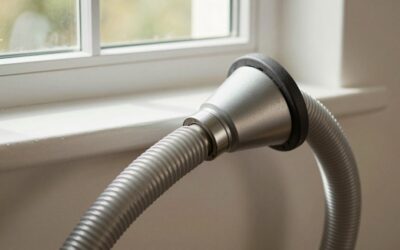
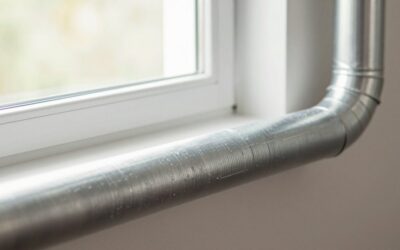
Keep the exhaust hose as short and straight as the layout allows, and use the window kit’s seals properly so the hose does not buzz in the opening. If the kit leaves gaps, weatherstripping or foam inserts designed for window installation can reduce rattles and heat leakage.
Clean or replace filters as the manufacturer’s instructions describe. A blocked filter forces the fan to push harder and can raise both noise and energy use. Place the unit away from the head of the bed if the layout allows, because distance cuts perceived loudness.
If something rattles, turn the unit off and unplug it before touching anything, and follow the manual for any adjustment. Do not open the cabinet yourself; unusual grinding, burning smells or repeated tripping of a breaker are reasons to stop using the unit and contact the manufacturer or a qualified technician.
Mistakes buyers make with “quiet” claims
- Trusting a single number with no conditions.
- Buying a unit with no capacity margin and then living with the loudest stage.
- Ignoring the window kit and then blaming the unit for hose rattle.
- Placing the unit on an uneven floor or leaning it against furniture.
- Comparing a noise figure from one listing to a different type of figure from another.
- Skipping filter care, which raises both noise and running costs over time.
Also be realistic. Portable units keep the compressor in the room, so even the quietest will be audible. The aim is a steady, low sound you can sleep or work through, not silence.
Frequently asked questions
How quiet is a quiet portable air conditioner?
Sellers often list noise in a range of roughly the mid-40s to the mid-60s of decibels, and the low end is usually measured on the lowest fan setting under lab conditions. Treat any figure as a seller claim. In a real room, the compressor, the hose and the surface under the unit all add sound. A listed figure in the 50s is a reasonable target for bedrooms, but check the listing for the measurement conditions.
Are dual-hose portable air conditioners quieter?
Not automatically. Dual-hose designs are mainly about efficiency, because they avoid pulling heated room air toward the unit. Noise depends on the compressor, fan and housing. A dual-hose unit can still be loud, and a single-hose unit can be calm. Use the design to judge cooling performance and the decibel claim plus buyer comments to judge noise.
Does an inverter portable air conditioner run more quietly?
Inverter or variable-speed models can adjust compressor speed instead of switching fully on and off, which many buyers find less jarring. That does not guarantee a low sound level, and listings use the term loosely. Check whether the product title or specifications actually describe variable-speed operation, and read buyer comments about the sound at night before you decide.
Can I put a portable air conditioner in a bedroom?
Many people do, provided the unit is sized for the room, vented through a window kit, and plugged in as the manufacturer instructs. Place it on a firm, level surface, keep the cord and hose clear of walkways, and avoid extension cords unless the manual allows them. If the noise is the worry, choose a model with a sleep or low-fan mode and set it up before bedtime.
What is the easiest way to make my unit quieter?
Start with the setup. Put the unit on a stable, level surface, add a vibration-damping mat, keep the hose short and unkinked, and seal the window kit so the hose does not rattle. Clean the filter on the schedule in the manual, because a clogged filter makes the fan work harder. Then use the lowest fan speed that keeps the room comfortable.






Write Your Review
No reviews yet. Be the first to share your experience!