
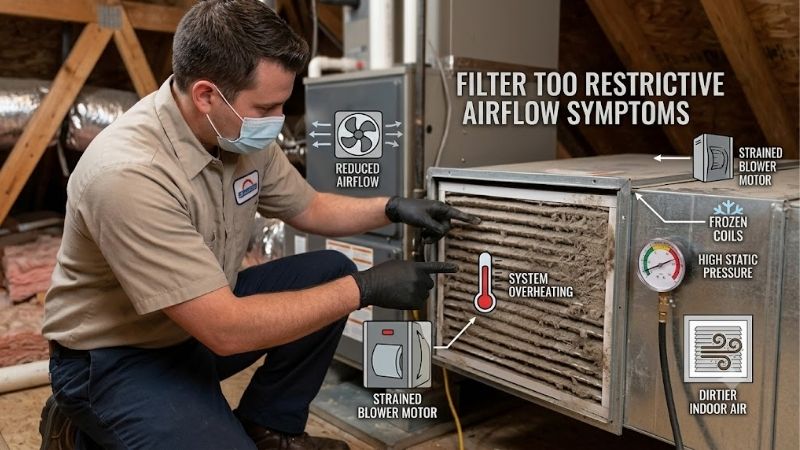
Filter too restrictive airflow symptoms indicate that your central HVAC system is struggling against high static pressure. When air cannot pass freely through dense media fibers, heating and cooling efficiency drops rapidly while energy bills climb. Spotting these airflow warning signs early protects your furnace blower motor.
How to Choose Solutions for Filter Too Restrictive Airflow Symptoms
Evaluating options for filter too restrictive airflow symptoms requires systematically testing system static pressure and vent delivery. Identifying whether dense media weave or excessive dust causes resistance allows you to select properly rated replacement filters. Proper airflow management protects your blower fan.
Evaluating Furnace Short Cycling and System Strain
Ignoring filter too restrictive airflow symptoms often leads to rapid heat buildup inside furnace heat exchangers. High static resistance traps thermal energy, triggering safety limit switches that shut off burner cycles prematurely. This constant short cycling starves your home of warmth while wearing out electrical switches.
Monitoring furnace run durations helps identify severe air drag caused by overly restrictive media. When furnace burners ignite and extinguish every few minutes, replacing dense filters restores normal heating performance. Addressing furnace short cycling promptly prevents costly emergency heat exchanger repairs.
Identifying Frozen Evaporator Coils and Moisture
In cooling seasons, low vent air velocity across refrigerant coils causes ice formation on evaporator fins. Restricted return airflow prevents warm indoor air from melting condensed moisture, creating a thick block of ice. Experiencing a frozen evaporator coil signals an urgent need for lower resistance filter media.
Allowing ice layers to envelop cooling coils leads to liquid refrigerant floodback and compressor failure. Shutting down air conditioners to thaw frozen coils restores temporary air movement across supply ducts. Upgrading to balanced filter media maintains required airflow velocity during hot summer afternoons.
Assessing Blower Motor Strain and Whistling Noise
High static pressure forces blower fan motors to operate at maximum RPM, generating excessive mechanical heat. Unchecked HVAC blower motor strain increases monthly electrical draw while accelerating bearing wear inside motor housings. Listening for return air duct whistling helps identify high vacuum conditions quickly.
Whistling return grilles occur when powerful blowers pull air through tiny gaps around tight filter frames. Replacing restrictive filters lowers internal static resistance, eliminating high-pitched duct noises instantly. Protecting electric fan motors maintains reliable circulation across all residential heating seasons.
Checking High MERV Filter Resistance and Pressure
Weak airflow from ceiling and floor supply grilles signals significant pleated furnace filter drag inside return channels. When air volume drops, distant bedrooms suffer from uneven home cooling and persistent hot spots. Checking reduced vent air velocity ensures your HVAC blower moves sufficient cubic feet per minute.
Drafty living areas and sluggish vent output indicate that filter media density exceeds your blower capacity. Measuring room air movement using simple tissue tests reveals airflow bottlenecks across supply branches. Selecting filters with lower pressure drops restores balanced airflow distribution everywhere.
| Airflow Restriction Indicator | Primary System Risk | Typical Operational Impact | Recommended Corrective Action |
|---|---|---|---|
| Furnace Short Cycling | Overheated Heat Exchanger | Burner Shuts Off Every 5 Mins | Lower MERV Rating to MERV 8 |
| Frozen Evaporator Coil | Compressor Motor Damage | Ice Block on Cooling Coils | Thaw System & Replace Filter |
| Duct Whistling Noise | High Static Air Vacuum | Loud High-Pitched Vent Sound | Switch to Lower Resistance Media |
| Weak Supply Velocity | Uneven Room Temperatures | Hot or Cold Spots in Rooms | Inspect & Upgrade Filter Size |
Top Picks for Filter Too Restrictive Airflow Symptoms
Finding effective solutions for filter too restrictive airflow symptoms requires selecting products designed to balance filtration efficiency and airflow volume. The following verified Amazon items eliminate static drag while protecting indoor air quality. These tools keep central heating systems running clean and cool.
Filterbuy 16x25x1 MERV 8 Pleated AC Furnace Air Filter
Ideal for homeowners seeking to eliminate filter too restrictive airflow symptoms without compromising dust capture. The Filterbuy MERV 8 filter uses electrostatically charged synthetic media that traps household dust while maintaining high airflow volume. It prevents blower motor strain across standard residential HVAC systems.
Pleated synthetic material requires replacing every three months to prevent heavy dust accumulation from increasing static resistance. Cardboard frame edges can bend slightly if forced into tight return filter slots. Overall, it delivers an optimal balance of low airflow resistance and effective everyday dust retention.
Honeywell Home 4-Inch MERV 11 Pleated Air Filter FC100A1029
Designed for households needing deep media filtration to catch fine allergens while preserving low initial static pressure drop. The Honeywell Home 4-inch MERV 11 filter features extensive surface area that allows air to pass freely without restriction. It protects furnace blowers while trapping microscopic pollen.
Requires a dedicated four-inch filter cabinet, making it unsuitable for standard one-inch return grille slots. Upfront purchase costs are higher than basic thin filters, though replacement intervals extend up to twelve months. It offers superior dust holding capacity with minimal impact on total ductwork airflow.
Nordic Pure 16x25x1 MERV 12 Pleated AC Furnace Air Filter
Great for allergy sufferers wanting high particle capture while carefully monitoring high MERV filter resistance. Nordic Pure MERV 12 filters utilize synthetic antimicrobial media that captures pet dander and fine mold spores efficiently. It maintains clean indoor air while providing predictable air resistance rates.
Dense media weave can induce high static pressure reading spikes on older single-speed furnace blower motors. Homeowners must replace these high-efficiency filters every thirty to sixty days to prevent severe airflow drag. Nonetheless, it remains an excellent choice for modern HVAC units with strong blower capacity.
Fieldpiece SDMN2 Dual-Port Manometer
Suited for proactive homeowners wanting to measure ductwork static pressure and verify pleated furnace filter drag accurately. The Fieldpiece SDMN2 provides precise differential pressure readings across filter slots and cooling coils. It reveals exact pressure drops before high resistance damages expensive blower motors.
Requires basic technical understanding to insert pressure probes correctly into supply and return ductwork lines. Higher initial tool cost makes it a specialized investment for serious DIY HVAC enthusiasts. Overall, it provides definitive diagnostic data to prevent mysterious furnace overheating problems.
LEVOIT Core 300 Air Purifier
Best for living spaces where heavy airborne dust forces frequent furnace filter changes and airflow restriction. The LEVOIT Core 300 features a True HEPA filter that captures 99.97% of dust and soot independently of your HVAC ductwork. It reduces dust buildup on central filters, preserving high system airflow.
Requires purchasing replacement filter cartridges every six months, adding ongoing routine maintenance expense. Maximum fan speed generates mild motor sound during quiet nighttime hours in small bedrooms. Nevertheless, it offers exceptional standalone air scrubbing that relieves stress on main furnace filters.
Frequently Asked Questions
Understanding filter too restrictive airflow symptoms helps homeowners prevent severe system breakdowns and lower high electric utility bill costs. Below are expert answers to frequent questions regarding MERV ratings, blower motor health, and frozen cooling coils. Learn how to maintain safe HVAC air circulation easily.
How do I know if my air filter is restricting airflow?
Identifying airflow restriction involves checking supply vent strength, listening for whistling noises, and observing furnace run times. When filter media restricts circulation, air coming from room registers feels noticeably weak and lukewarm. Furnace short cycling burners confirm high static pressure drag.
Placing a thin paper sheet against return grilles helps verify suction force during active heating cycles. If the paper drops or registers whistle loudly, filter density exceeds blower limits. Replacing dense media with lower resistance filters restores healthy circulation across all living areas.
Can a MERV 13 filter damage my HVAC blower motor?
Installing a thin MERV 13 filter inside an older single-speed system can create excessive HVAC blower motor strain. High-density media restricts airflow volume, forcing electric motors to draw extra current and overheat. Verifying manufacturer static pressure limits prevents premature blower failure.
Modern variable-speed blowers handle dense filters better, but unmonitored drag still reduces overall system efficiency. Upgrading to a deeper four-inch MERV 13 cabinet lowers air resistance while retaining high filtration. Choosing proper filter thickness protects fan motors from thermal overload.
Why is my AC coil freezing up with a new pleated filter?
A newly installed high-density filter can cause a frozen evaporator coil if the media weave restricts total airflow volume. Reduced air circulation prevents heat absorption, causing refrigerant temperatures to drop below freezing. Moisture on coil fins transforms into solid ice, blocking airflow.
Switching to a lower MERV rating restores required airflow velocity across cooling coils, allowing ice to melt naturally. Running the blower fan on manual mode helps thaw frozen fins without damaging compressor components. Balanced airflow prevents recurring ice accumulation during humid summer days.
How often should I change a high-efficiency furnace filter?
Replacing high-efficiency pleated filters every thirty to sixty days prevents accumulated dust from causing severe airflow drag. Dense filter media traps fine particulates quickly, accelerating surface clogging during heavy seasonal heating. Frequent replacements keep static pressure within safe limits.
Inspecting filter media monthly ensures dust buildup does not trigger sudden furnace short cycling or high electric utility bill spikes. Homes with multiple pets or ongoing dusty renovations require more frequent filter swaps. Regular maintenance guarantees clean indoor air and smooth HVAC operation.
Final Thoughts
Addressing filter too restrictive airflow symptoms promptly protects your central HVAC system while maintaining comfortable indoor temperatures. Choosing balanced filter media, monitoring static pressure, and replacing clogged filters prevents costly furnace repairs. Keep your airflow unrestricted for safe, efficient climate control.
As an Amazon Associate we earn from qualifying purchases at no extra cost to you.







Write Your Review
No reviews yet. Be the first to share your experience!