
Quick answer: Our top pick in 2026 is the Vacuum with a crevice tool and soft brush — our #1 rated choice. See the full ranked comparison, alternatives and buying advice below.
The Short Answer
Usually, no—you do not need duct cleaning rods unless you plan to clean a short, accessible duct yourself and can safely match the tool to that duct. For most homeowners, “duct cleaning rods” are more useful for a dryer vent or small, straight exhaust run than for an entire home HVAC system.
The phrase can describe several different products. Some are flexible rods with a brush for dryer vents, fireplace flues, or narrow exhaust pipes. Others are professional air-duct cleaning rods used with a rotating brush, vacuum collection system, and specialized attachments. Those are not interchangeable.
As an Amazon Associate we earn from qualifying purchases at no extra cost to you.


If your concern is ordinary dust in supply registers, buying rods is unlikely to solve the problem. If you have a long, blocked, or difficult-to-reach dryer vent, a suitable flexible brush kit may be a sensible low-cost tool. In 2026, the most important buying decision is not rod length alone; it is identifying which duct you are actually cleaning.
What You Actually Get
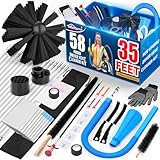
A basic rod kit usually includes several sections that screw or snap together, a brush head, and sometimes an adapter for a drill. The sections are commonly 18 to 24 inches long, with a total assembled length of roughly 20 to 35 feet. Flexible nylon or fiberglass construction lets the brush follow a mostly straight or gently curved path.
For example, a product marketed as the Holikme Dryer Vent Cleaner Kit – 30Ft Fireplace Chimney Brushes Flexible is priced around $19.99, while the Holikme Dryer Vent Cleaner Kit – 35Ft Flexible Lint Brush for Deep Cleaning is around $20.99. These products are best understood as dryer-vent or narrow-flue cleaning kits, not complete HVAC duct-cleaning systems.
A kit in this price range may weigh approximately 1 to 3 pounds, depending on the number of rods, brush size, storage case, and drill attachment. The brush diameter matters as much as the total length. A head that is too large can get stuck in a tight vent; one that is too small may skim over buildup instead of loosening it.
Using the rods generally involves disconnecting the dryer from the wall, opening the vent connection, and feeding the brush through the duct while turning it manually or with a low-speed drill. You then remove loosened lint and reconnect the vent. The process is different for an HVAC system: air handlers, registers, branch ducts, and return trunks may require multiple access points and controlled vacuum pressure.
Rods also do not automatically include the equipment that makes professional duct cleaning effective. A complete HVAC service may use a high-capacity vacuum, agitation tools, access panels, protective coverings, and a way to prevent loosened debris from entering the living space. A household rod alone cannot provide that containment.
Pros
- Low purchase price: Flexible brush kits commonly cost about $15 to $30, making them inexpensive compared with a service call.
- Useful for dryer vents: A long brush can reach through a wall or floor run where a short handheld lint brush cannot.
- Simple storage: Sections that screw together usually fit in a small closet, utility cabinet, or tool box.
- Immediate access: You can clean a visible, accessible run without waiting for an appointment.
- Helpful for routine maintenance: Removing lint from a dryer vent can support proper airflow and reduce the chance of a serious blockage.
- Flexible length: A 30- or 35-foot kit may be useful when the vent outlet is far from the appliance, although you should not force unused rod length into the duct.
- Reusable: With careful cleaning and storage, a brush may be used periodically rather than discarded after one job.
Cons
- Not a complete HVAC solution: A rod can loosen dust without capturing it. Debris may spread through the duct system or into the room.
- Risk of getting stuck: Rods can separate inside a vent, snag on seams, or become difficult to retrieve around sharp bends.
- Potential duct damage: Aggressive drilling or forcing a rigid brush through flexible ductwork can puncture the liner or detach connections.
- Limited visibility: Unless you use an inspection camera, you may not know what the brush has reached or whether a blockage remains.
- Variable build quality: Inexpensive threaded connections may loosen, and soft brush fibers may flatten quickly.
- Wrong tool for some obstructions: Wet debris, collapsed ductwork, nests, screws, and heavy construction dust generally require inspection and more specialized equipment.
- Safety concerns: Work near a dryer requires unplugging the appliance and keeping the vent reconnected correctly. Work around gas appliances also calls for extra caution.
Who Should Buy It
Buy a flexible rod kit if you have a dryer vent that is reasonably straight, accessible, and known to contain lint. It can be especially practical when the exterior vent is several feet away, the dryer takes longer than usual to dry clothes, or airflow at the outside flap is weak.
It may also suit a homeowner cleaning a small, noncritical exhaust duct or a short fireplace-related passage, provided the product is specifically rated for that use and the appliance is cold and disconnected as appropriate. Check the brush diameter, rod material, connection style, and maximum working length before purchasing.
A rod kit is a reasonable choice when you are comfortable with basic appliance maintenance and can access both ends of the vent. You should also have a vacuum, work gloves, eye protection, and enough room to avoid bending the rods sharply. Use a drill only if the manufacturer permits it, and start at low speed.
Who Should Skip It
Skip duct cleaning rods if you are trying to clean an entire forced-air HVAC system, especially one with multiple branches, insulated flexible duct, or difficult access. The tool may reach one section while leaving most of the system untouched. It can also disturb contaminants without collecting them.
Professional help is the better choice when you see mold-like growth, rodent or insect activity, standing water, severe odors, damaged insulation, or a major airflow problem. A technician should also inspect a duct that has collapsed, disconnected, or accumulated substantial construction debris.
Skip a kit if the duct has many tight bends, if you cannot safely disconnect the appliance, or if the rod diameter and length do not clearly fit the route. Renters should get permission before removing vent connections or opening building ductwork. If your only complaint is visible dust around a register, begin with a vacuum and filter replacement rather than buying long rods.
Cheaper Alternatives
| Option | Cost | Trade-off |
|---|---|---|
| Vacuum with a crevice tool and soft brush | $0 if already owned; about $10–$35 for attachments | Good for registers and the first few inches of accessible duct; cannot reach a long run. |
| Short handheld dryer-vent brush | About $8–$15 | Cheaper and easier to control, but usually limited to short, accessible vents. |
| DIY flexible rod kit | About $15–$30 | Reaches farther, but may loosen debris without removing it and can be difficult around bends. |
| Dryer-vent cleaning service | About $100–$250 | Costs more, but is preferable for long, roof-level, blocked, or hard-to-access vents. |
| HVAC duct-cleaning service | About $300–$800 for many homes | Higher cost and results vary by system and contamination; should include proper vacuum containment and inspection. |
Before spending money, clean the lint screen, vacuum behind the dryer, inspect the exterior termination, and check whether the vent hose is crushed. Those steps may improve airflow without any rod. Also replace the HVAC filter on the schedule recommended for your home and filter type. A rod is not a substitute for correcting a disconnected or undersized duct.
FAQ
Are duct cleaning rods the same as dryer-vent cleaning rods?
No. They can look similar, but dryer-vent kits are generally designed for narrow, relatively direct runs and lint removal. HVAC duct systems are larger, branched, and often connected to insulated or flexible ductwork. Professional HVAC rods are normally used with agitation equipment and a vacuum system, not by themselves.
How long should duct cleaning rods be?
Choose enough length to reach the target area without storing a large excess inside the duct. For many dryer installations, a 20- to 35-foot kit is more than sufficient, but measure the route first. A longer rod is not automatically better; extra sections can flex, disconnect, or become harder to control.
Can I use a drill with a flexible cleaning rod?
Only when the kit specifically allows it. Use the lowest practical speed and keep the rod moving so the brush does not grind against one spot. Do not use a drill on a damaged, soft, or flexible duct unless the manufacturer confirms compatibility. Manual rotation is slower but gives you more control.
How often should I clean a dryer vent with rods?
Inspect the vent at least once a year and clean it when lint buildup or reduced airflow appears. Homes with frequent laundry, pets, long vent runs, or multiple bends may need more frequent attention. Stop if the brush meets firm resistance, the rod will not retract, or you discover damage; those are signs to call a qualified professional.
Ready to decide? Our #1 pick for 2026 is the Vacuum with a crevice tool and soft brush.
Live price & availability on Amazon.


Write Your Review
No reviews yet. Be the first to share your experience!