
Quick answer: Our top pick in 2026 is the Vacuum crevice tool only — our #1 rated choice. See the full ranked comparison, alternatives and buying advice below.
The Short Answer
Yes—DIY dryer vent cleaning is generally safe if you can clean the vent without opening the dryer cabinet or working around a live gas or electrical connection. In other words, homeowners can usually handle the removable lint screen housing, the flexible or rigid duct behind the appliance, and the exterior vent cover. The job becomes a professional service when the vent is inaccessible, the duct runs through a wall or ceiling, the dryer is gas-powered and requires disconnection, or you find crushed ductwork, heavy buildup, moisture damage, or signs of overheating.
The keyword is safe, not merely possible. Dryer lint is highly flammable, and an overly aggressive brush can disconnect a duct, puncture thin foil tubing, or push lint farther into a wall. A careful cleaning once or twice a year is sensible for many homes, but it is not a substitute for correcting poor vent design or damaged ductwork.
As an Amazon Associate we earn from qualifying purchases at no extra cost to you.

What You Actually Get
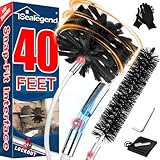
A DIY dryer vent cleaning kit is usually a set of flexible rods, a round brush, and sometimes a vacuum adapter. The rods screw together to create a cleaning shaft commonly ranging from 12 to 40 feet. The brush head is often about 4 inches in diameter, which is intended to fit standard dryer ducts. Some kits are designed to attach to a cordless drill at a low speed; others are meant to be pushed and rotated by hand.
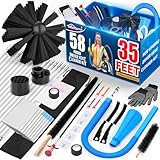
The Holikme Dryer Vent Cleaner Kit, listed at about $19.99, includes a 30-foot flexible brush system marketed for dryer vents and fireplace chimneys. The Sealegend 40Ft Dryer Vent Cleaner Kit, listed at about $27.99, offers a longer reach for installations where the exterior wall cap is farther from the dryer. These products can be useful for a basic cleaning, but the listed length is not the same as guaranteed usable reach. Curves, loose connections, and the need to keep part of the rod outside the duct reduce the practical distance.
You will also need a vacuum with a narrow hose or crevice attachment, a screwdriver or nut driver for the vent clamp, a flashlight, work gloves, and a soft brush or microfiber cloth. A vacuum with roughly 5 to 8 peak horsepower can remove loose lint effectively, but the horsepower number alone does not guarantee performance. The most important feature is a hose that fits the duct opening without creating a large gap.
Before starting, unplug an electric dryer. If you have a gas dryer, shut off the gas only if you know how to do so safely and can avoid disturbing the gas connection. Never use a drill near a gas line, and do not pull a gas dryer forward far enough to kink or strain the flexible gas connector. Turn the dryer off, let it cool, and clear the area of paper, cardboard, and other flammable materials.
Pros
- Low upfront cost: A basic brush kit generally costs about $15 to $35, compared with a professional cleaning that may run roughly $100 to $250 depending on access and location.
- Useful for accessible ducts: A short, straight run through the wall is often manageable with a vacuum and brush.
- Shorter drying times: Removing lint can improve airflow, which may help clothes dry more efficiently when buildup is the problem.
- Simple inspection opportunity: Moving the dryer lets you check for a crushed hose, loose clamp, excessive bends, or a vent that is too close to the floor.
- Reusable equipment: A quality rod-and-brush kit can be stored and used during future maintenance.
- Helpful exterior cleanup: A second person can watch the outside vent while you clean, confirming that lint and air are exiting instead of backing up inside.
Cons
- Damage is possible: A spinning brush can tear thin foil ducting, separate snap-together rods, or dislodge a connection hidden inside a wall.
- It may not reach the real blockage: A long vertical run, roof termination, bird nest, or severely clogged wall duct may require specialized equipment.
- Vacuuming alone is incomplete: A household vacuum may remove loose lint near the opening but leave compacted material attached to the duct walls.
- Drill use can be too aggressive: High speed can twist the rods, damage the brush, or cause the assembly to come apart inside the vent.
- Hidden defects remain hidden: Cleaning does not fix undersized ducts, excessive length, missing exterior flaps, water intrusion, or an improperly installed transition hose.
- Gas dryers add risk: Moving the appliance or disturbing the gas connector can create a hazard unrelated to lint removal.
- Some kits feel longer than they are useful: A 30- or 40-foot rating may be unnecessary for a typical laundry closet and can make the flexible assembly harder to control.
Who Should Buy It
A DIY kit makes sense if your dryer sits close to an exterior wall, the transition duct is visible and accessible, the vent run is reasonably straight, and you are comfortable unplugging the appliance and removing a clamp. It is also a practical purchase for homeowners who want to perform light maintenance every 6 to 12 months and are willing to stop immediately if the brush meets strong resistance.
Choose a shorter kit for a typical one-story installation with a vent run under 15 feet. A 30-foot kit is more versatile, while a 40-foot kit may help with a longer route but is not automatically better. Look for rods with secure threaded connections, a brush that matches the duct diameter, and a design that can be used by hand. If the kit supports a drill, use the lowest practical setting and follow the manufacturer’s direction of rotation.
Who Should Skip It
Hire a qualified dryer-vent professional if the duct disappears into a wall, ceiling, crawl space, or roof and you cannot inspect both ends. Skip DIY cleaning if the exterior vent is on a second story or roof, if birds have nested inside it, or if the duct is crushed, disconnected, rusted, or made from unusually thin foil.
Professional help is also the safer choice when the dryer is gas-powered and moving it would strain the connector, when the appliance is stacked and difficult to access, or when you notice a burning smell, scorching, a hot laundry room, repeated shutdowns, or clothes that remain damp after unusually long cycles. Those symptoms can indicate airflow restrictions, appliance problems, or both. A professional can inspect the entire route rather than simply pushing a brush through the nearest opening.
Cheaper Alternatives
| Option | Cost | Trade-off |
|---|---|---|
| Vacuum crevice tool only | $0 if already owned | Good for the lint screen housing and exposed duct opening, but it will not scrub buildup from a long or curved vent. |
| Handheld dryer-vent brush | About $8–$15 | Inexpensive and easy to control, but reach is often limited to 2–5 feet. |
| Holikme 30-foot kit | About $19.99 | Affordable longer reach, though flexible rods can separate or become difficult to control in bends. |
| Sealegend 40-foot kit | About $27.99 | More reach for a long route, but extra length adds storage, handling, and tangling concerns. |
| Professional cleaning | About $100–$250 | Costs more, but is preferable for concealed, roof-level, damaged, or heavily obstructed ductwork. |
FAQ
How often should I clean a dryer vent?
For many households, once every 12 months is a reasonable baseline. Clean more often—approximately every 6 months—if you run several loads per day, have a large family, use a long vent route, or notice longer drying times. Clean the lint screen after every load regardless of the schedule.
Can I clean a dryer vent with a leaf blower?
It is possible in some accessible, detached duct setups, but it is not the safest general recommendation. A leaf blower can force lint into the wall, attic, or crawl space, and strong airflow can disconnect a weak duct. A controlled brush-and-vacuum method is easier to monitor. Never use a blower if you cannot confirm where the duct ends and whether its connections are secure.
Should I use a drill with a dryer vent brush?
Only when the kit specifically allows it, and use low speed. Keep the rods aligned, rotate in the recommended direction, and work in short sections. If the brush catches, stop the drill before trying to pull it back. Do not force the brush through a tight bend or obstruction; resistance may signal a damaged or disconnected duct.
What is the clearest sign that DIY cleaning is not enough?
The clearest sign is continued poor airflow or long drying times after the visible duct and exterior cap are clean. Also stop and call a professional if you find a bird nest, water inside the duct, a disconnected section, a crushed hose, or a burning odor. DIY dryer vent cleaning is safe for routine, accessible maintenance—not for repairing hidden or hazardous vent systems.
Ready to decide? Our #1 pick for 2026 is the Vacuum crevice tool only.
Live price & availability on Amazon.


Write Your Review
No reviews yet. Be the first to share your experience!