
The Short Answer
For most household duct-cleaning jobs, a 1¼-inch or 1½-inch shop vac hose is the most practical size. These hoses fit common brush kits, dryer-vent attachments, and narrow registers without being too bulky. A 2½-inch hose is better for removing heavier debris from accessible main trunks, return-air openings, and larger floor registers, but it usually will not fit directly into narrow branch ducts.
If you are buying one hose for general home maintenance, choose a 1½-inch inside-diameter hose with adapters for your vacuum and attachments. If your priority is maximum airflow and larger debris removal, choose a 2½-inch hose and add a reducer or specialized duct-cleaning brush. The hose size must match the inside diameter of the tool opening, not merely the outside diameter listed on a product package.
As an Amazon Associate we earn from qualifying purchases at no extra cost to you.
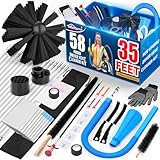


A shop vac can clean dust and loose debris near registers, grilles, and accessible duct sections. It is not a substitute for professional negative-air duct equipment when ducts contain mold, construction debris, vermin, extensive grease, or deeply embedded contamination. For a typical homeowner project in 2026, the most useful setup is a wet/dry vacuum, a flexible hose, a soft brush, and an adapter kit.
Standard Sizes
| Nominal hose size | Inside diameter | Inside diameter in centimeters | Best use |
|---|---|---|---|
| 1¼ inches | About 1.25 in | About 3.2 cm | Narrow vents, dryer lint tools, upholstery, and small crevices |
| 1½ inches | About 1.50 in | About 3.8 cm | General residential registers and flexible brush attachments |
| 1⅞ inches | About 1.88 in | About 4.8 cm | Some mid-size wet/dry vacuums and specialty adapters |
| 2½ inches | About 2.50 in | About 6.4 cm | Large shop vacs, return-air openings, and bulky debris |
Nominal sizes are not perfectly standardized. One manufacturer’s “1½-inch” hose may have an opening that measures slightly under or over 1½ inches, while the cuff or adapter may be wider. Measure the opening that actually connects to your brush or vacuum port. A 2½-inch hose may have an outside diameter near 2¾ to 3 inches once the ridges, cuff, and wall thickness are included.
Hose length also affects performance. A 6- to 10-foot hose is easier to control around registers and usually maintains stronger suction than a very long hose. Choose a 15- to 20-foot hose when you need to reach several vents without moving the vacuum. Longer hoses add friction and bends, which can reduce airflow. A 35-foot dryer-vent kit can reach far into a dryer duct, but its narrow hose and brush design are intended for lint removal, not for vacuuming an entire HVAC system.
For most jobs, a vacuum rated around 4 to 6 peak horsepower and equipped with a clean filter is adequate for loose household dust. Peak horsepower is a marketing measurement rather than a direct indication of cleaning power, so do not select a hose based on wattage alone. A sealed connection, short route, and correctly sized brush often matter more than a larger motor.
How to Measure Your Space
- Turn off the HVAC system. Set the thermostat to off and wait for the blower to stop. Remove the register or grille carefully so you do not damage the surrounding drywall or flooring.
- Measure the opening. Use a tape measure or ruler to measure the round duct collar or the rectangular opening behind the grille. Measure width and height for rectangular openings, then measure depth as far as you can safely see.
- Measure the vacuum port. Check the inside diameter of the shop vac inlet and the hose cuff. Write down the measurement in inches and centimeters. Do not assume that a hose labeled 1½ inches will connect without an adapter.
- Measure the tool end. A brush, crevice tool, or flexible rod may have a different connection size from the hose. Measure the tool’s socket and compare it with the hose’s outside diameter or the adapter’s listed range.
- Check access and bends. Note how far the duct runs before its first turn. A stiff, wide hose may fit a large opening but fail at a sharp elbow. For narrow branches, a flexible 1¼- or 1½-inch hose is easier to guide.
- Plan the reach. Add the distance from the vacuum to the register, then add at least 2 feet for handling. A 10-foot hose is usually enough for one room; a 15- or 20-foot hose is more convenient when moving the vacuum is difficult.
- Check the adapter seal. Use a purpose-built reducer, rubber coupler, or tapered adapter. Avoid forcing a hose into the duct, because a loose fit can leak dust into the room and a tight fit can damage the duct liner.
By Room or Use Case
Bedroom and Living Room Supply Vents
A 1¼- or 1½-inch hose is usually the best choice for standard supply registers. Pair it with a soft-bristled brush or a 10- to 20-inch flexible extension. These vents often have narrow branch ducts and multiple bends, so a smaller hose is easier to control. Vacuum the grille, the boot, and the first reachable section rather than forcing the hose deep into the duct.
Kitchen and Bathroom Exhaust Grilles
Use a 1¼- or 1½-inch hose with a soft brush for dust on exhaust grilles. Bathroom fans may contain delicate shutters or thin insulation, so avoid hard crevice tools and high-force pushing. Kitchen exhaust systems can contain grease; a standard shop vac is not appropriate for hot grease or heavy oily buildup. Clean removable grilles separately with the method recommended by the fan manufacturer.
Return-Air Openings
Large return grilles are the best place to use a 2½-inch hose, especially when removing visible dust, pet hair, or loose debris. The larger opening provides better airflow and is less likely to clog. Use a reducer if the actual return duct narrows behind the grille. Do not vacuum across a filter that is still installed; replace or clean the filter according to its rating and the manufacturer’s instructions.
Dryer Vents
Dryer vents need specialized lint-removal tools rather than a conventional long shop vac hose alone. A narrow hose, rotary brush, or flexible rod can travel through the 4-inch dryer duct without collapsing the line. Many dryer-cleaning kits cost roughly $8 to $15, while larger sets with multiple rods, brushes, and a longer reach can cost about $25 to $40. Some kits, including inexpensive vacuum-and-brush attachments, are designed for 1¼-, 1½-, or 2½-inch vacuum connections, so verify the adapter before ordering.
Central HVAC Trunks and Furnaces
A 2½-inch hose is preferable for accessible trunk lines because it moves more air and is less likely to plug with larger debris. However, a household shop vac cannot normally clean an entire connected duct network from one opening. Seal nearby registers, protect the blower and coil, and avoid disturbing duct insulation. For extensive debris or suspected biological contamination, use a qualified duct-cleaning professional.
Common Sizing Mistakes
- Choosing by outside diameter: The outside measurement includes the hose wall and ridges. Compare the working opening and the adapter dimensions instead.
- Assuming every 1½-inch hose is universal: Cuffs, locking tabs, and tapered ends vary by brand. A nominal size does not guarantee a direct fit.
- Using the largest hose everywhere: A 2½-inch hose has strong airflow but may not fit through narrow registers or around bends.
- Using a tiny hose for heavy debris: A 1¼-inch hose can clog quickly when used on insulation pieces, construction material, or large clumps of pet hair.
- Ignoring length and bends: Every extra foot and sharp turn adds resistance. Keep the route as short and straight as possible.
- Skipping filtration: A shop vac without a suitable filter can blow fine dust back into the room. Install the filter recommended for dry debris and empty the canister before it becomes full.
- Forcing the hose into lined ducts: Aggressive pushing can tear flexible ductwork or loosen internal insulation. Stop when you meet resistance.
FAQ
Is a 2½-inch hose better for duct cleaning?
It is better for large return openings and loose, bulky debris because it generally provides more airflow and is less likely to clog. It is not automatically better for narrow branch ducts, where a 1¼- or 1½-inch hose and flexible brush can reach more effectively.
Will a 1½-inch shop vac hose fit a 4-inch dryer vent?
Usually, not directly. The 4-inch measurement refers to the dryer duct, while the vacuum hose may be 1¼, 1½, or 2½ inches. You need a compatible adapter and a dryer-vent brush or rod system. Never rely on a loose friction fit that can release lint into the room.
How long should a duct-cleaning hose be?
Choose 6 to 10 feet for a single nearby vent, 10 to 15 feet for routine room-to-room work, and 15 to 20 feet when you want to avoid moving the vacuum. Longer specialty kits may reach 30 to 35 feet, but they work best for narrow dryer ducts and can lose airflow when sharply bent.
Can I use a regular household vacuum instead of a shop vac?
A regular vacuum can handle surface dust on registers, but a shop vac is more durable for loose debris and has a wider selection of adapters. Use the vacuum only on dry, accessible material, keep liquid away unless the machine is rated for wet pickup, and stop if you encounter insulation, moisture, pests, or suspected mold.
Ready to decide? Our #1 pick for 2026 is the 1¼ inches.
Live price & availability on Amazon.


Write Your Review
No reviews yet. Be the first to share your experience!