
Our Short List of 3

All 4 Picks at a Glance
| Product | Specs | Action |
|---|---|---|
 1. NATIONAL GEOGRAPHIC Mega Fossil Dig Kit — Best Overall | Check price on Amazon | |
| 2. NATIONAL GEOGRAPHIC Mega Fossil and Gemstone Dig Kit — Most Specimens | Check price on Amazon | |
| 3. NATIONAL GEOGRAPHIC Dino Fossil Dig Kit — Best for Dinosaur Lovers | Check price on Amazon | |
 4. NATIONAL GEOGRAPHIC Shark Teeth Fossils Dig Kit — Best for Shark Fans | Check price on Amazon |
The Short Answer
The best fossil hunting kits turn a curiosity about ancient life into a practical dig you can do at the kitchen table or in the backyard. For most buyers, the NATIONAL GEOGRAPHIC Mega Fossil Dig Kit is the strongest all-around pick because it packs 15 genuine prehistoric fossils into a single dig brick with a chisel, brush, and magnifying glass. If you want the widest variety of specimens in one box, the NATIONAL GEOGRAPHIC Mega Fossil and Gemstone Dig Kit adds gemstones to the mix with 20 specimens to excavate. For a focused, story-rich first dig, the NATIONAL GEOGRAPHIC Dino Fossil Dig Kit pairs a T. rex tooth replica with a full-color dinosaur activity book. And for shark fans, the NATIONAL GEOGRAPHIC Shark Teeth Fossils Dig Kit hides three genuine fossil shark teeth from three different species in one brick.
- The Short Answer
- Quick Comparison
- How to Choose a Fossil Hunting Kit
- 1. NATIONAL GEOGRAPHIC Mega Fossil Dig Kit — Best Overall
- 2. NATIONAL GEOGRAPHIC Mega Fossil and Gemstone Dig Kit — Most Specimens
- 3. NATIONAL GEOGRAPHIC Dino Fossil Dig Kit — Best for Dinosaur Lovers
- 4. NATIONAL GEOGRAPHIC Shark Teeth Fossils Dig Kit — Best for Shark Fans
- Fossil Hunting Kits Versus Field Rockhounding Kits
- Tips for a Better First Dig
- Frequently Asked Questions
- The Bottom Line
Every kit in this guide is a fossil excavation kit: a dig brick or matrix, real or replica fossils, and the tools to uncover them. That shared format makes the picks easy to compare on specimen count, tool quality, learning material, and who each kit suits best.
Quick Comparison
| Kit | Specimens | Tools Included | Best For |
|---|---|---|---|
| NATIONAL GEOGRAPHIC Mega Fossil Dig Kit | 15 genuine fossils | Chisel, brush, magnifying glass | Best overall first dig |
| NATIONAL GEOGRAPHIC Mega Fossil and Gemstone Dig Kit | 20 fossils and gemstones | Chisel, brush, magnifying glass | Most specimens per kit |
| NATIONAL GEOGRAPHIC Dino Fossil Dig Kit | T. rex tooth replica plus real coprolite sample | Paleontologist-style excavation tools | Dinosaur lovers and gift buyers |
| NATIONAL GEOGRAPHIC Shark Teeth Fossils Dig Kit | 3 genuine shark teeth | Digging tools, magnifying glass | Shark fans and marine fossil collectors |
How to Choose a Fossil Hunting Kit
Real fossils versus replicas
Some kits hide genuine fossils that are millions of years old. Others hide replicas molded from real specimens. Genuine fossils carry a direct connection to ancient life, which many collectors value, while replicas can reproduce dramatic specimens, such as a T. rex tooth, that would be impractical to include as originals. Decide which matters more to you before you buy, and read the listing carefully so you know what you are getting.
Specimen count and variety
A kit with more specimens keeps the dig going longer and gives a beginner more to identify and sort afterward. Single-specimen kits can still be excellent when the specimen is special, such as a large tooth replica or three teeth from different shark species, but a kit with 15 or 20 specimens offers more discovery moments per session.
Tools in the box
A complete kit should include at least a chisel, a brush, and a magnifying glass. The chisel breaks up the dig brick, the brush clears dust from each find, and the magnifying glass lets you study fine detail. Some kits add a wooden mallet for tapping the chisel and safety goggles for eye protection. If a kit lacks a tool you need, check whether you already own a suitable substitute at home before ordering extras.
Learning material
The best kits teach as they entertain. A full-color learning guide or activity book turns each uncovered fossil into a small lesson about the creature it came from, the era it lived in, and how fossils form. Kits aimed at younger children benefit most from clear, illustrated guides, while older beginners may prefer a detailed identification chart they can keep with a growing collection.
Age guidance
Manufacturers list a recommended age for each kit, usually 8 years and up for dig bricks that need chiseling. Younger children can still enjoy these kits with adult help, especially for the harder chiseling stages. Eye protection and a work surface you can sweep clean make the activity safer and tidier for every age.
Dig brick size and mess
Dig bricks are made from a gypsum-like material that crumbles as you work. Larger bricks take longer to excavate and create more dust and debris, so plan for a tray, an old towel, or an outdoor table. A spray bottle of water can soften stubborn spots on some bricks, and a dustpan and brush make cleanup quick.
1. NATIONAL GEOGRAPHIC Mega Fossil Dig Kit — Best Overall
The NATIONAL GEOGRAPHIC Mega Fossil Dig Kit is the most balanced fossil hunting kit in this guide. Its extra-large dig brick holds 15 genuine prehistoric fossils, so the excavation lasts well beyond a single sitting and every session can end with a new discovery. The kit includes a chisel, a brush, and a magnifying glass, plus a learning guide that helps you identify each specimen as it emerges from the brick.
What sets this kit apart is the combination of specimen count and authenticity. Fifteen real fossils give a beginner a small collection in a single box, and the variety encourages sorting, comparing, and labeling finds the way a field paleontologist would. The included learning guide explains what each fossil is and adds context about the ancient life it represents, which turns a fun afternoon into a genuine introduction to paleontology.
This kit suits ages 8 and up, and it works equally well as a solo project, a family activity, or a classroom demonstration. The brick is large enough that two people can dig at once from opposite ends, and the slow pace of careful excavation rewards patience. Spread a tray underneath, keep the brush handy, and work the chisel in short, controlled taps rather than heavy strikes to avoid chipping a specimen.
Considerations: the brick creates dust and crumbs as it breaks apart, so it is best used on a surface that is easy to clean. The fossils are small, as is typical for dig kits, so the magnifying glass matters more than it first appears. Once the brick is finished, the kit is done, so collectors who want to keep digging will need another kit or a trip to a real fossil site.
2. NATIONAL GEOGRAPHIC Mega Fossil and Gemstone Dig Kit — Most Specimens
The NATIONAL GEOGRAPHIC Mega Fossil and Gemstone Dig Kit raises the specimen count to 20, mixing genuine fossils with gemstones in one extra-large dig brick. That blend makes it the best choice when you want the longest dig and the widest range of finds from a single purchase. The kit includes a chisel, a brush, and a magnifying glass, so everything needed to start is in the box.
The fossil-and-gemstone combination suits households where more than one person is digging, since there is enough material for everyone to find several specimens. It also suits gift buyers who want a kit that appeals to both fossil fans and rock collectors. The gemstones add color and variety to the finished collection, and the fossils keep the paleontology theme front and center.
Like the standard Mega Fossil Dig Kit, this one is designed for ages 8 and up and pairs well with a learning guide for identifying finds. The larger brick means a longer excavation, which is a strength for a weekend project but worth knowing if you are planning a short activity. Give the dig a dedicated spot, such as a craft table with a tray, and let each specimen be brushed clean and set aside before moving on to the next section of brick.
Considerations: because the brick mixes fossils and gemstones, a buyer who wants only fossils may prefer the standard Mega Fossil Dig Kit. The brick is heavy for its size, so younger diggers may need help holding it steady while they chisel. As with every dig brick kit, expect dust and plan cleanup in advance.
3. NATIONAL GEOGRAPHIC Dino Fossil Dig Kit — Best for Dinosaur Lovers
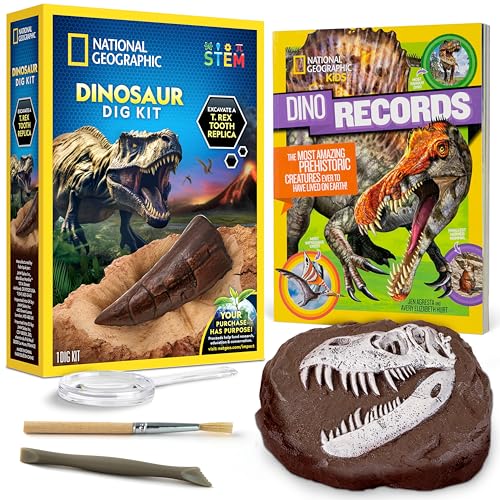
The NATIONAL GEOGRAPHIC Dino Fossil Dig Kit takes a different approach from the multi-specimen kits: it centers the whole excavation on one dramatic find, a T. rex tooth replica molded from an actual fossil. The kit also includes a real coprolite sample, a full-color Dino Records activity book, and excavation tools modeled on the gear paleontologists use in the field.
The book is what makes this kit stand out. Dino Records is packed with facts about record-setting dinosaurs, fossil discoveries, and the Mesozoic era, so the digging and the reading reinforce each other. A child who uncovers the tooth can immediately look up what it belonged to, how big the animal was, and what else lived alongside it. That narrative arc makes the kit a strong gift, especially for a young dinosaur fan who already knows the names of the big species.
The kit is aimed at ages 8 and up. The single large brick focuses attention on careful excavation rather than fast uncovering, and the tooth replica is large enough to display once it is cleaned. Keep the brush close while you work, and use the magnifying glass to inspect the tooth surface after brushing, since fine detail shows up best once the dust is cleared.
Considerations: this kit has one headline specimen rather than a dozen small ones, so collectors who want variety should look at the Mega Fossil kits instead. The tooth is a replica, not a genuine fossil, which is clearly stated in the listing and is the right call for a specimen of this size and fame. The included coprolite sample adds a genuine specimen to the box for those who want at least one real fossil.
4. NATIONAL GEOGRAPHIC Shark Teeth Fossils Dig Kit — Best for Shark Fans
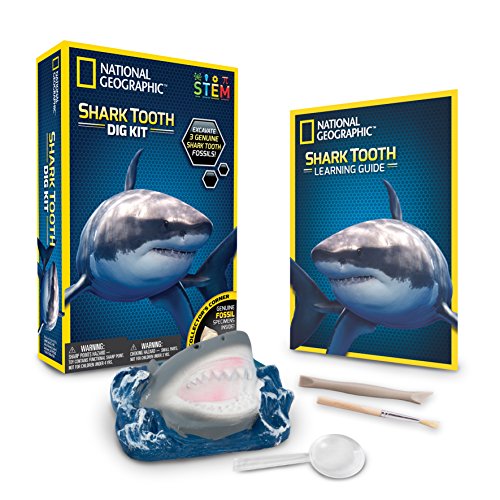
The NATIONAL GEOGRAPHIC Shark Teeth Fossils Dig Kit is the most focused kit in this guide. Its shark-themed digging brick hides three genuine fossil shark teeth, one each from the crow shark, the sand tiger shark, and the Otodus shark. The kit includes digging tools, a magnifying glass, and a ten-page Shark Teeth learning guide with facts and pictures for identifying each tooth.
Three teeth from three species make this kit a compact lesson in marine paleontology. Comparing the teeth side by side shows how tooth shape relates to diet and hunting style, and the learning guide explains the differences in plain language. It is a good pick for a shark enthusiast who already owns general fossil kits and wants something more specific, or for a beginner who would rather study three interesting specimens closely than rush through a dozen.
The kit is recommended for ages 8 and up. The brick is smaller than the Mega kits, so the dig is shorter, which suits a single-session activity or a younger digger with a shorter attention span. Work over a tray, chisel gently around each tooth, and brush each find clean before moving on, since the teeth are small and easy to lose in the rubble.
Considerations: with only three specimens, the excavation finishes quickly compared with the 15- and 20-specimen kits, so it works best as a focused activity rather than a weekend project. The brick and tools are sized for the specimens inside, so this kit is less suited to group digging. The listing notes it is not suitable for children under 3 years.
Fossil Hunting Kits Versus Field Rockhounding Kits
It helps to know the difference between the two kinds of kits sold under the fossil hunting label. Dig brick kits, like the four above, bring the excavation to you: the fossils are embedded in a prepared brick, the tools are sized for tabletop use, and the whole activity happens indoors. Field rockhounding kits, by contrast, contain a rock pick hammer, chisels, a loupe, and a carry bag for use at real outdoor sites. Both are legitimate ways into the hobby, but they serve different purposes. A dig brick kit is the right first step for learning excavation technique and fossil identification. A field kit is the right next step once you are ready to visit a quarry, riverbank, or road cut where collecting is permitted.
If you do move outdoors, research the site first. Many productive fossil sites sit on private land or in protected areas where collecting is restricted, and some public sites require a permit or limit what you can take. A local rock and mineral club is the fastest way to find legal collecting spots and to learn which tools and safety gear a real site demands.
Tips for a Better First Dig
Start by reading the learning guide before you pick up the chisel, so you know what you are looking for. Work on a tray or an old towel, keep a small container nearby for finished specimens, and brush each find clean as soon as it comes free. Use short, controlled taps with the chisel and let the tool do the work, since heavy strikes can crack a fossil. When a specimen is partly exposed, slow down and clear the material around it with the brush rather than prying it out. Label each find with the name from the guide and the date you dug it up, and store the collection in a divided box or a set of small bags so the specimens do not scratch each other.
For younger diggers, an adult should handle the hardest chiseling and make sure safety goggles are worn whenever the hammer or chisel is in use. A spray bottle can help soften a stubborn patch of brick, but use water sparingly and let the brick dry before resuming, since wet gypsum turns to paste.
Frequently Asked Questions
Are the fossils in these kits real?
The Mega Fossil Dig Kit, the Mega Fossil and Gemstone Dig Kit, and the Shark Teeth Fossils Dig Kit contain genuine fossils. The Dino Fossil Dig Kit centers on a T. rex tooth replica molded from a real fossil, and it also includes a real coprolite sample. Always check the listing for the specific kit you are buying, since real and replica specimens are sometimes sold side by side.
What age are fossil hunting kits for?
Most dig brick kits are recommended for ages 8 and up, because chiseling takes coordination and patience. Younger children can join in with adult supervision, particularly for the brushing, sorting, and identifying stages, which need no sharp tools.
How long does a dig brick take to finish?
A small brick with three specimens can be finished in one session. A large brick with 15 or 20 specimens can take several sessions, especially if you dig carefully and identify each find as you go. Spreading the dig across a weekend works well and keeps the activity from feeling rushed.
What should I do with the fossils after the dig?
Brush each specimen clean, let it dry fully, and store it in a labeled bag or a divided box. The learning guide that comes with the kit helps with identification, and a simple notebook with the name and date of each find turns the collection into a record you can build on with future kits or field trips.
Can I use these kits outdoors?
Dig brick kits are designed for tabletop use, but they work fine on a patio table or a picnic bench as long as you have a tray to catch the debris. Field collecting at real sites needs different tools, such as a rock pick hammer and a carry bag, plus permission to collect at the site.
The Bottom Line
A good fossil hunting kit balances real specimens, usable tools, and learning material that explains what you found. The NATIONAL GEOGRAPHIC Mega Fossil Dig Kit is the best overall choice for most buyers, with 15 genuine fossils and a complete tool set. The Mega Fossil and Gemstone Dig Kit is the pick for the longest dig and the most specimens. The Dino Fossil Dig Kit is the best gift for a dinosaur fan, and the Shark Teeth Fossils Dig Kit is the best focused pick for marine fossil lovers. Whichever you choose, dig slowly, brush each find clean, and label it while the details are fresh.
Disclosure: As an Amazon Associate, we earn from qualifying purchases.


Write Your Review
No reviews yet. Be the first to share your experience!