
The best hi-hat stands for stable, fast footwork are the Tama Iron Cobra 200 HH205 for value, the Yamaha HS1200T for a smooth, portable setup, and the Pearl H-930 for a strong all-purpose stand; heavy players should step up to the DW 5000 5500 or Tama Iron Cobra 600 HH605.
- Best hi-hat stands by playing situation
- Head-to-head comparison
- What actually determines pedal feel?
- Leg design, stability, and space
- Clutch quality is a small part with a large effect
- Decision matrix: match the stand to your routine
- How to set up a hi-hat stand for fast, stable footwork
- Ownership, maintenance, and common failure points
- Final buying advice
A hi-hat stand affects more than cymbal height. Its pedal geometry, spring response, clutch, leg arrangement, and base grip determine whether quick openings feel precise or whether the stand walks across the floor during hard playing. The right choice depends on how aggressively you play, how often you transport the kit, and how much adjustment you need.

Gibraltar Medium Weight Double Braced Hi-Hat Stand, Percussion Chrome Drum Set Hardware, For Snare Drum Practice Pad, 5707
Included for 'Best Hi-Hat Stands for Stable, Fast Footwork' because the listing specifies Percussion Chrome Drum Set Hardware and For Snare Drum Practice Pad, details this guide uses to compare options.
View on Amazon
PDP By DW 700 Series Three Legs Hi-Hat Stand (PDHH713), Chrome
Included for 'Best Hi-Hat Stands for Stable, Fast Footwork' because the listing specifies Chrome, details this guide uses to compare options.
View on Amazon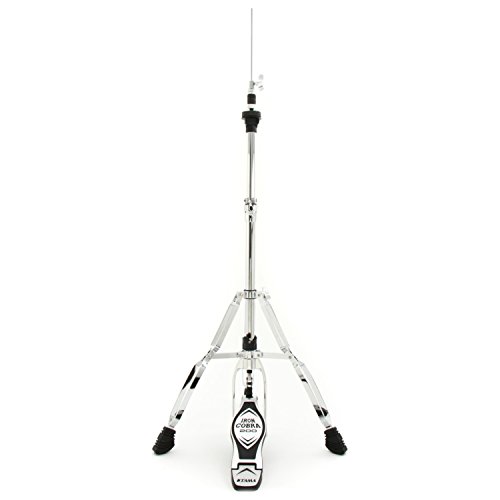
Tama Iron Cobra 200 Hi-Hat Stand
Included for 'Best Hi-Hat Stands for Stable, Fast Footwork' as a relevant option in this category; details come from the product listing.
View on Amazon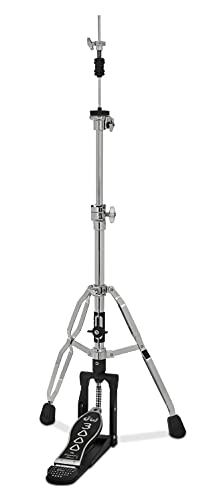
DW Hardware 3000 Series 2-Leg Hi-Hat Stand (DWCP3500TA),Chrome
Included for 'Best Hi-Hat Stands for Stable, Fast Footwork' because the listing specifies Chrome, details this guide uses to compare options.
View on AmazonBest hi-hat stands by playing situation
- Best overall for demanding players: DW 5000 5500. It combines a solid three-leg base, adjustable spring tension, a sturdy pedal, and a two-way cymbal clutch. It is relatively heavy, but that mass helps it stay planted for heel-toe patterns and forceful footwork.
- Best value: Tama Iron Cobra 200 HH205. Its direct, uncomplicated pedal feel and swivel-foot design provide reliable stability without the price or weight of a professional flagship stand.
- Best portable option: Yamaha HS1200T. The stand folds efficiently, offers useful spring adjustment, and has a responsive pedal that suits rehearsals, gigs, and compact hardware bags.
- Best midrange all-rounder: Pearl H-930. It offers a stable double-braced platform, a practical height range, and Pearl’s familiar clutch and pedal layout.
- Best for maximum stability on a budget: Tama Iron Cobra 600 HH605. Its heavier construction and long-footboard design favor players who prioritize planted performance over minimum transport weight.
Head-to-head comparison
The figures below are typical published specifications or approximate working ranges; small differences can occur between production revisions and regional versions. Weight includes the stand but not cymbals.
| Stand | Approx. weight | Height range | Spring adjustment | Leg design | Best use |
|---|---|---|---|---|---|
| Tama Iron Cobra 200 HH205 | Approx. 8.4 lb / 3.8 kg | Approx. 27–37 in / 686–940 mm | Adjustable tension | Double-braced, swivel feet | Budget practice and gigging |
| Yamaha HS1200T | Approx. 8.4 lb / 3.8 kg | Approx. 27–37 in / 686–940 mm | Adjustable tension | Double-braced, rotating legs | Portable, quick pedal work |
| Pearl H-930 | Approx. 9.5 lb / 4.3 kg | Approx. 28–39 in / 711–991 mm | Adjustable tension | Double-braced, independently rotating legs | General-purpose setup |
| Tama Iron Cobra 600 HH605 | Approx. 11 lb / 5.0 kg | Approx. 28–39 in / 711–991 mm | Adjustable tension | Heavy double-braced, swiveling legs | Hard playing and large cymbals |
| DW 5000 5500 | Approx. 13 lb / 5.9 kg | Approx. 28–39 in / 711–991 mm | Adjustable tension and pedal response | Heavy three-leg base, folding design | Professional touring and forceful footwork |
What actually determines pedal feel?
Spring tension and return speed
A light spring makes the pedal easy to depress and can feel comfortable for relaxed eighth-note patterns. It may, however, return too slowly when you play rapid openings or splash effects. A tighter spring returns the top cymbal faster, but excessive tension can make the pedal feel stiff and tiring.
Look for an adjustment that is easy to reach without removing the cymbal. The useful range matters more than the number of settings. A good stand should let you find a point where the cymbals close reliably without forcing your ankle to fight the mechanism.
Footboard geometry
A longer footboard gives the heel-toe technique more usable space and can make rapid doubles feel smoother. A shorter board generally feels quicker for simple toe-driven patterns and packs more easily. Direct-drive or low-linkage systems transmit movement immediately; chain-driven systems usually provide a slightly more forgiving feel.
For the fastest footwork, avoid choosing solely by spring tension. A pedal with side-to-side play, a loose hinge, or an uneven base can feel slow even when its spring is strong.
Leg design, stability, and space
Double-braced legs add weight and resist twisting, which is valuable when playing loud, heavy music. Swiveling or rotating legs are equally important when a bass-drum pedal, remote pedal, or auxiliary pedal must fit around the stand. A stand that is technically heavy but cannot be positioned close to the bass drum may be less practical than a lighter rotating-leg model.
Three-leg stands usually provide the most predictable footprint. A flat-base stand is lighter and easier to place in a cramped vintage-style setup, but it gives up some resistance to sliding and lifting. For hard playing, select a model with retractable spikes or substantial rubber feet, then place it on a drum rug rather than relying on bare-floor friction.
Clutch quality is a small part with a large effect
The clutch holds the upper hi-hat cymbal, so its threads, felt washers, and locking nuts deserve attention. A weak clutch can loosen during a set, causing the cymbal gap to change or creating rattling that sounds like a hardware fault.
Prefer a clutch with two locking points and replaceable felts. A two-way clutch is useful if you want to tune the cymbal’s response from a firm, closed feel to a looser, more open sound. Check that the threaded shaft extends far enough for thick cymbals and that the lower nut does not compress the felt completely flat.
Decision matrix: match the stand to your routine
| Your situation | Priority | Best direction | Why |
|---|---|---|---|
| Beginner with a limited budget | Simple adjustment and dependable parts | Tama Iron Cobra 200 or comparable midrange double-braced model | Enough stability to develop technique without paying for touring-level weight |
| Weekly rehearsals and regular transport | Portability and quick setup | Yamaha HS1200T | Rotating legs and moderate weight reduce packing and positioning problems |
| Frequent hard playing | Mass, base grip, and durable hinge parts | DW 5000 5500 or Tama Iron Cobra 600 | Heavier construction resists movement and frame flex |
| Small kit or crowded stage | Clearance around other pedals | Rotating-leg Pearl, Yamaha, or Tama model | The legs can be aligned around the bass-drum pedal and stands |
| Very tall or low playing position | Broad height adjustment | Pearl H-930, Tama 600, or DW 5000 | More adjustment room helps match posture and cymbal angle |
How to set up a hi-hat stand for fast, stable footwork
- Place the pedal on a drum rug. Align the center of the pedal with your natural ankle position, not merely with the visual center of the cymbals.
- Open the legs enough to resist twisting. Keep the base compact if space is limited, but do not fold the legs so far that one rubber foot carries most of the load.
- Set the lower cymbal level. A slight downward tilt toward the player helps prevent unwanted air-lock and gives the top cymbal room to move.
- Install the upper cymbal with adequate felt. Do not clamp the cymbal tightly between the clutch washers. It needs controlled movement, not a rigid grip.
- Adjust the cymbal gap before the spring. Start around 6–10 mm for a general setup, then change it to suit your preferred open sound.
- Increase spring tension gradually. Stop when the cymbal returns quickly enough for your fastest pattern. More tension is not automatically better.
- Test for movement. Play repeated quarter notes, rapid openings, and forceful closures. If the stand shifts, check the rug, feet, pedal alignment, and leg angle before tightening the spring further.
Ownership, maintenance, and common failure points
The parts that usually wear first are the pedal hinge, chain or linkage, spring hooks, rubber feet, cymbal felts, and clutch threads. These are generally replaceable, which is one reason a better stand can cost less over several years than repeatedly replacing a lightweight entry-level model.
Wipe dust and spilled drink from the pedal and base after each session. Check the clutch nut and spring adjustment before a performance. Lubricate only the hinge or moving joint recommended by the manufacturer; excess oil can collect grit and migrate onto the cymbal or pedal surface. Replace flattened felts and hardened rubber feet rather than compensating by overtightening the clutch.
Common mistakes include setting the spring extremely tight, clamping the top cymbal immovably, placing the stand on a smooth floor without a rug, and choosing a heavy fixed-leg model that blocks the bass-drum pedal. These problems can make a good stand feel slow or unstable.
Final buying advice
Choose the Tama Iron Cobra 200 if you want the essential features at a moderate market price, or the Yamaha HS1200T if transport and quick positioning matter most. The Pearl H-930 is a sensible middle ground for varied playing. For frequent hard playing, the DW 5000 and Tama Iron Cobra 600 justify their higher general market range—roughly $180–$320 depending on configuration and region—through greater mass, stronger hardware, and more adjustment.
Before buying, confirm three measurements: the stand’s folded height, its usable height at your preferred posture, and the clearance between its legs and your bass-drum pedal. Those details, combined with a properly adjusted spring and a secure clutch, matter more to fast footwork than a long feature list.





Write Your Review
No reviews yet. Be the first to share your experience!