
The best mage games for strategic spellcasting are Baldur’s Gate 3 for turn-based tactical depth, Elden Ring for action-oriented spell management, and Dragon’s Dogma 2 for hybrid combat creativity, while Hogwarts Legacy and The Elder Scrolls V: Skyrim are ideal if you want an accessible, story-driven magic experience.
What Makes a Mage Game Strategic?
Not all mage games challenge you the same way. Before comparing titles, use these four criteria to identify the right kind of magic experience for you:

Mage Wars Arena Board Game
Included for 'Best Mage Games for Strategic Spellcasting' as a relevant option in this category; details come from the product listing.
View on Amazon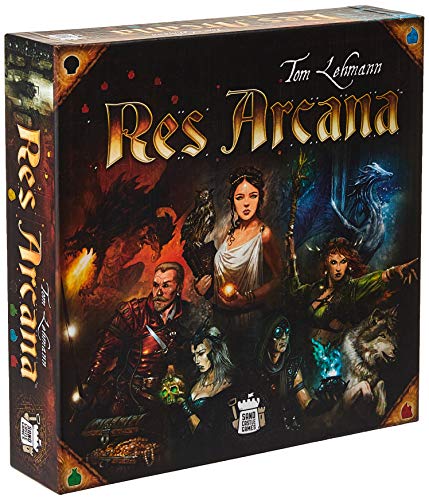
Res Arcana Board Game - The Enchanting World of Mages and Magic! Fantasy Adventure Game, Strategy Game for Kids & Adults, Ages 14+, 2-4 Players, 30-60 Min Playtime, Made by Sand Castle Games
Included for 'Best Mage Games for Strategic Spellcasting' because the listing specifies Strategy Game for Kids & Adults and Ages 14+, details this guide uses to compare options.
View on Amazon
Mage Wars Academy Game
Included for 'Best Mage Games for Strategic Spellcasting' as a relevant option in this category; details come from the product listing.
View on Amazon
Mage Noir - Strategy Card Battle Game for 2 Players - Core Game - Board Game for Ages 14 and Up - English Version
Included for 'Best Mage Games for Strategic Spellcasting' because the listing specifies Strategy Card Battle Game for 2 Players and Core Game, details this guide uses to compare options.
View on Amazon- Mage Class Depth: Does the game offer dedicated mage origins, subclasses, or skill trees with meaningful progression, or is magic just a secondary weapon?
- Spell Variety and Customization: Look for the number of spells, elemental types, and the ability to modify, combine, or craft spells rather than just unlocking linear upgrades.
- Combat Style: Turn-based and tactical games reward preparation and positioning, while action RPGs reward timing, resource management, and dodge-casting.
- Platform and Playstyle Fit: Consider single-player vs. online, controller vs. mouse-and-keyboard optimization, and how much time you need to invest to make a mage viable.
Best Mage Games Compared At a Glance
This table compares the leading magic-focused games available in 2026 on core strategic factors that product pages rarely put side-by-side.
| Game (Release Year) | Combat System | Playable Mage Spells / Abilities | Mage Subclasses / Schools | Platforms | Average Campaign Length (Mage Playthrough) |
|---|---|---|---|---|---|
| Baldur’s Gate 3 (2023) | Turn-based Tactical | 120+ spells across levels 1-6 | 8 Wizard schools, 4 Sorcerer bloodlines, 3 Cleric domains per deity, Druid circles | PC, PS5, Xbox Series X/S, Mac | 60-100 hours |
| Elden Ring (2022) | Real-time Action RPG | 70 Sorceries + 101 Incantations | No fixed class – 10 starting origins, Astrologer/Prisoner for mages, 8 staffs + 10 sacred seals | PC, PS4, PS5, Xbox One, Xbox Series X/S | 50-80 hours |
| Dragon’s Dogma 2 (2024) | Real-time Action with Pawn System | 30+ core spells per vocation | 2 dedicated mage vocations (Mage, Sorcerer) + 2 hybrid (Mystic Spearhand, Warfarer) | PC, PS5, Xbox Series X/S | 35-60 hours |
| Hogwarts Legacy (2023) | Real-time Action | 30+ spells + 15 talent upgrades | No class system – spell unlock is story-based, 3 talent branches for magic | PC, PS5, PS4, Xbox Series X/S, Xbox One, Switch | 25-35 hours |
| The Elder Scrolls V: Skyrim Special Edition (2016) | Real-time Action / First-Person | 90+ spells across 5 schools | 5 magic schools, 18 perk trees, no fixed class | PC, PS5, PS4, Xbox Series X/S, Xbox One, Switch | 30-70 hours |
| Path of Exile 2 (Early Access 2024) | Real-time Action RPG (Isometric) | 100+ active skill gems for spellcasters | 12 ascendancy classes (e.g., Sorceress: Stormweaver, Chronomancer) | PC, PS5, Xbox Series X/S | 40-70 hours per act cycle, open-ended endgame |
Detailed Breakdown: Best Mage Games By Playstyle
Baldur’s Gate 3 – Best for Deep Tactical Spellcasting
Baldur’s Gate 3 is the most strategic option for players who want spellcasting to feel like a puzzle. Built on Dungeons & Dragons 5th Edition rules, it uses spell slots, concentration, ritual casting, and spell preparation. Playing a Wizard means you must prepare a limited number of spells from your spellbook each long rest, while a Sorcerer has fewer spells known but can manipulate them with Metamagic. Positioning, surfaces, and verticality matter – you can electrify water, ignite oil, or use Misty Step to gain a tactical advantage. The trade-off is complexity and pacing; early levels as a mage are fragile and require careful resource management until level 5 when Fireball and other power spikes arrive.
Elden Ring – Best for High-Risk, High-Reward Action Magic
Elden Ring makes mage play strategic through resource and timing management rather than turn order. Sorceries scale with Intelligence and Staff upgrades, Incantations with Faith, and hybrid builds use both. You must balance FP (focus points), stamina, and positioning while bosses can punish long cast times. The game rewards exploration heavily for mages, as the best spells like Comet Azur, Stars of Ruin, or Ancient Dragons’ Lightning Strike are hidden in late-game areas, caves, or behind boss fights. Unlike Baldur’s Gate 3, you can respec after the Rennala boss fight, allowing you to experiment with pure mage, spellblade, or faith-caster setups without restarting. Best for players comfortable with challenging action combat and minimal quest guidance.
Dragon’s Dogma 2 – Best for Creative and Visual Spellcasting
Dragon’s Dogma 2 offers the most visually impressive large-scale magic. Its Sorcerer vocation requires long chant times for spells like Meteoron and Maelstrom, forcing you to rely on your Pawn companions to protect you. The strategic element is party composition and spell timing – casting Augural Flare and then detonating it with a follow-up spell, or using High Levin to stagger flying enemies so your melee Pawns can engage. It is less about mana spreadsheets and more about battlefield control and party synergy. Magic feels weighty and impactful, but vocation progression is locked until mid-game, so mage depth builds over time.
Hogwarts Legacy – Best for Accessible, Immersive Magic Fantasy
If you want to feel like a mage without complex build math, Hogwarts Legacy is the most approachable. There are no mana bars or spell slots; most spells are on cooldowns and unlocked through story progression and assignments. Combat strategy comes from combining crowd-control spells (Levioso, Glacius, Transformation) with damage spells and Ancient Magic finishers. Talent points let you specialize in Dark Arts, stealth, or core spell potency, but you cannot miss a build. It is the best pick for younger players, Harry Potter fans, or anyone who wants exploration and story with light tactical challenge on normal difficulty.
The Elder Scrolls V: Skyrim – Best for Open-Ended Spell Experimentation
Skyrim remains unmatched for freedom. You can dual-wield Destruction spells with different elements, use Conjuration to summon atronachs while casting Illusion to turn enemies against each other, or switch to a spellsword with Bound Sword in one hand. Magicka regenerates automatically, and spell costs decrease with perks and enchanted gear. The strategic depth is lower than Baldur’s Gate 3 or Path of Exile, but the mod support on PC extends its life significantly in 2026. Skyrim is ideal if you want to roleplay any type of mage and experiment without strict class restrictions. Expect to need difficulty or overhaul mods to keep magic challenging at high levels.
Path of Exile 2 – Best for Hardcore Build Crafting
Path of Exile 2 is designed for players who love deep character building. Its gem-based system lets you link an active skill gem like Spark or Flame Wall with support gems that change its behavior, projectile count, area, or triggered effects. The passive skill tree contains over 1,000 nodes, and Ascendancy classes further specialize your mage into elemental, chaos, or temporal magic. Strategy lies almost entirely in preparation – planning your gem links, passive path, and gear affinities before combat. It is online-only and has a steep learning curve, but it offers near-infinite replayability for dedicated theorycrafters.
Which Mage Game Should You Choose?
Use this decision matrix to match your situation to the right title:
| Your Situation | Recommended Game | Why It Fits |
|---|---|---|
| You want turn-based tactics and want every spell choice to matter | Baldur’s Gate 3 | Concentration and spell slot economy force long-term planning; strongest mage identity by class |
| You prefer challenging action combat and exploration | Elden Ring | Rewards dodging and FP management; vast open world with hidden spells |
| You want cinematic, large-scale magic with companions | Dragon’s Dogma 2 | Long casts balanced by team protection; best visual payoff for high-tier spells |
| You want a casual, story-first magic world | Hogwarts Legacy | No punishing resource system; 30+ hour single-player story with easy difficulty options |
| You want maximum freedom to create any mage archetype | The Elder Scrolls V: Skyrim | No class lock; mix schools freely and mod extensively; available on nearly every platform |
| You love deep loot and build optimization and don’t mind online-only | Path of Exile 2 | Support gem links and huge passive tree create thousands of viable mage builds |
What to Know Before You Buy: Cost, Time, and Ownership Realities
Magic games differ significantly in total cost and time investment beyond the initial purchase, which affects which is the better long-term choice:
- General Price Range in 2026: Most of these titles now sit in the $19 to $39 range during regular sales, with new releases like Dragon’s Dogma 2 and Path of Exile 2 still near the $49 to $69 launch price range. Factor in that Baldur’s Gate 3 and Elden Ring include substantial content without required DLC, while Path of Exile 2 is planned as free-to-play at full launch with optional cosmetic microtransactions.
- Time to Make a Mage Feel Powerful: In Baldur’s Gate 3 and Elden Ring, mages start weak for the first 8-12 hours. Hogwarts Legacy and Skyrim give you capable combat spells within the first 2-3 hours. If you have limited play time, choose a game with an earlier power curve.
- System and Storage Requirements: Baldur’s Gate 3 and Dragon’s Dogma 2 require 100-150 GB of storage and a modern discrete GPU for high settings. Elden Ring, Skyrim, and Hogwarts Legacy are more scalable on older hardware and handheld devices. Path of Exile 2 requires a persistent internet connection.
- What Wears First – Common Ownership Frustrations: In Skyrim, vanilla magic scaling falls off at higher levels without mods or Enchanting to reduce spell costs. In Elden Ring, casting can feel underwhelming until you find better staffs and memory stones that increase spell slots. In Baldur’s Gate 3, inventory management and long rest supplies can interrupt spellcasting flow. In Hogwarts Legacy, limited enemy variety and lack of spell crafting can reduce long-term challenge for hardcore players.
- DLC and Replayability: Baldur’s Gate 3 offers extremely high replayability through different mage subclasses and story choices. Elden Ring’s Shadow of the Erdtree expansion adds over 10 new spell types. Check edition contents before buying – Game of the Year or Deluxe editions in 2026 often bundle these expansions at a lower combined cost than buying separately.
FAQ
Which mage game has the most spells?
By raw count, Path of Exile 2 and Elden Ring lead with over 100 spells each when you combine active gems or Sorceries and Incantations. Baldur’s Gate 3 has around 120 spells but limits how many you can prepare at once, which adds strategic choice.
What is the easiest mage game for beginners?
Hogwarts Legacy is the most beginner-friendly because it has no mana management, clear cooldowns, and tutorialized combos. Skyrim on Adept difficulty is also forgiving due to regenerating Magicka and flexible play.
Which mage game is best on console vs. PC?
All six play well with a controller, but Baldur’s Gate 3 and Path of Exile 2 are more comfortable with mouse-and-keyboard due to inventory and skill management. Elden Ring, Dragon’s Dogma 2, and Hogwarts Legacy were designed with controller play in mind and perform equally well on PS5 and Xbox Series X/S.
Do I need to play previous games to understand these?
No. Baldur’s Gate 3, Elden Ring, Dragon’s Dogma 2, and Hogwarts Legacy are all standalone stories. Skyrim benefits from no prior knowledge, and Path of Exile 2 has a new campaign separate from the original Path of Exile.










Write Your Review
No reviews yet. Be the first to share your experience!