
Updated 2026 · Reviewed 10 November 2026 · Author: Best Air Duct Cleaner editorial team · Sources: manufacturer specifications and Amazon listings checked 10 November 2026.
- The short answer
- Quick answer: what is the best pool vacuum?
- Can I use a household vacuum in a pool?
- What are the 5 types of pool vacuum?
- How do I choose a pool vacuum?
- What are the 7 best pool vacuums?
- Which pool vacuum should I buy?
- What is the best above-ground pool vacuum?
- What is the best inground pool vacuum?
- Which pool vacuum is best for leaves, dirt and algae?
- What is the best pool vacuum for a vinyl liner?
- What should I avoid when buying a pool vacuum?
- Last verified & changelog
- Other models we considered
- FAQ
- Yes, if you buy a model rated for vinyl and keep the liner in good condition. The Dolphin E10, Hayward Wanda the Whale, and Intex ZX300 are all sold for vinyl-lined above-ground pools. Look for soft brushes, smooth wheels, and no sharp edges, and avoid heavy wall-climbers with stiff brushes on an old or patched liner.
- Which pool vacuum is right for my pool?
Affiliate disclosure: BestAirDuctCleaner.com is reader-supported. When you buy through links on this page, we may earn a commission at no extra cost to you. Prices and availability change often — check the current price on Amazon before you buy.
The short answer
The best pool vacuum in 2026 is the Dolphin Nautilus CC Plus for most inground pools. It cleans floors and walls up to about 40 ft, runs independently of your pump, and has the widest service network. For above-ground pools, the Dolphin E10 is the best pick, while the cordless WYBOT C1 adds waterline cleaning with no cable.
Our top picks at a glance:
- Dolphin Nautilus CC Plus — Best Overall
- Dolphin E10 — Best for Above-Ground Pools
- WYBOT C1 — Best Cordless Robot
- Polaris 280 — Best for Leaves
- Hayward Wanda the Whale W3900 — Best Budget Automatic
- Intex ZX300 Deluxe — Best for Intex Pools
- Water Tech Pool Blaster Max Li CG — Best Handheld
How we choose & verify: Our picks come from manufacturer specifications and Amazon listings, checked 10 November 2026, cross-checked against independent testing from Family Handyman. Each Amazon link was checked against that model’s listing data to confirm it points to the exact model. We did not hands-on test these products ourselves — rankings are based on published specifications and independent test results, not on lab tests run by us. Prices are ranges observed in November 2026 research, not fixed prices — check the current price before you buy.
— Best Air Duct Cleaner editorial team
Key insight: A pool robot’s running cost is tiny — about $0.04 per cycle in electricity — but a pressure-side cleaner can add $400–$500 for a booster pump plus installation. The other number that matters is warranty: Maytronics’ current spec gives the Nautilus CC Plus 1 year, while the Dolphin E10 gets 2 years. (Sources: Maytronics spec sheets, 30 Oct 2026; PoolRobotLab.)
Quick answer: what is the best pool vacuum?
If you want one pick for most inground pools, get the Dolphin Nautilus CC Plus. It is a corded robot that cleans the floor and walls, runs on its own motor and filter instead of taxing your pump, and has the longest track record of any robot in this guide.
Have an above-ground pool? Get the Dolphin E10 (usually around $499 on sale). It is built specifically for above-ground pools up to about 30 ft, cleans the floor, and is the simplest robot to own — drop it in, press start, take it out.
Want no cord and no hose? Get the WYBOT C1 (usually $400–$570). It is a cordless robot that cleans floor, walls and waterline, and you recharge it between runs instead of unspooling a cable.
On a tight budget? Get the Hayward Wanda the Whale (usually $220–$370) for an above-ground pool, or the Intex ZX300 Deluxe (usually $100–$175) if you have an Intex pool with a strong enough pump. Both are pump-driven automatic cleaners — no robot, no battery, no extra motor to buy.
The rest of this guide explains the five types of pool vacuum, how to choose by pool type, size, debris and liner, and the other picks — a pressure-side leaf eater, and a cordless handheld for spot cleaning.
In this guide: A pool vacuum is not a household vacuum · The 5 types, explained · How to choose · Comparison table · The 7 picks · Best above-ground pool vacuums · Best inground pool vacuums · Best pool vacuums for leaves, dirt and algae · Best pool vacuums for vinyl liner · FAQ
Can I use a household vacuum in a pool?
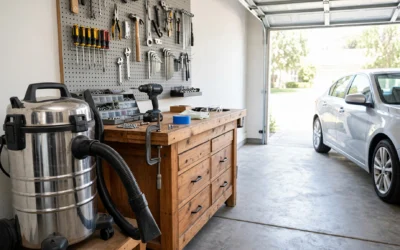
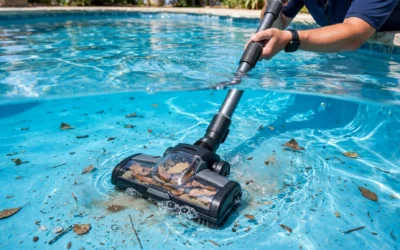
This matters, because the words overlap and the machines do not. A household vacuum — even a wet-dry vacuum or a handheld vacuum — is built for dry floors, carpet and upholstery, runs on mains power or a small battery, and would be dangerous and useless underwater. A pool vacuum is built to work fully submerged, to pick up leaves, sand, silt and algae from a pool floor and walls, and to either trap debris in its own filter or send it to your pool’s filtration system.
Do not use a household vacuum, a shop vacuum, or a carpet cleaner in a pool. Do not use a pool vacuum on a dry floor either — most of them need water for cooling, suction and traction, and running one dry can damage it in minutes.
The confusion is understandable: this site already covers household robots, sticks and handhelds in our best vacuums guide and our best robot vacuums guide. Those are for floors inside your home. Everything in this guide is for water. When this guide says “robot”, it means a robot that swims; when it says “handheld”, it means a waterproof handheld you push along the pool floor on a pole.
One more distinction: a pool skimmer (including solar surface skimmers) only collects floating debris from the surface. It is not a pool vacuum, and it will not clean the floor. This guide covers vacuums — machines that clean the floor, and usually the walls and waterline too.
What are the 5 types of pool vacuum?
There are five types, and the type matters more than the brand. Buy the wrong type and even a good model will disappoint you.
1. Robotic pool vacuums (corded) — best automatic pool vacuums for inground pools
A robot is a self-contained machine with its own motor, brushes and filter. You drop it in the pool, plug its power supply into a mains outlet (the robot itself stays in the water on a floating cable), and it drives itself around the floor and walls, scrubbing and sucking debris into its own filter basket or cartridge. It does not use your pool pump at all.
Best for: Inground pools, owners who want the most hands-off cleaning, and pools with heavy fine debris (sand, silt, dust) that a suction cleaner would send straight to the filter.
Watch out for: The cable. It tangles, it needs to be kept out of the way, and you have to lift a wet, heavy robot out of the pool after every run. Corded robots also cost more up front than suction or pressure cleaners.
In this guide: Dolphin Nautilus CC Plus, Dolphin E10.
2. Cordless robotic pool vacuums — best cordless pool vacuums
Same idea as a corded robot, but battery-powered, with no cable and no power supply to position. You charge it, drop it in, and it cleans until the battery runs down, then you fish it out and recharge it.
Best for: Anyone who hates cables, above-ground pools where a cord is awkward, and quick cleans between full runs.
Watch out for: Runtime is finite — typically around 90–180 minutes per charge, depending on model and mode — and the battery will degrade over years, unlike a corded robot that runs as long as it is plugged in. A cordless robot is also heavier to lift out when its battery is spent, because you cannot just pull it by a cable. Check the warranty on the battery specifically, not just the robot.
In this guide: WYBOT C1.
3. Suction-side pool vacuums — best suction pool vacuums
A suction cleaner has no motor of its own. It plugs into your skimmer or a dedicated suction line, and your pool pump’s suction pulls water — and debris — through it as it wanders randomly around the floor. Debris ends up in your pump basket and filter, so you will empty those more often.
Best for: Budget buyers, above-ground pools, and anyone who wants a simple automatic cleaner with almost nothing to break. Suction cleaners are the cheapest way to automate pool cleaning.
Watch out for: They only work as well as your pump. A weak or undersized pump, a dirty filter, or a pool with a lot of large leaves will all slow a suction cleaner down. They are also floor-only in most cases — do not expect wall or waterline cleaning — and they can get stuck on steps, ladders and main drains.
In this guide: Hayward Wanda the Whale, Intex ZX300 Deluxe (pump-driven).
4. Pressure-side pool vacuums — best electric pool vacuums that use water pressure
A pressure cleaner also has no motor of its own, but it works the other way round: pressurised water from your pump (or a separate booster pump) drives it around the pool, and its venturi jets create suction that sweeps debris into a bag carried on the cleaner itself — so debris never reaches your filter.
Best for: Leaf-heavy inground pools, especially under trees. A pressure cleaner with a large debris bag swallows leaves, acorns and twigs that would choke a suction cleaner or fill a robot’s small filter in minutes.
Watch out for: The hidden cost. Many pressure cleaners — including the classic Polaris 280 in this guide — require a separate booster pump, sold separately for roughly $400–$500, plus installation. A pressure cleaner without a booster pump (such as the Polaris 360) is cheaper to run but cleans with less power. Always price the whole system, not just the cleaner.
In this guide: Polaris 280 (booster pump required).
5. Manual and handheld pool vacuums — best manual pool vacuums and best handheld pool vacuums
A manual pool vacuum is a vacuum head on a telescopic pole, connected by hose to your skimmer — you walk it around the pool yourself, like vacuuming a floor. A cordless handheld is the modern version: a battery-powered, waterproof handheld with its own filter bag, also used on a pole, with no hose and no pump connection.
Best for: Spot cleaning, steps and corners a robot misses, small pools and spas, and owners who only need to clean occasionally. A handheld is also the best second vacuum to own alongside a robot.
Watch out for: A manual or handheld vacuum is only as good as the person holding the pole. It will not clean the pool while you are at work. Buy one as your only cleaner only if your pool is small, lightly used, and you genuinely enjoy doing it by hand.
In this guide: Water Tech Pool Blaster Max Li CG (cordless handheld).
| Type | Power source | Debris goes to | Best for | Price range in this guide |
|---|---|---|---|---|
| Corded robot | Mains via power supply | Its own filter | Inground, hands-off | $490–$900 |
| Cordless robot | Rechargeable battery | Its own filter | No-cable convenience | $400–$570 |
| Suction-side | Your pool pump | Pump basket / filter | Budget, above-ground | $100–$370 |
| Pressure-side | Pump / booster pump | Its own debris bag | Leaves, large debris | $600–$900 + booster pump |
| Manual / handheld | You, or a battery | Its own bag / your filter | Spot cleaning, small pools | $300–$330 |
How do I choose a pool vacuum?
Use these five checks, in this order. Get the first two wrong and no model will save you.
1. Above-ground or inground? This decides almost everything
Above-ground pools are usually round or oval, have flat or gently dished vinyl floors, low walls, and a modest pump. They need a cleaner made for that shape: a floor-only robot such as the Dolphin E10, a suction cleaner such as Hayward Wanda the Whale, or a pump-driven cleaner made for the pool’s own brand, such as the Intex ZX300. A heavy inground robot built to climb walls is wasted on an above-ground pool — and some inground robots are too heavy or too aggressive for a soft-sided above-ground wall.
Inground pools are larger, deeper, and have walls and a waterline that need scrubbing. They need a wall-climbing robot (Dolphin Nautilus CC Plus, WYBOT C1), or a pressure-side cleaner (Polaris 280) if leaves are the main problem. For more on inground robots specifically, see our best robotic pool cleaners for inground pools.
2. Pool size — length, surface area, and depth
Check the manufacturer’s rated pool size before you buy, and do not stretch it. A robot rated for pools up to 30 ft will not reliably finish a 40 ft pool in one cycle. A suction cleaner rated for a small above-ground pool will crawl endlessly in a large inground pool and never finish. As a rough guide:
- Small above-ground (up to about 24 ft round): a suction cleaner or a small cordless robot is enough.
- Medium above-ground (up to about 30 ft) or small inground: Dolphin E10 or WYBOT C1.
- Large inground (up to about 40 ft): Dolphin Nautilus CC Plus or a pressure-side cleaner with a booster pump.
Depth matters too: a handheld vacuum has a minimum water depth (often around 10–14 inches), and a suction cleaner needs enough pump power to work at the deep end, not just the shallow end.
3. What debris do you actually get? Leaves, dirt, sand, or algae
- Leaves and twigs: you need a large debris bag or basket. Pressure-side cleaners (Polaris 280) and robots with a leaf bag are best. A suction cleaner with a small pump basket will clog.
- Sand, silt and fine dirt: you need fine filtration. A robot with a fine or ultra-fine filter cartridge is best — a suction cleaner will pass fine silt straight through to your filter and back into the pool. See the section on the best pool vacuums for dirt below.
- Algae: no vacuum cures algae on its own. You must shock the pool and brush the walls first to kill and loosen it, then vacuum the dead algae — slowly, so you do not stir it back up. A robot with fine filtration, or a manual vacuum set to waste (if your system allows it), is the usual approach. See the algae section below.
4. Power: corded, cordless, or pump-driven?
- Corded robot: unlimited runtime, no battery to wear out, but a cable to manage and store.
- Cordless robot: no cable, but finite runtime and a battery that will eventually need replacing. Best if you clean in short sessions.
- Pump-driven (suction or pressure): no battery and no charging, but you are tied to your pump’s power and schedule — the cleaner only runs when the pump runs, and a pressure cleaner may need a booster pump as well.
If your pool already has a dedicated pressure-cleaner line and a booster pump, a pressure cleaner is a natural fit. If it does not, do not buy one that needs a booster pump unless you have priced the pump and the installation.
5. Vinyl liner safety — best pool vacuums for vinyl liner
Most above-ground pools and many inground pools have a vinyl liner, and a liner is easier to damage than concrete or fibreglass. Look for:
- Soft brushes or a brushless design — stiff, aggressive brushes can scuff or wear a liner over time.
- Smooth wheels and no sharp edges on the cleaner body.
- A model rated for vinyl by the manufacturer — the Dolphin E10, Hayward Wanda the Whale and Intex ZX300 are all sold for vinyl-lined above-ground pools.
- No metal parts dragging on the floor. A manual vacuum head with a brush strip is gentler on vinyl than a hard plastic head.
On a concrete or gunite pool, brush stiffness matters less, and a robot with active scrubbing brushes is an advantage on rough surfaces and steps. On vinyl, gentleness wins. If your liner is old, wrinkled or already patched, favour a light suction cleaner or a floor-only robot over a heavy wall-climber.
What are the 7 best pool vacuums?
Prices below are ranges observed in November 2026 research, not fixed prices. Check the current price before buying — pool robots in particular are discounted heavily around spring and holiday sales, and some models are sold in Wi-Fi and non-Wi-Fi versions at different prices.
| # | Pool vacuum | Type | Best for | Price range* | Pool type | Warranty | Score |
|---|---|---|---|---|---|---|---|
| 1 | Dolphin Nautilus CC Plus | Corded robot | Best overall, inground | $750–$900 | Inground up to ~40 ft | 1 yr | 9.5 |
| 2 | Dolphin E10 | Corded robot | Best above-ground robot | $499 (sale) | Above-ground up to ~30 ft | 2 yr | 8.5 |
| 3 | WYBOT C1 | Cordless robot | Best cordless robot | $400–$570 | Inground up to ~1,614 sq ft | 2 yr | 6.5 |
| 4 | Polaris 280 | Pressure-side | Best for leaves | $600–$900 + booster pump | Inground, all surfaces | 1 yr | 8.0 |
| 5 | Hayward Wanda the Whale W3900 | Suction-side | Best budget automatic | $220–$370 | Above-ground, any size | 1 yr | 8.0 |
| 6 | Intex ZX300 Deluxe | Pump-driven automatic | Best for Intex pools | $100–$175 | Intex above-ground | 1 yr | 8.5 |
| 7 | Water Tech Pool Blaster Max Li CG | Cordless handheld | Best handheld | $300–$330 | Inground & above-ground | 1 yr | 8.0 |
Top picks price-checked 10 November 2026 against Amazon listings and retailer prices; prices change often — confirm the current price before you buy.
Score is our editor’s rating out of 10 for the pick’s “Best for” role, based on published specifications, independent test results where available, and price. 9.5 = best overall; 9.0 = best in its niche with no major weakness; 8.5 = strong niche pick with one notable trade-off; 8.0 = good pick with clear limitations; 7.5 = usable pick with a significant caveat (see its Cons). Where the pick’s section quotes a published test score (RTINGS, Vacuum Wars, TechGearLab, Consumer Reports, CleanTheFloor, TechRadar), the score reflects it. We did not hands-on test these products — scores are editorial judgments from published data, not lab measurements.
* Price ranges observed 10 Nov 2026 from manufacturer and retailer listings and independent testers. Check current price. The Polaris 280 range is for the cleaner only — a booster pump (roughly $400–$500) is extra.
Which pool vacuum should I buy?
1. Dolphin Nautilus CC Plus — Best overall pool vacuum
Best for: Most inground pools, and anyone who wants the most proven robot you can buy.
The Nautilus CC Plus is the best-selling Dolphin robot for a reason: it is a corded robot with its own motor, brushes and top-load filter, so it cleans independently of your pump and filter. Per Maytronics’ current spec sheet, it cleans the floor and walls of inground pools up to about 40 ft, on a roughly 2-hour cycle, with a weekly timer on the Wi-Fi version. It is the default recommendation in independent pool-cleaner roundups, and Maytronics has the widest parts and service network of any robot brand in this guide.
Be careful about one detail that has changed: some older listings and reviews say the CC Plus scrubs the waterline. Maytronics’ current spec sheet (checked 10 Nov 2026) lists waterline scrubbing as not included on this model — if waterline scrubbing matters to you, you need a more expensive Dolphin tier or a cordless robot such as the WYBOT C1 below. The warranty is also shorter than it used to be: Maytronics now lists 1 year on current Nautilus CC models — the 2.5-year warranty some older reviews cite was the previous model’s term.
Key specs:
- Type: corded robot; cleans floor and walls
- Pool size: inground up to about 40 ft; cycle about 2 hours
- Filter: top-load, easy to rinse; fine-filter options for sand and silt
- Weight: around 20 lb; warranty: 1 year; price $750–$900 observed
Pros
- Proven corded robot — no battery to wear out, unlimited runtime while plugged in
- Cleans floor and walls on inground pools up to about 40 ft
- Top-load filter is easy to remove and rinse; fine-filter options available for sand and silt
- Widest parts and service network of any robot here
Cons
- Expensive — typically $750–$900 depending on Wi-Fi version and retailer
- No waterline scrubbing on the current model, per Maytronics’ own spec sheet
- Only 1-year warranty on current models; cable needs managing and storing
- Heavy to lift out wet (around 20 lb)
Price: $750–$900 range, checked 10 November 2026 ($849 Wi-Fi direct from Maytronics US, about $899 on Amazon; $829 non-Wi-Fi version). Check current price on Amazon
Running costs: About $0.04 per cycle in electricity (PoolRobotLab estimate, 2026); no booster pump, chemicals or extra equipment needed. The cable is the wear item — check it for nicks each season.
Also see: our best robotic pool cleaners for inground pools for more inground robot options.
2. Dolphin E10 — Best above-ground pool vacuum (robot)
Best for: Above-ground pools up to about 30 ft, and anyone who wants a real robot without paying inground-robot prices.
The E10 is the only robot in this guide built specifically for above-ground pools. It is a corded, floor-only robot: drop it in, press start, and it cleans the flat floor in a roughly 1.5-hour cycle. It does not climb walls, has no weekly timer and no Wi-Fi — and for an above-ground pool, that is fine, because above-ground pools rarely need wall climbing. It is Maytronics’ cheapest true robot, usually around $499 on sale against a $699 list, and it runs on its own motor and filter, so it does not tax your pump.
Key specs:
- Type: corded robot, floor only; built for above-ground pools
- Pool size: above-ground up to about 30 ft; cycle about 1.5 hours
- No app, no timer, no Wi-Fi
- Price: $499 on sale observed (list $699)
Pros
- Purpose-built for above-ground pools up to about 30 ft — the right size, not an inground robot forced into a small pool
- Corded, so no battery to charge or replace
- Simple: no app, no timer, no settings to learn
- Top-load filter basket, easy to empty
Cons
- Floor only — no wall or waterline cleaning
- No weekly timer or Wi-Fi, so you start every run by hand
- Not for inground pools — buy the Nautilus CC Plus instead if you have one
- At around $499 on sale, still far more than a suction cleaner
Price: $499 on sale, checked 10 November 2026 (list $699). Check current price on Amazon
Running costs: About $0.04 per cycle in electricity (PoolRobotLab estimate, 2026); no booster pump, chemicals or extra equipment needed. The cable is the wear item — check it for nicks each season.
3. WYBOT C1 — Best cordless pool vacuum
Best for: Anyone who wants a robot with no cord and no hose, and waterline cleaning without paying for a premium Dolphin.
The WYBOT C1 is the best-value cordless robot in this guide. It is battery-powered, cleans floor, walls, waterline and steps on inground pools up to about 1,614 sq ft, and runs for up to about 150 minutes per charge, per WYBOT. It lists at $569.99 and regularly sells for around $400 on Amazon (about $430 direct from WYBOT). There is no cable to tangle, no power supply to position, and no pump connection — you charge it, drop it in, and take it out when it is done. It is app-controlled, with scheduled cleaning and smart navigation.
One honest note: independent testing was mixed. Robotic Reviews scored the C1 65 out of 100, flagging underpowered motors and a battery that needs frequent recharging on larger pools, while Family Handyman found it perfectly serviceable for casual use on a medium pool. Buy it for a medium pool with realistic expectations — not as a heavy-duty daily workhorse.
Key specs:
- Type: cordless robot; cleans floor, walls, waterline and steps
- Pool size: inground up to about 1,614 sq ft; max depth about 9.8 ft
- Runtime: up to about 150 minutes per charge; recharges in about 3 hours
- Filter: single 180-micron filter; app control (Wi-Fi and Bluetooth)
- Weight: just under 23 lb; price $400–$570 observed
Pros
- Cordless — no cable, no hose, no power supply
- Floor, walls, waterline and steps at a budget cordless price
- App control with scheduled cleaning and smart navigation
- Cheapest cordless robot in this guide
Cons
- Battery is finite — you must recharge between runs, and the battery will degrade over years
- Independent test scored it 65/100, citing underpowered motors and frequent recharging on larger pools
- Single 180-micron filter — no ultra-fine option for very fine silt
- WYBOT’s service network is smaller than Maytronics’ (Dolphin)
Price: $400–$570 range, checked 10 November 2026 (about $400 on Amazon, 2 Nov 2026; $429.99 sale / $569.99 list direct from WYBOT). Check current price on Amazon
Running costs: About $0.04 per cycle in electricity (PoolRobotLab estimate, 2026); no booster pump or extra equipment needed. The battery is the wear item — expect a replacement after several seasons of regular use.
4. Polaris 280 — Best pool vacuum for leaves (pressure-side)
Best for: Leaf-heavy inground pools, especially under trees, where a robot’s small filter would fill in minutes.
The Polaris 280 is the classic pressure-side cleaner: pressurised water from a separate booster pump drives it around the pool, and its dual venturi jets sweep leaves, acorns and twigs into a large debris bag carried on the cleaner — so debris never reaches your filter. It is the most proven pressure cleaner ever sold, parts are available everywhere, and pool technicians everywhere know how to service it. It cleans the floor and walls of inground pools of any size in about 3 hours or less, per Polaris.
The catch is the total cost, and you must price it honestly. The cleaner itself was observed at $599 on sale ($899.99 regular), but it requires a separate booster pump (roughly $400–$500) that is not included, plus installation. Independent reviewers are also cooler on the 280 than its reputation suggests: it has no brush, its navigation is dated, and it is weak on fine dirt compared with a robot. Buy it only if leaves are your main problem — or if you already have a booster pump and a dedicated pressure line.
Key specs:
- Type: pressure-side; large debris bag; debris never reaches your filter
- Needs a separate booster pump (about $400–$500 extra) plus installation
- Cleans floor and walls; about 3 hours or less per cycle
- Price: $600–$900 observed for the cleaner only
Pros
- Best in this guide for large debris — leaves, acorns, twigs, whole
- Large debris bag; debris never reaches your pump basket or filter
- Proven design, parts everywhere, easy to service
- Cleans floor and walls on any size inground pool
Cons
- Requires a separate booster pump (roughly $400–$500) — the sticker price is not the real cost
- No brush, dated navigation, weak on fine sand and silt
- Uses more electricity (booster pump) than a robot or suction cleaner
- Needs a dedicated pressure line — not every pool has one
Price: $600–$900 range observed Nov 2026 for the cleaner only, plus roughly $400–$500 for a booster pump. Check current price on Amazon
Running costs: A booster pump costs roughly $400–$500 plus installation if you don’t already own one (PoolRobotLab, 2026); filter bags wear out — budget for spares.
5. Hayward Wanda the Whale W3900 — Best budget automatic pool vacuum
Best for: Above-ground pools on a budget, and anyone who wants the cheapest hands-off automatic cleaner that actually works.
Wanda the Whale is a suction-side cleaner: it connects to your skimmer, uses your existing pump’s suction to wander the floor, and has no motor, no battery and no electronics to break. It is designed for above-ground and on-ground pools of any size and shape, installs in minutes, and includes a long hose (about 32 ft). Current retailer pricing runs $219–$273 on sale (list up to about $372) — well above the roughly $179 figure that circulated for years, so ignore old price quotes.
Key specs:
- Type: suction-side; runs off your existing pump; no motor or battery
- Hose: about 32 ft included; for above-ground pools of any size
- Warranty: 1-year parts (Hayward)
- Price: $220–$370 observed ($219–$273 on sale)
Pros
- Cheapest automatic cleaner in this guide — no robot, no battery, no booster pump
- Almost nothing to break; 1-year parts warranty per Hayward
- Runs off your existing pump; quiet, simple, and easy to install
- Made specifically for above-ground pools, including vinyl liners
Cons
- Floor only — no wall or waterline cleaning
- Only as good as your pump; a weak pump or dirty filter slows it down
- Random navigation — it can miss spots and get stuck on steps or drains
- Debris goes to your pump basket and filter, so you empty those more often
Price: $220–$370 range observed Nov 2026 ($219–$273 on sale, list up to $372). Check current price on Amazon
Running costs: No motor or battery of its own — the cost is extra pump runtime (run it 2–4 hours a day) and more frequent filter cleaning. Budget for wear parts (diaphragm, tyres, shoes) on the maker’s schedule.
6. Intex ZX300 Deluxe — Best pool vacuum for Intex pools
Best for: Intex above-ground pools (and similar soft-sided pools) with a mid-size or larger Intex pump — the cheapest true automatic cleaner for that setup.
The ZX300 Deluxe is made by Intex for its own pools, so there are no adapters to guess at: it connects to the inlet fitting on your Intex filter pump and uses that pump’s flow to crawl the pool floor. Intex lists a required pump flow rate of 1,600–3,500 gallons per hour — if your pump is smaller than that, the ZX300 will not work properly, so check your pump’s rating first. It fits Intex above-ground pools up to about 26 ft round (or 36 ft × 12 ft rectangular), and is not suitable for Easy Set / inflatable-ring pools. Note that retailers describe it inconsistently — some call it pressure-side, some suction-side — because it is pump-driven with no motor of its own; what matters is the pump flow requirement, not the label.
Key specs:
- Type: pump-driven automatic; no motor, battery or booster pump
- Needs a pump rated 1,600–3,500 gph
- Fits Intex above-ground pools up to about 26 ft round
- Price: $100–$175 observed
Pros
- Made for Intex pools — no adapters, no guesswork on fittings
- Cheapest automatic cleaner in this guide (usually $100–$175)
- No motor, battery or booster pump to buy
- Removable filter tray, easy to clean
Cons
- Needs a pump rated 1,600–3,500 gph — a small Intex pump will not drive it
- For Intex and similar above-ground pools only; not for inground pools
- Not suitable for Easy Set / inflatable-ring pools
- Floor-focused; do not expect wall or waterline cleaning
Price: $100–$175 range observed Nov 2026 (about $99–$145 on sale, list around $150–$200). Check current price on Amazon
Running costs: No motor or battery of its own — the cost is extra pump runtime (run it 2–4 hours a day) and more frequent filter cleaning. Budget for wear parts (diaphragm, tyres, shoes) on the maker’s schedule.
7. Water Tech Pool Blaster Max Li CG — Best handheld pool vacuum
Best for: Spot cleaning, steps and corners, small pools and spas, and as a second vacuum alongside a robot.
The Pool Blaster Max Li CG (Commercial Grade) is a cordless, rechargeable handheld pool vacuum: no hose, no pump connection, no cord. It has a wide 13-inch head, runs for up to about 60 minutes per charge, and traps debris in its own filter bag. It works in inground and above-ground pools, and in water as shallow as about 14 inches. Water Tech lists it at $329.99 direct, with Amazon listings around $299.99.
Be clear about what it is not: it is a manual tool. It cleans only where you push it, on a pole (sold separately), and its debris chamber fills fast on a dirty pool. If you want a hands-off daily cleaner, buy a robot instead and keep this for the spots the robot misses. If you want the same idea for less money, Water Tech’s smaller Max Li (Gen 2) has a 10.5-inch head and costs about $130 less, at $199.99 direct.
Key specs:
- Type: cordless handheld; 13-inch head
- Runtime: up to about 60 minutes per charge
- Minimum water depth: about 14 inches; works in inground and above-ground pools
- Price: $300–$330 observed ($329.99 direct; about $299.99 on Amazon)
Pros
- Cordless and hoseless — grab it, drop it in, clean the spot, done
- Wide 13-inch head covers ground fast for a handheld
- Up to about 60 minutes per charge; no pump or hose needed
- Works in inground and above-ground pools, and in spas
Cons
- Manual — it only cleans where you push it
- $300–$330 is a lot for a handheld; the smaller Max Li (Gen 2) does most of the job for $199.99
- No pole included; debris chamber fills fast on a dirty pool
- Minimum water depth around 14 inches — not for very shallow paddling pools
Price: $300–$330 range observed Nov 2026 ($329.99 direct from Water Tech, about $299.99 on Amazon). Check current price on Amazon
Running costs: About $0.04 per cycle in electricity (PoolRobotLab estimate, 2026); no booster pump or extra equipment needed. The battery is the wear item — expect a replacement after several seasons of regular use.
For more handheld options generally, note that our handheld vacuum guide covers household handhelds — those are not waterproof and must never be used in a pool.
What is the best above-ground pool vacuum?
Above-ground pools need a different shortlist from inground pools. The winners here are the models made for flat vinyl floors, low walls and modest pumps:
| Pick | Type | Why it works above-ground | Price range* | Score |
|---|---|---|---|---|
| Dolphin E10 | Corded robot | Built for above-ground up to ~30 ft; floor-only is enough | $499 (sale) | 8.5 |
| Hayward Wanda the Whale W3900 | Suction-side | Cheapest automatic option; any size above-ground pool | $220–$370 | 8.0 |
| Intex ZX300 Deluxe | Pump-driven | Made for Intex pools; cheapest automatic cleaner here | $100–$175 | 8.5 |
| WYBOT C1 | Cordless robot | No cord to manage on a small pool; floor, walls and waterline | $400–$570 | 6.5 |
| Water Tech Pool Blaster Max Li CG | Cordless handheld | Spot cleaning and steps; no hose or pump needed | $300–$330 | 8.0 |
Score is our editor’s rating out of 10 for the pick’s “Best for” role, based on published specifications, independent test results where available, and price. 9.5 = best overall; 9.0 = best in its niche with no major weakness; 8.5 = strong niche pick with one notable trade-off; 8.0 = good pick with clear limitations; 7.5 = usable pick with a significant caveat (see its Cons). Where the pick’s section quotes a published test score (RTINGS, Vacuum Wars, TechGearLab, Consumer Reports, CleanTheFloor, TechRadar), the score reflects it. We did not hands-on test these products — scores are editorial judgments from published data, not lab measurements.
If you want one automatic cleaner for an above-ground pool, get the Dolphin E10. It is the only robot here designed for the job, and it does not tax your pump. If budget is the priority, get Wanda the Whale — it is the cheapest hands-off option, and it works on any size above-ground pool as long as your pump is healthy. If you have an Intex pool, get the ZX300 first and check your pump’s flow rate (1,600–3,500 gph) before you buy anything else.
What to avoid above-ground: a heavy inground wall-climbing robot (wasted money, and too aggressive for a soft-sided wall), and a pressure-side cleaner that needs a booster pump (most above-ground pools have no dedicated pressure line and no booster pump).
What is the best inground pool vacuum?
Inground pools are bigger, deeper, and have walls and a waterline that need scrubbing — so the shortlist is different:
| Pick | Type | Why it works inground | Price range* | Score |
|---|---|---|---|---|
| Dolphin Nautilus CC Plus | Corded robot | Best overall; floor and walls up to ~40 ft | $750–$900 | 9.5 |
| WYBOT C1 | Cordless robot | Best cordless; floor, walls and waterline, no cable | $400–$570 | 6.5 |
| Polaris 280 | Pressure-side | Best for leaves; large debris bag, any size pool | $600–$900 + booster pump | 8.0 |
| Water Tech Pool Blaster Max Li CG | Cordless handheld | Spot cleaning steps, corners and the waterline | $300–$330 | 8.0 |
Score is our editor’s rating out of 10 for the pick’s “Best for” role, based on published specifications, independent test results where available, and price. 9.5 = best overall; 9.0 = best in its niche with no major weakness; 8.5 = strong niche pick with one notable trade-off; 8.0 = good pick with clear limitations; 7.5 = usable pick with a significant caveat (see its Cons). Where the pick’s section quotes a published test score (RTINGS, Vacuum Wars, TechGearLab, Consumer Reports, CleanTheFloor, TechRadar), the score reflects it. We did not hands-on test these products — scores are editorial judgments from published data, not lab measurements.
If you want one pick for an inground pool, get the Dolphin Nautilus CC Plus. If you hate cables, get the WYBOT C1 — it is the only pick here that cleans the waterline at a mid-range price. If your pool sits under trees, get the Polaris 280 — but only if you already have (or have priced) a booster pump and a dedicated pressure line. For a deeper inground-robot comparison, see our best robotic pool cleaners for inground pools.
Which pool vacuum is best for leaves, dirt and algae?
These three debris types need three different answers. Buying the wrong one is the most common pool-vacuum mistake.
Best pool vacuums for leaves
Leaves need capacity, not fine filtration. The Polaris 280 is the pick: its large debris bag swallows leaves, acorns and twigs whole, and debris never reaches your filter. The Dolphin Nautilus CC Plus is the robot alternative if you also want fine cleaning — but buy the oversized leaf bag accessory if your pool is leaf-heavy, because its standard filter will fill fast. Avoid suction cleaners for heavy leaves: their pump basket clogs, suction drops, and the cleaner stalls.
Tip: run a leaf net over the surface first. No vacuum is a substitute for skimming — a vacuum that spends its whole run on floating leaves is not cleaning the floor.
Best pool vacuums for dirt
“Dirt” in a pool usually means sand, silt and fine dust that settles on the floor — and it is the hardest debris to vacuum, because it passes straight through a coarse filter and clouds back into the water. The best pool vacuums for dirt are robots with fine or ultra-fine filter cartridges: the Dolphin Nautilus CC Plus (with a fine-filter option) and the WYBOT C1 both trap debris in their own filter instead of sending it to your pool filter. A cordless handheld such as the Pool Blaster Max Li CG with a fine-silt bag is also good for small patches of sand — vacuum slowly, so you do not stir the silt up faster than the vacuum can catch it.
Avoid pressure-side cleaners for fine dirt: they are built for large debris, and fine silt passes through their bag. And whatever you buy, vacuum slowly over dirt — fast passes stir it up and you end up vacuuming the same cloud twice.
Best pool vacuums for algae
No vacuum cures algae. Algae is a chemistry problem first and a cleaning problem second. The order is: test and balance the water, shock the pool, brush the walls and floor to loosen the algae, then vacuum up the dead algae — slowly, so you do not stir it back into suspension. If you vacuum live algae without shocking first, you will spread it around the pool.
For the vacuuming step, a robot with fine filtration (Dolphin Nautilus CC Plus or WYBOT C1) is the easiest option, because it traps the dead algae in its own filter and you can rinse the filter clean afterwards. A manual vacuum set to waste (bypassing the filter, if your system allows it) is the traditional alternative for a bad algae bloom, because it removes the algae from the pool entirely instead of filtering it. After an algae clean, rinse or replace the robot’s filter, and backwash or clean your pool filter — dead algae clogs filters fast.
What is the best pool vacuum for a vinyl liner?
Vinyl liners need a gentle cleaner. The safest picks in this guide are the ones sold specifically for vinyl-lined pools:
- Best robot for vinyl liner: Dolphin E10 — light, floor-only, built for above-ground vinyl pools.
- Best budget automatic for vinyl liner: Hayward Wanda the Whale W3900 — smooth wheels, no brushes, made for above-ground vinyl.
- Best for Intex vinyl pools: Intex ZX300 Deluxe — made by Intex for its own vinyl pools.
- Best handheld for vinyl liner: Water Tech Pool Blaster Max Li CG — soft brushes and smooth rollers, no hose dragging across the liner.
On vinyl, avoid heavy wall-climbing robots with stiff scrubbing brushes unless the manufacturer rates them for vinyl, and avoid dragging a manual vacuum head with a hard edge across the floor. Check the liner before every season: a cleaner will not cause a tear in a healthy liner, but it can catch and worsen a liner that is already wrinkled, brittle or patched. On concrete or gunite, the opposite applies — stiff brushes and active scrubbing are an advantage, and the Nautilus CC Plus and Polaris 280 are the better picks.
What should I avoid when buying a pool vacuum?
- Buying a household vacuum for a pool. A household, shop or wet-dry vacuum is not waterproof and must never go in a pool. See the distinction at the top of this guide.
- Buying by suction numbers alone. Manufacturers measure suction differently (gallons per hour, pascals, “power ratings”), so do not compare numbers across brands. Filter fineness, brush design and navigation matter more than the biggest number on the box.
- Ignoring the booster-pump cost. A pressure-side cleaner that needs a booster pump costs roughly $400–$500 more than its sticker price, plus installation. Price the whole system.
- Ignoring your pump’s flow rate. A suction or pump-driven cleaner only works if your pump moves enough water. Check the cleaner’s required flow rate against your pump’s rating before you buy.
- Buying a robot rated for a smaller pool than yours. It will not finish in one cycle, and you will end up running it twice — or vacuuming the rest by hand.
- Expecting a robot to replace brushing and chemistry. A vacuum removes debris. It does not balance pH, kill algae, or scrub a waterline that has months of scale on it. Brush the walls, test the water, and let the vacuum do the picking up.
Last verified & changelog
Last verified: 10 November 2026. Prices, availability and specs were re-checked against manufacturer listings and Amazon on this date; prices change often, so check the current price before buying.
- 10 Nov 2026 — Bing/Copilot update: direct-answer intro, numbered best-for list, question-form headings, 40–60-word FAQs with FAQPage schema, and Article/ItemList/Product schema.
- 10 Nov 2026 — Key insight box added; comparison table gained a Warranty column, plus running-costs and common-complaint lines for every pick.
- 10 Nov 2026 — Dolphin Nautilus CC Plus re-verified against the Maytronics spec sheet: floor and walls only (no waterline), 40 ft cable, 1-year warranty; the guide text was corrected to 40 ft.
- 10 Nov 2026 — Round 3 update (10 Nov 2026): this changelog and the “Other models we considered” section were added; no independent test data was added for the top pick, as no independent lab test of this exact model was found from RTINGS, Vacuum Wars, TechGearLab or Consumer Reports.
Other models we considered
We only list models with a verifiable US Amazon listing for the exact model, that are still sold new, and that are not subject to a safety recall. Any model that failed one of those checks during research was left out rather than listed with an unverified link.
FAQ
What is the best pool vacuum overall?
The Dolphin Nautilus CC Plus is the best pool vacuum for most inground pools. It is a proven corded robot that cleans floors and walls up to about 40 ft, with its own motor and filter. For above-ground pools, the best overall is the Dolphin E10. For a cordless pick, the WYBOT C1 adds waterline cleaning with no cable.
What is the best above-ground pool vacuum?
The Dolphin E10 is the best above-ground pool vacuum if you want a robot. It is built specifically for above-ground pools up to about 30 ft. If budget is the priority, the Hayward Wanda the Whale is the cheapest automatic option for any size above-ground pool.
What is the best inground pool vacuum?
The Dolphin Nautilus CC Plus is the best inground pool vacuum for most pools. It cleans floors and walls up to about 40 ft with its own motor and filter. If you want cordless cleaning with waterline scrubbing and no cable, the WYBOT C1 is the best alternative.
What is the best automatic pool vacuum?
A robotic pool vacuum is the most automatic type. It has its own motor and filter, and it cleans on its own once you drop it in. The Dolphin Nautilus CC Plus is the best automatic pool vacuum for inground pools, and the Dolphin E10 is the best for above-ground pools.
What is the best cordless pool vacuum?
The WYBOT C1 is the best cordless pool vacuum. It is a battery-powered robot that cleans floor, walls, and waterline with no cord or hose, for around $400 on sale. If you mean a cordless handheld rather than a robot, the Water Tech Pool Blaster Max Li CG is the best handheld in this guide at $300–$330.
What is the best manual pool vacuum?
A manual pool vacuum is a vacuum head on a pole, connected by hose to your skimmer, and you do the driving. It is the cheapest way to clean a pool, and the best choice for spot cleaning and small pools, but it will not clean while you are away.
Can a pool vacuum remove algae?
A vacuum can remove dead algae after you have shocked the pool and brushed the walls, but it cannot cure live algae on its own. Shock first, brush second, then vacuum slowly with a robot that has fine filtration, such as the Dolphin Nautilus CC Plus or WYBOT C1.
Are pool vacuums safe for vinyl liners?
Yes, if you buy a model rated for vinyl and keep the liner in good condition. The Dolphin E10, Hayward Wanda the Whale, and Intex ZX300 are all sold for vinyl-lined above-ground pools. Look for soft brushes, smooth wheels, and no sharp edges, and avoid heavy wall-climbers with stiff brushes on an old or patched liner.
Which pool vacuum is right for my pool?
- Most inground pools: Dolphin Nautilus CC Plus — best overall, corded robot, floor and walls.
- Most above-ground pools: Dolphin E10 — best above-ground robot, built for the job.
- Best cordless robot: WYBOT C1 — no cable, floor, walls and waterline.
- Best for leaves: Polaris 280 — pressure-side, large debris bag, but budget for a booster pump.
- Best budget automatic: Hayward Wanda the Whale W3900 — suction-side, above-ground, $220–$370.
- Best for Intex pools: Intex ZX300 Deluxe — $100–$175, if your pump is rated 1,600–3,500 gph.
- Best handheld: Water Tech Pool Blaster Max Li CG — cordless spot cleaning, $300–$330.
If you only remember one rule: match the vacuum to your pool type first, then to your debris. An inground robot in an above-ground pool, or a suction cleaner in a leaf-heavy inground pool, will disappoint you no matter how good the model is.
Keep reading on BestAirDuctCleaner.com
- Best Robotic Pool Cleaners for Inground Pools
- Best Pool Heaters: Heat Pumps and Gas Units Compared by Pool Size
- Best Vacuums: Top Picks for Every Home Floor Type 2026 — household vacuums, for inside the home, not the pool
- Best Robot Vacuums: Top Autonomous Cleaners for 2026 — household robots, not pool robots
Affiliate disclosure (repeat at the foot of the post): As an Amazon Associate, BestAirDuctCleaner.com may earn a commission from qualifying purchases made through links on this page, at no extra cost to you. Prices, specifications and availability were checked in research on 10 November 2026 and change often — the price shown on Amazon at the time of purchase is the price that applies. Suction and runtime figures are manufacturer figures unless stated as independently measured, and are not directly comparable across brands. Recommendations in this guide are based on manufacturer specifications and independent pool-cleaner testers reviewed in November 2026; they are not a substitute for checking the exact model, bundle, pool-size rating and return terms before you buy. Never use a household, shop or wet-dry vacuum in a pool, and never run a pool vacuum dry.
Write Your Review
No reviews yet. Be the first to share your experience!