
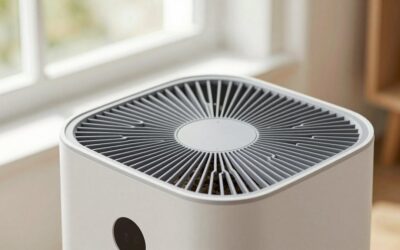
The best purifier for candle soot is a room-sized particle air cleaner used alongside better candle-burning practices—not a machine that can erase black deposits already stuck to your walls. For most enclosed living rooms, the Coway Airmega Mighty AP-1512HH is our best overall pick because it pairs a verified 233-cfm smoke CADR with a washable pre-filter and straightforward replacement filters. Choose a larger unit if the room is open or tall. Most important, correct a long or unstable wick, stop a smoking candle, and clean existing surface residue separately. Air filtration can reduce airborne particles; it cannot reverse soot already deposited on paint, glass, or fabric.
- Quick Verdict: The Right Purifier Depends on Where the Soot Goes
- Comparison Table: Five Documented Models for Candle-Related Particles
- What Candle Soot Is—and What an Air Purifier Actually Removes
- Five Air Purifiers Reviewed for Candle Soot
- How We Selected These Models
- Buying Guide: Size the Room Before Buying a Bigger Filter
- Reduce Candle Soot Before It Reaches the Purifier
- Questions Buyers Ask About Candle Soot
- Conclusion
Quick Verdict: The Right Purifier Depends on Where the Soot Goes
Best overall for an ordinary enclosed room: Coway Airmega Mighty AP-1512HH. Its published smoke CADR of 233 cfm and 361-square-foot room rating at 4.8 equivalent air changes per hour are meaningful particle-performance benchmarks. The washable pre-filter and separate six-month deodorization and one-year HEPA replacement schedules are transparent maintenance advantages. Its optional ionizer can be turned off, which we recommend for buyers who want to rely on filtration rather than electronic air-cleaning features. The carbon deodorization stage is not a verified solution for every candle fragrance or combustion gas.

Best compact choice: Levoit Core 300-P. A 143-cfm CADR fits a small, separated bedroom, office, or reading nook better than an open-plan apartment. Its published 222-square-foot figure is based on roughly 4.8 equivalent air changes per hour. Levoit sells a matching Smoke Remover replacement filter, but that branding does not establish a candle-soot-specific test or a measurable gas-removal CADR.
Best step up for scented candles and light residual odors: Winix 5510. It provides 253 cfm of smoke CADR, an AHAM room rating of 392 square feet, and a pellet-containing AOC activated-carbon stage. The carbon design makes it a more relevant comparison when scent is a secondary issue, though its candle-gas removal rate is not independently established here. PlasmaWave is optional and can be turned off.
Best straightforward HEPA-focused large-room alternative: Honeywell HPA300. With 300 cfm of smoke CADR and an AHAM-sized 465-square-foot room, this is a credible option if you prefer traditional fan-and-filter operation. The main ownership trade-off is replacement complexity: it uses three HEPA R filters plus an odor-reducing pre-filter that normally needs more frequent attention.
Best for a larger shared space: Blueair Blue Pure 211i Max. Its published smoke CADR is 435 cfm and its recommended room size is 674 square feet at 4.8 equivalent air changes per hour. Its washable fabric pre-filter is convenient, but the maker’s HEPASilent design includes an electrostatic component, and the unit’s relatively expensive replacement filter deserves attention. Neither its optional SmokeBlock filter nor its high CADR makes burning candles emissions-free.
Before choosing any model, distinguish airborne candle particles from settled soot. If black marks appear on a ceiling, above a jar rim, or along an HVAC register, the air purifier is only a supporting tool. Address the candle and its airflow environment first, then clean the surface appropriately.
Comparison Table: Five Documented Models for Candle-Related Particles
| Exact U.S. model | Published smoke CADR | Suggested room area at about 4.8 equivalent ACH | Distinct advantage | Main limitation |
|---|---|---|---|---|
| Coway Airmega Mighty AP-1512HH | 233 cfm | 361 sq ft | Washable pre-filter; familiar separate media | Modest gas sorbent stage; optional ionizer |
| Levoit Core 300-P | 143 cfm | 222 sq ft | Compact footprint; matching smoke-oriented replacement cartridge | Not for a large open room; limited published gas data |
| Winix 5510 | 253 cfm | 392 sq ft | AOC pellet carbon plus washable pre-filter | Optional PlasmaWave; no verified candle-gas CADR |
| Honeywell HPA300 | 300 cfm | 465 sq ft | High particle throughput with fan-and-filter design | Three HEPA cartridges and regular pre-filter purchases |
| Blueair Blue Pure 211i Max | 435 cfm | 674 sq ft | Strong large-space particle throughput and washable fabric shell | Electrostatic-assisted design; larger filter-replacement expense |
Figures above are manufacturer-listed or AHAM/ENERGY STAR-recorded particle CADR values, not original Best Air Duct Cleaner laboratory tests. Smoke CADR is generally measured with test smoke rather than a standardized candle-soot challenge. Treat area labels as starting points for normal eight-foot ceilings, not a guarantee for your floor plan or a specific burn session.
What Candle Soot Is—and What an Air Purifier Actually Removes
Black soot near a flame is a source problem before it is a filter problem
A candle normally burns by drawing liquid wax through a wick. When the flame becomes unstable or the fuel-air balance changes, incomplete combustion can release dark carbon-rich particles. A too-long wick, debris in the wax pool, and a draft across the flame can all make smoking more likely. The National Candle Association recommends trimming most wicks to approximately one-quarter inch before lighting and keeping lit candles away from fans, supply vents, doors, and open-window drafts. Follow the candle maker’s specific instructions where they differ.
If a jar turns black during a burn, stop and allow it to cool before addressing the wick. An air purifier operating across the room will not fix an overgrown wick or a flame that is repeatedly flickering. Running an air cleaner close enough to blow onto the flame can actually aggravate the conditions that create soot. Keep the purifier in the same general room but position it so its intake or discharge does not disturb the candle.
Visible smoke is not the complete measure of emissions. The U.S. Environmental Protection Agency lists burning candles as a source of indoor particulate matter, including particles that may remain suspended after the flame looks normal. A published peer-reviewed study of two HEPA-equipped air cleaners during candle and incense smoke events found reductions in airborne particles under the study conditions, but those results do not validate the performance of any of the five models ranked here.
An air purifier can capture suspended particles, not deposits already stuck to surfaces
Particle filters work only on air that reaches the machine. Very fine soot aerosol may remain airborne long enough to be captured by appropriately sized filtration. Other particles attach to windows, ceiling paint, shelves, and curtains. Once material has deposited on a surface, the purifier cannot reach it; a stained wall will not become clean just because a CADR meter looks impressive.
This distinction prevents an expensive mistake. Homeowners sometimes buy a larger purifier after noticing ghostlike dark streaks around vents and ceilings. Those streaks can have multiple causes, and their location alone does not establish candle soot or a malfunctioning HVAC system. If the pattern persists despite eliminating candle use, investigate airflow, dust deposition, moisture, and other combustion sources rather than assuming a purifier can diagnose it. Persistent unexplained heavy soot warrants an indoor-environment or qualified building assessment.
For ordinary accessible deposits, allow the source to cool and use surface-appropriate, gentle cleaning according to the finish maker’s instructions. Test an inconspicuous spot; fragile paint, textured surfaces, wallpaper, and expensive textiles may need professional treatment. Avoid vigorous dry brushing that re-suspends particles, and do not open HVAC equipment or dismantle live electrical devices to chase suspected residue.
Particle removal is not gas or odor removal
Candles, especially fragranced ones, may create an odor even when particle readings fall. A HEPA-style filter captures particles as air passes through; a separate activated-carbon stage can adsorb some gaseous compounds, but capacity depends on the sorbent mass, the chemistry of each pollutant, contact time, humidity, and saturation. There is no broadly comparable, universally applied gas CADR for these five products. We therefore do not assign fake percentages for candle fragrance or claim that a smoke-rated machine removes carbon monoxide.
Smoke CADR is still the most useful cross-model performance number in this guide because the purchase question is about soot particles. For an odor-dominant complaint, reducing or eliminating scented-candle use often provides a more reliable intervention than buying a second filter cartridge. For visible smoke, do not attempt to mask the problem with fragrances or intentional ozone generation.
Five Air Purifiers Reviewed for Candle Soot
Coway Airmega Mighty AP-1512HH — Best Overall Balance
Best for: A smaller living room, den, or bedroom where candles are used occasionally and soot prevention has already been addressed.
Coway lists a smoke CADR of 233 cfm for the AP-1512HH, alongside 246 cfm for dust and 240 cfm for pollen. At the AHAM convention for an eight-foot ceiling, its suggested area is 361 square feet. This is why it earns the overall slot: the particle-throughput evidence is specific, and the unit can offer several equivalent room air cleanings per hour without relying on an inflated one-ACH marketing label. In a 300-square-foot room with an eight-foot ceiling, the idealized smoke-CADR-equivalent rate is about 5.8 per hour; in an open plan that shares air with a kitchen or hallway, actual results are less predictable.
The washable pre-filter catches larger material and may help preserve the main filter when the room also contains household dust. The company specifies a deodorization filter service interval of about six months and a HEPA replacement interval of roughly one year under stated use assumptions. Candle-heavy conditions can load filters differently from the maker’s standard scenario, so inspect the pre-filter and follow device indicators and instructions rather than treating these intervals as guarantees.
A concern worth explaining is Coway’s optional Vital Ion function. The maker confirms that it can be switched on or off. For this article’s particle-removal task, buyers can leave it disabled and use the fan and filters; the model’s published CADR remains the comparison baseline, but exact CADR by ionizer setting was not separately verified for this guide. Avoid claiming the unit has no electronic component. The odor filter is a conventional deodorization stage, not a deep carbon bed with documented removal capacity for particular candle gases.
Why picked: Real smoke CADR, a manageable room-size target, separately serviceable media, and a practical owner workflow. Limitations: It will not clean existing wall stains, treat harmful combustion gases as an alarm, or cover a cavernous room at a high turnover rate. Buy if: Your main task is suspended particle reduction in a reasonably enclosed room. Skip if: The only problem is sticky black residue already deposited, or your open space requires well above 233 cfm.
Levoit Core 300-P — Best for a Compact Room
Best for: A contained office, small bedroom, or reading space where a compact device is more realistic than a large floor unit.
Levoit reports a CADR of 143 cfm and an approximately 222-square-foot room figure at 4.8 equivalent air changes per hour for the Core 300-P. Its separate one-ACH coverage marketing figure is much larger, but a single nominal pass through a room’s air volume each hour is a poor basis for selecting a soot-particle cleaner. In a 150-square-foot room with an eight-foot ceiling, the simple CADR equation gives about 7.2 equivalent changes per hour at the rated output; in a 300-square-foot room, the equivalent rate would fall to around 3.6, before accounting for room mixing and obstructions.
The basic Core 300-P uses a replaceable cartridge rather than separately purchased panel-style HEPA and carbon filters. Levoit also lists a Core 300-P Smoke Remover replacement filter. This is useful if shoppers specifically want to confirm replacement-cartridge compatibility, but the label should not be interpreted as an independently measured percentage reduction of candle soot or all candle-related VOCs. Check the exact model designation and filter packaging before ordering; Core 300-P and similar-looking connected variants should not be assumed to have interchangeable accessories.
The small footprint may make placement easier in rooms with limited free floor area. It still needs open intake and exhaust clearance, and should never be positioned where its air jet strikes a live candle. Like any purifier, reduced speed for quiet operation also means less filtered air volume than the highest-speed CADR. If daytime soot is the concern, operate a practical high fan setting after extinguishing and cooling the source, rather than assuming sleep mode delivers the rated maximum.
Why picked: Verified small-room CADR and an accessible replacement-filter ecosystem. Limitations: Modest absolute particle throughput and limited comparative gas-performance evidence. Buy if: You want a single-room supplement after fixing candle habits. Skip if: You have a high-ceiling loft or need one portable unit to cover several connected rooms.
Winix 5510 — Best if Residual Candle Fragrance Also Matters
Best for: Medium rooms where fine smoke particles are the main issue but the owner also wants more attention to odors from occasional scented candles.
Winix publishes a 253-cfm smoke CADR, a verified room-size figure of 392 square feet, and a filtration stack including a washable fine-mesh pre-filter, its AOC carbon filter with pellets, and a HEPA stage. The verified particle CADR is only modestly higher than the Coway Mighty, so the rationale for spending more should not be a promise of radically faster soot cleanup. Instead, the distinctive feature is the pellet-containing activated-carbon component. It is a more substantial construction approach than a simple carbon-coated sheet, but the maker does not provide a uniform candle-fragrance gas CADR that would permit a quantified claim of superior odor removal.
Winix lists roughly twelve months for the HEPA and AOC carbon replacement stages, and its current owner manual says the permanent pre-filter should be serviced about every fourteen days under ordinary guidance. The AOC carbon media is not washable. Heavy use near a smoke source may justify checking the filters and indicator more frequently, but do not wash carbon pellets or attempt to stretch a saturated cartridge by blowing air through it indoors.
The 5510 also includes PlasmaWave and a gas-responsive automatic mode. Its manual confirms a button can disable PlasmaWave. For buyers who prefer filtration-first operation, keeping that electronic function off is an available choice. The automatic sensor is not a candle-soot laboratory instrument: gases and particles are not identical, and a sensor response or lack of response should not determine whether a visibly smoking candle is safe to keep burning. A manual fan setting is more reliable for predictable filtration during a known particle episode.
Why picked: Published smoke CADR, AOC pellet carbon, and a washable pre-filter. Limitations: More technical complexity, optional electronic cleaning, and no candle-specific gas test. Buy if: Occasional candle fragrance is an additional annoyance and you value a richer carbon stage. Skip if: You dislike connected features or just need a simple large-room HEPA machine.
Honeywell HPA300 — Best Conventional Large-Room Filtration
Best for: A large enclosed living space where a clear, established smoke-CADR figure matters more than smart controls.
The Honeywell HPA300 reports a tobacco-smoke CADR of 300 cfm and a 465-square-foot room rating at approximately 4.8 equivalent air changes per hour. Its fan-and-filter design and conventional replaceable HEPA media make the purchase logic easy to explain. It is a material step up from the 143-cfm Levoit for a larger room and can serve a roughly 400-square-foot area at the stated eight-foot ceiling assumptions. It is not necessarily stronger than a higher-CADR unit simply because a listing describes it as a whole-room model; compare the actual smoke numbers.
One important ownership detail is easy to miss in online comparison tables. The HPA300 takes three HEPA R replacement cartridges, not one, and uses a separate A pre-filter/odor-reducing stage. Honeywell’s product information suggests roughly yearly HEPA service and pre-filter changes around every three months, with intervals depending on conditions. Shoppers should compare the price of the complete set of three R cartridges and the number of pre-filters needed during a year, rather than basing ongoing expense on the price of a single replacement element.
The activated-carbon component is in the pre-filter family, so it is reasonable to expect some everyday odor control but not to claim a validated treatment for candle combustion gases. Honeywell explicitly notes that the HPA300 does not remove or adsorb carbon monoxide. If combustion appliances are producing CO concerns, an appropriate alarm and source inspection—not this or any other particle machine—is the response.
Why picked: Well-specified large-room smoke CADR without a required app or ionization feature. Limitations: Multi-cartridge HEPA replacements and a shorter service interval for its odor pre-filter. Buy if: You want straightforward particle filtration in a larger room. Skip if: A complicated recurring filter set or compact footprint is a deal-breaker.
Blueair Blue Pure 211i Max — Best for a Larger Shared Living Space
Best for: A broad family or entertaining area with more air volume, provided the owner has already stopped candle smoking at the source.
Blueair specifies 435 cfm for smoke CADR, 452 cfm for dust, and a 674-square-foot recommended area at 4.8 equivalent changes per hour. Among the five units here, it has the highest published smoke CADR. That does not make it the only sensible choice for a 150-square-foot bedroom, but it can be particularly relevant when a large space needs stronger particle throughput or when the ceiling is above the eight-foot basis used for many room labels. In a 500-square-foot room with a ten-foot ceiling, a theoretical calculation gives 5.22 equivalent changes per hour at 435 cfm; as always, real-world mixing and actual fan speed can reduce effective room cleaning.
The Blue Pure 211i Max has a washable fabric pre-filter over its main particle-and-carbon cartridge. Blueair offers a SmokeBlock replacement option identified for this exact model. That is helpful for buyers who also deal with occasional odors, but its manufacturer-described smoke-related performance should not be recast as an independent candle-soot test. For comparison purposes, the strongest shared evidence remains particle CADR. Filter-life displays depend on usage, and Blueair states up to nine months for certain cartridge configurations, not a universal promise for soot-heavy operation.
A buyer should also understand the device’s filtration technology. Blueair calls its particle process HEPASilent, combining mechanical filtration and electrostatic assistance. It is not identical in mechanism to a strictly mechanical-only fan-and-HEPA box. Shoppers who wish to avoid all electronic particle charging should weigh that preference, even though the published CADR is strong. The washable outer pre-filter is useful for visible lint, but an expensive main filter still needs periodic replacement and cannot be washed.
Why picked: Highest documented smoke CADR in this shortlist and a practical large-room sizing target. Limitations: Costlier proprietary filter options, more complex technology, and no guarantee that connected spaces mix like a single test chamber. Buy if: You need high particle throughput in a larger shared room. Skip if: A small enclosed room is the only target or you want a mechanical-only setup.
How We Selected These Models
We compared five named U.S. models using public manufacturer specifications, AHAM/ENERGY STAR records where available, official replacement-filter information, and the U.S. EPA’s guidance on indoor particles and portable air cleaners. We did not conduct original particle-counter, gas-chamber, wall-soot, sound-meter, or filter-loading tests. Published smoke CADR was used as a comparable particle-throughput benchmark; every model on the list has a concrete smoke value. That value is not proof that the unit was independently challenged with the same type of candle, wax, wick, room, or black deposit.
The strongest selection axes were verified smoke CADR, realistic room volume, mechanical filtration and pre-filter servicing, replacement-filter economics, and what the device cannot do about deposits or gases. A larger model does not automatically win every room: a compact model may be more practical if it can be operated continuously at a suitable speed. Conversely, a marketing claim that one unit cleans a very large room once per hour cannot substitute for sufficient CADR when the concern is recurring airborne soot.
We did not rank by transient retailer prices, unspecified Amazon availability, customer star ratings, unverified proprietary soot-removal percentages, or claims that a filter prevents health problems. Product cost and inventory can change; check the exact U.S. variant, warranty, and replacement parts at the point of purchase. All figures are subject to the measurement scope in the referenced manufacturer or program sources.
Buying Guide: Size the Room Before Buying a Bigger Filter
Use smoke CADR, not a giant square-foot headline
An air purifier cannot filter particles in a room faster than its clean-air delivery allows. AHAM recommends a tobacco-smoke CADR of at least two-thirds the floor area in square feet for a typical eight-foot-high room. For example, 300 square feet suggests a smoke CADR of at least about 200 cfm by that rule. The published suggested room sizes in our table correspond to roughly 4.8 theoretical air cleanings per hour at the standard height. They do not promise complete pollution removal in one pass or a uniform room concentration during ongoing combustion.
For a more accurate comparison, estimate room volume: area (sq ft) × ceiling height (ft) = volume (cu ft). Then use equivalent clean-air changes per hour = smoke CADR (cu ft/min) × 60 (min/hour) ÷ room volume (cu ft). This is an idealized comparison of particle cleaning, not an outdoor-air ventilation rate or a guarantee of exposure reduction. As a worked hypothetical example, a 250-square-foot room with a nine-foot ceiling is 2,250 cubic feet; a 200-cfm purifier corresponds to 200 × 60 ÷ 2,250 = about 5.3 equivalent changes per hour at its rated speed. Obstructions, leakage, and lower fan speeds change real outcomes.
For an open-plan living area, measure the whole air-connected volume that you reasonably expect the unit to influence. A 300-square-foot seating zone attached to a kitchen and dining room cannot always be treated as a sealed 300-square-foot box. If the room is much larger than a model’s verified rating, choose a higher-CADR unit or consider more than one appropriately placed unit. Do not claim two devices deliver perfectly additive room results without considering airflow patterns.
Match the filter system to the problem you have actually observed
If the concern is a brief plume of fine dark particles, start with adequate smoke CADR and reliable filter access. If there is also a noticeable perfume or combustion smell, evaluate the maker’s carbon-stage construction and replacement process—but keep expectations modest because gas chemistry is variable and standardized data are sparse. A special filter name such as “SmokeBlock” or “Smoke Remover” may identify a compatible option; it does not imply that the product cleans stained ceilings or removes all hazardous gases.
Be skeptical of devices promoted primarily with ionizers, ozone, or fragrance masking. EPA recommends avoiding air cleaners that intentionally produce ozone, a lung irritant. Mechanical filtration is an established approach to airborne particles. Some models in this list include switchable or integrated electrostatic functions, so consult their manuals if technology type is a purchase criterion. Do not confuse a California low-ozone certification with proof that a device captures candle soot better than every competing design.
Include replacement media and cleaning effort in the purchase decision
Soot-related use can increase particle loading and make filter servicing more relevant. A washable pre-filter can intercept large household lint or dust, but the fine particles that matter to the smoke problem generally require the main particle medium. Do not wash disposable HEPA cartridges, carbon media, or combination particle filters unless the exact manufacturer explicitly instructs you to. Water or a vacuum can damage certain media. The Honeywell’s three R filters, Coway’s separate six-month and yearly components, Winix’s HEPA/AOC pair, and Blueair’s model-specific integrated cartridge lead to different ownership routines even at similar purchase prices.
A practical five-year cost comparison would add the initial unit price to the actual number and cost of replacement filters required under your expected usage. However, this guide does not invent current U.S. price totals, because filter prices and usage patterns were not verified consistently across all five models. Keep a short reminder for inspection and use the device’s filter indicator as a maintenance prompt rather than as an objective particle exposure monitor.
Reduce Candle Soot Before It Reaches the Purifier
Set the candle up so the flame burns steadily
Trim a cooled wick to approximately one-quarter inch before lighting, unless the specific candle’s care instructions say otherwise. Remove loose wick clippings and visible debris from the cooled wax pool. Burn on a stable, heat-resistant surface, away from flammable items, and follow the candle’s label for minimum spacing, maximum burn time, and safe remaining wax depth. The National Candle Association recommends keeping burning candles away from direct drafts and never leaving them unattended. If a flame becomes excessively tall, flickers repeatedly, or produces obvious smoke, extinguish it safely and correct the cause after cooling.
A common placement mistake is putting an air purifier or fan next to the candle to “catch” the smoke at source. Residential units are designed to clean room air, not to act as certified local exhaust hoods for flames. An intake close to the flame may alter the draft and increase sooting, while the heater/fire exposure can present additional hazards. Place the purifier where its airflow is unobstructed and its outlet does not blow at the flame. Its purpose is to reduce residual particles already in the room, not to engineer candle combustion.
Run the purifier strategically, and do not ignore ventilation
If you choose to burn a candle despite soot concerns, use proper ventilation that is appropriate for outdoor air conditions and the home’s setup. The EPA specifically recommends adequate ventilation with candles and incense. Avoid bringing heavily polluted outdoor air inside solely because a candle is burning; eliminate the candle as the source when conditions conflict. Operate the purifier at a useful manual fan speed before, during, and after the activity when safe, but stop burning immediately if it visibly smokes. Exact post-burn run time cannot be generalized because the room, air exchange, and event size vary.
If you are using an air-quality sensor, treat its reading as trend information rather than an absolute laboratory measurement of ultrafine soot or every chemical emitted. A consumer PM2.5 sensor may not detect or characterize the smallest particles accurately, and it does not detect carbon monoxide unless it is a separate certified CO alarm. Odor fading, an indicator changing color, or a purifier turning to sleep mode does not mean combustion emissions have become harmless.
Clean existing black marks separately from airborne particles
Once a candle is extinguished and cool, examine where residue has appeared. Black marks limited to a jar rim suggest a candle-specific combustion problem; widespread recurring wall streaks could have different contributing factors. Use a finish-compatible cleaning method for the affected material and avoid scrubbing surfaces that can be permanently marked. A soft, barely damp cloth may be suitable on some washable finishes, but follow the paint, wallpaper, upholstery, and furniture makers’ instructions and test first. A dedicated professional may be needed for heavy or valuable surface damage.
For surrounding room dust, choose methods that capture rather than throw particles back into the air. A suitable vacuum with intact high-efficiency filtration or damp wiping can reduce accessible settled material where appropriate, while dry sweeping or aggressive brushing can resuspend particles. Do not assume every black streak is candle soot. If deposits recur after candle use stops, especially near heating systems, vents, fuel-burning appliances, or if anyone experiences headache or dizziness, stop looking for a purifier-only fix and investigate environmental or combustion safety with qualified help. CO alarms remain essential wherever appropriate; a purifier is not a substitute.
Questions Buyers Ask About Candle Soot
Will a HEPA air purifier remove black candle soot from walls?
No. A filter can capture some soot particles while they are floating in air and pass through the device. It cannot lift existing stains from wall paint, curtains, window frames, or ceilings. Correct the smoking candle and use surface-appropriate cleaning to address residue already deposited. If marks continue to appear after the candle has been removed, identify the actual source rather than buying successive filters.
Is smoke CADR measured specifically with candle soot?
The smoke CADR used in standard U.S. air-cleaner comparisons is ordinarily based on controlled test smoke such as tobacco smoke, not a standardized burned-candle challenge. It is still a meaningful comparison of particle-filtering throughput across the models in this guide. It does not quantify actual candle gas reduction, personal exposure, wall-stain prevention, or performance on a particular wax blend.
Are soy, beeswax, and paraffin candles equally soot-free?
No wax label alone is a reliable guarantee of soot-free use. Wick size, candle formulation, flame stability, burn duration, and drafts all matter. Rather than assuming that one marketing category eliminates emissions, look for a properly made candle, follow its burn instructions, and stop using products that repeatedly smoke or leave heavy residue even when handled correctly.
Should I put an air purifier directly beside a burning candle?
No. Keep the machine away from the flame and from any location where its airflow makes the flame flutter. Follow both the candle’s clearance rules and the air purifier’s minimum placement and ventilation-clearance instructions. A portable unit is a room air cleaner, not a substitute for fire-safe exhaust or ventilation design.
Will activated carbon remove candle odor and harmful gases?
It may reduce some odors and gaseous compounds, depending on the carbon and the specific chemicals, but no ordinary particulate smoke-CADR claim establishes broad gas protection. A shallow carbon sheet and a deeper pellet bed are not equivalent designs, yet neither should be treated as a carbon monoxide control device or a guarantee of chemical safety. Reduce or stop burning if odors or symptoms are the primary complaint.
What if the room has ten-foot ceilings or opens into a hallway?
Increase the volume used for sizing. A smoke CADR suitable for 350 square feet at eight feet will produce fewer equivalent air changes at ten feet or in a connected, larger air volume. Use the CADR × 60 ÷ cubic-feet calculation and assess how the spaces communicate. Consider a higher-output unit or multiple placements rather than relying on the largest number on the carton.
How often should I change the filter if I burn candles frequently?
Follow the exact device’s maintenance instructions, filter indicator, and visible loading condition. Manufacturer schedules are based on specified or typical environments; more smoke and household dust can shorten effective media life. Wash only the pre-filter parts labeled washable and fully dry them before reassembly. Do not rinse disposable carbon or HEPA elements to extend their service interval.
Can an air purifier make it safe to burn candles during wildfire smoke?
It is better to avoid adding candle smoke when outdoor air is already polluted. EPA’s wildfire clean-room guidance advises avoiding indoor particle-generating activities, including candles. A room purifier can support particle reduction but should not be taken as permission to create an avoidable combustion source during a smoke event.
Conclusion
For the best purifier for candle soot, choose the Coway Airmega Mighty AP-1512HH for a typical enclosed room, the Levoit Core 300-P for a small space, or the Blueair Blue Pure 211i Max for a much larger living area; consider the Winix 5510 when a more developed carbon stage matters and the Honeywell HPA300 for conventional large-room HEPA filtration. Size by smoke CADR and actual room volume, not headline coverage. Most importantly, stop the candle from smoking and clean settled black residue separately—a portable purifier can reduce airborne particles, but it cannot repair the source or erase soot already on surfaces.




Write Your Review
No reviews yet. Be the first to share your experience!