
- Top Pick: Dryer Vent Cleaner Kit – Flexible Lint Brush for Household Cleaning, Long Refrigerator Coil Brush, Dust & Pet Hair Remover (1-Pack)
- Best Value: Holikme Dryer Vent Cleaner Kit – 30Ft Fireplace Chimney Brushes Flexible
- Premium Choice: Holikme Dryer Vent Cleaner Kit – 15Ft Flexible Lint Brush for Deep Cleaning
Choosing the right dryer vent brush length sounds simple, but many shoppers focus on the longest handle or the lowest price and overlook how their vent is actually routed. A brush that is too short may leave lint behind near the wall. One that is too long can be difficult to control, kink inside a flexible duct, or tempt you to force it past a bend. The best choice depends on the distance you need to clean, the vent’s shape, and whether you will work from indoors, outdoors, or both.
- Decide These 3 Things First
- Size: Match Brush Length to the Vent Route
- Material: Balance Flexibility and Strength
- Construction: Inspect the Connections and Head
- Comfort and Performance: Control Matters More Than Maximum Reach
- Price Tiers: Spend According to the Job
- Warranty and Replacement Support
- Delivery and Assembly
- Spec Checklist
- Red Flags
- FAQ
This guide explains how to choose dryer vent brush length in 2026, with practical measurements for common homes and apartments. It also covers brush construction, comfort, price, and the specifications worth checking before you buy.
As an Amazon Associate we earn from qualifying purchases at no extra cost to you.


Decide These 3 Things First
- Measure the cleaning path. Estimate the distance from the dryer connection to the exterior vent, then add about 2 to 3 feet. This gives the brush enough reach without requiring you to push the final section aggressively.
- Identify the vent layout. A short, nearly straight duct needs a different tool from a long route with two or three turns. Flexible plastic rods are useful for distance, but they are not a substitute for removing and inspecting a badly crushed or disconnected duct.
- Choose your access points. Cleaning from the dryer side may require 4 to 8 feet of usable reach. Cleaning from the exterior hood may require another 2 to 6 feet. If the duct is long, a two-sided cleaning approach is often easier than buying one extremely long brush.
Size: Match Brush Length to the Vent Route
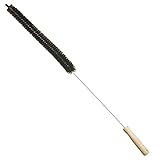
For many apartments and compact laundry rooms, a brush with 2 to 4 feet of reach is sufficient. This range works well when the dryer sits close to an exterior wall and the duct has only one gentle bend. A 28.7-inch hand brush, such as the OTAMCO-style option, is best viewed as a short-reach tool for the dryer opening, lint trap area, or a relatively accessible duct—not a complete solution for every installation.
A 5- to 8-foot brush is a practical middle ground for many single-story homes. It can reach through a typical wall cavity or short duct run while remaining reasonably easy to guide. Look for a kit that states both the number of sections and the assembled length; a listing that says “15 feet” may refer to the maximum length of several connected rods rather than the length of one rigid shaft.
Choose 15 to 30 feet only when you have measured a genuinely long route or need to reach from one end of a larger duct. A 15-foot kit is more versatile than a 30-foot kit for ordinary household use. A 30-foot option, such as the Holikme-style fireplace and dryer brush kit, can be useful for long runs, but excessive length adds storage demands and makes bends harder to navigate.
Do not automatically add the full stated length to your duct. You need enough extra reach to grip the brush and withdraw it, but pushing unused sections into a tight bend can make the tool buckle. For a measured 10-foot route, a 12- to 15-foot kit is generally more practical than a 30-foot kit.
Material: Balance Flexibility and Strength
Brush rods are commonly made from flexible plastic, nylon-coated wire, fiberglass, or a combination of materials. Flexible plastic rods are light and inexpensive, often costing about $6 to $15. They are suitable for short and moderately straight runs, but threaded connections can loosen if the rod twists under pressure.
Fiberglass or reinforced composite rods usually cost about $15 to $35 for a household kit. They offer better stiffness over longer distances while retaining enough flexibility for gradual bends. They can still crack if sharply folded, so store them straight or in the supplied case when possible.
The bristles should be stiff enough to loosen lint without scraping aggressively against the duct. Nylon bristles are common and appropriate for most metal and rigid plastic ducts. A brush head around 4 to 6 inches wide is usually more useful than an oversized head, which may catch on seams or struggle around a bend.
Avoid assuming that metal is automatically better. Bare metal wire can scratch some surfaces and may be less forgiving around joints. If a kit uses a metal core, a coated or wrapped design is preferable for ordinary household cleaning.
Construction: Inspect the Connections and Head
The connection system is one of the most important details in a sectional dryer vent brush. Threaded rods should screw together firmly, with enough thread engagement that a section will not separate during withdrawal. A kit with 8 to 12 short sections may be easier to store than a few long sections, but it also creates more connection points that can loosen.
Check whether the brush head is permanently attached or replaceable. A fixed head is simple and usually less expensive. A replaceable head can extend the useful life of the handle, particularly if the bristles flatten after repeated cleaning. The head should be centered and securely crimped or molded into place; loose tufts are a sign of poor construction.
For long kits, look for a swivel or flexible joint near the head. This can help the brush follow a gradual bend rather than forming a rigid angle. It should not be so loose that the head folds backward when you pull it out. A storage bag, wall hook, or compact coil is useful for kits longer than 10 feet.
Comfort and Performance: Control Matters More Than Maximum Reach
A long brush is only useful if you can control it. A handle about 4 to 6 inches long gives most users enough grip without adding unnecessary bulk. Textured plastic or rubber can be more comfortable than smooth wood during repeated push-and-pull movements. A wood handle, as found on some short lint brushes, can feel sturdy but may offer less grip if your hands are damp.
Consider the assembled weight. A short brush commonly weighs less than 8 ounces. A multi-section 15- to 30-foot kit may weigh roughly 1 to 3 pounds depending on its rods, head, and storage accessories. Heavier tools can feel more stable, but they also create more friction and are tiring to withdraw from a long duct.
Brush diameter matters as much as length. A 4-inch head suits many residential ducts, while a 5- or 6-inch head may be better for a larger rigid run. Never force a brush that fills the duct completely. If it binds, stop, rotate gently, and withdraw it rather than pushing harder.
These tools remove loose lint; they do not repair a crushed hose, seal a leaking joint, or clear every obstruction. If the dryer takes unusually long to dry clothes, shuts off from overheating, or the duct is inaccessible, professional inspection may be safer than selecting a longer brush.
Price Tiers: Spend According to the Job
Budget, $6 to $12: Expect a short hand brush or a basic flexible tool. These are suitable for cleaning the first few feet, refrigerator coils, lint traps, and short apartment runs. The $5.88-style multipurpose brush fits this category. Check the advertised reach carefully because some low-cost products describe the handle and bristles together.
Midrange, $13 to $22: This is the most useful range for many households. A 10- to 15-foot kit with sectional rods, a 4- to 6-inch brush head, and a storage bag can handle longer routes without the bulk of a commercial chimney-cleaning set. A 15-foot kit priced around $14.99 is typical of this tier.
Premium, $23 to $45 or more: Premium household kits may include 20 to 30 feet of reinforced rods, multiple heads, a drill adapter, or better connection hardware. A 30-foot kit around $19.99 may actually be midrange by feature set, so compare construction rather than relying on the label. A drill adapter can speed up brushing, but use low speed and light pressure; high speed can damage flexible ducting or loosen connections.
Warranty and Replacement Support
Low-cost brushes may have no meaningful warranty, while better kits often provide 30 days to 1 year of coverage for manufacturing defects. Warranty length is less important than whether the seller identifies replacement rods, heads, or connectors. A broken section should not force you to replace an entire long kit.
Look for a clear return period of at least 30 days and a product page that lists the actual rod diameter, connection type, and replacement availability. Keep your receipt and inspect every section before inserting the brush. Warranty coverage generally will not include damage caused by forcing the tool, using excessive drill speed, or bending rods beyond their stated limit.
Delivery and Assembly
Most dryer vent brush kits require simple assembly: screw together the number of sections needed, attach the head, and test the connection by hand. Allow about 5 to 10 minutes for setup and another few minutes to disassemble and clean the tool. No electrical power is required unless the kit includes an optional drill adapter.
Before ordering, confirm the package dimensions if storage space is limited. A 30-foot kit may arrive in a box under 24 inches long but contain many loose sections. Delivery costs can materially change the value of an inexpensive brush, so compare the delivered total rather than the listed item price alone. If you need the brush for a scheduled cleaning, verify that all sections and accessories are included when it arrives.
Spec Checklist
| Spec | Budget | Mid | Premium |
|---|---|---|---|
| Usable reach | 2–4 feet | 8–15 feet | 20–30 feet |
| Typical price | $6–$12 | $13–$22 | $23–$45+ |
| Rod material | Flexible plastic | Reinforced plastic or fiberglass | Fiberglass or coated composite |
| Brush head | 3–4 inches | 4–6 inches | 4–6 inches, often replaceable |
| Approximate kit weight | Under 8 ounces | 8 ounces–2 pounds | 1–3 pounds |
| Best use | Short ducts and surface lint | Most household runs | Long routes and frequent use |
| Warranty target | Return period | 30 days–1 year | 1 year or replacement support |
Red Flags
- The listing gives a total length but does not state the number, diameter, or length of rod sections.
- Connections are smooth push-fit joints with no locking feature or clear threading.
- The brush head is wider than the duct opening or has visibly loose bristles.
- The product promises to clean any vent regardless of bends, blockages, or duct condition.
- There are no photos of the handle, connectors, brush head, or storage method.
- The kit recommends high-speed drilling without specifying a low-speed setting or cautioning against force.
- Replacement rods and return information are unavailable.
FAQ
How long should a dryer vent brush be?
Choose a brush with about 2 to 3 feet more reach than the distance you need to clean. A 5- to 8-foot tool suits many short residential runs, while a 10- to 15-foot kit is a versatile choice for longer routes. Use 20 to 30 feet only after measuring the duct or when cleaning from a distant access point.
Is a 15-foot dryer vent brush long enough?
It is long enough for many single-story household installations, especially when the dryer and exterior wall are relatively close. Measure the route first. If the duct has several bends, cleaning from both ends may work better than trying to push all 15 feet through from one side.
Can I use a drill with a dryer vent brush?
Only if the kit specifically includes or supports a drill adapter. Use the lowest practical speed, keep pressure light, and stop if the rod begins to whip, bind, or separate. Manual brushing is safer for fragile flexible ducting and tight bends.
When should I hire a professional instead?
Hire a professional if the duct is concealed and inaccessible, visibly crushed, disconnected, unusually long, or still restricts airflow after cleaning. Professional help is also appropriate if the dryer overheats, produces a burning smell, or repeatedly takes much longer than normal to dry clothing.
Ready to decide? Our #1 pick for 2026 is the Usable reach.
Live price & availability on Amazon.





Write Your Review
No reviews yet. Be the first to share your experience!