
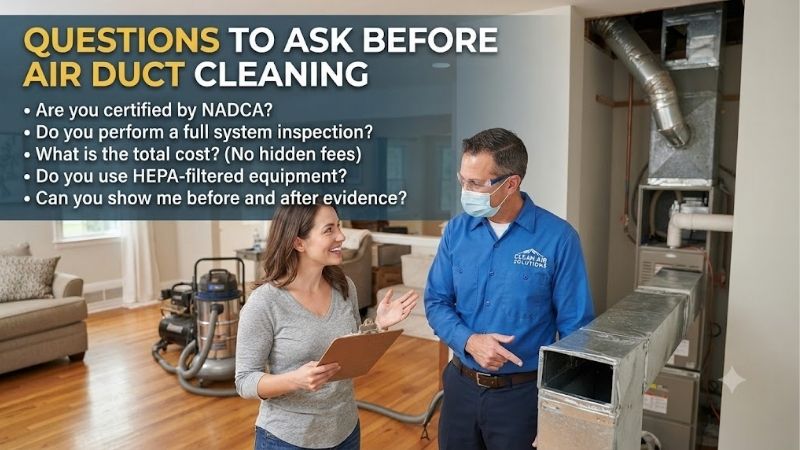
Questions to ask before air duct cleaning guarantees home owners select certified technicians while preventing costly service scams. Asking about equipment types, negative air pressure, and cleaning methods ensures complete indoor air quality assessment. Proper planning protects sensitive furnace components from unexpected damage.
How to Choose the Right Questions to Ask Before Air Duct Cleaning
Preparing proper questions to ask before air duct cleaning helps you identify honest contractors and avoid inadequate surface brushing. Evaluating technician qualifications, vacuum power, and sanitizing chemicals protects your ventilation investment. Focus on clear service scopes before signing agreement contracts.
Verification of Contractor Licensing and Certification
Inquiring if a provider hires a NADCA certified technician ensures your home receives industry-standard cleaning procedures. Certified contractors follow strict safety guidelines, preventing toxic dust from re-entering active living areas. Asking for proof of liability insurance prevents financial loss from property accidents.
Legitimate companies present active licensing documentation promptly without high-pressure sales tactics or vague promises. Uncertified operators frequently employ untrained crews who skip crucial return plenums and blower motors. Confirming professional credentials upfront protects your household from sub-standard servicing.
Evaluation of Equipment and Vacuum Extraction Methods
Requesting specifics regarding HEPA vacuum extraction machinery confirms whether dirt particles are contained safely outdoors. High-powered truck-mounted vacuums create continuous negative pressure, extracting heavy debris without blowing dust into rooms. Portable units must feature sealed HEPA filtration to remain effective.
Standard shop vacuums lack sealed containment bags, spreading microscopic allergens directly across newly painted interior walls. Asking technicians about their vacuum airflow ratings guarantees sufficient suction for deep trunk channels. Powerful extraction equipment remains vital for complete internal ventilation maintenance.
Clarification of Chemical Application and Mold Protocols
Discussing whether chemical disinfectants will be applied helps you evaluate safety for children and household pets. If suspect growth exists, requesting a formal mold remediation protocol prevents hazardous chemical misting inside air ducts. Always verify that applied chemical solutions possess official EPA registration.
Unnecessary chemical treatments can trigger severe respiratory discomfort for allergic family members if misapplied. Professional technicians inspect internal surfaces before recommending liquid deodorizing or anti-microbial sprays. Clear communication regarding chemical choices ensures safe and healthy indoor environments.
Top Picks for Air Duct Cleaning Equipment and Tools
Preparing specific questions to ask before air duct cleaning enables homeowners to select effective self-inspection and maintenance tools. Evaluating equipment based on durability, filtration grade, and ease of operation ensures smooth airflow restoration. The following Amazon picks deliver reliable DIY inspection results.
| Product Name | Category | Primary Feature | Main Benefit |
|---|---|---|---|
| DEPSTECH Dual Lens Endoscope | Inspection Camera | 1080P Dual Lenses | Visual ductwork inspection |
| Holikme 16-Foot Brush Kit | Vent Brush Kit | Flexible Drill Rods | Rotary brush cleaning power |
| Atrix Turbo Red Canister Vac | HEPA Vacuum | 106 CFM, Sealed Bags | Traps dangerous fine particles |
| PetraTools Electric ULV Fogger | Cold Atomizer | Ultra-Low Volume Mist | Deep ductwork disinfection |
| Klein Tools ET140 Meter | Moisture Tester | Pinless EMF Sensor | Detects hidden duct moisture |
DEPSTECH Dual Lens Industrial Endoscope Camera
Homeowners asking questions to ask before air duct cleaning can use this endoscope for clear ductwork inspection before hiring crews. Featuring dual 1080P lenses, it streams crisp real-time video directly to smartphones. Its semi-rigid 16.5-foot cable navigates long metal channels to reveal hidden dust buildup fast.
However, the small camera lens requires frequent wiping when navigating heavily soiled trunk lines during long checks. The companion wireless app can display minor video delay through dense plaster drywall. Overall, it provides solid visual proof needed to confirm whether ductwork requires professional service.
Holikme 16-Foot Flexible Duct Cleaning Brush Kit
Designed for proactive homeowners, this drill-powered rotary brush kit provides exceptional rotary brush cleaning for branch vents. High-density nylon rods screw together tightly to dislodge stubborn dust clung inside sheet metal walls. Flexible rod construction bends around sharp duct elbows without snapping or jamming.
On the downside, reversing drill rotation inside wall channels can unscrew individual rod connectors unexpectedly. The brush head diameter feels slightly large for narrow secondary flex ducts. Despite these operational considerations, it offers an economical mechanical scrubbing option for residential air vents.
Atrix Turbo Red Canister HEPA Vacuum AHC-1
This compact canister vacuum suits users seeking certified filtration to assist with HVAC system sanitization projects safely. Its 1,400-watt motor produces 106 CFM airflow, trapping 99.97% of fine particles down to 0.3 microns. Variable speed dials allow smooth suction adjustments around delicate register boxes and grilles.
The internal collection bag fills quickly when vacuuming heavy drywall dust or pest debris from main air return trunks. Plastic extension wands included in the box feel short when reaching elevated ceiling vents without step ladders. Still, its sealed HEPA system prevents fine dust from recirculating into living spaces.
PetraTools Electric ULV Cold Fogger Atomizer
Property owners needing comprehensive liquid application will appreciate this fogger, engineered for chemical fogging safety across supply lines. Generating fine micro-droplets, it distributes sanitizing liquids deeply into inaccessible plenum chambers. Comfortable backpack straps ease user fatigue during long fogging runs.
At nearly ten pounds empty, the unit feels heavy when filled to maximum liquid capacity for extended house projects. Its high-output electric motor operates loudly, making ear protection necessary during prolonged indoor operation. Regardless, it delivers unmatched liquid coverage for deep ductwork disinfection.
Klein Tools ET140 Pinless Moisture Meter
This non-destructive pinless meter allows buyers to check drywall around vents before accepting a flat-rate pricing estimate. Utilizing electromagnetic field technology, it detects hidden relative moisture up to 0.75 inches deep. Visual LED bars and audible alerts identify damp spots prone to mold growth without puncturing.
The sensor requires flat contact with material surfaces, making readings difficult inside curved metal duct walls. Battery life decreases quickly if the high-brightness display stays illuminated during extended home assessments. Nevertheless, it remains a valuable diagnostic tool for detecting hidden HVAC water leaks.
Frequently Asked Questions
Addressing common questions regarding questions to ask before air duct cleaning helps homeowners evaluate service proposals with confidence. Clear answers clarify pricing structures, cleaning frequency, and necessary preparation steps. Read these expert responses to plan your ventilation maintenance effectively.
What questions should I ask about air duct cleaning pricing?
Always ask whether the contractor provides total fixed pricing or charges per register vent during initial consultations. Fraudulent operators often advertise low lure prices before adding unexpected fees for main trunk lines and blower units. Requesting a written quote prevents surprise cost increases on job day.
Evaluating key questions to ask before air duct cleaning prevents paying extra for routine access holes or basic vent seal verification. Professional contractors state clearly what components are included in their standard base rate. Upfront pricing transparency guarantees you avoid deceptive bait-and-switch billing schemes.
How long should a thorough air duct cleaning take?
A complete professional duct cleaning typically requires two to four hours for a standard single-family residential home. Service duration varies based on system size, duct accessibility, and the volume of accumulated dust or debris. Quick thirty-minute visits usually indicate superficial cleaning that misses main trunks.
Inquiring about job duration is among crucial questions to ask before air duct cleaning to ensure thorough work. Technicians need adequate time to seal vents, hook up negative air machines, and mechanically brush every duct run. Rushed appointments frequently leave hidden debris inside unreachable plenum chambers.
Should air duct cleaning include the furnace and blower fan?
Yes, comprehensive service must cover the entire HVAC system, including evaporator coils, drain pans, and blower fans. Cleaning ductwork without servicing the main blower unit causes remaining fan dust to contaminate freshly brushed channels instantly. Full system cleaning ensures sustained energy efficiency and balanced airflow.
Asking technicians if they clean internal furnace components ensures complete indoor air quality protection across every room. Reputable companies include air handler cleaning within their primary service package without hidden addon costs. Thorough whole-system maintenance prolongs mechanical component lifespan significantly.
How can I tell if the duct cleaning was done correctly?
Requesting before-and-after camera inspection photos allows you to verify that interior duct walls are free of dust piles. Legitimate contractors gladly show live endoscope footage inside main trunks before completing the service appointment. Clean ductwork displays smooth metallic surfaces without visible lint or debris.
Reviewing visual proof answers essential questions to ask before air duct cleaning regarding service quality standards. You should also notice reduced airborne dust settling on furniture and improved airflow from supply registers. Immediate visual confirmation provides confidence that your ductwork was cleaned properly.
Final Thoughts
Preparing vital questions to ask before air duct cleaning guarantees you hire qualified contractors and receive honest service. Verifying credentials, negative air equipment, and whole-system scopes protects your home against sub-standard workmanship. Clear preparation ensures fresh indoor air quality assessment and lasting HVAC performance.
As an Amazon Associate we earn from qualifying purchases at no extra cost to you.



Top picks from this guide
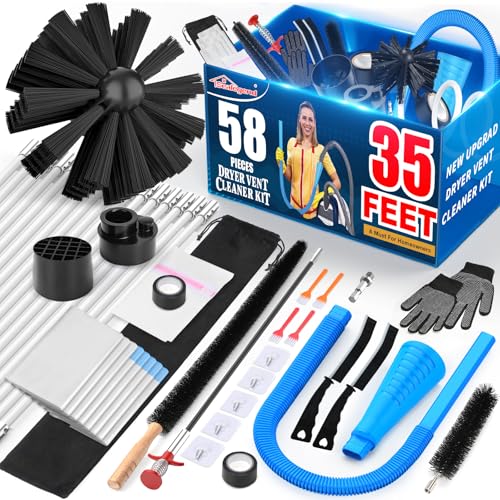 SealegendSealegend 58-Pieces 35-Feet Dryer Vent Cleaner Kit, Dryer Cleaning Tools$27 \xc2\xb7 98/100
 HolikmeHolikme Dryer Vent Cleaner Kit - 30Ft Fireplace Chimney Brushes…$23 \xc2\xb7 96/100
 HolikmeHolikme 35FT Dryer Vent Cleaner Kit 58Pcs - Lint Remover…$27 \xc2\xb7 96/100
 NORTHWEST ENTERPRISESNORTHWEST ENTERPRISES Air Duct Cleaner Spray & Deodorizer, Linen Breeze$25 \xc2\xb7 96/100

Write Your Review
No reviews yet. Be the first to share your experience!