
- Top Pick: 1-Inch Black Curtain Rod – 66 to 130 Inch Windows, Industrial Duct, Indoor/Outdoor, Ceiling or Wall Mount
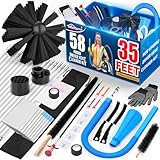
- Best Value: Holikme Dryer Vent Cleaner Kit – 15Ft Flexible Lint Brush for Deep Cleaning
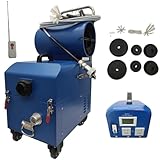
- Premium Choice: VEVOR Fiberglass Fish Tape 425 FT x 1/4 inch, Fish Tape Duct Rodder Puller with Durable Steel Stand, Non-Conductive Fishtape Wire Cable Running Rod for Walls, Floor and Electrical Conduit
The Short Answer
For most residential dryer-vent and flexible-duct cleaning jobs, buy 12 to 15 feet of duct rod length. That is enough for a typical run from a laundry room to an exterior wall, including a little extra for curves and the connection at each end.
Choose 6 to 10 feet for a short bathroom exhaust duct or a vent that exits directly through an outside wall. Choose 20 to 30 feet for a long dryer run, a basement laundry room, or a route that travels through a crawlspace. Commercial ductwork, chimney-like vertical runs, and conduit-pulling work may require 50 feet or more.
As an Amazon Associate we earn from qualifying purchases at no extra cost to you.


The key is to measure the path the rod must travel—not just the straight-line distance between the appliance and the exterior vent. Add approximately 10 to 20 percent for bends, couplings, and working room. A 12-foot measured route, for example, calls for about 14 to 15 feet of usable rod length.
Do not confuse duct-cleaning rods with a curtain rod. A curtain rod is a support bar measured to fit a window, while duct rods are flexible or semi-flexible tools used to push a brush through ventilation ductwork. Some listings use industrial-looking language loosely, so confirm the product’s intended use before buying.
Standard Sizes
Duct rods are sold as complete flexible lengths or as short sections that screw together. Sectional rods are easier to store and replace, while a continuous rod is less likely to separate inside a duct. The best size depends on the duct’s length, number of bends, and diameter.
| Rod length | Metric equivalent | Best for | Typical duct route |
|---|---|---|---|
| 6 ft | 1.83 m | Short bathroom or range-hood runs | Up to 5 ft |
| 10 ft | 3.05 m | Direct-wall exhaust vents | Up to 8 ft |
| 12 ft | 3.66 m | Most compact dryer-vent cleaning jobs | Up to 10 ft |
| 15 ft | 4.57 m | Typical residential dryer vents | Up to 13 ft |
| 20 ft | 6.10 m | Long dryer runs and basement laundry rooms | Up to 17 ft |
| 30 ft | 9.14 m | Long, winding residential ductwork | Up to 25 ft |
| 50 ft | 15.24 m | Commercial or unusually long ventilation routes | Up to 42 ft |
| 100 ft | 30.48 m | Large buildings and service work | Up to 85 ft |
These route lengths leave room to grip the tool and account for turns. They are not a guarantee that a rod will pass through every duct. A narrow, crushed, or sharply bent duct can stop a long rod even when the total measured distance is short.
Most home dryer-vent kits use rods about 3 feet long that connect to create 12 feet of total reach. Extension kits may add another 12 feet, bringing the system to approximately 24 feet. Flexible lint-brush kits commonly offer 15 feet of reach and cost roughly $15 to $30. Longer fiberglass fish tapes and duct pullers can cost about $70 to $120 or more, but they are generally designed for pulling wire or cable rather than spinning a dryer-vent brush.
Check diameter as carefully as length. Residential dryer ducts are commonly 4 inches, or 10.2 cm, in diameter. Bathroom exhaust ducts are often 3 or 4 inches, or 7.6 or 10.2 cm. The cleaning brush should fit the duct without binding. A brush that is too large can damage flexible foil ducting, while one that is too small may leave lint behind.
How to Measure Your Space
- Identify the starting point. For a dryer, measure from the rear exhaust outlet. For a bathroom fan, start at the fan housing or the accessible duct opening.
- Locate the endpoint. Measure to the exterior wall cap, roof vent, or the point where the duct connects to a larger ventilation system.
- Trace the actual route. Follow the duct around walls, floors, cabinets, joists, and ceiling spaces. Do not measure diagonally through obstacles.
- Measure each section. Use a tape measure for exposed areas. For hidden sections, use building plans, attic access, crawlspace access, or the distance between known entry points.
- Count the bends. Add extra length for every major turn. A practical allowance is 6 to 12 inches, or 15 to 30 cm, per substantial bend.
- Add working room. Add 10 to 20 percent to the total. This helps the brush reach the far end while leaving enough rod outside the opening to control it.
- Confirm access points. A 30-foot rod does not help if you can only safely reach one end of a tightly enclosed duct. You may need to clean from both ends.
For example, suppose a dryer sits 7 feet from the exterior wall, but the duct travels 3 feet downward and around one corner. The route is approximately 10 feet. Add 2 feet for the bend and handling space, and choose a 12-foot kit at minimum. A 15-foot kit gives more comfortable reach.
By Room or Use Case
Dryer vents
A 12- to 15-foot rod is the most useful starting size for a standard dryer. Select 20 feet if the laundry area is in a basement or the duct travels across a floor or ceiling before exiting. For runs longer than 20 feet, look for a sectional system that can be extended, rather than forcing one very long flexible rod through the duct.
Use a brush designed for dryer vents, especially with a rotating system. Disconnect the dryer, unplug it, and avoid operating a powered brush if the duct is crushed or blocked. Rigid metal ductwork tolerates cleaning tools better than thin foil or plastic flex duct.
Bathroom exhaust fans
Most bathroom fan ducts are short, so 6 to 10 feet is usually sufficient. Measure from the fan housing to the roof or wall cap. If the duct rises through an attic to a roof vent, 12 to 20 feet may be necessary. A smaller brush may be appropriate because some bathroom ducts are only 3 inches in diameter.
Kitchen range hoods
Range-hood ducts vary substantially. A straight wall exit may need only 6 to 10 feet, while a ceiling or roof route may require 15 to 30 feet. Grease ducts require specialized cleaning and safety procedures. Do not use an ordinary dryer-lint brush as a substitute for professional hood-duct maintenance in a commercial kitchen.
HVAC supply and return ducts
For heating and cooling systems, rod length depends on the access opening and the branch layout. A 10- to 20-foot rod may reach a short branch, but a main trunk can require 30 feet or more. HVAC cleaning often uses an access panel, vacuum equipment, and specialized agitation tools. Avoid pushing a stiff rod through insulated ductwork, dampers, or motorized components without knowing what is inside.
Wire, cable, and conduit pulling
For pulling wire through conduit or wall cavities, use fish tape or a fiberglass duct rodder rather than a lint-cleaning rod. A 25- to 50-foot tool suits many home projects; 100 to 425 feet is intended for long conduit runs or professional work. Fiberglass is often preferred around electrical work because it is nonconductive, but no tool should be treated as electrically safe around energized circuits. Turn off power and verify the circuit before working.
Common Sizing Mistakes
- Buying the straight-line length: Curves and vertical sections make the actual route longer.
- Choosing the longest rod automatically: Excess length can kink, bind, or become difficult to control.
- Ignoring rod diameter: The tool must fit through the duct and around its bends.
- Mixing tool categories: Fish tape, duct rodders, curtain rods, and dryer brushes are not interchangeable.
- Forgetting connection length: Threaded sections may add several inches, but that does not always equal usable cleaning reach.
- Using rigid rods in flexible duct: A stiff tool can tear thin duct material or separate a joint.
- Measuring only from one end: A long, inaccessible run may be safer to clean from both the appliance and exterior openings.
FAQ
How much duct rod length do I need for a 15-foot dryer vent?
Choose at least a 17- to 20-foot system. The extra length allows for bends and leaves part of the rod outside the opening for control. If the duct is straight and accessible from both ends, a 15-foot kit may work, but it offers little margin.
Is a 12-foot duct-cleaning kit enough?
It is enough for many short and average dryer vents, particularly routes measuring 10 feet or less. Add an extension if the duct runs through a basement, attic, crawlspace, or several bends.
Can I use a 425-foot fish tape to clean a dryer vent?
Usually, no. A long fish tape is made for pulling cable and may not accept a dryer brush or tolerate rotary cleaning. Use a purpose-built dryer-vent cleaning system unless the manufacturer specifically approves the attachment and method.
Should the rod be longer than the duct?
Yes. Aim for roughly 10 to 20 percent more usable length than the measured route. That extra capacity helps the tool reach the endpoint without forcing the rod and gives you room to hold, turn, or withdraw it safely.
Ready to decide? Our #1 pick for 2026 is the 6 ft.
Live price & availability on Amazon.


Write Your Review
No reviews yet. Be the first to share your experience!