
Uninsulated ducts in an attic, basement, crawl space, or garage can lose a large share of heated or cooled air before it ever reaches a room. That loss shows up as uneven temperatures, longer heating and cooling cycles, and condensation on cold duct surfaces. A well-chosen duct wrap slows that transfer and keeps supply air closer to its intended temperature.
- Quick Answer
- 1. Frost King SP1 Multi-Purpose Fiberglass Insulation Roll
- 2. TWCUSEP Reflective Fiberglass FRK Foil Faced Duct Insulation
- 3. US Energy Products R-8 HVAC Duct Wrap Insulation
- 4. Reflectix BP24050 Bubble Pack Insulation
- 5. BlueTex Insulation Vapor Barrier Seam Tape
- How to Choose
- Who Should Skip
- Frequently Asked Questions
- Final Verdict
The right choice depends on duct shape, location, moisture exposure, and the thermal rating required by local building guidance. Fiberglass wraps suit long trunk lines, reflective foam and bubble wraps suit tight spaces, and foil tape seals seams that would otherwise leak air.
As an Amazon Associate, we earn from qualifying purchases.
Quick Answer
For most homes, a foil-faced fiberglass duct wrap is the best insulation for ducts because it combines real thermal resistance with a vapor barrier in one layer. Choose a thick foil-faced fiberglass roll for cold attics and long trunk lines, a reflective foam-core wrap for tight or damp spaces, and foil seam tape to seal every joint. Match thickness and rating to your climate and local code before buying.
1. Frost King SP1 Multi-Purpose Fiberglass Insulation Roll
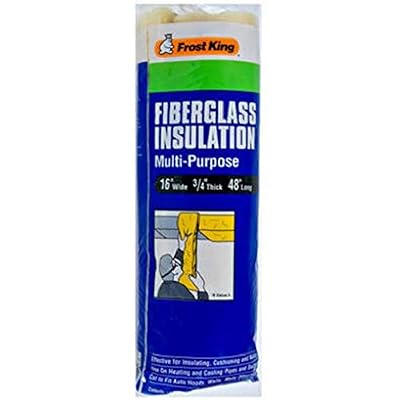
The Frost King SP1 is a compact fiberglass utility roll for short duct runs, repairs, and sections that are hard to reach with a wide roll. It measures 16 inches wide, three quarters of an inch thick, and 48 inches long, so it suits branch ducts and spots around elbows and hangers. The fiberglass construction is fire retardant, and the published description lists heating and cooling ducts among its intended uses.
Cut the roll with a sharp utility knife, wrap it snugly around the duct, and secure the ends with foil tape so no bare metal shows. Because the roll is narrow, it is easy to manage alone in a low attic or a crowded basement ceiling, and it works as a patch when an older wrap has torn. The main limit is size: a long trunk line would need several rolls, and damp locations need a separate vapor barrier.
Specs
- Material: Fiberglass utility roll
- Size: 16 inches wide by 48 inches long
- Thickness: Three quarters of an inch
- Facing: Unfaced fiberglass
- Intended use: Heating and cooling pipes and ducts
- Fire performance: Fire retardant construction
- Best for: Short runs, repairs, and tight spaces
2. TWCUSEP Reflective Fiberglass FRK Foil Faced Duct Insulation

The TWCUSEP reflective fiberglass duct insulation is the thickest option in this guide, at 2.2 inches thick, and it is aimed at ducts in attics, garages, basements, and other unconditioned spaces. The foil-faced fiberglass carries a stated thermal range of R8 to R12. Its size of 2 feet by 20 feet covers a useful length of trunk duct in a single piece, reducing seams.
The foil scrim kraft facing serves as a vapor barrier and a durable outer skin. That matters in humid attics, where bare fiberglass can absorb moisture and lose performance. Seams can be sealed with foil tape. Installation needs more room than a thin wrap because the roll is bulky, so measure carefully and avoid compressing the fiberglass. Gloves, long sleeves, and eye protection are sensible when handling fiberglass.
Specs
- Material: Fiberglass with FRK foil facing
- Size: 2 feet wide by 20 feet long
- Thickness: 2.2 inches
- Thermal rating: R8 to R12
- Facing: Silver foil scrim kraft vapor barrier
- Fire performance: Meets Class A fire codes in published description
- Best for: Attics, garages, basements, and long trunk lines
3. US Energy Products R-8 HVAC Duct Wrap Insulation

The US Energy Products R-8 HVAC duct wrap uses a reflective double-sided foam core instead of fiberglass. The foam core is a quarter inch thick, and the roll measures 2 feet by 20 feet, giving 40 square feet of coverage. The reflective surface slows radiant heat transfer, while the foam layer adds a thermal break that does not shed fibers.
This construction is a good fit where fiberglass is unwelcome, such as above a finished ceiling or in a tight crawl space. The material cuts cleanly, bends around rectangular and round ducts, and stays light enough to hold in place with foil tape while seams are sealed. It is also Class 1-A ASTM fire rated in the published listing. The thin profile is both a strength and a limit: it fits where a thick fiberglass roll cannot, but it should not be treated as equal to a thick fiberglass wrap on a long attic run in a cold climate.
Specs
- Material: Reflective double-sided foam core
- Size: 2 feet wide by 20 feet long
- Coverage: 40 square feet per roll
- Thickness: One quarter inch
- Thermal rating: R-8 in published listing
- Fire performance: Class 1-A ASTM fire rated in published listing
- Best for: Tight spaces, fiber-free installs, and damp areas
4. Reflectix BP24050 Bubble Pack Insulation

The Reflectix BP24050 is a wide reflective bubble pack roll, 24 inches wide by 50 feet long, that works as a radiant barrier around ducts. It uses layers of aluminum foil bonded to polyethylene bubble layers, creating a light, flexible sheet that reflects radiant heat. The roll is fiber free, so it can be handled without the itch and dust associated with fiberglass.
This roll suits attic ducts exposed to strong summer heat, where radiant gain can warm supply air before it reaches a room. Wrap it around the duct with the foil side outward, overlap seams, and seal them with foil tape. The long 50-foot length means fewer joins. Reflective bubble insulation performs best with an air space beside the reflective surface, so do not compress it tightly.
Specs
- Material: Reflective foil-faced polyethylene bubble pack
- Size: 24 inches wide by 50 feet long
- Thickness: Bubble pack construction, about five sixteenths of an inch in related listings
- Facing: Double reflective aluminum foil layers
- Fiber content: Fiber free
- Intended use: Attics, walls, crawl spaces, and ducts
- Best for: Radiant heat control and long continuous runs
5. BlueTex Insulation Vapor Barrier Seam Tape

No duct insulation job is complete without seam tape, and the BlueTex Insulation vapor barrier seam tape is made for sealing the joints in duct wraps. The roll is 6 inches wide and 180 feet long, so one roll covers many seams. It is a white polyethylene tape with a strong adhesive, designed to create a vapor barrier at seams, repairs, and edges.
Use it to seal the longitudinal seam of a fiberglass wrap, to join two rolls end to end, and to patch tears in an existing vapor barrier. A wrap with open seams loses much of its value, because conditioned air and humid air can bypass the insulation at every gap. Wipe dust from the foil facing before applying, press the tape firmly along the seam, and smooth out air bubbles with a dry cloth. Avoid stretching the tape, since stretched tape can lift at the edges over time.
Specs
- Material: Polyethylene vapor barrier tape
- Size: 6 inches wide by 180 feet long
- Color: White
- Adhesive: Strong vapor barrier adhesive
- Intended use: Sealing insulation seams, repairs, and vapor barriers
- Application: Duct wrap seams, crawl spaces, and metal building insulation
- Best for: Finishing and sealing any duct insulation install
How to Choose
Start with location. Ducts in a cold attic or an unheated garage need the thickest wrap you can fit, with a foil facing and a rating that meets local guidance. Ducts inside conditioned space need less insulation. Ducts in a humid basement or crawl space need a reliable vapor barrier above all, because wet insulation performs poorly.
Next, match material to the job. Fiberglass gives the highest conductive thermal resistance in thick rolls and suits long straight trunk lines. Reflective foam-core and bubble wraps suit tight bends and places where fibers are unwelcome. Always check the fire rating and local code before choosing.
Measure before ordering. Record duct perimeter, length, and the number of elbows and takeoffs, then add extra material for overlaps and waste. Buy foil tape at the same time to seal every seam, and plan supports so the finished wrap does not sag. Seal duct seams before wrapping, then insulate over the sealed duct. If ducts are badly damaged, repair the ductwork first.
Who Should Skip
Homeowners with ducts already inside conditioned space and showing no condensation or temperature complaints may gain little from adding insulation. The same applies to a short run that is already wrapped and sealed. In those cases, checking and sealing seams is a better first step than buying more wrap.
Do not insulate ducts that are wet, moldy, or damaged without first finding the cause. Covering a leak or a damp section hides the problem and can make it worse. Fix the water source, repair the duct, and let the area dry before wrapping. Skip insulation not rated for the duct temperature, and skip thin reflective products where a thick fiberglass wrap is required by code. If the job involves asbestos-containing wrap or commercial kitchen exhaust, bring in a qualified professional.
Frequently Asked Questions
What R-value do I need for duct insulation?
The right rating depends on climate and duct location. Ducts in unconditioned spaces such as attics generally need a higher rating than ducts inside conditioned space. Many guides point to R-6 to R-8 for attic ducts. Check local building guidance for the exact figure in your area.
Should duct insulation have a vapor barrier?
Yes, in most cases. A foil or plastic facing stops humid air from reaching the cold duct surface, where it would condense and wet the insulation. Seal all seams with foil tape so the barrier is continuous.
Can I insulate flexible ductwork?
Yes, but use a light, flexible wrap and avoid compressing the flexible duct. Do not pull the wrap tight enough to crush the inner core, and do not add so much weight that the duct sags. Seal the duct connections first, then wrap, and support the finished run at regular intervals.
How do I stop condensation on air conditioning ducts?
Condensation forms when warm humid air meets a cold duct surface. Insulation raises the outer surface temperature, and a sealed vapor barrier keeps humid air away from the cold metal. Make sure the wrap covers the full duct, including elbows and takeoffs, and seal every seam with foil tape. If condensation continues, check indoor humidity and duct air leakage.
Final Verdict
The best insulation for ducts is the one that fits your duct location, climate, and available space, and that you can install with a continuous vapor barrier and sealed seams. For most attic and basement trunk lines, the thick TWCUSEP foil-faced fiberglass wrap offers the strongest thermal protection here. For tight spaces, the US Energy Products foam-core wrap is more practical. The Frost King roll covers small jobs, the Reflectix pack handles radiant heat, and BlueTex tape finishes every install.








Write Your Review
No reviews yet. Be the first to share your experience!