
The best duct board you can buy on Amazon is the Owens Corning 703 FRK 2-inch board. Its rigid 3-pound fiberglass core and foil-scrim-kraft facing make it the closest match to the boards HVAC contractors fabricate into rectangular ductwork. If the foil facing is not needed, the F and L fiberglass board is the lower-cost alternative for lining plenums and wrapping duct runs, while the Roxul Rockboard 60 is the non-combustible mineral wool option.
One honest note before the list: true factory duct board, such as the 4-by-10-foot foil-faced sheets sold under the Johns Manville SuperDuct name, moves through HVAC distributors rather than online retail. The five products below are the rigid boards, flexible wraps, and sealing tape available through Amazon for the same jobs: building short duct runs, lining plenums, insulating exposed duct, and sealing the seams.
As an Amazon Associate, we earn from qualifying purchases.
Quick Answer
Buy the Owens Corning 703 FRK 2-inch board for most duct fabrication and lining jobs. Choose the F and L fiberglass board when the budget is tight and a thinner panel will do. Pick Roxul Rockboard 60 for non-combustible mineral wool around hot equipment. Add the 3M 3340 foil tape to every order, because taped seams keep a duct board job airtight.
1. Owens Corning 703 FRK Semi Rigid Fiberglass Board, 2 Inch Thickness (6 Pack)
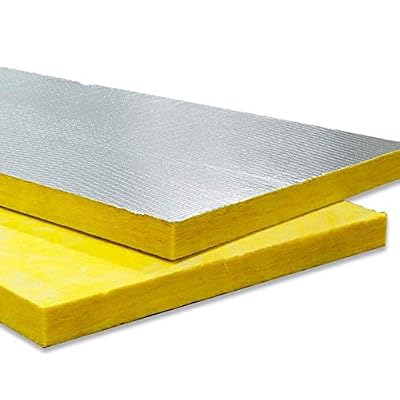
This is the board to start with. Owens Corning rates the 703 series for use on mechanical equipment and heating and air conditioning ductwork. The semi-rigid core holds its shape when cut and fitted, and the factory-applied FRK foil facing acts as a vapor retarder while giving the board a clean finished face. Six 2-by-4-foot boards cover 48 square feet, enough for a short run, a plenum box, or several branch takeoffs.
The 2-inch thickness delivers an R-value of 8.7 and a noise reduction coefficient of 1.00, so the same board that insulates the duct also quiets the air. The board handles operating temperatures up to 450 degrees Fahrenheit and carries a Class A fire rating under ASTM E84.
Specs
- Material: Semi-rigid fiberglass with FRK foil-scrim-kraft facing
- Board size: 24 x 48 x 2 inches
- Pack: 6 boards, 48 square feet
- Density: 3.0 pounds per cubic foot
- R-value: 8.7 at 2 inches
- Operating temperature: Up to 450 degrees Fahrenheit
- Fire rating: Class A per ASTM E84
2. F and L Fiberglass Board Acoustic Insulation Panels, 1-1/2in x 24in x 48in

The F and L board is the budget pick, and the only board here whose listing names HVAC duct applications directly in the title. It comes in thicknesses from 1 inch to 2 inches and in 24-by-24-inch and 24-by-48-inch sizes, so it suits small lining jobs, plenum panels, and duct sections where a full 2-inch board would be too much.
Because the board is unfaced, it needs foil tape or a separate vapor barrier on any surface exposed to humid air, and it sheds fibers when cut, so gloves, a dust mask, and eye protection belong on the job. For patching a damaged duct section or lining a small return-air box, it is the most affordable way to get a real fiberglass board rather than a soft batt.
Specs
- Material: Fiberglass board
- Size: 1-1/2 x 24 x 48 inches
- Coverage: 576 square inches per panel
- Thickness range: 1 inch to 2 inches
- Available sizes: 24 x 24 inches and 24 x 48 inches
- Listed uses: Walls, ceilings, and HVAC duct applications
3. Roxul Rockboard 60 Mineral Wool Rigid Acoustic Insulation Board 2 Inch, 4 Pack
Rockboard 60 is the mineral wool alternative to fiberglass duct board, and it earns its place on fire performance alone. The board is non-combustible, with a flame spread of 0 and smoke developed of 0 under ASTM E84, which makes it the choice around furnaces, boilers, and other hot equipment. At 6 pounds per cubic foot it is twice as dense as the Owens Corning 703, so it holds a clean cut edge and resists sagging on vertical duct faces.
It delivers an R-value of 4.3 per inch, or about 8.6 at the full 2-inch thickness, and its noise reduction coefficient of 1.0 at 2 inches matches the fiberglass boards here. The 4-pack covers 32 square feet, less than the 6-pack fiberglass options, so measure the job first. Mineral wool also resists moisture better than fiberglass, which helps in damp basements and crawl spaces.
Specs
- Material: Rigid mineral wool, also called stone wool
- Board size: 24 x 48 x 2 inches
- Pack: 4 boards, 32 square feet
- Density: 6 pounds per cubic foot
- R-value: 4.3 per inch
- Fire performance: Non-combustible, flame spread 0 and smoke developed 0 per ASTM E84
4. Frost King SP1 Multi-Purpose Fiberglass Insulation Roll, 16″ W x 3/4″ T x 48″ L
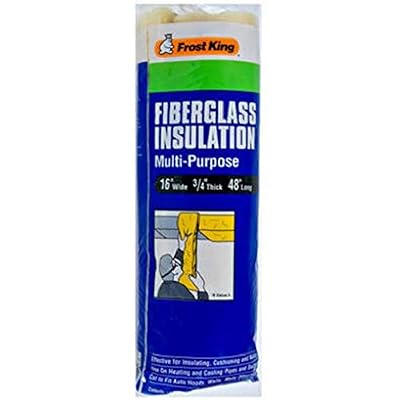
Not every duct job needs a rigid board. The Frost King SP1 is a flexible fiberglass roll for the small jobs where a board would be awkward: wrapping a short section of round duct, patching a damaged wrap, or lining an irregular surface that a stiff board cannot follow. At 16 inches wide, 3/4 inch thick, and 48 inches long, it is sized for one-off repairs.
The maker describes the roll as fire retardant and heat absorbent, and lists heating and cooling pipes and ducts among its intended uses. A 3/4-inch flexible roll does not replace a 2-inch rigid board on a fabricated duct run, and it needs tape or strapping to stay in place on vertical surfaces.
Specs
- Material: Fiberglass
- Size: 16 inches wide x 3/4 inch thick x 48 inches long
- Listed uses: Heating and cooling pipes and ducts
- Fire performance: Fire retardant and heat absorbent
5. 3M Aluminum Foil Tape 3340, 2.5″ x 50 yd, 4.0 mil, Silver

Every duct board job needs the right tape, and the 3M 3340 is made for exactly this work. The maker states that it is ideal for sealing rigid fiberglass duct boards and flexible air duct systems. Ordinary cloth duct tape dries out and curls over time, while a foil tape rated for HVAC service stays bonded through attic heat and winter cold.
The tape is 2.5 inches wide and 50 yards long, with a 2.0 mil aluminum foil backing and a strong acrylic adhesive, at 4.0 mil total thickness. Its operating range runs from minus 40 to 300 degrees Fahrenheit, which covers residential supply and return air. One roll goes a long way on a small job.
Specs
- Material: Aluminum foil backing with acrylic adhesive
- Size: 2.5 inches wide x 50 yards long
- Thickness: 4.0 mil
- Temperature range: Minus 40 to 300 degrees Fahrenheit
- Listed uses: Sealing rigid fiberglass duct boards and flexible air ducts
How to Choose Duct Board
Start with the job. A new rectangular duct run or a lined plenum calls for a rigid board such as the Owens Corning 703 FRK or the Roxul Rockboard 60, while insulating an existing metal duct or patching a damaged section is easier with a flexible wrap such as the Frost King roll. Thickness sets both the insulation value and the stiffness: a 2-inch board insulates roughly twice as well as a 1-inch board, while a 1-inch or 1-1/2-inch board fits where space is tight.
Facing matters next. A foil-scrim-kraft facing acts as a vapor retarder and gives the outside of the duct a finished surface, so a faced board is the better choice for exposed runs in attics and basements. An unfaced board costs less and works fine inside a lined plenum, but it needs foil tape on the seams. Density is the third check: a 3-pound board is the standard all-rounder, while a 6-pound board is stiffer. Finally, confirm the fire rating and local code requirements before ordering, and buy the foil tape in the same order as the board.
Who Should Skip Duct Board
Skip this roundup if the job calls for full 4-by-10-foot factory duct board sheets. Those sheets are sold through HVAC distributors, they cannot ship by parcel, and none of the boards here replaces them on a whole-house duct system. A job that specifies UL 181 listed duct board needs the listed product from a distributor, so check the specification first.
Homeowners who only need to seal a few leaky joints should start with foil tape and mastic rather than buying boards. Anyone sensitive to fiberglass dust should think twice about cutting rigid boards at home: the work needs gloves, a dust mask, eye protection, and good ventilation. In those cases, hiring an HVAC contractor is the better move.
Frequently Asked Questions
What is duct board made of?
Duct board is a rigid fiberglass or mineral wool board, bonded with resin and usually faced on one side with a foil-scrim-kraft vapor retarder. The rigid core lets the board be cut and folded into rectangular ductwork, while the facing keeps moisture out. True factory duct board is sold in large sheets through distributors.
Can I use rigid fiberglass board to build ductwork?
Yes, for short runs, plenums, return-air boxes, and branch takeoffs, a rigid board such as the Owens Corning 703 FRK can be grooved, folded, and taped into duct sections. The joints must be sealed with foil tape rated for HVAC use, and the finished duct must meet local code requirements for fire rating and air leakage.
What thickness of duct board do I need?
A 1-inch board suits thin panels, small plenums, and tight spaces, while a 1-1/2-inch board is a good middle ground for lining work. A 2-inch board is the standard choice for fabricated duct runs because it insulates better and holds its shape. Check the R-value the local code calls for, since colder climates require thicker insulation on ducts.
Do I need special tape for duct board seams?
Yes. Duct board seams need an aluminum foil tape rated for HVAC service, such as the 3M 3340, rather than ordinary cloth duct tape. Foil tape bonds to the foil facing, seals the joint against air leaks, and holds up through the temperature swings in an attic or basement. Every seam, joint, and cut edge should be taped and pressed firmly into place.
Final Verdict
The Owens Corning 703 FRK 2-inch board is the best duct board here because it combines a rigid fiberglass core, a foil facing, and a published HVAC ductwork application in one pack. The F and L board is the budget alternative for thinner panels and small lining jobs, the Roxul Rockboard 60 is the non-combustible mineral wool choice, and the Frost King roll covers the flexible jobs a rigid board cannot. Whichever board is chosen, the 3M 3340 foil tape is not optional: sealed seams are what turn a stack of boards into a duct that holds air.








Write Your Review
No reviews yet. Be the first to share your experience!