
An engine bay collects oil film, road grime, and dust until the whole compartment looks dull and a small leak hides under the mess. The decision is not whether to clean it, but which cleaner matches the grime and the surfaces involved. A ready-to-use spray suits a quick tidy, while a gallon concentrate suits a shop that cleans engines every week. A foaming aerosol clings to vertical surfaces where a thin spray runs off, and a heavy-duty degreaser cuts baked-on oil that a mild cleaner only smears.
This guide is for car owners who clean their own engine bay and want a product that cuts grease without damaging hoses, paint, or wiring. Every product below was chosen from the names and specs on its Amazon page, with form, size, and surface guidance checked against the listing.
Quick Picks
As an Amazon Associate we earn from qualifying purchases
| Product | Best for | Key spec from title |
|---|---|---|
| Chemical Guys Orange Degreaser | Quick spray-and-wipe cleanups | 16 oz ready-to-use citrus spray |
| GUNK Foamy Engine Brite FEB1 | Foam that clings to vertical surfaces | 17 oz foaming aerosol |
| Meguiar’s Super Degreaser D10801 | Heavy grease in a shop setting | 1 gallon concentrate, pH 13.5 |
| Simple Green Pro HD | Professional heavy-duty concentrate | 1 gallon professional concentrate |
How to Choose
Match the form to the grime
Ready-to-use sprays suit light grime and quick cleanups, because there is nothing to mix and the trigger bottle reaches into tight corners. Foaming aerosols suit vertical surfaces and heavy buildup, since the foam clings instead of running off the valve cover and the inner fenders. Concentrates suit heavy grease and frequent use, because a gallon dilutes into many working bottles, but they need measuring and a separate sprayer. Choose the form that matches how dirty the engine is and how often it gets cleaned, not the form that looks strongest on the shelf.
Check dilution and strength before buying
Concentrates list dilution ratios on the label, and those ratios set the real strength of the working solution. A heavy-duty mix such as 4 parts water to 1 part concentrate cuts baked-on oil, while a 10 to 1 mix suits general degreasing, and a lighter mix suits paint and plastic. Ready-to-use products skip this step entirely, which suits a driver who cleans once a season. Buying a gallon of concentrate for one engine a year wastes product, while buying a small spray bottle for a shop wastes time. Match the size and the strength to the workload.
Protect the surfaces that cleaners can harm
Engine bays mix rubber hoses, plastic covers, painted metal, and wiring, and not every cleaner suits every surface. A non-corrosive formula protects metal parts, while a high-pH degreaser cuts grease fast but needs a rinse before it dries on paint or aluminum. Read the listing for surface guidance and never let a strong degreaser dry on the engine, because dried residue stains and can attack finishes. Aluminum parts show stains fast, so rinse them first and keep the cleaner moving across the bay. Test a small hidden area first when trying a new product, and keep the cleaner off the air intake, the alternator, and exposed connectors.
Follow the safety basics every time
Engine cleaning is safe when the basics are respected, and risky when they are skipped. Let the engine cool before spraying, because a hot engine can turn a cleaner into vapor and cause burns. Cover the air intake, the alternator, and exposed electrical connectors with plastic before the first spray, and wear gloves and eye protection, since degreasers irritate skin and eyes. Work outdoors or in a ventilated space, keep the product away from the battery terminals, and rinse with a gentle stream rather than a pressure washer that forces water into connectors.
The 4 Best Options
Chemical Guys Signature Series Orange Degreaser
The Chemical Guys Orange Degreaser is the pick for a fast spray-and-wipe cleanup of a lightly soiled engine bay. Its citrus-based formula comes ready to use in a 16-ounce spray bottle, so there is nothing to mix and the trigger reaches under hoses and around the valve cover. It suits engines, tires, undercarriages, and tools, which makes the bottle useful beyond the engine bay. The citrus scent is gentler than solvent cleaners, but the product still irritates skin and eyes, so gloves and eye protection belong in the routine. Keep it off a hot engine and rinse or wipe the residue away.
Specs
- Citrus-based formula
- 16 oz ready-to-use spray bottle
- Model CLD_201_16SW
- For engines, tires, undercarriages, and tools
- Spray-on application
Best for: Drivers who want a ready-to-use spray for a quick engine tidy.
Watch out for: It irritates skin and eyes, so wear gloves and eye protection, and never spray it on a hot engine.
GUNK Foamy Engine Brite FEB1
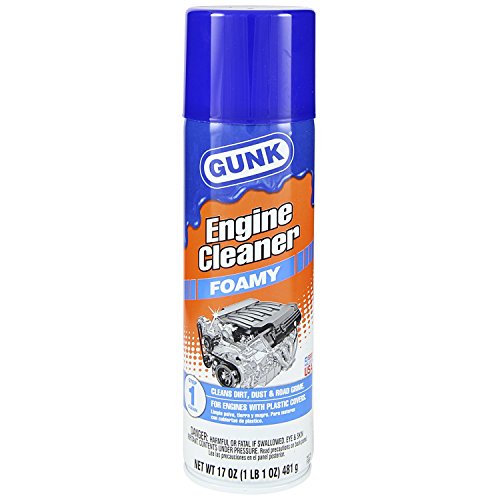
The GUNK Foamy Engine Brite is the pick for engines with heavy buildup on vertical surfaces, because its foam clings where a thin spray runs off. The 17-ounce aerosol lays down a thick foam that sits on the valve cover, the inner fenders, and the firewall, giving the cleaner time to break down oil and road film. It is ready to use with no mixing, and it is made to be safe on plastic covers and rubber parts. Spray it on a cool engine, let it dwell, then rinse with a gentle stream. The foam makes it easy to see which areas are covered and which still need a pass.
Specs
- Foaming aerosol
- 17 oz can
- Ready to use, no mixing
- Made for plastic covers and rubber parts
- Spray on, dwell, then rinse
Best for: Engines with baked-on grime on vertical surfaces where foam needs to cling.
Watch out for: Let the engine cool first and rinse before the foam dries, because dried residue is harder to remove and can stain finishes.
Meguiar’s Super Degreaser D10801
The Meguiar’s Super Degreaser is the pick for a shop or a serious home garage, because a single gallon of concentrate mixes into many working bottles. Its high pH of 13.5 cuts heavy grease fast, with a 4 to 1 dilution for heavy cleaning and a 10 to 1 dilution for medium work. That range suits everything from a greasy engine block to a dirty floor, but the strength demands care: wear gloves and eye protection, rinse thoroughly, and never let the solution dry on paint or aluminum. A gallon lasts a long time, which suits drivers who clean engines often.
Specs
- 1-gallon concentrate
- pH 13.5
- 4:1 dilution for heavy cleaning
- 10:1 dilution for medium cleaning
- Professional-grade degreaser
Best for: Shops and frequent cleaners who need a strong concentrate in bulk.
Watch out for: The high pH demands gloves, eye protection, and a full rinse, and the solution must not dry on paint or aluminum.
Simple Green Pro HD
The Simple Green Pro HD is the pick for a professional-grade concentrate that stays non-corrosive to metals. Its heavy-duty formula is built for engines, tools, and equipment, and it dilutes for different jobs, so one gallon covers degreasing, general cleaning, and shop floors. The non-corrosive claim matters for engine bays full of aluminum and steel, where a harsh cleaner can stain or pit the metal. It is a concentrate, so it needs a separate spray bottle and measuring, but the flexibility suits a garage that cleans more than one kind of surface.
Specs
- Professional-grade heavy-duty cleaner
- 1-gallon concentrate
- Non-corrosive to metals
- Dilutable for different jobs
- For engines, tools, and equipment
Best for: Garages that want a strong concentrate safe for the metals in an engine bay.
Watch out for: It is a concentrate, so it needs diluting and a separate spray bottle, and the label ratios should be followed for each surface.
Which One Fits Your Situation
You clean the engine bay once a season
Choose the Chemical Guys Orange Degreaser. The ready-to-use spray needs no mixing, and the 16-ounce bottle is enough for a light cleanup of the valve cover, the hoses, and the inner fenders. Wipe or rinse the residue, let the bay dry, and the job is done in one short session.
The engine has years of baked-on grime
Choose the GUNK Foamy Engine Brite. The foam clings to vertical surfaces and gives the cleaner time to break down heavy buildup, and a second pass handles the stubborn spots. Let the engine cool first, spray evenly, wait the dwell time, and rinse with a gentle stream. A second pass with a brush on the stubborn spots finishes the job.
You run a shop or clean engines every week
Choose the Meguiar’s Super Degreaser or the Simple Green Pro HD. A gallon of concentrate mixes into many working bottles, which beats buying a spray bottle every week. Pick Meguiar’s for the strongest cut on heavy grease, and Simple Green Pro HD when the engine bay has exposed aluminum that needs a non-corrosive formula.
You want one cleaner for the whole garage
Choose the Simple Green Pro HD. It dilutes for engines, tools, and floors, and its non-corrosive formula suits the metals in the bay. Keep a labeled spray bottle for the engine mix and another for the lighter general-cleaning mix, so the right strength is always ready. Store the gallon upright and out of reach, since concentrates are strong.
Common Mistakes
- Spraying a cleaner on a hot engine, which turns it into vapor and risks burns.
- Letting a strong degreaser dry on paint or aluminum, where it stains and attacks the finish.
- Skipping the plastic covers on the air intake, the alternator, and exposed connectors before rinsing.
- Using a pressure washer in the engine bay, which forces water into connectors and sensors.
- Buying a gallon of concentrate for one cleanup a year, then storing a half-used jug for seasons.
Frequently Asked Questions
Should the engine be hot or cold when cleaning?
The engine should be cool to the touch before any cleaner goes on. A hot engine can turn the cleaner into vapor, cause burns, and bake the residue onto surfaces instead of letting it lift the grime. Let the vehicle sit for at least an hour after driving, then touch the valve cover to confirm it is cool before spraying.
Do I need to cover anything before rinsing?
Yes, cover the air intake, the alternator, and any exposed electrical connectors with plastic bags or wrap before the first spray. Water and cleaner in the intake or the alternator can cause starting problems and damage, and a pressure washer makes the risk worse. Use a gentle stream for the rinse and avoid spraying directly into connectors.
Can a degreaser damage hoses and plastic covers?
Most engine cleaners are made for rubber and plastic, and the GUNK foam is stated safe for plastic covers and rubber parts. A high-pH degreaser can still harm paint and aluminum if it dries on them, so rinse thoroughly and never let it sit longer than the label directs. Test a small hidden area first on an older engine.
How do I dilute a concentrate correctly?
Follow the label ratios, such as 4 parts water to 1 part concentrate for heavy cleaning and 10 to 1 for medium work. Measure with a cup or a marked bottle, because a mix that is too strong wastes product and risks surfaces, while a weak mix will not cut the grease. Label the spray bottle with the ratio for the next use.

Write Your Review
No reviews yet. Be the first to share your experience!