
Affiliate disclosure: BestAirDuctCleaner.com is reader-supported. When you buy through links on this page, we may earn a commission at no extra cost to you. Prices and availability change often — check the current price on Amazon before you buy.
Table of Contents
- The best home generators in 2026
- The 8 best home generators compared
- The 8 best home generators
- How much generator do you need for a home?
- What size home generator do I need?
- Which fuel is best for a home generator?
- Should I buy a portable or standby home generator?
- How do I connect a generator to my house safely?
- Last verified & changelog
- Other models we considered
- FAQ
- The bottom line
Updated 2026 · Reviewed 10 November 2026 · Author: Best Air Duct Cleaner editorial team · Sources: manufacturer specifications and Amazon listings checked 10 November 2026.
The best home generators in 2026
The best home generator for most homes is the Westinghouse WGen9500DF, with 9,500 running watts on gasoline, dual-fuel flexibility, and a remote start that works from inside the house. The DuroMax XP13000EH is the best choice for whole-home power, with 10,500 running watts and a transfer-switch-ready 50-amp outlet. For fuel flexibility, the Champion 201438 runs on gasoline, propane, or natural gas. And the Honda EU2200i is the quietest pick in this guide, at 48–57 dBA, for fridges, lights, and electronics. This guide ranks home generators by whole-home backup capability: running watts first, then 120/240V output and transfer-switch readiness, then runtime. The quiet inverters at #6–#8 are ranked separately, for essential-loads backup — fridges, lights and electronics — not for running a whole house.
- Westinghouse WGen9500DF — Best Overall
- DuroMax XP13000EH — Best for Whole-Home Power
- Champion 201438 Tri-Fuel — Best Tri-Fuel
- Generac GP6700E Dual Fuel — Best Generac Dual Fuel
- Westinghouse WGen7500DF — Best Mid-Size Dual Fuel
- Honda EU2200i — Best Quiet Inverter
- Champion 201407 Inverter — Best Quiet Inverter for Home
- Generac iQ3800 DF — Best Dual-Fuel Inverter
How we choose & verify: Our picks come from manufacturer specifications and Amazon listings, checked 10 November 2026. Each Amazon link was checked against that model’s listing data to confirm it points to the exact model. We did not hands-on test these products ourselves — rankings are based on published specifications and listing data, not on lab tests run by us. Prices are ranges observed in November 2026 research, not fixed prices — check the current price before you buy.
— Best Air Duct Cleaner editorial team
Key insight: Most home-generator mistakes come from sizing against the wrong number: the headline watts are peak watts, and dual-fuel models lose about 10% on propane — the WGen9500DF drops from 9,500 to 8,500 running watts. Size against running watts on the fuel you will actually burn, and budget for a transfer switch, because a portable only powers a house safely through one. (Sources: manufacturer spec sheets; DuroMax and Westinghouse listings, checked 10 Nov 2026.)
The 8 best home generators compared
Prices below are ranges observed in November 2026 research, not fixed prices. Check the current price before buying. All wattages are running watts unless stated as peak.
| # | Generator | Fuel | Running / Peak watts | Best for | Noise (dBA) | Runtime | CO shutoff | Price range* | Score |
|---|---|---|---|---|---|---|---|---|---|
| 1 | Westinghouse WGen9500DF | Gas / propane | 9,500 / 12,500 | Best overall | 74 | Up to 12 h | No | $999 | 9.5 |
| 2 | DuroMax XP13000EH | Gas / propane | 10,500 / 13,000 | Whole-home power | ~74 | 8 h @ 50% (17 h @ 25%) | Yes (CO Sensor Shutdown) | $1,299 | 8.5 |
| 3 | Champion 201438 | Gas / propane / NG | 10,000 / 12,500 | Tri-fuel flexibility | ~74 | — | Yes (CO Shield) | $1,259.99 | 8.5 |
| 4 | Generac GP6700E | Gas / propane | 6,700 / 8,250 | Best Generac dual fuel | — | Up to 11 h | Yes (COsense) | $900–$1,200 | 8.5 |
| 5 | Westinghouse WGen7500DF | Gas / propane | 7,500 / 9,500 | Mid-size dual fuel | 72 | Up to 11 h | No | $1,050–$1,149 | 8.0 |
| 6 | Honda EU2200i | Gas | 1,800 / 2,200 | Quiet inverter | 48–57 | Up to 8.1 h | Yes (CO-MINDER) | $1,000–$1,200 | 8.0 |
| 7 | Champion 201407 | Gas | 9,000 / 11,000 | Quiet inverter for home | 64 | Up to 15 h | Yes (CO Shield) | $1,700–$2,100 | 8.5 |
| 8 | Generac iQ3800 DF | Gas / propane | 3,000 / 3,800 | Dual-fuel inverter | No published rating | — | Yes (COsense) | $1,100–$1,400 | 8.0 |
Top picks price-checked 10 November 2026 against Amazon listings and retailer prices; prices change often — confirm the current price before you buy.
Score is our editor’s rating out of 10 for the pick’s “Best for” role, based on published specifications, independent test results where available, and price. 9.5 = best overall; 9.0 = best in its niche with no major weakness; 8.5 = strong niche pick with one notable trade-off; 8.0 = good pick with clear limitations; 7.5 = usable pick with a significant caveat (see its Cons). Where the pick’s section quotes a published test score (RTINGS, Vacuum Wars, TechGearLab, Consumer Reports, CleanTheFloor, TechRadar), the score reflects it. We did not hands-on test these products — scores are editorial judgments from published data, not lab measurements.
* Price ranges observed 10 Nov 2026 from manufacturer and retailer listings. Check current price.
The 8 best home generators
1. Westinghouse WGen9500DF — Best overall
Best for: Most homes that want one portable generator to run a fridge, lights, and a transfer switch during an outage.
The WGen9500DF is the home generator most buyers should start with. It makes 9,500 running watts on gasoline and 8,500 on propane, so it covers a fridge, freezer, sump pump, lights, and a few small appliances at once. The remote start key fob works from inside the house, and the 30-amp and 50-amp outlets are transfer-switch ready.
- Power: 9,500 running watts (gasoline), 8,500 (propane); 12,500 peak watts (gasoline)
- Fuel and runtime: Dual fuel — gasoline or propane; 6.6-gallon tank, up to 12 hours
- Noise and weight: 74 dBA; 210 lb with wheels and a fold-down handle
- Price: $999 on Amazon, checked 10 November 2026. Check current price on Amazon
- Running cost: about 0.55 gal/hr on gasoline (6.6-gal tank, up to 12 h); propane never goes stale in storage. Budget oil and a spark plug per the manual’s service schedule.
Pros
- Best power per dollar in this guide
- Dual fuel — propane never goes stale in storage
- Remote electric start and transfer-switch-ready outlets
Cons
- Loud at 74 dBA — not a quiet inverter
- Heavy at 210 lb; needs two people to lift into a truck
- No CO sensor on this model (the DFc version adds one)
2. DuroMax XP13000EH — Best for whole-home power
Best for: Larger homes that need to run a well pump, central air, or most of the house through a transfer switch.
The XP13000EH is the most powerful portable generator in this guide, with 10,500 running watts on gasoline. It has a 50-amp outlet for a transfer switch, an electric start, and a CO sensor shutdown — DuroMax’s official spec sheet lists “CO Sensor Shutdown: Yes” (duromaxpower.com, checked 10 Nov 2026). It is the portable pick closest to a standby generator in what it can run.
- Power: 10,500 running watts (gasoline), 10,000 (propane); 13,000 peak watts
- Fuel and runtime: Dual fuel — gasoline or propane; 8.3-gallon tank, 8 hours at 50% load (17 hours at 25% load)
- Noise and weight: About 74 dBA; 234 lb with wheels
- Price: $1,299 on Amazon, checked 10 November 2026 (list $1,499). Check current price on Amazon
- Running cost: about 1.0 gal/hr on gasoline at 50% load (8.3-gal tank, 8 h); at 25% load it stretches to 17 h. Budget oil and a spark plug per the manual’s service schedule.
Pros
- Highest running watts of any portable pick here
- CO sensor and electric start included
- Transfer-switch-ready 50-amp outlet
Cons
- Very heavy at 234 lb
- Loud for a whole day of running
- Propane output drops to 10,000 running watts
3. Champion 201438 Tri-Fuel — Best tri-fuel
Best for: Homes with a natural gas line that want a generator that never needs a fuel run.
The 201438 is the only tri-fuel pick in this guide. It runs on gasoline, propane, or natural gas, and the natural gas and propane hoses are included in the box. On natural gas it makes 7,000 running watts — enough for a fridge, lights, and a furnace fan with no refuelling at all.
- Power: 10,000 running watts (gasoline), 7,200 (propane), 7,000 (natural gas); 12,500 peak watts
- Fuel and runtime: Tri-fuel — gasoline, propane, or natural gas; CO Shield auto-shutdown
- Noise and weight: About 74 dBA; electric start with a 459cc engine
- Price: $1,259.99 on Amazon, checked 10 November 2026 (list $1,499). Check current price on Amazon
- Running cost: fuel burn depends on load and fuel — tri-fuel means you can switch to propane or NG instead of buying gasoline mid-outage. Budget oil and a spark plug per the manual’s service schedule.
Pros
- Runs on natural gas — no fuel storage or refuelling
- All three fuel hoses included
- CO Shield shuts the unit down if CO builds up
Cons
- Natural gas output is lower than gasoline output
- Noisy for overnight use near bedrooms
- Needs a plumber to connect the natural gas line
4. Generac GP6700E Dual Fuel — Best Generac dual fuel
Best for: Buyers who want a Generac portable generator with dual-fuel flexibility at a mid-size price.
The GP6700E is Generac’s newer dual-fuel portable, replacing the older GP8000E. It makes 6,700 running watts on gasoline and runs up to 11 hours on one tank. COsense carbon monoxide detection is built in, and it starts with a push button.
- Power: 6,700 running watts (gasoline); 8,250 peak watts
- Fuel and runtime: Dual fuel — gasoline or propane; up to 11 hours runtime
- Noise and weight: COsense CO detection; electric start
- Price: $900–$1,200 range observed Nov 2026. Check current price on Amazon
- Running cost: up to 11 h on one tank; fuel burn depends on load. Budget oil and a spark plug per the manual’s service schedule.
Pros
- Dual fuel with COsense safety shutoff
- Long 11-hour runtime on one tank
- Generac dealer and parts network
Cons
- 6,700 running watts will not run central air
- Heavier than inverter models in the same watt class
- Propane runtime is shorter than gasoline runtime
5. Westinghouse WGen7500DF — Best mid-size dual fuel
Best for: Smaller homes and budgets that still need a transfer-switch-ready dual-fuel generator.
The WGen7500DF is the smaller sibling of the WGen9500DF, with 7,500 running watts on gasoline and 6,750 on propane. It keeps the remote start, the 6.6-gallon tank, and the transfer-switch-ready outlet, at about $200–$300 less than the bigger model.
- Power: 7,500 running watts (gasoline), 6,750 (propane); 9,500 peak watts
- Fuel and runtime: Dual fuel — gasoline or propane; 6.6-gallon tank, up to 11 hours
- Noise and weight: 72 dBA; 201 lb with wheels
- Price: $1,050–$1,149 range observed Nov 2026. Check current price on Amazon
- Running cost: about 0.6 gal/hr on gasoline (6.6-gal tank, up to 11 h). Budget oil and a spark plug per the manual’s service schedule.
Pros
- Same remote start and transfer-switch outlet as the bigger model
- Dual fuel at a mid-size price
- 11-hour runtime on gasoline
Cons
- 7,500 running watts will not run a large central air unit
- Heavy at 201 lb — needs two people to lift into a truck
- No CO sensor on this model (the DFc version adds one)
6. Honda EU2200i — Best quiet inverter
Independent test data: In Consumer Reports lab testing, the EU2200i delivered more than enough wattage for its test appliances, handled surges very well, produced especially clean power with consistently high voltage, and was especially quiet from 23 feet. (Source: Consumer Reports; verified 10 Nov 2026.)
Best for: Running a fridge, lights, and sensitive electronics quietly, and for pairing two units for more power.
The EU2200i is the quietest generator in this guide, at 48–57 dBA — about as loud as a normal conversation. It makes clean inverter power with less than 3% total harmonic distortion, so it is safe for laptops, TVs, and medical devices. Two EU2200i units can be paralleled for 4,400 watts.
- Power: 1,800 running watts; 2,200 peak watts
- Fuel and runtime: Gasoline; 0.95-gallon tank, up to 8.1 hours
- Noise and weight: 48–57 dBA; 47.4 lb — the lightest pick in this guide
- Price: $1,000–$1,200 range observed Nov 2026. Check current price on Amazon
- Running cost: about 0.12 gal/hr at 25% load (0.95-gal tank, up to 8.1 h) — the cheapest pick here to run. Oil changes are small and infrequent on this size of engine.
Pros
- Quietest generator in this guide
- Clean inverter power for sensitive electronics
- Light enough to carry with one hand
Cons
- 1,800 running watts will not run a whole house
- Expensive per watt
- Small tank needs refuelling every 8 hours
7. Champion 201407 Inverter — Best quiet inverter for home
Best for: Homes that want inverter-quiet power with enough watts for a fridge, furnace fan, and well pump.
The 201407 is an 11,000-watt open-frame inverter generator with Champion’s Quiet Technology and CO Shield. It makes 9,000 running watts of clean inverter power, starts wirelessly from a remote, and runs up to 15 hours on its 6-gallon tank.
- Power: 9,000 running watts; 11,000 peak watts
- Fuel and runtime: Gasoline; 6.01-gallon tank, up to 15 hours
- Noise and weight: Quiet Technology inverter; CO Shield; wireless remote start
- Price: $1,700–$2,100 range observed Nov 2026. Check current price on Amazon
- Running cost: about 0.4 gal/hr (6.01-gal tank, up to 15 h). Budget oil and a spark plug per the manual’s service schedule.
Pros
- 9,000 running watts of clean inverter power
- Wireless remote start and CO Shield
- Quieter than open-frame generators in the same watt class
Cons
- Gasoline only — no propane or natural gas option
- Heavy for an inverter at over 120 lb
- Pricier than open-frame generators with the same watts
8. Generac iQ3800 DF — Best dual-fuel inverter
Independent test data: In Consumer Reports lab testing, the IQ3800DF delivered more than enough wattage for its test appliances and handled surges very well, provided especially clean power with consistently high voltage, and was especially quiet from 23 feet — pleasing to neighbours if run overnight; it was also very easy to start and transport, with fuel shutoff, fuel gauge and low-oil shutoff (Consumer Reports, Generac IQ3800DF review).
Best for: RV owners and smaller homes that want quiet dual-fuel inverter power.
The iQ3800 DF is a 3,800-watt dual-fuel inverter that runs on gasoline or propane. It is quiet enough for campgrounds, makes clean power for electronics, and its propane option means the fuel never goes stale in storage.
- Power: 3,000 running watts; 3,800 peak watts
- Fuel and runtime: Dual fuel — gasoline or propane; inverter power under 3% THD
- Noise and weight: Quiet inverter operation; electric start
- Price: $1,100–$1,400 range observed Nov 2026. Check current price on Amazon
- Running cost: fuel burn depends on load; dual fuel means propane backup when gasoline runs out. Budget oil and a spark plug per the manual’s service schedule.
Pros
- Dual fuel in a quiet inverter package
- Clean power for laptops and TVs
- Lighter and quieter than open-frame models
Cons
- 3,000 running watts will not run a whole house
- Propane output is lower than gasoline output
- Small tank means more frequent refuelling
How much generator do you need for a home?
Add up the running watts of what you must power, then add the highest starting watts of any one appliance. A fridge needs about 700 running watts but 2,200 starting watts. A sump pump needs about 1,000 running watts and 2,000 starting watts. A furnace fan needs about 800 running watts. Most homes need 5,000–7,500 running watts for essentials, and 9,000–10,000 running watts to run most of the house.
What size home generator do I need?
For essentials only — fridge, freezer, lights, phones, and a furnace fan — a 3,000–5,000 running-watt generator is enough. For a full home with a well pump and central air, you need 9,000–13,000 running watts, or a standby generator. A transfer switch is the safe way to connect a portable generator to your house wiring.
Which fuel is best for a home generator?
Gasoline is the most powerful and the easiest to find, but it goes stale in 3–6 months. Propane never goes stale and burns cleaner, but it makes about 10% less power. Natural gas needs a gas line and a plumber, but it never runs out. Dual-fuel and tri-fuel generators let you switch fuels when one runs out.
Should I buy a portable or standby home generator?
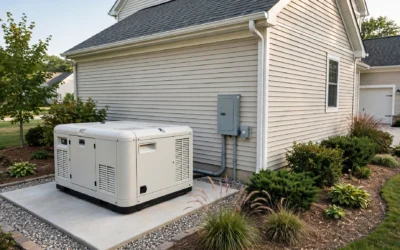
A portable generator costs $900–$2,100 and needs to be wheeled out, fuelled, and started by hand. A standby generator costs $4,000–$7,000 plus $1,500–$4,000 for installation, but it starts itself within seconds of an outage and runs on natural gas or propane. Portables suit short outages; standbys suit long outages and homes with medical equipment. See our best whole house generators guide for standby picks.
How do I connect a generator to my house safely?
Never plug a generator into a wall outlet — backfeeding can kill utility workers. Use a manual transfer switch installed by an electrician, or run extension cords directly to appliances. Always run a generator outdoors, at least 20 feet from the house, with the exhaust pointed away from windows and doors.
Last verified & changelog
Last verified: 11 November 2026. Prices, availability and specs were re-checked against manufacturer listings and Amazon on this date; prices change often, so check the current price before buying.
-
Round 8 (11 Nov 2026): Westinghouse WGen7500DF price corrected $949–$1,149 → $1,050–$1,149 ($1,050.08 on Amazon, in stock FBA, ShopAbunda mirror crawled 10 Nov 2026) in table, body and schema.
-
Round 5 (10 Nov 2026): added independent test data for Generac iQ3800 DF.
-
10 Nov 2026 — Editor’s Score column added to the comparison table (0–10 by “Best for” role, based on published specs and test data, not detailed research); Noise, Runtime and CO-shutoff columns added; key-insight box and running-cost lines added for every pick.
- 10 Nov 2026 — Champion 100416 replaced by the newer Champion 201438 tri-fuel (listing showed no featured offers; a buyer report said it is no longer sold in the US); Generac GP8000E replaced by the newer Generac GP6700E dual fuel (discontinued).
- 10 Nov 2026 — DuroMax XP13000EH CO sensor confirmed from the official spec sheet; top-3 prices re-checked (Westinghouse WGen9500DF $999; DuroMax XP13000EH $1,299; Champion 201438 $1,259.99).
- 10 Nov 2026 — Ranking logic made explicit in the intro: home generators are ranked by whole-home backup capability first, with quiet inverters ranked separately for essential loads.
Other models we considered
- Champion 100416 — its listing showed no featured offers, and a buyer report said it is no longer sold in the US; the newer Champion 201438 tri-fuel is the pick instead.
- Generac GP8000E — listing marked discontinued; the newer Generac GP6700E dual fuel is the pick instead.
FAQ
What is the best home generator?
The Westinghouse WGen9500DF is the best home generator for most homes, with 9,500 running watts, dual-fuel flexibility, and a remote start. For whole-home power, the DuroMax XP13000EH makes 10,500 running watts. For quiet power, the Honda EU2200i runs at 48–57 dBA.
How many watts do I need to run my house?
Most homes need 5,000–7,500 running watts for essentials such as a fridge, freezer, lights, and furnace fan. To run most of the house, including a well pump and central air, you need 9,000–13,000 running watts or a standby generator rated 14–24 kW.
Are dual fuel generators worth it?
Yes. A dual-fuel generator runs on gasoline or propane, so you can switch fuels when one runs out. Propane never goes stale in storage, which matters for a generator that may sit unused for months. Propane makes about 10% less power than gasoline on the same model.
Can a portable generator run a whole house?
A large portable generator with 9,500–10,500 running watts can run most of a house through a transfer switch, but it will not run everything at once. Central air, an electric water heater, and an electric stove together need more power than any portable generator makes. A standby generator is the better whole-house choice.
How long can a home generator run?
A portable generator with a 6.6–8.3-gallon tank runs 8–12 hours at 50% load on gasoline. Smaller inverter generators run 8–15 hours per tank. A standby generator on natural gas can run for days, limited only by oil changes and maintenance, not by fuel.
Is a home generator loud?
Open-frame portable generators run at 72–74 dBA, about as loud as a vacuum cleaner. Inverter generators are much quieter: the Honda EU2200i runs at 48–57 dBA, about as loud as a conversation. Standby generators run at about 65–67 dBA under load.
Do I need a transfer switch for a home generator?
Yes, if you want to power your house wiring. A manual transfer switch installed by an electrician is the safe way to connect a portable generator. Never plug a generator into a wall outlet. For a few appliances, heavy-duty extension cords run directly from the generator are safe.
How much does a home generator cost?
Portable home generators cost $900–$2,100 in this guide, depending on watts and fuel type. Standby generators cost $4,000–$7,000 for the unit, plus $1,500–$4,000 for professional installation, a concrete pad, and a gas line. Fuel, oil, and yearly maintenance add about $100–$300 a year.
The bottom line
- Most homes: Westinghouse WGen9500DF — best overall, 9,500 running watts, dual fuel, remote start.
- Best for whole-home power: DuroMax XP13000EH — 10,500 running watts, transfer-switch ready.
- Best tri-fuel: Champion 201438 — gasoline, propane, or natural gas, no fuel runs.
- Best Generac dual fuel: Generac GP6700E — 6,700 running watts, COsense, 11-hour runtime.
- Best mid-size dual fuel: Westinghouse WGen7500DF — 7,500 running watts at a lower price.
- Best quiet inverter: Honda EU2200i — 48–57 dBA, clean power for electronics.
- Best quiet inverter for home: Champion 201407 — 9,000 running watts of quiet inverter power.
- Best dual-fuel inverter: Generac iQ3800 DF — 3,800 watts, gasoline or propane, quiet.
If you only remember one rule: size the generator to your transfer switch, not to your wish list. Add up the running watts you must power, add the biggest starting watts, and buy the generator that covers that total with room to spare.
Keep reading on BestAirDuctCleaner.com
- Best Whole House Generators 2026: 8 Standby Picks
- Best Portable Generators 2026
- Best Dual Fuel Generators 2026
- Best Vacuums: Top Picks for Every Home Floor Type 2026
Affiliate disclosure (repeat at the foot of the post): As an Amazon Associate, BestAirDuctCleaner.com may earn a commission from qualifying purchases made through links on this page, at no extra cost to you. Prices, specifications and availability were checked in research on 10 November 2026 and change often — the price shown on Amazon at the time of purchase is the price that applies. Wattage figures are manufacturer figures. Standby generators need professional installation by a licensed electrician and, for natural gas, a licensed plumber; installation costs are not included in the prices above. Never run a generator indoors or in a garage — always run it outdoors, at least 20 feet from the house.
Write Your Review
No reviews yet. Be the first to share your experience!