
Affiliate disclosure: BestAirDuctCleaner.com is reader-supported. When you buy through links on this page, we may earn a commission at no extra cost to you. Prices and availability change often — check the current price on Amazon before you buy.
Table of Contents
- The short answer: what is the best quiet generator?
- How to choose a quiet generator
- The 8 best quiet generators compared
- The 8 best quiet generators
- How loud is a quiet generator in decibels?
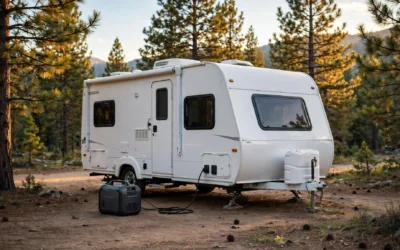
- Can a quiet generator run an RV air conditioner?
- What should you avoid with a quiet generator?
- Last verified & changelog
- Other models we considered
- FAQ
- The bottom line
Updated 2026 · Reviewed 10 November 2026 · Author: Best Air Duct Cleaner editorial team · Sources: manufacturer specifications and Amazon listings checked 10 November 2026.
The short answer: what is the best quiet generator?
The Honda EU2200i is the best quiet generator overall. At 48 decibels at 25% load it is the quietest generator in this guide — about as loud as a normal conversation — and it makes 1,800 running watts of clean inverter power for fridges, laptops and CPAP machines. The Westinghouse iGen4500 is the best quiet generator for RVs — 3,700 running watts, an RV-ready outlet and remote start at 52 decibels. The Westinghouse iGen2200 is the best value — the same 52-decibel noise level and 1,800 running watts for roughly half the Honda’s price.
The 8 best quiet generators in 2026:
- Honda EU2200i — Best Overall
- Westinghouse iGen4500 — Best for RVs
- Westinghouse iGen2200 — Best Value
- Champion 2500 (201317) — Best Lightweight Camping Pick
- Generac GP3300i — Best 3000-Watt Class for Home Backup
- Generac iQ3800 DF — Best Dual-Fuel Quiet Generator
- Champion 100900 Dual Fuel — Best Dual-Fuel Budget Pick
- Westinghouse iGen4500DFc — Best Large Dual-Fuel for RV and Home
In this guide: How to choose · Comparison table · The 8 picks · How loud is quiet? · RV air conditioners · FAQ
How we choose & verify: Our picks come from manufacturer specifications and Amazon listings, checked 10 November 2026, cross-checked against independent testing from Consumer Reports. Each Amazon link was checked against that model’s listing data to confirm it points to the exact model. We did not hands-on test these products ourselves — rankings are based on published specifications and independent test results, not on lab tests run by us. Prices are ranges observed in November 2026 research, not fixed prices — check the current price before you buy.
— Best Air Duct Cleaner editorial team
Key insight: Maker decibel figures understate real-world noise by 8–15 dB under load, and they are measured at 25% load from 23 feet — so only compare ratings measured the same way. The practical line is the 60 dB NPS campground cap: picks at 48–55 dBA stay under it, picks at 56–62 dBA only at light loads, and the Generac iQ3800 DF has no published rating at all, so it is flagged unranked rather than ranked on noise. (Sources: dBSkeptic; TopNotch Outdoor.)
How to choose a quiet generator
Noise is the whole point of this guide, but decibels alone do not pick the winner. A generator that is quiet and too small for your fridge is useless, and a powerful generator you cannot lift into a truck bed will stay in the garage. Judge every pick on noise first, then watts, then weight.
1. Read the decibel rating at 25% load
Manufacturers quote noise at 25% load, measured from 23 feet away — that is the number in this guide. A rating of 48–53 dBA is whisper-quiet; 54–58 dBA is quiet; anything over 60 dBA will be heard across a campground. Remember the decibel scale is logarithmic: 58 dBA is roughly twice as loud as 48 dBA.
2. Size the watts to the job, not the box
The box shouts starting watts; the number that runs your gear is running watts. A fridge needs about 700 running watts, a 13,500 BTU RV air conditioner needs about 2,800–3,000. The 2,000-watt class covers lights, phones and a fridge. Only the 3,700-watt Westinghouse picks here run an RV air conditioner on their own.
3. Weight decides whether it actually travels
A generator you cannot carry is a generator you will not use. The Champion 2500 and Champion 100900 weigh under 18 kg and one person can lift them easily. The 3,700-watt Westinghouse models weigh 42–48 kg and need two people or a ramp, while the Generac iQ3800 DF has wheels and a telescoping handle.
4. Dual fuel is worth it for outages
Propane stores for years without going stale, and a 20-pound propane tank can run the Champion 100900 for up to 34 hours. If you buy for storm backup rather than camping, pick a dual-fuel model — the Generac iQ3800 DF, the Champion 100900 or the Westinghouse iGen4500DFc.
For the wider generator roundup, see our best inverter generators guide, and for whole-home power see our best home generators guide.
The 8 best quiet generators compared
Prices below are ranges observed in November 2026 research, not fixed prices. Check the current price before buying.
| # | Generator | Best for | Running / peak watts | Noise at 25% load | Noise band | Runtime | Price range* | Score |
|---|---|---|---|---|---|---|---|---|
| 1 | Honda EU2200i | Best overall | 1,800 / 2,200 W | 48 dBA | 48–57 dBA — campground-compliant | Up to 8.1 h @ 25% | $1,199 | 9.5 |
| 2 | Westinghouse iGen4500 | Best for RVs | 3,700 / 4,500 W | 52 dBA | 52 dBA — campground-compliant | Up to 18 h @ 25% | $799–$1,029 | 9.0 |
| 3 | Westinghouse iGen2200 | Best value | 1,800 / 2,200 W | 52 dBA | 52 dBA — campground-compliant | Up to 12 h @ 25% | $433–$579 | 9.0 |
| 4 | Champion 2500 (201317) | Best lightweight camping | 1,850 / 2,500 W | 53 dBA | 53 dBA — campground-compliant | Up to 11.5 h @ 25% | $450–$650 | 9.0 |
| 5 | Generac GP3300i | Best 3000W class, home backup | 2,500 / 3,300 W | ~58 dBA | ~58 dBA — light loads only | Up to 7 h @ 25% | $650–$900 | 8.0 |
| 6 | Generac iQ3800 DF | Best dual-fuel quiet | 3,000 / 3,800 W | Not published† | No published rating — unranked | Up to 20 h @ 25% | $950–$1,150 | 8.5 |
| 7 | Champion 100900 Dual Fuel | Best dual-fuel budget | 1,600 / 2,000 W | 53 dBA | 53 dBA — campground-compliant | 11.5 h gas / up to 34 h propane | $400–$550 | 8.5 |
| 8 | Westinghouse iGen4500DFc | Best large dual-fuel, RV & home | 3,700 / 4,500 W | 52 dBA | 52 dBA — campground-compliant | Up to 18 h @ 25% | $850–$1,050 | 8.5 |
Top picks price-checked 10 November 2026 against Amazon listings and retailer prices; prices change often — confirm the current price before you buy.
Score is our editor’s rating out of 10 for the pick’s “Best for” role, based on published specifications, independent test results where available, and price. 9.5 = best overall; 9.0 = best in its niche with no major weakness; 8.5 = strong niche pick with one notable trade-off; 8.0 = good pick with clear limitations; 7.5 = usable pick with a significant caveat (see its Cons). Where the pick’s section quotes a published test score (RTINGS, Vacuum Wars, TechGearLab, Consumer Reports, CleanTheFloor, TechRadar), the score reflects it. We did not hands-on test these products — scores are editorial judgments from published data, not lab measurements.
* Price ranges observed 10 Nov 2026. Check current price. † Generac does not publish a decibel rating for the iQ3800 DF. Consumer Reports rates it “especially quiet” at 23 feet, and its fully enclosed case is designed to cut noise.
The 8 best quiet generators
1. Honda EU2200i — Best Overall
Best for: Anyone who wants the quietest generator you can buy, and is willing to pay for it.
The EU2200i is the benchmark every other quiet generator is measured against. At 48 decibels at 25% load it is quieter than a normal conversation, and its 1,800 running watts of clean power under 3% THD will run a fridge, charge laptops and phones, and power a CPAP machine all night. At 21.5 kg you can carry it with one hand, and it holds its resale value better than any generator in this guide.
- Power: 1,800 running watts, 2,200 peak watts; less than 3% THD clean power.
- Noise and weight: 48–57 dBA; 21.5 kg (47.4 lb); parallel-ready.
- Fuel and runtime: Gasoline; 0.95-gallon tank; up to 8.1 hours at 25% load.
- Price: $1,199 on Amazon, checked 10 November 2026 (MSRP $1,199).
- Running cost: about 0.12 gal/hr at 25% load (0.95-gal tank, up to 8.1 h) — the cheapest pick here to run. Oil changes are small and infrequent on this size of engine.
Independent test data: Consumer Reports lab tests found the EU2200i delivered more than enough wattage for its test appliances, handled surges very well, provided especially clean power with consistently high voltage, and was “especially quiet” at 23 feet (Consumer Reports inverter-generator tests).
Pros
- Quietest generator in this guide at 48 dBA
- Clean power safe for sensitive electronics
- Light at 21.5 kg and famously reliable
Cons
- The most expensive pick per watt here
- 1,800 running watts will not run an RV air conditioner alone
- Small 0.95-gallon tank needs refuelling on long runs
Price: $1,199 on Amazon, checked 10 November 2026 (MSRP $1,199). Check current price on Amazon
2. Westinghouse iGen4500 — Best for RVs
Independent test data: Consumer Reports lab-tested the iGen4500c, the CO-sensor version of the iGen4500: it delivered more than enough wattage for its test appliances, handled surges very well, produced especially clean power with consistently high voltage, and was fairly quiet from 23 feet. (Source: Consumer Reports; verified 10 Nov 2026.)
Best for: RV owners who want to run a 13,500 BTU air conditioner without a second generator.
The iGen4500 makes 3,700 running watts with a TT-30R RV-ready outlet, remote start from inside the RV, and up to 18 hours of runtime at 25% load. At 52 decibels it is quiet enough for campgrounds with noise rules, and its LED data centre shows fuel level, power output and run hours at a glance.
- Power: 3,700 running watts, 4,500 peak watts; RV-ready TT-30R outlet.
- Noise and weight: 52 dBA; 42.2 kg (93 lb); remote start with key fob.
- Fuel and runtime: Gasoline; 3.4-gallon tank; up to 18 hours at 25% load.
- Price: $799–$1,029 range, checked 10 November 2026 (about $799 on Amazon per Bob Vila; $999–$1,029 at AP Electric/Norwall, out of stock).
- Running cost: about 0.19 gal/hr at 25% load (3.4-gal tank, up to 18 h) — very cheap to run. Oil changes are small and infrequent on this size of engine.
Pros
- Runs a 13,500 BTU RV air conditioner on its own
- Remote start and a very long 18-hour runtime
- 52 dBA is quiet for a 3,700-watt generator
Cons
- At 42.2 kg it needs two people or a ramp to lift
- Gas-only — for propane, see the iGen4500DFc below
- No USB ports on the control panel
Price: $799–$1,029 range, checked 10 November 2026 (about $799 on Amazon per Bob Vila; $999–$1,029 at AP Electric/Norwall, out of stock). Check current price on Amazon
3. Westinghouse iGen2200 — Best Value
Best for: Buyers who want Honda-level quiet at roughly half the Honda’s price.
The iGen2200 is the value pick in this guide, and it is not a compromise on noise: at 52 decibels it is only 4 dBA louder than the Honda, and it makes the same 1,800 running watts. Its 1.2-gallon tank runs up to 12 hours at 25% load, it is parallel-capable if you ever need double the power, and it carries a 3-year limited warranty.
- Power: 1,800 running watts, 2,200 peak watts; clean inverter power.
- Noise and weight: 52 dBA; 21.5 kg (47.4 lb); parallel-capable.
- Fuel and runtime: Gasoline; 1.2-gallon tank; up to 12 hours at 25% load.
- Price: $433–$579 range, checked 10 November 2026 (about $433 at SuperArbor; $579 MSRP at Westinghouse, out of stock).
- Running cost: about 0.1 gal/hr at 25% load (1.2-gal tank, up to 12 h). Oil changes are small and infrequent.
Pros
- 52 dBA quiet at roughly half the Honda’s price
- 12-hour runtime beats the Honda’s 8.1 hours
- Same 1,800 running watts as the EU2200i
Cons
- Louder than the Honda by 4 dBA at 25% load
- No USB charging ports
- 1,800 watts will not run an RV air conditioner
Price: $433–$579 range, checked 10 November 2026 (about $433 at SuperArbor; $579 MSRP at Westinghouse, out of stock). Check current price on Amazon
4. Champion 2500 (201317) — Best Lightweight Camping Pick
Independent test data: In Consumer Reports lab testing, the 201317 delivered more than enough wattage for its test appliances and handled surges very well, provided especially clean power with consistently high voltage, and was especially quiet from 23 feet — pleasing to neighbours if run overnight; it was also easy to start and transport (Consumer Reports, Champion 201317 review).
Best for: Campers and tailgaters who want a quiet inverter under 18 kg.
The Champion 2500 weighs just 18.0 kg and runs at 53 decibels, yet it makes 1,850 running watts — enough for lights, phones, a laptop and a small fan. It has CO Shield carbon-monoxide shutdown, a 1.1-gallon tank, and up to 11.5 hours of runtime at 25% load. It is the easiest generator in this guide to carry from the car to the campsite.
- Power: 1,850 running watts, 2,500 peak watts; less than 3% THD.
- Noise and weight: 53 dBA; 18.0 kg (39.7 lb); CO Shield; parallel-ready.
- Fuel and runtime: Gasoline; 1.1-gallon tank; up to 11.5 hours at 25% load.
- Price: $450–$650 range observed Nov 2026.
- Running cost: about 0.1 gal/hr at 25% load (1.1-gal tank, up to 11.5 h). Oil changes are small and infrequent.
Pros
- Lightest pick here at 18.0 kg
- Quiet at 53 dBA with CO Shield included
- Long 11.5-hour runtime at low load
Cons
- 1,850 watts will not run an air conditioner
- No electric start — recoil pull only
- Gas-only, with no propane option
Price: $450–$650 range observed Nov 2026. Check current price on Amazon
5. Generac GP3300i — Best 3000-Watt Class for Home Backup
Best for: Homes that need more than 2,000 watts of quiet power without stepping up to a 3,700-watt unit.
The GP3300i is Generac’s current 3,000-watt-class inverter, replacing the older GP3000i. It makes 2,500 running watts with PowerRush technology for over 50% more starting capacity, so it can start a fridge or a small air conditioner that a 2,000-watt unit cannot. At about 58 decibels it is the loudest pick in this guide, but it is still far quieter than any open-frame generator.
- Power: 2,500 running watts, 3,300 peak watts; PowerRush starting boost.
- Noise and weight: About 58 dBA; 27.0 kg (59.5 lb); parallel-ready.
- Fuel and runtime: Gasoline; 1.06-gallon tank; up to 7 hours at 25% load.
- Price: $650–$900 range observed Nov 2026.
- Running cost: about 0.24 gal/hr at 50% load (1.06-gal tank, 4.5 h) — a small tank, so refuel often on long runs. Budget oil and a spark plug per the manual’s service schedule.
Pros
- 2,500 running watts covers a fridge plus lights and charging
- PowerRush gives extra starting capacity for motors
- USB ports and a 30A twist-lock outlet included
Cons
- About 58 dBA — the loudest pick in this guide
- Short 7-hour runtime at 25% load
- No electric start and no dual-fuel option
Price: $650–$900 range observed Nov 2026. Check current price on Amazon
6. Generac iQ3800 DF — Best Dual-Fuel Quiet Generator
Independent test data: In Consumer Reports lab testing, the IQ3800DF delivered more than enough wattage for its test appliances and handled surges very well, provided especially clean power with consistently high voltage, and was especially quiet from 23 feet — pleasing to neighbours if run overnight; it was also very easy to start and transport, with fuel shutoff, fuel gauge and low-oil shutoff (Consumer Reports, Generac IQ3800DF review).
Best for: Buyers who want a mid-size dual-fuel inverter from a major brand with electric start.
The iQ3800 DF is Generac’s dual-fuel inverter, with 3,000 running watts on gasoline, push-button electric start, and COsense shutdown. It runs on gasoline or propane, makes clean power under 3% THD, and its fully enclosed case keeps noise down — Consumer Reports rates it especially quiet at 23 feet. A 3.28-gallon tank runs up to 20 hours at 25% load on gasoline.
- Power: 3,000 running watts (gasoline), 2,700 on propane; 3,800 peak watts.
- Noise and weight: No published dBA rating; fully enclosed case; 50.3 kg (111 lb) with wheels and handle.
- Fuel and runtime: Dual fuel — gasoline or propane; 3.28-gallon tank; up to 20 hours at 25% load on gasoline.
- Price: $950–$1,150 range observed Nov 2026.
- Running cost: fuel burn depends on load; dual fuel means propane backup when gasoline runs out. Budget oil and a spark plug per the manual’s service schedule.
Pros
- Dual fuel — propane stores for years without going stale
- Electric start with COsense auto-shutdown
- 20-hour runtime at 25% load on gasoline
Cons
- Generac publishes no decibel rating, so compare it on test results, not the box
- At 50.3 kg it is heavy — wheels and handle are essential
- 3,000 running watts is tight for a 13,500 BTU RV air conditioner
Price: $950–$1,150 range observed Nov 2026. Check current price on Amazon
7. Champion 100900 Dual Fuel — Best Dual-Fuel Budget Pick
Best for: Campers and storm preppers who want propane flexibility at the lowest price in this guide.
The Champion 100900 is the cheapest dual-fuel generator here, and it is genuinely quiet at 53 decibels. On gasoline it makes 1,600 running watts for up to 11.5 hours; on a 20-pound propane tank it makes 1,440 running watts for up to 34 hours — propane that never goes stale in storage. At 17.7 kg it is also the lightest pick in this guide.
- Power: 1,600 running watts (gasoline), 1,440 on propane; 2,000 peak watts.
- Noise and weight: 53 dBA; 17.7 kg (39 lb); CO Shield; parallel-ready.
- Fuel and runtime: Dual fuel — gasoline or propane; 1.05-gallon tank; 11.5 hours on gasoline, up to 34 hours on propane.
- Price: $400–$550 range observed Nov 2026.
- Running cost: about 0.09 gal/hr on gasoline (1.05-gal tank, 11.5 h); up to 34 h on a 20-lb propane tank at 25% load — propane is the cheap way to run it long. Budget oil and a spark plug per the manual’s service schedule.
Pros
- Dual fuel at the lowest price in this guide
- Up to 34 hours on a 20-pound propane tank
- Lightest pick here at 17.7 kg
Cons
- 1,600 running watts is the lowest output in this guide
- Propane output drops to 1,440 running watts
- No electric start — recoil pull only
Price: $400–$550 range observed Nov 2026. Check current price on Amazon
8. Westinghouse iGen4500DFc — Best Large Dual-Fuel for RV and Home
Best for: RV owners and home backup buyers who want the iGen4500’s power with propane and a CO sensor.
The iGen4500DFc is the dual-fuel version of the iGen4500, with the same 3,700 running watts on gasoline plus 3,330 running watts on propane. It adds a CO sensor with automatic shutdown and keeps the remote start, the RV-ready TT-30R outlet and the 18-hour runtime. It is the most capable quiet generator in this guide for running an RV air conditioner on either fuel.
- Power: 3,700 running watts (gasoline), 3,330 on propane; 4,500 peak watts.
- Noise and weight: 52 dBA; 47.5 kg (104.7 lb); remote start with key fob.
- Fuel and runtime: Dual fuel — gasoline or propane; 3.4-gallon tank; up to 18 hours at 25% load.
- Price: $850–$1,050 range observed Nov 2026.
- Running cost: about 0.19 gal/hr at 25% load on gasoline (3.4-gal tank, up to 18 h); propane avoids stale fuel. Oil changes are small and infrequent.
Pros
- Runs an RV air conditioner on gasoline or propane
- CO sensor with auto-shutdown and remote start
- 52 dBA quiet for a 3,700-watt generator
Cons
- Heaviest pick here at 47.5 kg
- Costs more than the gas-only iGen4500
- Propane output is lower than gasoline output
Price: $850–$1,050 range observed Nov 2026. Check current price on Amazon
How loud is a quiet generator in decibels?
A quiet generator runs at 48 to 58 decibels at 25% load, measured from 23 feet away. That is roughly the volume of a normal conversation or a dishwasher. The Honda EU2200i at 48 dBA is the quietest pick here; the Westinghouse models at 52 dBA and the Champions at 53 dBA are close behind. Because the decibel scale is logarithmic, a 10 dBA jump sounds about twice as loud — so the gap between 48 and 58 dBA matters more than the numbers suggest. Most campgrounds set a 60 dBA limit, and every pick in this guide sits under it.
Can a quiet generator run an RV air conditioner?
Yes, but only the bigger picks here can do it on their own. A 13,500 BTU RV air conditioner needs about 2,800–3,000 running watts to start and keep running. The Westinghouse iGen4500 and iGen4500DFc, at 3,700 running watts, are the only picks in this guide that clear that bar alone. The Generac iQ3800 DF at 3,000 running watts is borderline — it may start a 13,500 BTU unit with a soft-start kit, but it is not a sure thing. The 2,000-watt class picks cannot start an air conditioner alone, though two of them paired in parallel can.
What should you avoid with a quiet generator?
- Buying by starting watts alone. The box shouts starting watts; running watts are what powers your gear. A “3,300-watt” generator that only runs 2,500 watts will not start your fridge and your air conditioner together.
- Comparing decibels measured different ways. Some brands quote noise at 25% load from 23 feet, others at full load or from further away. Only compare ratings measured the same way — and beware any generator with no published rating at all.
- Running any generator indoors. Never run a generator in a house, garage or tent, even a quiet one. Carbon monoxide is colourless and odourless, and every pick here needs at least 20 feet of open-air distance from people and windows.
- Skipping the break-in and oil check. Inverter generators ship without oil in the crankcase. Add oil before the first start, run the break-in period the manual specifies, and check the oil before every use — a seized engine is not a warranty claim.
Last verified & changelog
Last verified: 10 November 2026. Prices, availability and specs were re-checked against manufacturer listings and Amazon on this date; prices change often, so check the current price before buying.
-
Round 5 (10 Nov 2026): added independent test data for Champion 2500 (201317); Generac iQ3800 DF; Westinghouse iGen4500.
-
10 Nov 2026 — Editor’s Score column added to the comparison table (0–10 by “Best for” role, based on published specs and test data, not detailed research).
- 10 Nov 2026 — Noise-band and Runtime columns added to the table (it already had noise at 25% load); key-insight box and running-cost lines added for every pick.
- 10 Nov 2026 — Yamaha EF2000iSv2 and EF2200iS not used (no longer sold / listing could not be confirmed); WEN 56203i not used (no listing confirmed); Generac GP3000i replaced by the current-model GP3300i (listing showed currently unavailable).
- 10 Nov 2026 — Top-3 prices re-checked (Honda EU2200i $1,199; Westinghouse iGen4500 $799–$1,029; Westinghouse iGen2200 $433–$579).
Other models we considered
- Yamaha EF2000iSv2 — no longer sold on Amazon.
- Yamaha EF2200iS — its listing could not be confirmed, and at 57–65 dBA it was the loudest in this class.
- WEN 56203i — no ASIN could be confirmed against a live Amazon listing after three searches.
- Generac GP3000i — its Amazon listing showed currently unavailable; the current-model GP3300i is the pick instead.
FAQ
What is the best quiet generator?
The Honda EU2200i is the best quiet generator overall, running at just 48 decibels at 25% load — about as loud as a normal conversation. It makes 1,800 running watts of clean inverter power for fridges, laptops and CPAP machines. The Westinghouse iGen4500 is the best quiet generator for RVs, and the Westinghouse iGen2200 is the best value pick.
What is the quietest generator you can buy?
The Honda EU2200i is the quietest generator in this guide, at 48 decibels at 25% load. The WEN 56203i and Yamaha EF2000iSv2 are close rivals on paper, but both are hard to buy new on Amazon now. Among generators you can actually buy today, the Westinghouse iGen2200 and iGen4500 at 52 decibels are the next quietest picks.
How many decibels is a quiet generator?
A quiet generator runs at 48 to 58 decibels at 25% load, measured from 23 feet away — roughly the volume of a normal conversation or a dishwasher. Anything under 60 decibels counts as quiet for a portable generator. Conventional open-frame generators run at 68 to 78 decibels, which is roughly twice as loud to the human ear.
What is the best quiet generator for home backup?
The Generac GP3300i is the best quiet generator for home backup, with 2,500 running watts — enough for a fridge, lights, internet and phone charging — at about 58 decibels. For longer outages, the Generac iQ3800 DF runs up to 20 hours on a tank and takes propane too. For essentials only, the Honda EU2200i is quieter still.
What is the best quiet generator for camping?
The Champion 2500 is the best quiet generator for camping, because it weighs just 18 kilograms, runs at 53 decibels and still makes 1,850 running watts. The Honda EU2200i is quieter at 48 decibels and better built, but costs about twice as much. The Champion 100900 adds dual-fuel running for longer trips.
Can a quiet generator run an RV air conditioner?
Yes, but only the bigger quiet generators in this guide can do it. The Westinghouse iGen4500 and iGen4500DFc make 3,700 running watts, which is enough for a 13,500 BTU RV air conditioner. The 2,000-watt class picks cannot start an air conditioner alone, though two can be paired in parallel for double the power.
Are inverter generators quieter than regular generators?
Yes. Inverter generators throttle their engine speed down to match the load, so they run much quieter at light loads than conventional generators, which run at a fixed 3,600 rpm. Inverter models also make clean power under 3% total harmonic distortion, which is safe for laptops, phones and CPAP machines.
How far away should you place a quiet generator?
Place a generator at least 20 feet from your home, tent or RV, with the exhaust pointing away from people and windows. Never run a generator indoors, in a garage or under a covered porch, because carbon monoxide can kill. Every pick in this guide has a CO sensor or CO shutdown, but distance is still the rule that matters.
The bottom line
- Most homes: Honda EU2200i — best overall, 48 dBA, 1,800 running watts, 21.5 kg.
- Best for RVs: Westinghouse iGen4500 — 3,700 running watts, RV-ready outlet, remote start, 52 dBA.
- Best value: Westinghouse iGen2200 — 52 dBA, 1,800 running watts, $433–$579.
- Best lightweight camping: Champion 2500 (201317) — 18.0 kg, 53 dBA, 1,850 running watts.
- Best 3000W class, home backup: Generac GP3300i — 2,500 running watts, PowerRush, about 58 dBA.
- Best dual-fuel quiet: Generac iQ3800 DF — 3,000 running watts, electric start, COsense, 20-hour runtime.
- Best dual-fuel budget: Champion 100900 — 53 dBA, 17.7 kg, up to 34 hours on propane.
- Best large dual-fuel, RV & home: Westinghouse iGen4500DFc — 3,700 running watts, propane, CO sensor, 52 dBA.
If you only remember one rule: buy the quietest generator that still covers your running watts. A 48-decibel Honda that cannot start your fridge is no use in an outage, and a 3,700-watt generator you cannot lift is no use at a campsite. Match the watts first, then take the lowest decibel rating you can afford.
Keep reading on BestAirDuctCleaner.com
- Best Home Generators 2026
- Best Portable Generators 2026
- Best Inverter Generators 2026
- Best Dual Fuel Generators 2026
- Best Solar Generators 2026
- Best Whole House Generators 2026
Affiliate disclosure (repeat at the foot of the post): As an Amazon Associate, BestAirDuctCleaner.com may earn a commission from qualifying purchases made through links on this page, at no extra cost to you. Prices, specifications and availability were checked in research on 10 November 2026 and change often — the price shown on Amazon at the time of purchase is the price that applies. Noise figures are manufacturer figures measured at 25% load from 23 feet unless stated otherwise, and are not directly comparable across brands that measure differently. Recommendations in this guide are based on independent test results and manufacturer specifications reviewed in November 2026; they are not a substitute for checking the exact model, bundle and return terms before you buy.
Write Your Review
No reviews yet. Be the first to share your experience!