
A mid drive electric bike conversion kit replaces the crankset and bottom bracket area of an ordinary bicycle with a motor that drives the chain. That single design choice changes almost everything about how a converted bike climbs, balances, and uses its gears. Instead of pushing or pulling one wheel, the motor works through the same chainring, chain, and cassette that your legs use, so shifting down for a hill multiplies the motor’s effort just as it multiplies yours.

As an Amazon Associate we earn from qualifying purchases
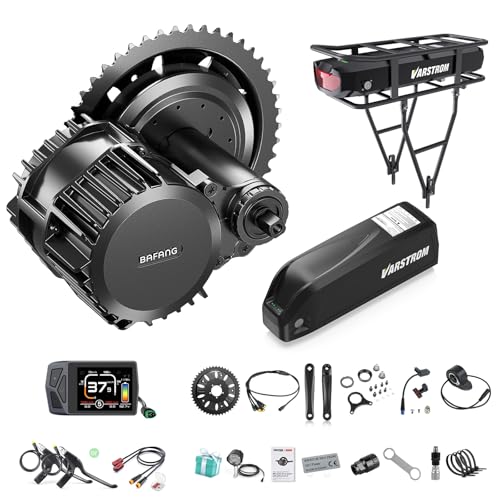
This guide explains how mid drive kits work, what has to fit before any kit belongs on your shortlist, and how the main approaches differ. Three verified mid drive conversion kits are covered in detail below: two Bafang designs built around cadence sensing and strong climbing power, and a Tongsheng design built around torque sensing for a more natural pedal feel. Every product in this guide is the same type of product — a mid drive electric bike conversion kit — because mixing in hub motors or friction drives would make the comparison misleading.
Why Choose a Mid Drive Conversion at All?
The strongest argument for a mid drive is gearing. A hub motor spins at wheel speed, so on a long, steep climb it can be forced to work slowly and inefficiently. A mid drive, by contrast, benefits when you shift to an easier gear. The motor can keep spinning in a happier range while the cassette does the work of trading speed for pulling power. Riders who live among hills, carry cargo, or tow a trailer tend to notice this difference first.
Balance is the second argument. The motor sits low and in the middle of the frame, close to the bottom bracket, rather than adding weight inside a front or rear wheel. That central placement keeps steering feel closer to the original bike and makes lifting the bike onto a rack or carrying it up steps less awkward than a heavy rear hub can be.
Efficiency is the third argument, and it is linked to the first two. Because the motor can use the gears, it often draws power more effectively across a varied route of flats, rollers, and climbs. That does not guarantee a longer range from a given battery, because riding style, assist level, tire choice, and total weight all matter, but it gives the rider more control over how the power is used.
There are trade-offs, and a fair guide should name them plainly. Mid drive kits put extra load through the chain, chainring, and cassette, so those wear parts may need replacing sooner than they would on an unpowered bike. Installation is also more involved than swapping a wheel: the cranks and bottom bracket usually have to come out, which means specific tools and a careful check of shell dimensions. Finally, most kits do not include a battery, or include it only in certain variants, so the motor kit is rarely the whole purchase.
Check Fit Before You Look at Power
More failed conversions fail on fit than on motor choice. Work through these checks in order before ordering anything.
Bottom bracket width and diameter
Most of the kits in this guide are designed for a threaded bottom bracket shell that is 68 to 73 millimeters wide. That covers a large share of mountain bikes, hybrids, and road bikes with external or threaded bottom brackets. Wider fat-bike shells, commonly 100 or 120 millimeters, need a motor version built for that width, and the Bafang BBSHD family offers such variants while many smaller motors do not.
Press-fit shells, oversized shells, and carbon frames deserve special caution. Several listings state plainly that their kits are not intended for carbon frames or for bikes with coaster brakes. If your bike uses an eccentric bottom bracket, an integrated chain guide mount welded at the shell, or a very shaped down tube close to the shell, measure carefully and study the motor’s clearance needs. A motor that cannot sit flush or that hangs too low will create problems no amount of power can fix.
Chainline and chainring clearance
The motor drives a single chainring in most conversions, so a bike with a front derailleur usually loses it. Check that the chainring size in the kit clears your chainstay. Larger chainrings suit flatter, faster riding, while smaller chainrings favor climbing and cargo work. Chainline also matters: if the ring sits too far outward, shifting to the largest rear cogs can run the chain at a harsh angle. Spacers and different ring offsets exist for some systems, but they are system-specific.
Brake type and cut-off sensors
Most kits include brake levers with motor cut-off switches, or separate sensors for existing levers. Mechanical brake levers are usually straightforward to swap. Hydraulic brakes need sensor kits that attach to the existing levers, and fitting those magnets neatly can be the fiddliest part of the whole build. Whichever route your brakes require, plan it before the motor arrives, because a cut-off that is not connected leaves the motor fighting the brakes.
Display and control protocol
Modern Bafang kits may use CAN bus communication, while older and many current kits use UART. Displays, throttles, and sensors from one protocol do not interchange with the other. The practical rule is simple: buy the display and controls offered for the exact motor variant you are ordering, and be wary of mixing leftover parts from an earlier build unless the seller confirms compatibility in writing.
Battery, mounting, and voltage
Decide where the battery will live before choosing capacity. A down tube pack keeps weight central but needs bottle-boss spacing and clearance from the front wheel at full steering lock and suspension movement. A rear rack pack is easy to mount but raises and rearwards the weight. Voltage must match the motor system: a 48 volt motor needs a 48 volt battery, and some Bafang kits also accept 52 volt packs in specified variants. Connectors differ between brands, so confirm the discharge connector type rather than assuming two packs with the same voltage will plug together.
Cadence Sensing Versus Torque Sensing
This is the deepest dividing line among mid drive kits, and it shapes how the finished bike feels every time you ride it.
A cadence-based system, used by the Bafang BBS02 and BBSHD kits below, adds power when it detects that the cranks are turning, with the amount governed by the assist level you select. It can feel strong and eager, and a thumb throttle is commonly included for starting off or for a boost without pedaling. The feel is less like an extension of your legs and more like a helpful push that arrives once you are moving.
A torque-sensing system, used by the Tongsheng kit below, measures how hard you are pressing on the pedals and scales the assistance to your effort. Push gently and you receive gentle help; push hard for a climb or a quick start and the help grows. Many riders who come from ordinary cycling prefer this behavior, especially at low speeds, in traffic, and on technical ground where a sudden surge would be unwelcome.
Neither approach is automatically better. Cadence systems tend to offer higher headline power and a throttle, which cargo and utility riders value. Torque systems tend to feel smoother and can be more economical with a battery because assistance follows effort rather than a fixed level. Your riding style should decide this choice before headline wattage does.
The Kits in Detail
1. BAFANG BBS02 750W Mid Drive Kit with Downtube Battery
The Bafang BBS02 family has been the default starting point for DIY mid drive conversions for years, and this listing pairs the 48 volt, 750 watt BBS02 motor with a down tube battery and an EKD01 display, which removes the most common second purchase from the process.
Per the listing, the motor model is the BBS02B, the kit fits bottom bracket shells of 68 to 73 millimeters, and the chainring in this variant is 42 teeth. The listing gives the item model number as M315 MM G340.750.C. A 42 tooth ring is a middle-ground choice: tall enough for useful speed on flat ground in higher gears, and low enough, paired with a wide-range cassette, for most road and trail climbing that a converted hardtail or hybrid is likely to face.
Who should consider it: riders converting a standard mountain bike, hybrid, or commuter who want strong hill performance and the convenience of a kit that bundles a battery. Because the BBS02 drives through the gears, its climbing ability feels greater than a simple wattage figure suggests, provided you shift appropriately rather than leaving the bike in a high gear and letting the motor strain.
Points to check before ordering: confirm that the bundled battery’s mounting and connector match the listing variant you select, confirm whether your brakes need the included levers or separate hydraulic sensors, and remember that a 750 watt system sits at the upper end of the power classes recognized in many United States jurisdictions, so local rules for where such a bike may be ridden are worth checking.
- Link: https://www.amazon.com/dp/B0BX9WN3Y7
2. BAFANG Mid Drive Kit 1000W BBS-HD
The BBSHD, also written BBS-HD, is Bafang’s heavy-duty mid drive. This listing describes a 1000 watt kit for 48 volt or 52 volt systems, with versions for 68 to 73 millimeter bottom brackets as well as 100 and 120 millimeter fat-bike shells, and battery and display offered as options within the listing.
Per the listing, the model name is BBSHD. The design intent is different from the BBS02: a larger motor built to sustain high output, aimed at fat bikes, cargo builds, and off-road conversions where a smaller motor would be worked very hard. The wider shell options are the headline here, because fat bikes are exactly the conversions that standard-width motors cannot serve at all.
Who should consider it: riders with a fat bike, a heavy cargo build, or a dedicated off-road project who have already confirmed their shell width and who understand the legal picture. In many places a 1000 watt conversion falls outside standard e-bike classes for public roads and paths, and sellers of high-output kits commonly describe them for off-road or private-property use. Treat that as a real constraint, not fine print.
Points to check before ordering: select the shell width variant that matches your frame, decide deliberately whether you are adding the listing’s battery and display options or sourcing them separately in the same protocol, and budget for stronger drivetrain wear parts, because this level of output works chains and cassettes hard.
- Link: https://www.amazon.com/dp/B0DLNQFQ6T
3. TSDZ2B 48V 500W Mid Drive Motor Ebike Conversion Kit
The Tongsheng TSDZ2B takes the opposite approach to the high-power Bafang kits. Per the listing, it is a 48 volt, 500 watt mid drive motor with a torque sensor, a VLCD5 display, and fit for 68 and 73 millimeter bottom brackets, intended for mountain, city, and road bicycles with disc brakes and chain drives.
The listing states a motor weight of 3.6 kilograms, which is light for a mid drive and helps the converted bike retain more of its original handling. Included components per the listing are the motor, display, speed sensor, brake parts, throttle, crank, chainring, and tools. The torque sensor is the reason to choose this kit: assistance proportional to pedal pressure gives a calm, bicycle-like response that suits riders who still want to feel that they are cycling, with help, rather than being carried.
Who should consider it: commuters, touring riders, and traditional cyclists converting a standard threaded-shell bike who value natural feel and moderate power over maximum output. The 500 watt rating is also easier to reconcile with the power limits used in many e-bike regulations than the higher-output kits above, although you should still confirm the rules that apply where you ride.
Points to check before ordering: the battery is a separate purchase, so match voltage and connector carefully; confirm your frame tube dimensions against the listing’s fit notes; and note that torque-sensing kits reward smooth pedaling, so riders who mainly want throttle-only movement should look at the cadence-based kits instead.
- Link: https://www.amazon.com/dp/B0CL484F1X
How to Choose Among These Three
Start with the frame, not the motor. If your bottom bracket shell is wider than 73 millimeters, the BBSHD listing is the only one of the three that speaks to your bike. If your shell is a standard 68 to 73 millimeters, all three remain possible, and the decision becomes about feel and purpose.
Choose the BBS02 kit if you want a proven, powerful all-rounder and value having a battery bundled in the same purchase. Choose the TSDZ2B if you want the most natural pedaling feel, a lighter motor, and moderate assistance for commuting or touring. Choose the BBSHD if your build is heavy, wide-shelled, or intended for demanding off-road use and you accept the extra weight, cost in wear parts, and legal homework that come with high output.
Then sanity-check the whole build as a system. Add the weights of motor and battery to your own weight and cargo, and ask whether your brakes, wheels, and tires suit the total. A conversion that is fast but under-braked is not a good conversion. Disc brakes in sound condition, tires with intact casings, and spokes that are properly tensioned matter more after a motor is added, not less.
Installation Overview
A typical mid drive installation follows a consistent sequence. Remove the pedals, cranks, chain, front derailleur if fitted, and the bottom bracket. Clean and grease the shell threads. Slide the motor spindle through the shell, position the motor body so it cannot rotate under load, and secure it with the locking hardware in the order the maker specifies. Fit the chainring and cranks, then route the wiring harness along the frame with enough slack at the steering and suspension points.
Next come the speed sensor on a chainstay aligned with its spoke magnet, the display and controls on the handlebar, and the brake cut-offs. Connect the battery last, after every other plug is seated, and do the first power-on with the driven wheel raised so an unexpected start cannot move the bike. Shift through the gears under light assistance, listen for chain rub or skipping under load, and re-check the motor fixing after the first few rides, because settling is common.
If any step requires forcing a part, stop and re-measure. Forcing a motor into an incompatible shell can damage the frame, and frame damage costs far more than returning a kit.
Living With a Mid Drive Conversion
Expect to replace chains more often, and check chain wear with a gauge rather than waiting for shifting to suffer, because a worn chain accelerates cassette and chainring wear. Keep the chainring area clean, since grit around the motor and ring is abrasive. Inspect wiring at the bottom bracket after wet or muddy rides, and keep connectors dry and fully seated.
Battery care follows the usual lithium guidance from makers: avoid storing the pack fully depleted or in extreme heat, charge it in a dry place where it can be observed, and use the charger supplied for that pack. If range falls noticeably, look first at tire pressure, brake drag, and assist habits before assuming the battery itself is failing.
Finally, keep the documentation for your exact kit variant, including its protocol, display model, and battery connector type. Mid drive systems are modular only within their own families, and that paperwork is what makes a future display, sensor, or battery purchase a simple order instead of a guessing game.
Conclusion
The best mid drive electric bike conversion kits share one idea: put the motor at the cranks and let it use the bike’s gears. Within that idea, the right kit depends on your frame’s bottom bracket, on whether you prefer cadence-based power or torque-based finesse, and on how much output your riding and your local rules actually call for. Measure the shell, decide the feel you want, plan the battery and brakes as part of the same purchase, and any of the three kits above can turn a bike you already like into an electric bike that still handles like the original.



Write Your Review
No reviews yet. Be the first to share your experience!