
Hepa Vacuum Vs Negative Pressure Machine Selection Depends On Your Remediation Goal. While Vacuums Clean Physical Surfaces Directly, Air Machines Treat Ambient Air In Enclosed Work Zones. Understanding How These Two Tools Contain Spores Ensures Professional Results During Home Renovations And Mold Abatement Projects Today.
How to Choose Between Equipment Types
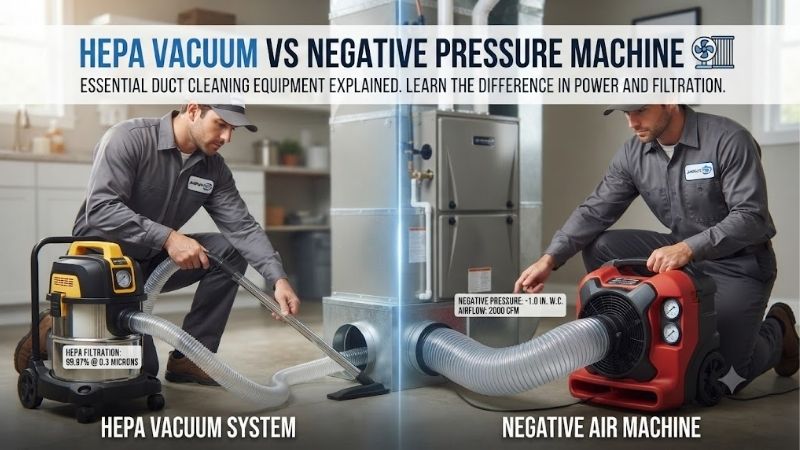
Deciding on a hepa vacuum vs negative pressure machine requires evaluating your job site requirements. Surface remediation calls for direct physical suction, while room containment demands continuous airborne filtration. By analyzing workflow, enclosure size, and hazardous dust types, contractors select the right combination.
Target Cleaning Surface vs Air Volume
When comparing units, consider whether you are targeting settled particles or floating spores. Vacuum systems utilize high static pressure to extract embedded particulate matter directly from drywall, flooring, and framing. Utilizing commercial remediation gear ensures that trapped debris remains captured without leaking into living spaces.
Conversely, negative air machines focus on high volumetric airflow rather than deep surface suction. They continuously pull ambient air through internal filters to trap airborne contaminants across entire rooms. Choosing the correct approach prevents cross-contamination across non-isolated areas during major structural restoration.
Airflow Ratings and Ducting Options
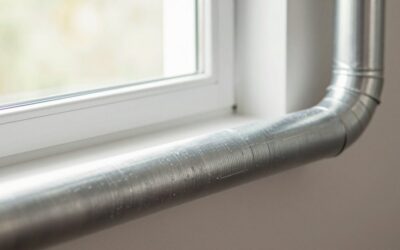
Airflow dynamics dictate how effectively each machine operates within active work zones. Negative pressure equipment typically provides between five hundred and two thousand CFM airflow rating to circulate room air multiple times per hour. Heavy ducting routes exhaust air outdoors, creating a localized vacuum effect inside the workspace.
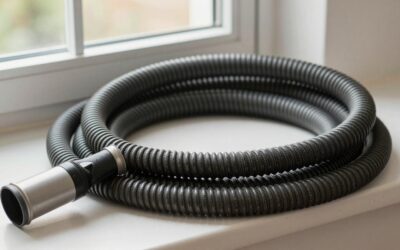
Vacuums deliver lower overall volumetric airflow but generate intense localized suction at the nozzle tip. This targeted airflow allows operators to capture fine hazardous particles directly from crack crevices and porous materials. Ducting is unnecessary here because exhaust air passes through internal sealed systems safely.
Filtration Seal and Certified Standards
True safety relies on certified filtration integrity to prevent microscopic bypass leakage. Both machine categories rely on a certified sealed HEPA filter designed to trap 99.97% of particles down to 0.3 microns. Ensuring a fully gasket-sealed cabinet prevents hazardous dust from escaping through seams around internal blower motors.
Pre-filters play a crucial role in extending the operational lifespan of primary filters. Multi-stage filtration systems capture larger debris first, preventing fine HEPA media from clogging prematurely during intensive sanding or demolition. Inspecting filter indicators guarantees consistent performance across long working hours.
| Feature / Metric | HEPA Vacuum Cleaner | Negative Pressure Machine (Air Scrubber) |
|---|---|---|
| Primary Focus | Surface particulate & dust extraction | Ambient airborne spore & dust filtration |
| Airflow Capacity | Low CFM (90 – 150 CFM), high static pressure | High CFM (500 – 2000 CFM), high volume flow |
| Ducting Capability | Rarely ducted; exhausts internally | Frequently ducted outside to create negative pressure |
| Best Application | Direct cleaning of drywall, carpets, framing | Enclosed room containment & continuous air cleaning |
| Filter Stages | 2 to 3 stages (Bag, Pre-filter, HEPA) | 3 to 4 stages (Pre-filter, Carbon, HEPA) |
Top Picks for Professional and Home Remediation
Selecting the right hepa vacuum vs negative pressure machine model requires choosing reliable commercial equipment. We evaluated top-performing units based on suction efficiency, airflow power, filter longevity, and build quality. The following recommended tools suit various contractor needs and home abatement budgets.
Atrix AHV-1 Omega HEPA Vacuum
Ideal for technicians needing portable surface dust capture in tight residential environments. The Atrix AHV-1 features a self-contained filter cartridge system that prevents loose dust exposure during filter swaps. Its compact, lightweight housing makes transportation between job sites effortless for solo operators handling small jobs.
However, the smaller capacity cartridge requires frequent replacement during heavy demolition work, increasing long-term operational costs. Despite this limitation, it remains an excellent choice for targeted hazardous spot cleaning and localized electronic remediation where convenience and containment are paramount.
Dri-Eaz HEPA 700 Air Scrubber
Designed for restoration crews establishing a secure containment zone setup during mold removal. The Dri-Eaz HEPA 700 offers variable speed airflow up to 700 CFM alongside remote monitoring capabilities via Command Hub. Its stackable roto-molded shell withstands tough job site impacts while maintaining airtight operation.
On the downside, ducting accessories are sold separately, adding to initial setup expenses for full negative air configuration. Nevertheless, its high efficiency and rugged construction make it an industry benchmark for dependable air scrubbing and continuous environmental purification during restoration.
Nilfisk GD930 Industrial HEPA Vacuum
Targeted at professional contractors requiring heavy-duty hazardous particle extraction on floors and surfaces. The Nilfisk GD930 boasts a massive 4-gallon steel container and powerful suction motor. Its large multi-stage filter membrane protects the main HEPA element, ensuring sustained pull during extensive cleanup.
The heavy steel construction makes it somewhat cumbersome to lift up steep stairs or maneuver in narrow attics. However, its outstanding motor longevity, whisper-quiet sound output, and exceptional filtration performance make it a top-tier investment for demanding commercial restoration work.
AlorAir CleanShield HEPA 550
Perfect for flood restoration specialists seeking continuous airborne spore filtration in residential spaces. The AlorAir CleanShield HEPA 550 features an integrated hour meter, GFCI daisy-chain outlets, and a compact footprint. Its intake ducting port allows flexible negative pressure ducting through standard windows.
A noticeable drawback is that maximum fan settings generate significant noise inside smaller enclosed living spaces. Regardless, its reliable motor performance, multi-stage filtration capabilities, and stackable design make it a highly practical air scrubber for professional abatement projects.
ProTeam ProForce 1500XP HEPA Vacuum
Built for facility managers and restoration crews needing versatile air scrubber equipment and surface cleaning agility. The ProTeam ProForce 1500XP upright vacuum uses a dual-motor system to spin the brush roll while maintaining strong suction. Its sealed HEPA filtration traps fine dust before exhaust air re-enters.
Its upright frame can feel top-heavy during prolonged overhead hose attachment use when clearing high ledges. Nevertheless, its exceptional carpet agitation power, robust filtration seal, and commercial durability make it an outstanding tool for daily surface maintenance in impacted spaces.
Frequently Asked Questions
Understanding the distinct roles of a hepa vacuum vs negative pressure machine prevents costly remediation mistakes. Below, we address common questions regarding setup requirements, air exchange rates, filter maintenance, and containment strategies to help you choose the right configuration for your job site.
Can a HEPA vacuum replace a negative air machine?
No, a hepa vacuum vs negative pressure machine serves completely different functions during environmental cleanup. A vacuum cleaner is designed strictly for localized surface dust extraction. It cannot pull ambient room air at sufficient volume to establish environmental containment or continuously clear floating spores.
To safely handle airborne debris, contractors rely on continuous air exchange using ducting systems. While vacuums capture settled dust from surfaces, air machines maintain continuous air purification across the entire room. Combining both tools guarantees thorough remediation without allowing dangerous particles to spread.
When is negative air pressure strictly required?
Negative pressure is necessary whenever hazardous materials are disturbed in enclosed spaces during restoration. Evaluating a hepa vacuum vs negative pressure machine setup reveals that air pressure controls prevent cross-contamination. Ducting air outside creates lower pressure inside, preventing airborne spores from escaping.
Professional restoration standards mandate using a pressure differential monitor to verify continuous negative pressure. This setup ensures that air flows inward toward the containment zone rather than leaking into clean home zones. Without negative pressure, active demolition easily spreads microscopic contaminants elsewhere.
Do air scrubbers exhaust outside the home?
Air scrubbers operate in two distinct modes depending on how ducting is configured by technicians. When choosing a hepa vacuum vs negative pressure machine workflow, exhausting outdoors creates true negative pressure. Venting purified air outside draws fresh air into the workspace through controlled containment entry points.
If ducting outdoors is not feasible, the unit functions as a recirculating air scrubber in the room. This configuration continuously filters room air to achieve effective mold spore removal without altering pressure. However, recirculating air does not prevent air leakage through unsealed containment plastic barriers.
How often should filters be replaced in both?
Filter lifespan depends on dust concentration, operating hours, and pre-filter maintenance routines. Comparing a hepa vacuum vs negative pressure machine shows pre-filters usually require changing after every major project or fifty operating hours. Replacing low-cost pre-filters frequently prevents primary filters from clogging.
Primary HEPA filters typically last between six and twelve months under moderate contractor usage. Most professional machines include pressure gauges or indicator lights that signal when airflow drops significantly. Changing filters promptly preserves motor longevity and maintains peak particle capture efficiency on job sites.
Final Thoughts
Ultimately, understanding the hepa vacuum vs negative pressure machine comparison clarifies how to build an effective containment and cleanup strategy. Combining surface suction with environmental air scrubbing ensures complete particle removal on every restoration job. Invest in certified HEPA equipment today to protect your air.
As an Amazon Associate we earn from qualifying purchases at no extra cost to you.


Write Your Review
No reviews yet. Be the first to share your experience!