
Choosing a rotary duct cleaning kit looks simple until you compare brush diameter, rod length, connector types, and the quality of the included pieces. Many shoppers buy the longest kit available, assume more accessories mean better cleaning, or choose the lowest price without checking whether the rods fit a drill. Those mistakes can leave lint and debris behind—or create a broken brush inside a vent.
- Decide These 3 Things First
- Size: Match Reach and Brush Diameter to the Duct
- Material: Nylon Is Usually the Practical Choice
- Construction: Inspect Every Connection
- Comfort and Performance: Control Beats Maximum Speed
- Price Tiers: Buy the Weakest Kit That Meets the Job
- Warranty and Replacement Support
- Delivery and Assembly
- Spec Checklist
- Red Flags
- FAQ
The right kit depends on the duct’s length, shape, and diameter, plus how often you plan to use it. A dryer vent with two bends needs a flexible system that can navigate turns. A short, mostly straight run may only need 12 to 20 feet of rods. Before buying in 2026, use the guide below to match the kit to the job rather than paying for features you will not use.
As an Amazon Associate we earn from qualifying purchases at no extra cost to you.


Decide These 3 Things First
- Measure the route. Estimate the vent’s total length from the dryer connection to the exterior cap, then add 3 to 5 feet for access and overlap. Most household dryer vents are roughly 4 inches in diameter, but transitions, screens, and tight elbows can reduce usable space.
- Count the bends. A straight or gently curved duct can accept a stiffer rod system. Several 90-degree bends require flexible nylon rods and a brush head that will not jam at each turn.
- Choose the cleaning method. Rotary kits are typically powered by a cordless drill through a threaded adapter. Confirm that the kit includes the adapter and that your drill can run at a low speed, generally around 300 to 600 revolutions per minute. Do not use an impact driver unless the manufacturer specifically permits it.
These three decisions narrow the choice more effectively than the number of included accessories. A 35-foot kit is not automatically better than a 20-foot kit if the longer rods are difficult to control or the brush cannot pass through your duct.
Size: Match Reach and Brush Diameter to the Duct
Length is the first specification shoppers notice, but usable reach matters more than the advertised maximum. A kit rated at 30 feet may include ten 3-foot sections, while another may use 2.5-foot sections. More joints can mean more flexibility, but also more connections to tighten.
For a short dryer run, choose approximately 12 to 20 feet of total rod length. A 20- to 30-foot kit suits many single-story homes and gives you room to work from either end. Choose 30 to 40 feet when the vent exits through a long wall, attic, or crawlspace route. Kits longer than 40 feet are useful for unusual layouts but can be harder to control and store.
Check the brush diameter as carefully as the rod length. A brush around 4 inches wide is a common starting point for standard dryer ducting, but it should not be a tight fit. For a 4-inch duct with seams, a 3.5- to 4-inch brush is generally easier to move than a larger chimney-style head. If the duct is narrow, lined, or heavily bent, a smaller 2.5- to 3-inch brush may reduce snagging.
Do not force a brush through a restriction. Rotary action can loosen debris, but it cannot compensate for a crushed duct or blocked exterior cap. If the vent has major damage or a permanently inaccessible section, professional inspection is safer.
Material: Nylon Is Usually the Practical Choice
Most household rotary kits use flexible nylon rods with a nylon or polypropylene brush. Nylon is light, resistant to ordinary moisture, and flexible enough for the gradual bends found in dryer vents. Look for rods described as reinforced or thick-walled rather than simply “flexible.” Excessively soft rods may bow instead of pushing the brush forward.
Metal rods can provide more stiffness, but they are less forgiving around thin vent walls, joints, and plastic transitions. An exposed metal edge can scratch or puncture a duct. Metal components may make sense for a rigid chimney or specialized cleaning job, but they are not automatically an upgrade for a household dryer vent.
Brush bristles should be firm enough to dislodge lint without feeling like hard wire. A brush with bristles approximately 1 to 2 inches long can sweep the interior surface while still turning through moderate bends. Replace a brush when bristles flatten, separate, or lose their attachment to the hub.
Construction: Inspect Every Connection
A rotary kit is only as reliable as its weakest threaded joint. Before buying, check whether the rods screw together securely and whether the kit includes locking nuts, washers, or a connector designed to resist loosening during rotation. Connections should be easy to tighten by hand but should not wobble once assembled.
Pay attention to the drill adapter. A common design uses a hex shank that fits a standard drill chuck. A 1/4-inch hex shank is convenient for many cordless drills, but the product should state the size rather than leaving compatibility unclear. The adapter should be straight and made from reasonably rigid metal; a bent adapter will create vibration and make the brush harder to guide.
Examine how the brush attaches to the first rod. A permanently fixed brush can be sturdy, while a replaceable brush may be more economical over time. If the kit includes multiple brush shapes, make sure the replacements use the same thread or connector. Loose caps, thin plastic threads, and poorly finished rod ends are warning signs even when the accessory count looks impressive.
Comfort and Performance: Control Beats Maximum Speed
Rotary cleaning is not a race. A cordless drill with a variable-speed trigger and an adjustable clutch gives you more control than a high-powered drill operated at full speed. Begin around 300 rpm, keep the brush moving, and increase speed only if the rod remains stable and the duct manufacturer allows rotary cleaning.
Use short, controlled passes rather than forcing the entire rod into the vent at once. Feed approximately 12 to 18 inches at a time, pause, and reverse slowly to pull debris back toward the access point. This method reduces the chance of a joint separating inside the duct.
Consider storage and handling, too. A 30-foot kit may weigh roughly 2 to 4 pounds before packaging, but its loose rods can be awkward to store. A carrying bag, labeled sections, and a brush-cleaning tool are practical conveniences. If you must work from a ladder or in a cramped laundry area, lighter rods and fewer accessories may improve safety more than extra reach.
Price Tiers: Buy the Weakest Kit That Meets the Job
Budget kits generally cost about $15 to $25. They often include 20 to 30 feet of rods, one brush, and a basic drill adapter. A product such as the approximately $19.99 Holikme 30-foot kit falls into this range. These kits can be suitable for occasional cleaning when the vent is short and mostly straight.
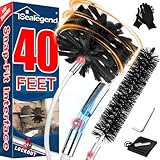
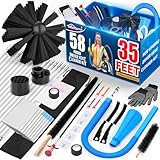
Midrange kits cost approximately $25 to $40. They may offer 30 to 40 feet of reach, sturdier connectors, extra brushes, or more cleaning tools. The roughly $27.99 Sealegend 40-foot kit and the approximately $34.99 Sealegend 35-foot, 58-piece kit illustrate how accessory count can rise in this tier. Count useful components rather than assuming 58 pieces means 58 meaningful upgrades.
Premium household kits generally cost about $40 to $80, although specialty systems can cost more. At this level, look for improved rod construction, replaceable brushes, better cases, clearer instructions, and a more dependable connector system—not merely a longer rod. A $20.99 Holikme 35-foot kit may be a better value than a costlier set if its length and attachment style already fit your vent.
Budget at least $5 to $15 for replacement brushes or small accessories over the life of the kit. A low initial price is less attractive if replacement parts are unavailable.
Warranty and Replacement Support
Many inexpensive cleaning kits have limited warranty information, so read the seller’s policy before purchase. A basic warranty of 30 to 90 days may cover a defective adapter or missing part, while a one-year warranty provides more useful protection for a reusable tool. The warranty should identify whether it covers rods, brush heads, and connectors separately.
Look for a clear replacement path. If the brush wears out but the rods remain sound, purchasing a $5 to $15 replacement head is preferable to replacing the entire kit. Keep the receipt, take a photo of the kit when it arrives, and inspect each connection before first use.
Delivery and Assembly
Most kits require only a few minutes of assembly, but the instructions should explain rod order, brush direction, drill attachment, and recommended speed. Confirm that all sections, end caps, and adapters are included before beginning. A missing connector can turn a 35-foot kit into a much shorter one.
For delivery, check package dimensions and return terms, especially if the kit comes in a long box. Inspect rods for cracks, bent threads, or crushed ends immediately. Do not use a kit with a visibly damaged adapter or a brush that is not centered on its hub. Keep the packaging until you have completed a test rotation outside the duct.
Spec Checklist
| Spec | Budget | Mid | Premium |
|---|---|---|---|
| Typical price | $15–$25 | $25–$40 | $40–$80+ |
| Total rod length | 20–30 ft | 30–40 ft | 35–50 ft |
| Rod sections | 6–10 sections | 10–14 sections | 10–16 reinforced sections |
| Brush diameter | 3–4 in | 3–4 in, often with spare head | Multiple sizes or replaceable heads |
| Drill connection | Basic adapter | Metal hex adapter | Rigid, replaceable adapter |
| Storage | Bag or basic box | Zippered case | Organized case with labeled sections |
| Warranty target | 30–90 days | 90 days–1 year | 1 year or more |
Red Flags
- “Universal” compatibility without a stated rod diameter, brush size, or drill connection.
- Extra-long kits that do not explain how to prevent joints from loosening.
- Brush heads wider than the duct, especially when the product recommends forcing them through bends.
- Adapters made entirely from thin plastic or visibly crooked metal.
- Vague speed guidance, no assembly instructions, or no safety warnings.
- Accessory counts that include tiny caps and duplicate pieces but no replacement brush.
- No information about replacement parts, returns, or warranty coverage.
FAQ
How long should a rotary duct cleaning kit be?
Choose at least 5 feet more than your estimated duct route. A 20- to 30-foot kit works for many short runs, while a 30- to 40-foot kit is more versatile for long walls, attics, and crawlspaces. Extra length is useful only if you can control the rods and keep every joint tight.
Can I use a rotary duct cleaning kit with any drill?
Use a standard cordless or corded drill with a compatible chuck, variable-speed control, and a low-speed setting. Start around 300 to 600 rpm. Avoid impact mode and do not operate at maximum speed unless the instructions specifically allow it.
What brush size is best for a 4-inch dryer vent?
A brush around 3.5 to 4 inches is a practical starting point, provided the duct is clear enough for it to pass. A smaller 2.5- to 3-inch brush may be better for tight bends or damaged sections. Never force a brush through a restriction.
How often should I use the kit?
Inspect and clean the dryer vent at least once a year, and do it sooner if drying takes longer, clothes feel unusually hot, or the exterior airflow is weak. Clean the lint screen after every load and stop using the dryer if you notice burning odors or overheating.
Ready to decide? Our #1 pick for 2026 is the Typical price.
Live price & availability on Amazon.


Write Your Review
No reviews yet. Be the first to share your experience!