
Mold in air ducts vs dust presents a critical diagnostic dilemma for concerned homeowners managing system cleanliness. While ordinary vent dust creates dry gray surface accumulation, toxic mold growth thrives on excess moisture and releases dangerous spores. Identifying these contaminants protects health and HVAC efficiency.
How to Choose the Right Mold in Air Ducts vs Dust Solutions
Evaluating the difference between mold in air ducts vs dust requires checking moisture sources, spot patterns, and persistent room smells. Pinpointing whether your vents suffer from dry particulate buildup or active fungal growth prevents unnecessary cleaning fees. Accurate diagnosis keeps your home heating safe.
Evaluating Visual Appearance and Texture
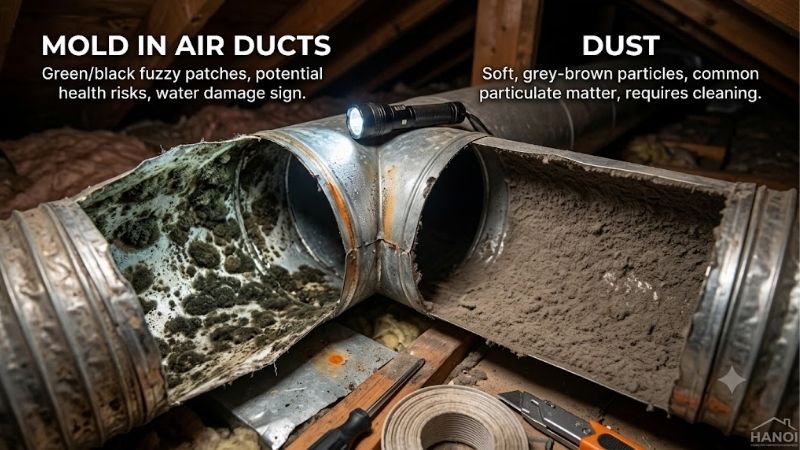
Examining vent deposits closely helps homeowners distinguish harmless dust clumps from dangerous mold colonies. Ordinary dust appears light gray, dry, and powdery along metal register edges, clinging loosely to metal grilles. Conversely, active fungal growth displays dark green or black spots with slimy or fuzzy raised textures.
Spotting irregular specks that smear wetly when wiped indicates active organic growth rather than dry environmental debris. If gray accumulation blows off metal grilles easily with compressed air, your system likely suffers from basic dust. Performing careful visual checks prevents confusing harmless dirt with mold.
Checking Odor Characteristics and Moisture
Monitoring household scent changes provides immediate clues when differentiating mold in air ducts vs dust deposits. Basic duct dust emits a brief stale smell when your heating furnace starts up after long idle periods. In contrast, active mold infestation generates persistent damp, earthy, and musty odor signals.
Excessive relative humidity levels above sixty percent create ideal breeding conditions for fungal spores inside unconditioned supply shafts. Checking metal air plenums for standing water or leaking air handler drain pans reveals active dampness. Eliminating excess moisture stops dangerous organic growth permanently.
Monitoring Health Symptoms and Air Quality
Tracking family health reactions helps determine if ventilation channels contain toxic mold spores or routine dust particles. Standard dust accumulation might trigger mild sneezing or temporary eye tickles in sensitive individuals. However, active mold growth causes persistent respiratory irritation and severe allergic reactions.
Continuous exposure to mycotoxin particles can trigger chronic sinus congestion, unexplained fatigue, and persistent coughing spells. Utilizing digital particle counters measures airborne particulate density versus organic chemical vapors objectively. Monitoring health patterns ensures timely intervention for clean home air.
Top Picks for Identifying and Treating HVAC Contaminants
Selecting reliable diagnostic tools and cleaners helps manage mold in air ducts vs dust issues effectively. We reviewed top Amazon products capable of inspecting hidden channels, testing active spores, and scrubbing coils. These proven tools empower homeowners to maintain clean, safe home ventilation systems.
DEPSTECH DS300 Industrial Endoscope
Ideal for DIY home inspectors, this borescope camera lets you inspect dark supply vents without opening ductwork walls. Its bright 1080P color display and semi-rigid probe cable stream live video, helping you spot dark fungal clusters versus gray dust. It offers clear visual proof of internal vent conditions.
Guiding the semi-rigid probe cable around tight ninety-degree elbows requires patient manual handling to avoid twisting inside metal ducts. However, its built-in LED lights and long cable length eliminate guesswork when checking hidden channels. It serves as an essential tool for evaluating duct cleanliness.
Mold Armor FG500 Do-It-Yourself Mold Test Kit
Designed for concerned homeowners, this easy DIY mold test kit verifies if dark vent spots contain live fungal spores. The included petri dishes and growth media let you sample air register grilles directly, confirming whether gray dust holds active mold. It delivers affordable lab-quality home testing results.
Waiting forty-eight hours for culture incubation requires patience before sending samples to official laboratories for detailed strain identification. Nevertheless, its quick initial color change offers immediate proof of active fungal contamination. It helps homeowners avoid paying for unnecessary duct cleaning.
Temtop M10 Air Quality Monitor
Perfect for continuous indoor air quality tracking, this compact sensor measures real-time particulate density and organic pollutants. High-precision optical sensors detect fine dust spikes alongside volatile organic compounds, helping you evaluate ventilation air safety. It provides objective data for home maintenance.
The internal rechargeable battery lasts a few days on portable settings, requiring continuous USB power connection for long-term monitoring. Despite minor charging needs, its clear digital screen instantly alerts you to rising airborne particle counts. It acts as a reliable sentinel for whole-house air safety.
LEVOIT Core 300 Air Purifier
Built for living rooms and bedrooms, this compact air purifier uses 3-stage filtration to trap floating dust and mold spores. Its high-efficiency HEPA filter rapidly circulates indoor air, capturing fine particulate matter before it enters return vents. It offers immediate relief from household air irritants.
Replacing filter cartridges every six months adds recurring maintenance expenses over long periods of continuous operation. However, its whisper-quiet sleep mode and high CADR air turnover keep room atmospheres fresh without disruptive motor noise. It remains an excellent investment for clean indoor air defense.
Nu-Calgon 4171-75 Evap Foam No Rinse Cleaner
Designed for HVAC coil maintenance, this heavy-duty foaming cleaner breaks down dirt, dust, and organic grime on evaporator coils. Its self-rinsing aerosol spray penetrates deep between aluminum fins, neutralizing musty odors at the moisture source. It provides professional-grade cleaning for home air handlers.
Applying the expanding foam requires turning off system power and allowing complete drainage time before restarting heating or cooling equipment. Nevertheless, its heavy-duty cleaning action restores heat exchanger efficiency without manual scrubbing. It offers a fast solution for refreshing dirty air channels.
| Product Name | Category | Key Benefit | Best Application |
|---|---|---|---|
| DEPSTECH DS300 | Inspection Camera | Standalone 1080P screen display | Spotting internal mold vs dust |
| Mold Armor FG500 | DIY Mold Test Kit | Live fungal spore identification | Testing air register grilles |
| Temtop M10 Monitor | Air Quality Sensor | Real-time TVOC & PM2.5 tracking | Tracking particulate & mold vapors |
| LEVOIT Core 300 | HEPA Air Purifier | High CADR 3-stage air scrubbing | Trapping floating dust & spores |
| Nu-Calgon Evap Foam | Coil Foam Cleaner | Self-rinsing heavy foaming action | Cleaning evaporator coil moisture |
Frequently Asked Questions
Homeowners frequently ask critical questions regarding mold in air ducts vs dust when inspecting their HVAC systems. Understanding how moisture and airflow impact internal vent cleanliness helps you make smart maintenance decisions. Here are expert answers to common questions about managing home air channels.
Can dust in air ducts turn into mold?
Understanding mold in air ducts vs dust requires recognizing that dry dust itself cannot turn into mold without active water exposure. However, settled dust contains organic skin flakes and wood fibers that act as food for microscopic spores. When duct condensation occurs, fungal growth rapidly colonizes dust.
Controlling attic air leak gaps and maintaining indoor relative humidity below fifty percent prevents settled dust from dampening. Using high-MERV air filters stops dust accumulation inside return shafts, removing potential organic food sources. Preventive moisture control keeps your ventilation system clean.
How can you tell if black spots in vents are mold or dust?
Differentiating dark spots involves testing surface moisture, texture, and pattern distribution across air register grilles. Ordinary soot or dark dust forms flat, dry smudges that wipe away easily with dry paper towels. Conversely, black mold forms raised, fuzzy, or slimy spots that grow in circular cluster patterns.
Using a swab test kit provides definitive chemical confirmation of active fungal spores versus harmless carbon dust. If dark specks reappear rapidly after cleaning with bleach solutions, active moisture inside ducts is feeding mold growth. Visual and chemical verification prevents misdiagnosing vent issues.
Is breathing duct dust as harmful as breathing mold?
While breathing heavy duct dust can cause mild coughing and nasal congestion, inhaling toxic mold spores poses significantly higher health risks. Dust consists primarily of inert soil, pet dander, and textile fibers. In contrast, active fungal colonies release volatile organic compounds and hazardous mycotoxins.
Long-term exposure to fungal spores can trigger chronic respiratory illness, severe asthma flare-ups, and systemic immune inflammation. Upgrading furnace air filters traps fine dust while installing UV lights kills airborne spores inside air handlers. Protecting whole-house ventilation preserves family health.
Does cleaning ducts remove mold permanently?
Physical duct vacuuming removes accumulated dust and surface mold colonies, but cleaning alone will not prevent mold from returning. If underlying evaporator coil moisture or roof leaks remain unfixed, fresh mold spores will recolonize damp duct walls. Resolving moisture issues is essential for lasting results.
Sealing leaking duct joints and lowering indoor humidity stops condensation from forming inside unconditioned attic channels. Combining thorough mechanical cleaning with permanent moisture control eliminates fungal growth long term. Addressing root causes protects your home HVAC equipment investment.
Final Thoughts
Evaluating mold in air ducts vs dust requires checking moisture levels, odor persistence, and surface spot textures carefully. While dry dust requires basic vacuuming and filter changes, active mold demands immediate moisture repair and antimicrobial cleaning. Utilizing diagnostic tools preserves healthy indoor air quality.
As an Amazon Associate we earn from qualifying purchases at no extra cost to you.






Write Your Review
No reviews yet. Be the first to share your experience!