
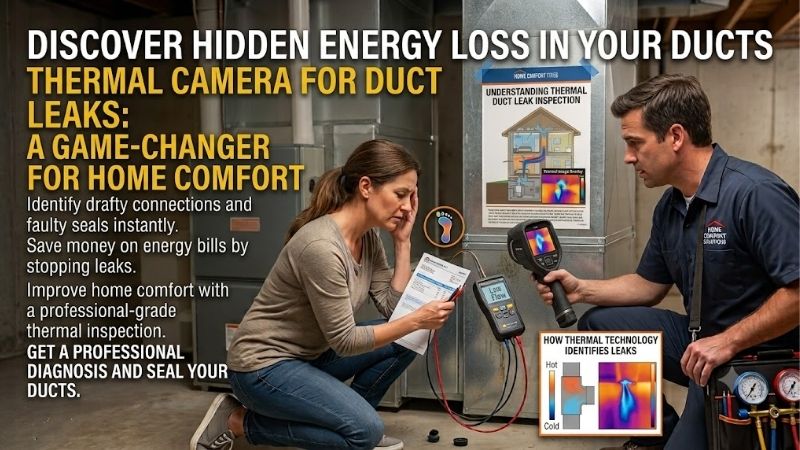
Thermal camera for duct leaks helps you locate hidden temperature anomalies across residential heating and cooling ductwork effortlessly. Using visual infrared imaging, this specialized diagnostic device pinpoints air leaks behind sheetrock without invasive wall cuts. Securing intact duct seals improves system efficiency.
How to Choose the Right Thermal Camera for Duct Leaks
Selecting the best thermal camera for duct leaks requires balancing sensor accuracy, battery performance, and software capability. Choosing an effective infrared thermal imager ensures you find drafty connection gaps across supply plenums quickly before investing money in expensive professional home repairs.
Thermal Sensitivity and Detector Range
High thermal sensitivity lets you detect faint temperature variances created by leaking conditioned air. When inspecting unconditioned attic trunks, lower noise equivalent temperature differences reveal tiny airflow gaps without needing extreme temperature splits between indoor living spaces and exterior ambient weather.
Checking total operating temperature range guarantees reliable field performance in hot attics or freezing basements. Equipment with tight thermal tolerances produces crisp visual imagery across sheetrock boundaries, allowing home inspectors to target mastic sealing precisely where HVAC energy losses occur most.
Thermal Imaging Resolution and Visual Blending
Sensor pixel count directly influences image sharpness when scanning concealed residential ductwork. A higher thermal imaging resolution reveals clear outlines of unsealed joint seams, eliminating blurry thermal blobs that make identifying precise air escape points frustrating during routine home maintenance audits.
Blending visible light imagery with thermal overlays makes spatial orientation much simpler inside dark spaces. Visual outline blending embosses physical edges directly onto heat maps, helping homeowners recognize exact vent positions, joist gaps, and insulation tears without guessing structural layout locations.
Form Factor and Field Ergonomics
Compact handheld instruments or smartphone dongles offer superior mobility in cramped residential crawlspaces. Choosing an ergonomic HVAC diagnostic tool reduces wrist fatigue when reaching over tall ceiling joists or scanning behind tight furnace cabinets during detailed ductwork integrity evaluations.
Ruggedized outer casings protect sensitive internal optics from accidental drops on hard concrete floors. Durable IP-rated enclosures safeguard delicate thermal sensors against dust accumulation, humidity, and minor bumps, ensuring long service life throughout years of home improvement diagnostic projects.
Battery Life and Image Capture Capabilities
Extended battery operating time ensures uninterrupted diagnostic scans across multi-story residential structures. Selecting a reliable air draft detector equipped with fast USB charging or swappable lithium battery packs prevents annoying mid-inspection shutdowns when inspecting complex ductwork branching systems.
Onboard photo storage allows DIYers to save thermal radiometric images for post-test analysis or contractor reports. Dedicated reporting software simplifies documenting before-and-after duct sealing results, helping you quantify overall efficiency improvements and home heating cost reductions accurately.
| Feature Category | Recommended Resolution | Thermal Sensitivity | Primary Advantage | Best Home Application |
|---|---|---|---|---|
| Standalone Handheld | 160 x 120 pixels | < 0.07°C | Rugged all-in-one body | Full house attic & basement audits |
| Smartphone Plugin | 256 x 192 pixels | < 0.05°C | High detail, pocket size | Quick room-by-room spot checks |
| Compact Point-Shoot | 80 x 60 pixels | < 0.10°C | Easy laser target pointer | Basic joint gap & vent inspection |
| Advanced Radiometric | 320 x 240 pixels | < 0.04°C | Precise temp measurement | Complex HVAC & electrical audits |
Top Picks
Choosing a reliable thermal camera for duct leaks requires evaluating real-world sensor performance and physical durability. Performing a thorough HVAC energy audit becomes effortless when using field-tested equipment. The top recommendations below deliver outstanding accuracy for home energy diagnostics.
FLIR TG165-X Thermal Camera
The FLIR TG165-X suits homeowners seeking an intuitive thermal camera for duct leaks with visual edge enhancement. Featuring patented MSX technology and a laser pointer, this FLIR thermal camera embosses structural details onto thermal maps, making unsealed plenum seams instantly visible during inspections.
Its thermal screen resolution is slightly lower than dedicated professional inspection rigs, requiring closer distance scans in large rooms. Nevertheless, its rugged IP54 housing, drop resistance, and reliable bullseye laser guidance make it a top recommendation for residential energy troubleshooting tasks.
Seek Thermal Compact Imager
Designed for smartphone users, the Seek Thermal Compact attaches directly to mobile devices for quick inspections. Functioning as a high-resolution thermal leak detector, it provides a wide detection range, helping homeowners trace cold or hot air leakage across long duct lines without carrying heavy equipment.
The device depends entirely on your phone battery, which can drain mobile power during extended attic inspections. Despite this minor drawback, its ultra-compact size, sharp sensor resolution, and versatile mobile application controls offer exceptional value for convenient home airflow diagnostic scans.
Klein Tools TI250 Rechargeable Imager
The Klein Tools TI250 targets DIY enthusiasts needing a straightforward tool to detect ductwork air leaks easily. Featuring an intuitive user interface and high/low temperature point tracking, this standalone imager displays unseen hot spots clearly, allowing fast isolation of unsealed furnace transitions.
It lacks visual light image blending, making target orientation in uniform wall spaces somewhat tricky without reference marks. However, its affordable price tag, sturdy construction, and simple MicroSD image saving make it an indispensable asset for routine home energy maintenance procedures.
TOPDON TC001 Thermal Camera
The TOPDON TC001 is ideal for homeowners wanting high infrared thermal imager resolution via an Android smartphone connection. Packing a 256×192 thermal core, it captures high-detail heat distribution maps, allowing precise identification of hairline cracks along metal supply trunks in dark crawlspaces.
The USB connector fit can feel loose on bulky phone protective cases, requiring specialized adapter extensions occasionally. Overall, its impressive thermal image detail, smooth frame rates, and advanced mobile temperature graphing software easily justify its position as a standout diagnostic tool.
PerfectPrime IR0002 Thermal Imager
The PerfectPrime IR0002 caters to budget-focused users aiming for simple heat loss detection around home air vents. Offering lightweight handheld operation and basic thermal overlay options, this camera highlights surface temperature differentials clearly to assist in fast room-by-room insulation evaluations.
Its internal rechargeable battery offers shorter operating times compared to premium units, requiring periodic recharges during multi-room audits. Nonetheless, its entry-level affordability, easy screen navigation, and solid thermal performance provide high utility for occasional DIY home inspection projects.
Frequently Asked Questions
Understanding how to operate a thermal camera for duct leaks ensures accurate diagnosis of residential airflow issues. Addressing common home energy inspection questions helps you optimize your research approach, locate hidden ductwork air leaks safely, and achieve maximum HVAC cooling performance.
Can thermal cameras detect air leaks behind sheetrock?
Yes, infrared cameras detect surface temperature changes caused by leaking air impinging on interior drywall surfaces. While infrared optics cannot see through solid wall materials directly, high thermal sensitivity reveals hot or cold spots created by air moving through unsealed wall cavities.
For optimal visual results, run your HVAC blower with heating or cooling engaged to create a strong temperature differential. This thermal variance makes hidden duct connection gaps show up vividly on screen, allowing precise location targeting before making minor repair openings in sheetrock.
What temperature difference is required for thermal scanning?
A minimum delta temperature of 10 to 15 degrees Fahrenheit between indoor conditioned air and ambient duct spaces is recommended. Sufficient thermal contrast ensures clear heat loss detection, preventing faint air leak signatures from blending into surrounding building structural framing.
Testing during hot summer afternoons or cold winter mornings yields the most distinct thermal imagery across sheetrock ceilings. Maximizing temperature differences enhances visual contrast, ensuring even tiny return plenum gaps show up clearly on digital thermal displays during DIY inspections.
Are smartphone thermal cameras reliable for home DIY audits?
Modern smartphone thermal cameras deliver impressive sensor resolution and sensitivity that rival entry-level professional tools. Utilizing your phone’s screen and processing power, a compact air draft detector dongle offers high-definition thermal imaging at a fraction of standalone camera costs.
While mobile dongles require careful handling near hot furnace components, their advanced software allows rapid image sharing and detailed point analysis. They represent an outstanding, cost-effective choice for homeowners performing routine airflow audits around accessible ductwork runs.
Where are duct leaks most frequently detected during scans?
Duct leaks occur most commonly at connection joints between supply plenums, main trunk lines, and individual branch takeoffs. Using a thermal leak detector around air filter slots, return grilles, and flexible duct connections quickly reveals loose tape or unsealed sheet metal seams in unconditioned spaces.
Inspecting unconditioned attics, basements, and crawlspaces first yields the highest diagnostic payoff during home audits. Sealing identified seam gaps with mastic sealant or approved foil tape immediately improves HVAC system efficiency, restores air balance, and lowers monthly electric bills.
Final Thoughts
Investing in a thermal camera for duct leaks is a practical way to pinpoint energy waste and restore home comfort. By identifying hidden airflow losses accurately, you can execute targeted air sealing without unnecessary wall damage. Start your home HVAC energy audit today to optimize performance.
Product links and buying checks
As an Amazon Associate, we earn from qualifying purchases.
- FLIR TG165-X thermal camera on Amazon — Check the exact model, selected variant and seller before ordering.
Prices, availability and included accessories can change. Review the current listing and the compatibility guidance above before purchasing.
As an Amazon Associate we earn from qualifying purchases at no extra cost to you.






Write Your Review
No reviews yet. Be the first to share your experience!