
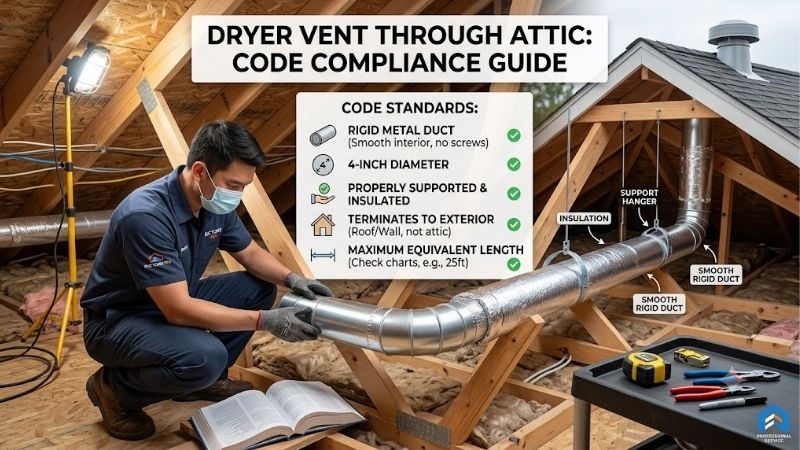
Dryer vent through attic code regulations safeguard properties from hidden moisture accumulation hazards and fire dangers. Navigating complex attic spaces requires installing smooth rigid metal piping, insulating unconditioned runs, and exhausting directly outdoors. Adhering to standards ensures safe laundry performance.
How to Choose the Right Dryer Vent Through Attic Code Setup
Understanding dryer vent through attic code rules allows homeowners to route piping safely across an unconditioned space. Evaluating thermal insulation, metal pipe rigidity, and exterior termination caps prevents structural decay. Selecting approved materials maintains continuous ventilation safety for modern laundry spaces.
Mandate Thermal Pipe Insulation
Applying a thermal insulation sleeve around metal ductwork in cold attic spaces prevents interior moisture condensation. Uninsulated metal piping causes warm exhaust vapors to liquefy quickly and flow back into ceiling drywall. Securing thick fiberglass insulation maintains elevated exhaust temperatures until air exits.
Inspectors check insulation density along the entire concealed pathway during standard residential audits. Wrapping duct joints tightly prevents cold drafts from cooling the metal wall during long operational runs. Maintaining warm exhaust streams protects attic roof structures from severe wood rot and mildew growth over time.
Install Smooth Rigid Piping
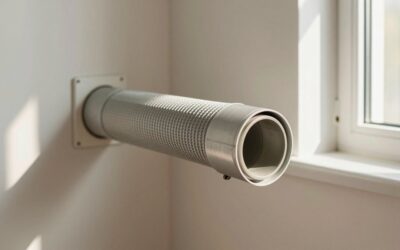
A compliant dryer vent through attic code setup strictly mandates using a rigid galvanized duct inside ceiling cavities. Ribbed flexible plastic or foil hoses create heavy lint traps that ignite under high appliance heat. Smooth internal walls ensure lint fibers discharge completely to exterior exit hoods.
Securing rigid metal pipe sections with heavy aluminum foil tape preserves airtight mechanical seals across joists. Installers must avoid sheet metal screws because exposed threads catch floating lint and cause blockages. Smooth galvanized construction delivers unmatched durability and structural fire resistance.
Ensure Direct Exterior Exhaust
Venting moist laundry air directly through an exterior roof cap guarantees effective condensation prevention throughout upper levels. Terminating exhaust lines inside attics releases hundreds of gallons of water vapor into roof trusses yearly. Direct penetration ensures moisture clears the structural thermal envelope safely.
Installing dedicated dampers at exterior exit points blocks wind drafts while preventing pest access inside piping. Verifying that wall or roof hoods remain free from fine mesh screens prevents fatal lint buildup hazards. Direct discharge routes maintain healthy indoor air quality across living quarters.
Top Picks for Attic Dryer Venting Equipment
Applying dryer vent through attic code guidelines alongside verified equipment keeps home exhaust lines fully compliant. We evaluated top-rated galvanized pipes, pipe insulation wraps, roof termination caps, and booster fans on Amazon. The following tools provide reliable operation and long-term fire protection.
Imperial 4-Inch Rigid Galvanized Duct Pipe
Designed for homeowners meeting strict building code compliance standards, this heavy-duty metal pipe handles concealed ceiling runs. Its smooth galvanized steel interior minimizes friction, allowing moist lint to discharge without catching. Pre-crimped ends allow seamless joining across long attic distances.
Handling sharp sheet metal edges demands thick work gloves during installation within cramped attic rafters. Nevertheless, its non-combustible rigid structure provides total fire safety that flexible hoses cannot match. It serves as the permanent gold standard pipe material for ceiling exhaust systems.
Frost King 4-Inch Foil and Fiberglass Duct Wrap
Ideal for DIYers insulating attic runs, this dense blanket wrap prevents exhaust backpressure caused by cooling vapor. Thick fiberglass layer covered by reflective foil holds internal temperatures high until air exits outdoors. Universal dimensions wrap easily around standard four-inch metal exhaust piping.
Taping edges firmly with metallic foil tape takes patience when maneuvering around tight roof trusses. Even so, its thermal barrier prevents condensation from dripping into ceiling drywall during winter months. It remains an essential inexpensive upgrade for cold attic ventilation installations.
Builder’s Best Heavy Duty Steel Roof Vent Cap
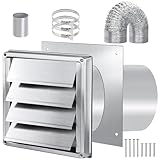
Tailored for homeowners terminating exhaust lines through shingles, this sturdy cap eliminates moisture accumulation hazard risks. Heavy galvanized steel construction withstands harsh weather while the built-in damper blocks cold air backdrafts. Wide discharge mouth lets heavy exhaust flow outward without friction.
Securing flashing underneath roof shingles requires careful waterproofing sealant application during exterior roof work. Regardless, its screenless louvered mouth prevents fiber clogs while stopping pests from entering the home. It delivers durable weather protection for vertical attic vent terminations.
Tjernlund DB2F Automatic Dryer Booster Fan
Engineered for long vertical duct runs exceeding code length limits, this inline blower solves roof jack vent resistance. Integrated pressure sensors switch the fan on automatically whenever the clothes dryer starts running. Heavy steel housing operates quietly while maintaining strong velocity to the roof.
Hardwired electrical setup requires basic wiring skills or professional electrician help inside attic spaces. Nonetheless, its powerful air assist prevents lint settling along extended vertical duct paths effectively. It provides an ideal solution for complex home layouts facing severe run restrictions.
MagVent MV-180 Magnetic Dryer Vent Coupling
Perfect for connecting laundry units to wall piping, this magnetic fitting aligns with a roof termination cap setup. Strong neodymium magnets form an airtight seal without crushing fragile transition hoses behind the dryer. High-grade materials resist high exhaust heat during heavy laundry cycles.
Initial mounting requires careful wall measurement to align magnetic plates accurately in tight utility spaces. However, its quick-release coupling simplifies routine cleaning access and eliminates hidden duct kinks. It serves as an innovative connection upgrade for restricted utility closets.
| Equipment / Tool Name | Primary Function | Core Code Benefit | Best Suited For |
|---|---|---|---|
| Imperial Rigid Duct | Main exhaust conduit | Non-combustible safety | Ceiling cavity runs |
| Frost King Duct Wrap | Thermal pipe insulation | Condensation prevention | Unconditioned attics |
| Builder’s Best Roof Cap | Outdoor roof exit | Backdraft & weather seal | Roof penetrations |
| Tjernlund Booster Fan | Auxiliary airflow velocity | Overcomes length limits | Extended runs >35 ft |
| MagVent MV-180 Coupling | Wall transition connection | Prevents duct crushing | Tight laundry closets |
Frequently Asked Questions
Reviewing dryer vent through attic code standards raises frequent technical questions regarding home ventilation safety. Understanding insulation needs, screening rules, and backdraft dampers ensures safe appliance performance. Below are clear expert answers regarding self-closing louver setups and attic rules.
Can a dryer vent terminate directly inside an attic?
Enforcing a dryer vent through attic code rule strictly prohibits terminating exhaust lines inside an attic unconditioned space. Discharging warm moist air into roof cavities creates massive mold growth and structural timber decay. All exhaust ducting must extend completely to exterior exit hoods.
Installing continuous metal piping ensures that humid air and airborne lint discharge safely outdoors without touching attic insulation. Unvented moisture quickly ruins drywall and causes costly structural remediation. Direct outdoor termination protects your home from severe internal water damage.
Why must attic dryer vents be wrapped in insulation?
Attic spaces experience extreme temperature drops during winter, causing hot exhaust vapors to cool and condense inside metal pipes. Applying a thermal insulation sleeve maintains internal air temperatures so moisture stays vaporized until it exits. Uninsulated pipes allow water to pool inside ducting.
Pooled water attracts floating lint, creating heavy sludge that blocks airflow and strains dryer blowers. Insulating the entire attic run prevents water pooling while reducing hazardous backpressure behind the appliance. Proper insulation preserves drying efficiency throughout freezing winter weather.
Is flexible foil ducting allowed in attic spaces?
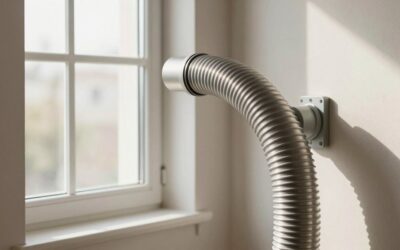
Building regulations strictly ban flexible plastic or foil accordions inside concealed attic spaces, requiring a rigid galvanized duct instead. Flexible ducting features ribbed walls that trap flammable fibers and sag over joists. Sagging sections collect heavy moisture pockets that obstruct air movement.
Replacing flexible hoses with smooth rigid metal piping guarantees clear airflow pathways and superior structural fire resistance. Smooth metal surfaces allow lint fibers to pass freely without catching on internal ridges. Installing rigid metal remains mandatory for all concealed ceiling spaces.
Are screens allowed on attic roof vent termination caps?
Roof exit caps must never feature fine wire screens because floating lint clogs mesh openings rapidly, preventing condensation prevention. Clogged cap screens create severe backpressure that traps extreme heat inside the exhaust line. Code standards require screenless dampers that swing open freely.
Installing spring-loaded or gravity flaps blocks pest entry while allowing lint-laden air to discharge without obstruction. Homeowners should inspect roof caps periodically to ensure dampers operate smoothly without binding. Clean exterior terminations guarantee safe continuous exhaust ventilation.
Final Thoughts
Adhering to dryer vent through attic code standards ensures your laundry setup maintains proper airflow, fire safety, and moisture control. Insulating rigid metal piping and terminating lines through exterior roof caps protects structural framing from rot. Follow these code guidelines to preserve home safety and dryer performance.
As an Amazon Associate we earn from qualifying purchases at no extra cost to you.





Write Your Review
No reviews yet. Be the first to share your experience!