
- Top Pick: Duct Vacuum Attachment for Shop Vac, HVAC Cleaning Tool for Air Vent, Shop Vac Accessory with Strong Seal for Supply Nozzle(3in*9in) (Black)
- Best Value: Holikme Dryer Vent Cleaner Kit, Vacuum Hose Attachment, 2-Piece, Blue
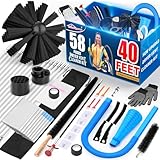
- Premium Choice: Sealegend 58-Pieces 40-Feet Dryer Vent Cleaner Kit, Dryer Cleaning Tools
A duct vacuum buying guide for homeowners should begin with one important distinction: “duct cleaning” can mean several different jobs. Removing lint from a short dryer vent is not the same as reaching dust several feet into an HVAC supply run, and neither task is automatically solved by buying the most powerful shop vacuum.
Homeowners commonly make four mistakes. They buy an attachment without checking hose diameter, assume a flexible brush can navigate every bend, choose a kit based on the number of pieces instead of useful reach, or expect a small vacuum to remove heavy debris from an entire duct system. Some also overlook sealing: a tool that leaks around the vent opening can lose suction, spread dust, and make the job slower.
As an Amazon Associate we earn from qualifying purchases at no extra cost to you.



This 2026 guide focuses on practical equipment for light residential maintenance, dryer vents, registers, and reachable duct sections. It does not replace professional cleaning when ducts contain mold, standing water, vermin, construction debris, or suspected asbestos. Before shopping, identify the task, measure the connection, and decide how much cleaning you will actually do.
Decide These 3 Things First
- What are you cleaning? A dryer vent usually needs a narrow brush and flexible rods. A floor register or supply nozzle may benefit from a wider, sealed vacuum attachment. Whole-system HVAC cleaning generally requires commercial equipment and access to multiple branches.
- How far must the tool reach? Measure from the access point to the suspected buildup. Basic dryer tools may reach about 4 to 12 feet; longer kits can extend 20 to 40 feet, but extra length is useful only if the rods remain controllable.
- What vacuum will power it? Check the vacuum hose’s inside diameter, typically 1-1/4, 1-1/2, or 2 inches. Also check whether the vacuum is wet/dry rated and whether an adapter is included. A universal claim is not a substitute for measurements.
Size and Reach
Size affects both access and performance. For dryer vents, a brush head around 1-1/2 to 3 inches wide can fit many residential runs, but the vent opening and internal elbows determine the practical limit. A rod kit with 6-inch sections is easier to steer around bends than a single long, rigid shaft. Look for enough rod length to reach the exterior termination or the full interior run, usually 8 to 15 feet for routine maintenance.
Longer systems, such as 20- to 40-foot kits, can be useful for unusually long dryer ducts or straight HVAC runs. However, length creates more friction and makes weak connections more likely to separate. Do not assume a 40-foot kit cleans 40 feet effectively through several sharp turns.
For register cleaning, compare the nozzle’s face dimensions with the grille opening. A rectangular attachment around 3 by 9 inches may cover a supply register efficiently, while a narrow crevice tool works better around edges and between fins. Measure the opening, not just the visible grille.
Material and Flexibility
Brush bristles should be firm enough to loosen lint but not so abrasive that they scratch painted metal or damage a flexible liner. Nylon is a common choice for general dryer maintenance. Soft-bristle tools are preferable around delicate grilles, while overly stiff wire brushes deserve caution unless the manufacturer specifically approves them for the application.
Rods are commonly made from plastic, fiberglass, or metal. Plastic rods are light and inexpensive, but their threaded ends can strip if overtightened. Fiberglass provides a useful balance of rigidity and flexibility. Metal rods can be durable, yet they may scratch duct interiors, conduct electricity near wiring, or kink at tight bends. For most homeowners, fiberglass or reinforced polymer rods in the 1/4- to 3/8-inch diameter range are easier to control.
Look for a hose that bends without collapsing. A 4- to 6-foot flexible hose is adequate for many attachment jobs; longer hoses improve reach but can reduce effective suction. Smooth interiors usually collect less debris than heavily ribbed hoses.
Construction and Connection Security
Inspect how each joint is made. Threaded rod connections should engage by several turns and should not wobble when lightly flexed. Push-fit vacuum adapters should seat fully over the hose, with a step-down or step-up profile that matches your equipment. A loose connection can be more damaging than a modestly lower advertised suction figure.
For an HVAC attachment, prioritize a broad sealing skirt or gasket around the supply nozzle. A useful seal should compress slightly against the register without requiring excessive force. Some attachments include foam or rubber edging; others rely on a molded plastic lip. If the product has no sealing surface, you may need to hold it tightly against the grille, which is tiring and less effective.
Check whether the kit includes a cap, clamp, or debris screen. A screen can help prevent large lint clumps from entering the vacuum hose, while a collection bag or canister filter reduces cleanup. Never remove the vacuum’s required filter simply to increase airflow.
Comfort and Performance
Performance is not just motor wattage. Airflow, hose restriction, seal quality, and filter condition all matter. A compact shop vacuum may use roughly 3 to 6 peak horsepower in its marketing language, but peak horsepower is not a standardized measure of cleaning performance. If the manufacturer provides airflow, a figure around 60 to 100 cubic feet per minute can be useful for light attachment work, but do not compare numbers from different measurement methods as if they were lab-equivalent.
For a handheld job, total tool weight matters. A hose, wand, and brush assembly weighing about 2 to 4 pounds is manageable for most people. Long rods become awkward when held overhead, so clean from a stable ladder only when necessary and keep the vacuum on the floor. A shoulder strap, handle, or low-friction brush can make a greater practical difference than a larger motor.
Noise is another consideration. Many shop vacuums exceed 75 decibels, so hearing protection is sensible during extended cleaning. Choose a vacuum with a sealed, washable or replaceable filter appropriate to fine dust. Stop if the vacuum overheats, loses suction, or begins to smell hot.
Price Tiers
Budget tools generally cost about $4 to $15. A simple universal dryer attachment in the $4 range may be enough for occasional lint removal when the hose fit is correct. These products often include little more than a narrow adapter, so expect limited reach, basic plastic, and no meaningful warranty.
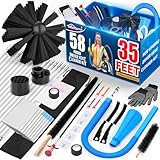
Midrange kits usually cost $15 to $45. This is where you will find brush-and-rod sets, flexible hoses, multiple adapters, and better connection hardware. A two-piece dryer cleaner around $7.59 is still an entry-level purchase, while a 40-foot, multi-piece kit around $39.99 is a midrange option if you genuinely need its reach. Count usable components rather than total pieces; several nearly identical adapters do not add much value.
Specialized HVAC attachments often fall between $25 and $60. An attachment priced near $35 may be worthwhile when it has a strong seal, a register-sized nozzle, and a reliable shop-vac connection. Premium homeowner setups can exceed $60 when they include a higher-quality hose, powered brush, dust collection, or several durable access tools. Spend more for fit and construction, not for an inflated accessory count.
Warranty and Replacement Parts
At minimum, look for a clear return period of 30 days. A one-year limited warranty is a useful baseline for a reusable kit, but read what it covers: some warranties exclude brushes, rods, hoses, and other wear components. Replacement rods, brushes, filters, and adapters may matter more than a long warranty if you plan annual cleaning.
Save the product listing and measure the original parts before ordering replacements. A “universal” brush may fit several vacuums but still use a proprietary thread or collar. For inexpensive kits, replacement availability can be poor; factor that into the value calculation rather than assuming every component will last indefinitely.
Delivery and Assembly
Most homeowner kits require only basic assembly, but the number of connections affects setup time. A short attachment may be ready in under five minutes. A 20- to 40-foot rod kit can take 10 to 20 minutes to assemble, inspect, and disassemble for storage. Confirm that the kit includes instructions and that the rods can be stored without sharp bends.
Before ordering, verify the package dimensions and whether the vacuum adapter is included or sold separately. Check return shipping terms, especially for bulky hoses or long kits. When the product arrives, test every joint before inserting it into a duct. A loose brush head left inside a vent is a preventable and expensive problem.
Spec Checklist
| Spec | Budget | Mid | Premium |
|---|---|---|---|
| Typical price | $4–$15 | $15–$45 | $45–$100+ |
| Useful reach | 4–8 feet | 8–20 feet | 20–40 feet |
| Vacuum hose fit | One stated size | 1-1/4, 1-1/2, or 2 inches with adapter | Multiple sizes and locking connections |
| Rod or hose material | Basic plastic | Reinforced plastic or fiberglass | Heavy-duty fiberglass, reinforced hose, or powered tooling |
| Brush size | About 1-1/2–2 inches | About 2–3 inches | Multiple brush sizes |
| Seal and adapters | Basic push-fit | Step adapters and flexible seal | Locking adapters, gasket, and debris control |
| Warranty target | Return period | 30-day return and up to 1-year limited warranty | One year or more with replacement parts |
Red Flags
- Unclear compatibility: “Fits most vacuums” without hose measurements or an adapter diagram is a warning.
- Unrealistic cleaning claims: No attachment turns a household vacuum into commercial HVAC equipment.
- Excessive piece counts: A 58-piece package may contain duplicate connectors, tiny brushes, or parts irrelevant to your duct.
- Weak joints: Threads that wobble before use are likely to loosen inside a vent.
- No safety guidance: Avoid products that give no instructions for electrical shutoff, ladder use, filters, or stopping when a tool becomes stuck.
- Unprotected bristles: Sharp wire or exposed metal can damage flexible duct liners and painted registers.
- No replacement information: A reusable system without replaceable wear parts may be false economy.
FAQ
Can I use a regular shop vacuum to clean air ducts?
You can use one for reachable registers and limited, light debris when the attachment seals properly. It is not a substitute for professional negative-air equipment on a whole HVAC system. Cover nearby surfaces, use the correct filter, and do not push a brush beyond the point where you can retrieve it.
Is a dryer vent kit the same as an HVAC duct vacuum attachment?
No. Dryer kits typically use narrow brushes and flexible rods to loosen lint in a relatively small passage. HVAC attachments are often wider and designed to connect to a shop vacuum at a register. Some components may work across both tasks, but fit and reach must be checked separately.
How often should homeowners clean a dryer vent?
Inspect it at least annually, and clean it sooner if drying takes longer, clothes feel unusually hot, or the exterior flap has weak airflow. Homes with frequent laundry, long vent runs, or several bends may need more frequent attention. Disconnect power before accessing the appliance.
What is the best choice for occasional use?
Choose a midrange kit with the correct hose adapter, 8 to 15 feet of manageable reach, secure joints, and a brush suited to your vent size. For a single short job, a $4 to $15 attachment may be adequate. Pay extra only when you need a longer reach, a better seal, or replacement parts.
Ready to decide? Our #1 pick for 2026 is the Typical price.
Live price & availability on Amazon.


Write Your Review
No reviews yet. Be the first to share your experience!