
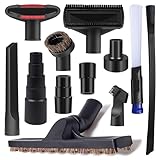
- Top Pick: 16 Pcs Universal Vacuum Attachments Kit for Shop Vac Accessories with 2 1/2" to 1 1/4" & 1 7/8" to 1" Hose Adapter for Shop Vac, 1 1/4" Shop Vacuum Cleaner Attachments, Household Cleaning Vacuum Kit
- Best Value: 12Pcs Universal Vacuum Attachment Professional Shop Vac Accessories Wet Dry Vacuum Hose Adapter with Hair Brush Extension Wand Flexible Crevice Tool fit 2 1/2" to 1 1/4" and 1 7/8" to 1" Vacuum Hose
- Premium Choice: Horsepower Duck Compact Cordless Vacuum, Ultra-Powerful Upgraded Battery for Extra-Long Run Time, AS SEEN ON TV, Strong Suction, Easy to Store, Portable & Rechargeable. Home & Auto (Duck Gold)
Choosing between a shop vac attachment and a dedicated duct vacuum comes down to the job you actually need to do. A shop vac attachment is an inexpensive way to clean floors, upholstery, cars, baseboards, dryer vents, and reachable sections of ductwork with a wet-dry vacuum you may already own. A duct vacuum, by contrast, is a specialized machine built to create strong, contained airflow through HVAC ducts and remove heavier accumulations of dust and debris.
The real decision is not simply which tool has more suction. It is whether your home needs a flexible general-purpose cleaning setup or equipment designed for whole-system duct cleaning. For most homeowners, the attachment route costs less, takes up less space, and handles routine messes. A dedicated duct vacuum makes more sense for extensive contamination, frequent duct cleaning, or professional-level work.
As an Amazon Associate we earn from qualifying purchases at no extra cost to you.



Quick Verdict
Choose a shop vac attachment if you want affordable versatility. A compatible wet-dry vacuum paired with extension wands, a crevice tool, a brush, and the correct hose adapter can handle everyday home cleaning and small, accessible duct sections. Expect to spend about $20 to $80 for attachments, or roughly $70 to $300 if you also need a shop vac.
Choose a dedicated duct vacuum if you are cleaning an entire HVAC system, dealing with substantial buildup, or need equipment that can connect to duct openings and collect debris more systematically. These machines commonly cost about $1,000 to $4,000 or more, weigh approximately 50 to 180 pounds, and may require 1,000 to 2,000 watts, specialized hoses, plugs, and brushes.
For a typical apartment, rental, or single-family home with no visible duct problem, a shop vac attachment is the more practical buy. A duct vacuum is a serious investment, not a routine household accessory.
Side by Side
| Factor | Shop Vac Attachment | Dedicated Duct Vacuum |
|---|---|---|
| Comfort | Light accessories, usually under 5 pounds together; easy for short jobs | Heavier machine and hoses; setup can be tiring without help |
| Durability | Depends on hose, adapters, and the wet-dry vacuum; plastic tools can crack | Built for repeated duct work, though filters, brushes, and seals still wear |
| Price range | About $20–$80 for attachments; $70–$300 with a shop vac | About $1,000–$4,000-plus |
| Maintenance | Empty the canister, wash or replace filters, and inspect adapters | Clean filters and hoses; replace brushes, plugs, seals, and collection bags as needed |
| Space needed | Attachment kits may fit in a 12-by-8-inch storage bin | Often needs a closet, garage corner, or utility room; some units exceed 24 inches in height |
| Look | Ordinary utility equipment that can be stored out of sight | Industrial appearance with large hoses, fittings, and a prominent motor housing |
| Resale | Low individual resale value, but a good shop vac remains useful | Can retain value if commercial-grade and well maintained, but the buyer pool is smaller |
| Best for | Household cleaning, cars, workshops, vents, and reachable duct sections | Whole-system HVAC cleaning, severe buildup, and frequent or professional use |
| Power needs | Uses the existing vacuum, commonly about 5–12 amps | Often requires a dedicated outlet and roughly 1,000–2,000 watts |
Where Shop Vac Attachment Wins
The biggest advantage is value. An attachment kit lets one vacuum perform several jobs instead of requiring a dedicated machine. A narrow crevice tool can reach along floor registers, a soft brush can loosen dust around grilles, and an extension wand can reach several feet into an accessible opening. The same vacuum can then clean sawdust, spilled water, car interiors, garage floors, and pet hair.
Compatibility is the main detail to check. Many wet-dry vacuums use a 2 1/2-inch hose, while household accessories often measure 1 1/4 or 1 7/8 inches. A kit with multiple adapters can bridge those sizes, but the connection should fit snugly. A loose reducer allows air to escape, lowers effective suction, and may blow dust back into the room.
For example, a 16-piece universal attachment kit priced at $30.98 includes the kind of adapters, brushes, wands, and narrow tools that make a shop vac more useful around a home. A 12-piece kit priced at $22.99 is another low-cost approach, particularly when the priority is adding a flexible crevice tool, hair brush, or extension wand. These products are best viewed as accessory collections: they expand reach and surface coverage, but they do not transform a standard vacuum into a commercial duct-cleaning system.
Shop vac attachments also win on maneuverability. Most tools are small enough to use one-handed, and a homeowner can clean an individual register without moving furniture or setting up a large machine. A compact cordless vacuum can be convenient for crumbs, car seats, and quick touch-ups. One example in this category is the Horsepower Duck Compact Cordless Vacuum, listed at $59.99. Its portable format is useful for light cleanup, but a small cordless unit generally is not a substitute for a high-capacity wet-dry vacuum when cleaning long duct runs or heavy debris.
There are limitations. A typical shop vac is not designed to clean every part of an HVAC system. It may not have enough hose length, filtration, or airflow control to pull debris from distant branches. Pushing a narrow tool too far can also damage flexible duct lining or dislodge insulation. Never use a household vacuum setup to remove suspected mold, asbestos, vermiculite, or other hazardous material without professional guidance.
Where Duct Vacuum Wins
A dedicated duct vacuum is designed around containment and sustained airflow. Instead of relying on a small nozzle at a single register, it may connect to a trunk line or access point while technicians seal other openings and agitate debris with rotary brushes or air tools. This approach is more suitable when dust has accumulated throughout supply and return ducts rather than only around visible grilles.
Capacity is another advantage. A commercial-style unit can have a large collection container or bag, so it does not need to be emptied repeatedly during a substantial cleaning. Better filtration can also reduce the amount of fine dust released into the work area, although performance depends on the filter, seals, setup, and operator technique.
Dedicated equipment is particularly useful for older homes after renovation, properties with heavy construction dust, and buildings where ducts have not been serviced for many years. It can also be practical for a contractor or property manager who expects to clean multiple systems. The tradeoff is that the equipment demands planning: access panels may need to be created, registers may need protection, and the HVAC system should be turned off during cleaning.
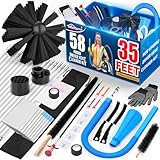
A specialized example is the EQCOTWEA air duct vacuuming and cleaning machine, priced at $2,807. It is described as an integrated machine with three rotary brushes, three pipe plugs, and support for 50- to 200-millimeter pipe diameters with 110V or 220V power through a transformer. That type of specification illustrates the difference between a household attachment and a duct-cleaning machine: the latter is engineered around duct diameter, sealing, agitation, and system-level work. It is far more machine than most homeowners need for occasional dust removal.
Cost Over 5 Years
A shop vac setup usually has the lower five-year cost. Suppose you spend $30 on an attachment kit and $150 on a wet-dry vacuum. Add $20 to $40 per year for replacement filters, bags, or worn accessories, and the five-year total is approximately $280 to $380. If you already own the vacuum, the total may remain below $200.
A dedicated duct vacuum changes the calculation. A $2,807 machine could cost roughly $3,100 to $3,600 over five years after allowing for replacement filters, brushes, seals, and occasional hose or collection components. Electricity is a relatively small part of ownership, but storage and transportation matter. A unit that occupies a garage corner and weighs more than 100 pounds has a real convenience cost, even when it does not appear on the receipt.
Professional duct cleaning is a separate comparison. Hiring a qualified company may cost several hundred dollars per visit, depending on home size, access, contamination, and local labor rates. Buying a machine only makes financial sense when you need frequent use, have specialized requirements, or can share the equipment across multiple properties.
Which One for Your Home
Small apartment
Choose a shop vac attachment, or a compact vacuum with a narrow nozzle. Storage, noise, and portability matter more than high-capacity collection. Clean accessible registers and surrounding surfaces without opening ductwork or attempting a whole-system project.
Family with kids or pets
A shop vac and a versatile attachment kit provide better everyday value. Use the brush and upholstery tools for hair, crumbs, and tracked-in debris, then use the wet-dry vacuum for garage or basement messes. A dedicated duct vacuum is warranted only when there is clear, extensive buildup or a professional cleaning plan.
Rental
Keep the investment modest and reversible. A $20-to-$40 attachment kit can improve an existing vacuum without requiring alterations to the property. Ask the landlord before removing registers, accessing ductwork, or addressing suspected contamination. A large duct machine is rarely sensible for a renter.
Long-term home
Start with a shop vac attachment unless you expect repeated renovation, major dust problems, or unusually large ductwork. If a professional inspection identifies system-wide buildup, compare the cost of hiring a specialist with buying and storing a dedicated machine. In 2026, the best value for most homeowners remains a quality wet-dry vacuum with compatible, well-sealed accessories.
FAQ
Can a shop vac clean air ducts?
It can clean reachable areas near a register and remove loose debris from short sections. It generally cannot provide the access, sealing, hose length, filtration, or agitation needed for complete HVAC duct cleaning.
Do I need a special attachment for a shop vac?
Usually, you need the correct hose adapter plus a crevice tool, brush, or extension wand. Measure the hose opening before buying because 1 1/4-inch, 1 7/8-inch, and 2 1/2-inch connections are common.
Is a duct vacuum worth the price for one house?
Usually not. Unless the system has extensive contamination or you plan to use the machine frequently, professional service or a shop vac attachment is typically more economical and easier to manage.
What should I avoid vacuuming?
Do not disturb suspected asbestos, mold, vermiculite, or contaminated insulation with ordinary equipment. Stop and seek professional advice. Also avoid forcing rigid tools into flexible ductwork, where they can puncture the lining or loosen insulation.
Ready to decide? Our #1 pick for 2026 is the Comfort.
Live price & availability on Amazon.


Write Your Review
No reviews yet. Be the first to share your experience!