
- Top Pick: 6 Inch Dryer Vent Cleaner Brush Head, Duct Cleaning Brush with 3/8” Hex Shaft Drill Attachment for Dryer Vent Cleaning, Fireplace, Chimney Washing, Compatible with Standard M8 Flexible Rods
- Best Value: Holikme Dryer Vent Cleaner Kit – 30Ft Fireplace Chimney Brushes Flexible
- Premium Choice: Holikme Dryer Vent Cleaner Kit – 35Ft Flexible Lint Brush for Deep Cleaning
The Short Answer
For most floor, wall, and ceiling registers, choose a duct-cleaning brush with a 2- to 4-inch diameter (5.1 to 10.2 cm). A 3-inch brush (7.6 cm) is the best general-purpose starting size for standard residential supply registers and return grilles.
The brush should be smaller than the narrowest opening by at least 1/2 inch (1.3 cm), and preferably 1 inch (2.5 cm), so the bristles can move without catching on louvers, dampers, screws, or sharp sheet metal. For a 4-inch-wide register opening, a 3-inch brush is usually appropriate. For a 6-inch opening, a 4- to 5-inch brush may work if the duct is straight and unobstructed.
As an Amazon Associate we earn from qualifying purchases at no extra cost to you.


Do not confuse a register brush with a dryer-vent or chimney brush. Dryer-vent kits commonly include 4- to 6-inch brush heads, flexible rods, and drill attachments. They are useful for larger, round passages, but a 6-inch head is usually too large for a typical residential register opening.
Standard Sizes
Brush diameter is measured across the outside tips of the bristles, not across the metal hub or threaded shaft. The useful size depends on the register opening, the duct shape, and how far the brush must travel.
| Brush diameter | Metric equivalent | Best for | Typical minimum opening |
|---|---|---|---|
| 1 inch | 2.5 cm | Small gaps, narrow slots, control grilles, and coil fins | 1.5 inches (3.8 cm) |
| 2 inches | 5.1 cm | Small wall registers, return-slot openings, and tight duct branches | 2.5 inches (6.4 cm) |
| 3 inches | 7.6 cm | Most standard residential supply and return registers | 4 inches (10.2 cm) |
| 4 inches | 10.2 cm | Large registers, short round ducts, and wide return openings | 5 inches (12.7 cm) |
| 5 inches | 12.7 cm | Large return ducts and accessible trunk-line openings | 6 inches (15.2 cm) |
| 6 inches | 15.2 cm | Round dryer vents, fireplace passages, and large open ducts | 7 inches (17.8 cm) |
The “typical minimum opening” is a working clearance, not a strict industry standard. A brush may physically fit through a smaller opening, but compressed bristles can increase friction and make the tool difficult to remove. A brush that is too large can also dislodge a damper, damage insulation, bend a grille, or push debris deeper into the duct.
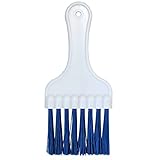
For most homeowners, a kit containing a 2- or 3-inch brush, flexible rods, and a narrow detail brush offers better register access than a single large chimney brush. Coil-cleaning brushes are different again: many are approximately 1 inch wide and 8 to 12 inches long, with relatively soft bristles designed to pass between fins rather than scrub the inside of a duct.
How to Measure Your Space
- Turn off the HVAC system. Set the thermostat to off before removing a register. This prevents the blower from pulling loose dust into the system while you work.
- Remove the grille or register. Most are held by two or four screws. Keep the screws in a small container so they do not fall into the duct.
- Measure the narrowest opening. Measure the clear space inside the duct collar, not the outside dimensions of the decorative cover. For a rectangular opening, record both width and height.
- Check for obstructions. Look for a volume damper, sharp screw tips, insulation, bends, or a short transition immediately behind the opening. A brush that fits the mouth may not fit around the first turn.
- Subtract clearance. Choose a brush at least 1/2 inch smaller than the narrowest dimension. Subtract 1 inch for a safer, easier fit when the duct has louvers, a bend, or a long flexible-rod reach.
- Measure the cleaning depth. A brush with a 6-inch head is not necessarily suitable for a 6-inch-deep duct. Check the rod length and whether the brush can be controlled without bending excessively.
- Inspect the shaft and connection. Common attachments include threaded flexible rods, an M8 connection, or a 3/8-inch hex shaft for a drill. Confirm that the parts are compatible before buying.
For example, if the clear opening is 4 inches by 10 inches, a 3-inch brush leaves approximately 1/2 inch of space on each side of the narrow dimension. If the opening is only 2 1/2 inches wide, select a 1- or 2-inch brush rather than forcing in a 3-inch model.
By Room or Use Case
Floor and Wall Supply Registers
A 2- or 3-inch brush is generally the right choice for standard supply registers. Use a soft or medium-stiff nylon brush for painted metal, plastic, and adjustable louvers. A flexible rod helps reach several feet into a straight branch, but rotate it slowly by hand near the register. A drill attachment can produce too much torque for thin ductwork and may twist a flexible rod.
Ceiling Registers
Ceiling registers often have narrow slots and adjustable dampers, so a 1- to 3-inch brush is safer than a large round brush. Work from a stable step ladder, support the register with one hand, and avoid pushing a long rod into the duct at an angle. A vacuum with a crevice tool can collect loosened debris at the opening.
Return-Air Grilles
Return openings are often larger than supply registers, making a 3- to 5-inch brush suitable in many homes. Measure first, because return grilles may conceal a filter rack, damper, or framing that reduces the usable opening. Clean the grille separately with a vacuum and mild soap before brushing the accessible duct surface.
Dryer Vents
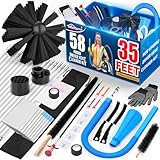
Dryer-vent brushes are commonly 4, 5, or 6 inches in diameter. A 6-inch brush head can work in a round 4-inch dryer duct only when its bristles compress easily, but a 4-inch head is usually easier to control in the standard 4-inch duct size. Kits with 30 to 35 feet of flexible rods are designed for long runs, although the required length depends on the route and the location of the exterior termination.
Example products in this category often cost about $10 to $21. A 6-inch brush head with a 3/8-inch hex drill attachment may cost around $9.99, while 30- to 35-foot flexible brush kits commonly fall near $19.99 to $20.99. Price does not indicate that a brush is suitable for registers; diameter, flexibility, and connection type matter more.
HVAC Coils and Narrow Fins
Use a dedicated coil-cleaning brush for evaporator or condenser fins. These are often about 1 inch wide and 8 to 12 inches long, with bristles that fit between closely spaced fins. Do not substitute a stiff chimney brush, which can flatten fins and reduce airflow. Basic coil brushes commonly cost about $5 to $15; one compact HVAC coil brush may be priced near $4.99.
Common Sizing Mistakes
- Buying by register-cover size: A 4-by-10-inch grille does not provide a 4-by-10-inch unobstructed duct opening. Measure behind the cover.
- Choosing the biggest brush available: Larger is not automatically more effective. An oversized head can jam and damage the duct.
- Ignoring bristle compression: The listed diameter may be the relaxed diameter. Allow additional room if the bristles are stiff.
- Using a chimney brush for a small branch duct: Six-inch heads are intended for larger passages and may not negotiate register openings.
- Measuring only the first few inches: A damper or bend farther inside may reduce clearance. Inspect as far as practical with a flashlight.
- Using a drill without checking the rod: High speed can kink flexible rods, loosen connections, or damage thin ductwork. Hand rotation is usually adequate for register cleaning.
- Expecting a brush to replace professional duct cleaning: A register brush reaches only accessible areas. It cannot clean sealed trunks, internal insulation, or contamination throughout an HVAC system.
FAQ
What diameter brush is best for a standard air vent?
A 3-inch brush, or about 7.6 cm, is the best general-purpose choice for many standard residential registers. Use a 2-inch brush if the opening is narrow, slotted, or obstructed by a damper.
Can I use a 6-inch duct brush for registers?
Usually not. A 6-inch brush is better suited to large round passages, dryer vents, fireplaces, and chimney applications. Use it for a register only when the clear opening is at least 7 inches and the interior is straight and unobstructed.
Should a duct-cleaning brush be bigger than the vent opening?
No. The brush should be smaller than the narrowest clear opening. Leave at least 1/2 inch of total clearance, and choose about 1 inch of total clearance when the opening contains louvers or the duct turns immediately behind the register.
What is the difference between a register brush and a dryer-vent brush?
A register brush is usually smaller and easier to guide through rectangular openings. Dryer-vent brushes are commonly 4 to 6 inches in diameter and attach to long flexible rods, sometimes with drill-compatible shafts. Select the tool by measuring the passage, not by the product category alone.
Ready to decide? Our #1 pick for 2026 is the 1 inch.
Live price & availability on Amazon.


Write Your Review
No reviews yet. Be the first to share your experience!